

Starting Strength Training: Understanding Your One-Rep Max
Learn what a one-rep max is, why it matters for programming your workouts, and how to estimate it safely — plus calorie and protein guidance for recovery.
I still remember the first time I walked into a weight room after my ACL reconstruction. I was twenty-two, six months post-surgery, and terrified. Not of the weights themselves — I’d been a competitive swimmer since I was twelve and no stranger to hard training. What scared me was the gap between who I’d been and who I was standing there in a knee brace, wondering if a bodyweight squat would make something pop again.
That fear is something I hear from almost every beginner I coach. Maybe you haven’t torn a ligament, but if you’re new to strength training, there’s a version of that feeling: the uncertainty of not knowing how much weight is right for you, whether you’re doing too much or too little, and how to progress without getting hurt. That’s exactly where understanding your one-rep max comes in — and why I built my entire coaching practice around teaching people to start with numbers they can trust.
What is a one-rep max, and do beginners really need it?
Your one-rep max, or 1RM, is the heaviest weight you can lift for a single repetition of a given exercise with proper form. It’s the gold standard measurement in strength training because nearly every reputable programme uses it to set your working weights. When a plan says “do 3 sets of 8 at 70% of your 1RM,” it’s telling you exactly how hard those sets should feel — hard enough to stimulate growth, light enough to maintain technique across all your reps.
Research published in the Journal of Strength and Conditioning Research has consistently shown that percentage-based programming leads to more consistent progress than simply guessing how heavy to go each session. It removes the daily negotiation of “does this feel heavy enough?” and replaces it with a clear, objective target.
Here’s the important part: you do not need to actually lift your true one-rep max to benefit from knowing it. In fact, for beginners, I strongly recommend against attempting a maximal single. The injury risk isn’t worth it when there are well-validated formulas — like the Epley and Brzycki equations — that can estimate your 1RM from a lighter set you can perform safely.
How do you estimate your 1RM safely?
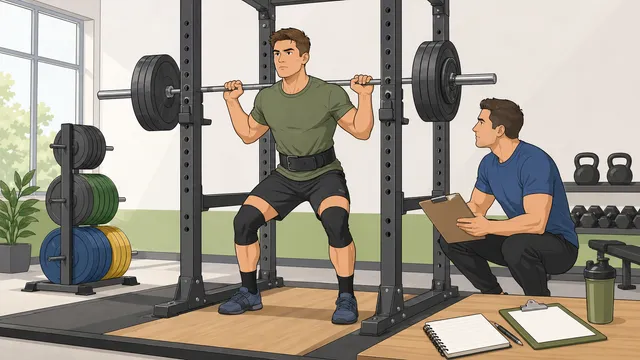
The process is simple. Pick an exercise — the bench press, squat, or deadlift are the most common starting points. Warm up thoroughly. Then perform a set with a weight you can handle for somewhere between 3 and 10 repetitions, pushing close to but not quite to failure. Record the weight and the number of clean reps you completed.
That’s all you need. The calculator below does the rest, applying proven estimation formulas to give you a reliable 1RM number. I use this with every single client who walks through my door, from post-rehab athletes to people picking up a barbell for the very first time.
A few tips from my coaching experience: choose a rep range of 5 to 8 for the most accurate estimate. The further you get from that range — particularly above 12 reps — the less precise the calculation becomes. And please, always use a spotter or safety bars when testing near your limits.
Use the One-Rep Max Calculator to estimate your training max safely:
Units
Quick examples
Estimate used for planning
1RM result
115.54 kg Average estimate
This bench press set projects from 100 kg for 5 reps. The formula comparison below shows how much the estimate moves when you switch methods.
- Training max
- 104 kg
- Formula spread
- 4.96 kg
- Accuracy band
- Best
- Bodyweight ratio
- 1.44x
Formula comparison
For heavy low-rep sets, Brzycki is often the more conservative estimate while the average keeps the headline result balanced. Formula spread on this set is about 4.96 kg.
| Method | Estimate | Use note |
|---|---|---|
| Average selected | 115.54 kg | Balanced headline estimate that smooths the three classic formulas. |
| Epley | 116.67 kg | Common coaching estimate that scales smoothly across moderate rep ranges. |
| Brzycki | 112.5 kg | Usually the more conservative heavy-set estimate when reps stay low. |
| Lombardi | 117.46 kg | Can stay higher when reps climb, so it is best read alongside the other formulas. |
Training max and working sets
This headline estimate uses bench press-appropriate planning rows and a warm-up ladder so the result is easier to use as a 1 rep max chart, training anchor, and max-day checkpoint.
| Row | % of selected estimate | Load | Typical range | Why it helps |
|---|---|---|---|---|
| Training max | 90% | 104 kg | Anchor | Good starting point for percentage-based bench blocks and top-set planning. |
| Heavy single exposure | 93% | 106.9 kg | 1 rep | Usually smarter than testing a true max every bench session. |
| 5x5 strength work | 80% | 92.4 kg | 4-6 reps | Common bench strength range when bar speed is still clean. |
| Volume bench work | 73% | 83.8 kg | 6-10 reps | Useful when the priority is more bench practice and upper-body volume. |
Warm-up and max-day checkpoint ladder
Use these rows when the 1RM estimate is guiding a heavy session, then round each load to a practical plate jump and stop if bar speed or technique breaks down.
| Step | % of estimate | Load | Reps | Use note |
|---|---|---|---|---|
| Easy technique ramp | 45% | 52 kg | 5 reps | Move smoothly and check the setup before the load feels heavy. |
| First working warm-up | 60% | 69.3 kg | 3 reps | Enough load to rehearse the lift without adding meaningful fatigue. |
| Primer set | 75% | 86.7 kg | 2 reps | Use the same stance, grip, pause, and range of motion you want to evaluate. |
| Heavy single preview | 85% | 98.2 kg | 1 rep | A useful readiness check before deciding whether to approach a true max. |
| Max-day decision point | 92% | 106.3 kg | 1 rep | Stop here for ordinary training, or use it as a final checkpoint before a planned test. |
Bench Press milestone gaps
These rows answer the practical question most competitors miss: how far this 1 rep calculator result is from the next familiar plate benchmark.
| Milestone | Target | Status |
|---|---|---|
| 135 lb benchmark | 61.2 kg | Already met |
| 185 lb benchmark | 83.9 kg | Already met |
| 225 lb benchmark | 102.1 kg | Already met |
| 315 lb benchmark | 142.9 kg | Need about 27.36 kg more |
1 rep max chart
Use this rep max chart when you want a quick answer for common rep ranges instead of recalculating every working weight by hand.
| Reps | % 1RM | Projected load |
|---|---|---|
| 1 | 100% | 115.5 kg |
| 2 | 97% | 112.1 kg |
| 3 | 93% | 107.5 kg |
| 4 | 90% | 104 kg |
| 5 | 87% | 100.5 kg |
| 6 | 83% | 95.9 kg |
| 8 | 80% | 92.4 kg |
| 10 | 75% | 86.7 kg |
| 12 | 70% | 80.9 kg |
| 15 | 65% | 75.1 kg |
Treat the result as a planning number, not a dare. If the calculator estimates your squat 1RM at 82 kg, you do not need to march over to the rack and try to prove it this afternoon. The useful part is that you can now build sensible working sets from that estimate. For most beginners, I would rather see you train beautifully at 60% to 75% of that number for weeks than grind one ugly single for the sake of your ego.
A good secondary check is how the estimate matches your actual session quality. If 70% of your estimated 1RM feels impossible for the prescribed reps, your test set was probably too sloppy, too fatigued, or too optimistic. If it feels comically easy, wonderful. That usually means your technique is improving faster than the original estimate captured, and you can retest in a few weeks.
What percentage of 1RM should beginners lift?
Once you have your estimated 1RM, you can build a sensible programme around it. Here’s a straightforward framework that I use with beginners:
- Hypertrophy (muscle building): 3 to 4 sets of 8 to 12 reps at 60 to 75% of your 1RM
- Strength: 3 to 5 sets of 3 to 6 reps at 75 to 85% of your 1RM
- Power and peaking: 1 to 3 sets of 1 to 3 reps at 85 to 95% of your 1RM (for intermediate and advanced lifters only)
If you’re brand new, start in the hypertrophy range. The lighter loads give your connective tissue — tendons, ligaments, cartilage — time to adapt alongside your muscles. Trust me on this one. After my ACL tear, I spent an entire year rebuilding with high-rep, moderate-weight work before I touched anything above 80% of my max. It was the smartest decision I ever made, and it’s the approach I recommend to every client.
Re-test your estimated 1RM every 6 to 8 weeks. As a beginner, your numbers will climb quickly, and your working weights need to climb with them.
If you want an even safer runway, use a training max instead of your full estimated max. Many beginner-friendly programmes quietly work off about 85% to 90% of estimated 1RM and then take percentages from there. That small buffer keeps technique cleaner and leaves room for bad sleep, stressful workdays, and the general chaos of being a human being rather than a spreadsheet.
I would also match the lift to the level of confidence you have in your movement quality. A leg press or machine row can tolerate more enthusiasm than a barbell back squat performed by someone still learning how to brace. The number is only useful if the movement pattern is trustworthy.
Fuelling Your Training: Calories and Recovery
Strength training places real demands on your body. Every session creates microscopic damage to muscle fibres, and it’s during recovery — not during the workout itself — that those fibres rebuild stronger. Recovery requires two things above all else: enough total energy (calories) and enough protein.
A common mistake I see in new lifters is dramatically under-eating while starting a challenging programme. If your body doesn’t have the raw materials it needs, it cannot repair and grow. You’ll stall, feel exhausted, and wonder why the weights aren’t moving. A position stand from the International Society of Sports Nutrition makes this clear: caloric intake must be sufficient to support training adaptations, or progress will be compromised regardless of how good the programme is.
Understanding how many calories your training sessions actually burn can help you plan your nutrition more accurately. A heavy 45-minute barbell session burns considerably more than most people expect, and that expenditure needs to be accounted for in your daily intake.
Estimate the energy cost of your sessions with the Calories Burned Calculator:
Use this calories burned calculator as a broad exercise calorie worksheet when you want to compare workout energy by activity, body weight, and session length on one consistent MET-based scale. It is built for the common search intents behind workout calorie calculator, exercise calorie calculator, calories burned by activity, and calories burned per hour, but it is most useful when you treat the result as a planning estimate rather than a device-grade measurement.
Activity intents covered here
Quick body-weight presets
Estimate from
Quick session lengths
Calories burned
540 kcal
540 kcal for 45 minutes of running (moderate, about 10 km/h) at 9.8 MET.
- Calories per hour
- 720 kcal
- Calories per 30 minutes
- 360 kcal
- Calories per minute
- 12.01 kcal
- Activity intensity
- 9.8 MET
- Selected activity
- Running (moderate, about 10 km/h)
- Modeled duration
- 45 min
- Distance estimate
- 7.5 km / 4.66 mi
- Weight used
- 70 kg / 154.32 lb
Benchmark session lengths
These rows keep the same body weight and activity while changing only the workout length.
| Length | Calories | Calories / min |
|---|---|---|
| 30 min | 360 kcal | 12.01 kcal |
| 45 min | 540 kcal | 12.01 kcal |
| 60 min | 720 kcal | 12.01 kcal |
| 90 min | 1,080 kcal | 12.01 kcal |
Time needed to reach common calorie targets
These rows keep the selected activity and body weight fixed, then show how long the session would need to last to hit common planning totals.
| Target | Time needed | Sessions at current length |
|---|---|---|
| 150 kcal | 13 min | 0.28 sessions |
| 300 kcal | 25 min | 0.56 sessions |
| 500 kcal | 42 min | 0.93 sessions |
| 750 kcal | 63 min | 1.39 sessions |
Weekly burn planner from the current session
Use this to turn one representative workout into a repeatable weekly total instead of treating the result as a one-off number.
| Sessions / week | Weekly total | 4-week total |
|---|---|---|
| 2 | 1,080 kcal | 4,322 kcal |
| 3 | 1,621 kcal | 6,483 kcal |
| 5 | 2,701 kcal | 10,805 kcal |
| 7 | 3,782 kcal | 15,126 kcal |
Same session at common body weights
These rows keep the activity and workout length fixed so you can see how much the estimate shifts when body weight changes.
| Body weight | Calories |
|---|---|
| 55 kg | 424 kcal |
| 70 kg | 540 kcal |
| 85 kg | 656 kcal |
| 100 kg | 772 kcal |
Same-session activity comparison
These rows keep weight and duration fixed so you can see how the activity choice changes the burn estimate.
| Activity | Calories | MET |
|---|---|---|
| Walking (very slow, under 3 km/h) | 110 kcal | 2 |
| Walking (slow, about 3.2 km/h) | 138 kcal | 2.5 |
| Walking (moderate pace) | 193 kcal | 3.5 |
| Walking (brisk pace) | 237 kcal | 4.3 |
| Walking (fast / power walk) | 276 kcal | 5 |
| Walking (very fast / race-walk pace) | 331 kcal | 6 |
| Running (light jog, about 7.5 km/h) | 386 kcal | 7 |
| Running (easy, about 8 km/h) | 441 kcal | 8 |
| Running (moderate, about 10 km/h) | 540 kcal | 9.8 |
| Running (tempo, about 12 km/h) | 606 kcal | 11 |
| Running (fast, about 14 km/h) | 678 kcal | 12.3 |
| Running (race pace / sprint, about 16 km/h) | 799 kcal | 14.5 |
| Cycling / biking (moderate, 19-22 km/h) | 441 kcal | 8 |
| Cycling (light, 16-19 km/h) | 375 kcal | 6.8 |
| Cycling / biking (vigorous, 22-26 km/h) | 551 kcal | 10 |
| Cycling (very vigorous, 26-32 km/h) | 662 kcal | 12 |
| Cycling (racing, over 32 km/h) | 871 kcal | 15.8 |
| Biking (leisure, under 16 km/h) | 221 kcal | 4 |
| Biking (easy, 16-19 km/h) | 331 kcal | 6 |
| Biking (fast, 22-25 km/h) | 551 kcal | 10 |
| Biking (racing, over 25 km/h) | 662 kcal | 12 |
| Elliptical trainer (low intensity) | 254 kcal | 4.6 |
| Elliptical trainer (moderate effort) | 314 kcal | 5.7 |
| Elliptical trainer (vigorous effort) | 413 kcal | 7.5 |
| Elliptical trainer (high intensity) | 524 kcal | 9.5 |
| Jump rope (slow, 60-80 jumps/min) | 485 kcal | 8.8 |
| Jump rope (moderate, 80-100 jumps/min) | 606 kcal | 11 |
| Jump rope (fast, 100-120 jumps/min) | 678 kcal | 12.3 |
| Jump rope (very fast, over 120 jumps/min) | 772 kcal | 14 |
| Swimming (leisurely) | 265 kcal | 4.8 |
| Swimming freestyle (slow / easy) | 320 kcal | 5.8 |
| Swimming freestyle (moderate) | 386 kcal | 7 |
| Swimming freestyle (fast / vigorous) | 540 kcal | 9.8 |
| Swimming breaststroke | 568 kcal | 10.3 |
| Swimming backstroke | 331 kcal | 6 |
| Swimming butterfly | 761 kcal | 13.8 |
| Swimming / water polo | 551 kcal | 10 |
| Weight lifting (light) | 138 kcal | 2.5 |
| Weight lifting (general) | 193 kcal | 3.5 |
| Weight lifting (vigorous) | 331 kcal | 6 |
| Weight lifting circuit (minimal rest) | 441 kcal | 8 |
| Hiking (flat trail) | 292 kcal | 5.3 |
| Hiking (rolling trail) | 331 kcal | 6 |
| Hiking (moderate hills) | 386 kcal | 7 |
| Hiking (steep terrain) | 441 kcal | 8 |
| Hiking (mountain / off-trail) | 496 kcal | 9 |
| Push-ups (modified / incline, training pace) | 209 kcal | 3.8 |
| Push-ups (standard, controlled pace) | 441 kcal | 8 |
| Push-ups (standard, training pace) | 441 kcal | 8 |
| Push-ups (standard, test pace) | 441 kcal | 8 |
| Push-ups (standard, explosive pace) | 441 kcal | 8 |
| Yoga or mobility | 154 kcal | 2.8 |
Do not use that number as permission to “earn” food or punish yourself with cardio if the total looks lower than you expected. Strength training nutrition goes sideways very quickly when people turn recovery maths into compensation maths. The better question is: does my overall intake support my training week? One lifting session rarely tells the whole story. Your recovery needs come from the combination of training load, daily movement, sleep, body size, and whether you are trying to maintain, gain, or lose weight.
If the calculator shows that your sessions are burning more than you realised and you have been dragging through workouts, that is useful information. If it shows a lower number than the treadmill screen of your dreams, that is useful too. Either way, it should lead to steadier fuelling, not more food anxiety.
How much protein do you need for strength training?
If calories are the foundation of recovery, protein is the building material. When you lift weights, you break down muscle protein. To rebuild and add new tissue, you need to supply your body with adequate amino acids from dietary protein, consistently, every day — not just on training days.
Current research recommends between 1.6 and 2.2 grams of protein per kilogram of body weight for people engaged in regular resistance training. If you’re in a calorie deficit while lifting — trying to lose fat and build muscle simultaneously — aim for the higher end of that range to protect the lean mass you’re working so hard to build.
During my own ACL recovery, hitting my protein target was non-negotiable. My physiotherapist and I tracked it closely because the research on protein and connective tissue repair was compelling. I ate more Greek yoghurt, eggs, and lean chicken in that year than in the rest of my twenties combined, and I’m convinced it made a meaningful difference in how strong my knee came back.
Spreading your protein across 3 to 5 meals through the day, rather than loading it all into one sitting, also appears to optimise muscle protein synthesis based on studies in the American Journal of Clinical Nutrition.
If you want help turning those recovery numbers into meals and macro targets, the macro-planning guide is the next practical step.
Set a recovery-friendly intake with the Protein Calculator:
Protein calculator
How much protein do you need per day?
Use this protein calculator to estimate daily protein from your body weight, training level, and goal, then compare maintenance, fat-loss, and muscle-gain targets for the same body weight.
Protein target sheet
140 g/day
Fat-loss support. Moderate activity. Anchor target 140 g/day (1.8 g/kg) with a practical range of 125–156 g/day. At 4 eating occasions that works out to about 35 g per meal. That is 28% of the daily calories you entered. Your current intake is about 45 g below the anchor. This page converts body weight to kilograms if needed, applies a goal- and activity-adjusted grams-per-kilogram target, and then turns that anchor into a practical range, meal splits, same-goal activity comparisons, weight-sensitivity checkpoints, life-stage cautions, plant-based planning notes, and GLP-1 warning prompts.
140
Anchor target (g/day)
1.8 g/kg
125–156
Practical range (g/day)
0.82
Grams per lb
560
Protein kcal/day
Protein intake calculator summary
This broad protein intake calculator combines the daily protein requirement, protein needs, protein per meal, protein gap, and percent-of-calories checks into one planning sheet.
Daily protein requirement
The daily requirement row starts with body weight and then adjusts the planning anchor for your selected goal and training activity. Use the reference rows below when you only need a general adult baseline.
Daily range
The anchor row is the main planning target. The lower and upper rows show a practical band around it rather than implying one exact intake fits every training block.
| Target band | g/kg | g/lb | g/day |
|---|---|---|---|
| Lower practical target | 1.6 | 0.73 | 125 |
| Anchor target | 1.8 | 0.82 | 140 |
| Upper practical target | 2 | 0.91 | 156 |
Turn the daily target into meals
These rows show what the same daily target looks like if you usually eat three, four, or five times per day.
| Meal pattern | Anchor g/meal | Range g/meal | Planning note |
|---|---|---|---|
| 3 meals | 47 g | 42–52 g | Classic breakfast, lunch, and dinner split. |
| 4 meals | 35 g | 31–39 g | Useful when you want one higher-protein snack or shake. |
| 5 meals | 28 g | 25–31 g | Spreads the daily target across smaller protein hits. |
Protein gap check
Compare the anchor protein target with the current intake you entered so you can see the approximate daily protein gap before changing meals or supplements.
+45
Protein gap (g/day)
Add about 45 g/day to reach the anchor target.
Protein percentage of calories
Protein provides about 4 kcal per gram. Enter daily calories to convert the protein grams into an estimated protein percentage of calories for the lower, anchor, and upper rows.
| Protein row | Protein grams | Protein calories | % of calories | How to use it |
|---|---|---|---|---|
| Lower practical target | 125 g | 500 kcal | 25% | Lower end of the planning band for easier weeks or smaller appetite. |
| Anchor target | 140 g | 560 kcal | 28% | The main daily protein intake target used by the calculator. |
| Upper practical target | 156 g | 624 kcal | 31.2% | Higher end of the range when training load, dieting, or appetite support matter more. |
Age and life-stage module
The headline target remains a general planning anchor. These rows show when age, pregnancy, breastfeeding, child or teen growth, and older adult recovery need more cautious handling.
| Context | Planning focus | g/kg cue | Caution |
|---|---|---|---|
| General adult | Broad daily planning | 0.8-2.2+ | Use the main result as a general adult planning anchor, then adjust for training, appetite, and total calories. |
| Older adult | Strength, function, and recovery | often 1.0-1.2+ | Older adults may need a higher floor than a basic reference intake, especially when appetite, frailty, illness recovery, or resistance training matter. |
| Pregnancy or breastfeeding | Clinician-guided life-stage needs | varies by trimester and feeding status | Pregnancy and breastfeeding protein needs should be checked against current maternity guidance and individual medical advice rather than treated as a generic body-weight target. |
| Child or teen | Growth and development | age-specific | Under-18 protein planning needs age, growth, sport, and medical context. Use this master only as a signpost, not as a child or teen prescription. |
Vegetarian and vegan considerations
Plant-based protein targets use the same daily grams anchor, but food choices, portion size, leucine density, fibre, and calorie budget can change how practical the plan feels.
| Diet pattern | Protein anchors | Planning note |
|---|---|---|
| Omnivore | Meat, fish, eggs, dairy, soy, legumes, and mixed meals | Most users can reach the target with ordinary meals if each eating occasion includes a clear protein anchor. |
| Vegetarian | Dairy, eggs, soy foods, legumes, seitan, grains, nuts, and seeds | Vegetarian plans often work best when dairy, eggs, soy, or several plant proteins are distributed across the day. |
| Vegan | Soy foods, seitan, legumes, pea protein, grains, nuts, and seeds | Vegan plans may need larger portions, more protein-dense foods, or protein powder because many plant foods bring more fibre and calories per gram of protein. |
GLP-1 protein warning section
GLP-1 medication, fast weight loss, nausea, vomiting, constipation, reflux, or very low appetite can make a protein target medically and practically different from a normal meal-planning goal.
| Warning point | What to check |
|---|---|
| Appetite and tolerance | GLP-1 medicines can make a high protein target harder to eat because nausea, reflux, constipation, or food aversion can reduce total intake. |
| Lean-mass protection | Protein planning during rapid weight loss works best alongside enough calories, fluids, micronutrients, and resistance training where appropriate. |
| Escalation point | Review the target with the prescriber or a dietitian if appetite is very low, vomiting occurs, kidney disease is present, or the target pushes out essential foods. |
Per-meal checkpoint guide
Competitor pages often talk about protein per meal. These rows show whether your selected 4-occasion plan still stays at or above common 25 g, 30 g, and 40 g meal checkpoints.
| Checkpoint | Meals/day at or above it | How to use it |
|---|---|---|
| 25 g | 5 | Your current 4-meal pattern still averages at least 25 g each time from the 140 g anchor target. |
| 30 g | 4 | Your current 4-meal pattern still averages at least 30 g each time from the 140 g anchor target. |
| 40 g | 3 | To keep the 140 g anchor target at about 40 g each time, you would usually want 3 eating occasions or fewer. |
Anchor meal food equivalents
These rough food equivalents turn the 35 g anchor meal into more realistic servings so you can check whether the target fits meals you would actually eat.
| Food example | Approx. serving | Protein per serving | Servings for this meal | Why it helps |
|---|---|---|---|---|
| Chicken breast | 120 g cooked | 37 g | 0.9x | A dense whole-food anchor that covers most of a typical meal target in one serving. |
| Greek yogurt | 200 g pot | 20 g | 1.8x | Useful when breakfast or snacks need a high-protein base without cooking. |
| Firm tofu | 180 g block | 24 g | 1.5x | A practical plant-based anchor that often needs a larger portion or a second protein food. |
| Eggs | 3 large eggs | 19 g | 1.8x | Easy to combine, but egg-only meals usually need several servings to reach a higher target. |
| Whey protein | 1 scoop | 24 g | 1.5x | Convenient when appetite, travel, or schedule makes a full food meal harder to organise. |
Across the full day, the same anchor target works out to about 3.8 servings of chicken breast or 7 servings of greek yogurt spread across your chosen cadence.
Same body weight, different goal
These rows keep your current weight and activity level fixed so you can see how the protein target shifts when the goal changes.
| Goal | g/kg | g/day |
|---|---|---|
| General maintenance | 1.4 | 109 |
| Fat-loss support | 1.8 | 140 |
| Muscle-gain support | 2 | 156 |
| High-performance training | 2.2 | 172 |
Same goal, different training load
These rows keep your current body weight and goal fixed so you can see whether a lighter or harder training block changes the protein anchor enough to matter.
| Activity level | g/kg | g/day | How to use it |
|---|---|---|---|
| Light activity | 1.7 | 133 | Useful when most training sessions are easy or infrequent. |
| Moderate activity | 1.8 | 140 | Middle-ground planning target for regular training weeks. |
| High activity | 2 | 156 | Higher-end planning row for dense training blocks or heavier deficits. |
If body weight changes
These rows keep the same goal and activity level while showing how the anchor target moves if your working body weight is modestly lighter or heavier.
| Scenario | Weight | Anchor g/day | How to read it |
|---|---|---|---|
| 5 kg lighter | 73 kg | 131 | Useful if you are planning around a leaner maintenance weight or a modest cut. |
| Current weight | 78 kg | 140 | The body-weight anchor used for the headline result above. |
| 5 kg heavier | 83 kg | 149 | Shows how the same goal scales if body weight trends upward or you plan ahead for a gaining phase. |
Reference checkpoints
These rows help compare your current target against common baseline and higher-end planning markers.
| Checkpoint | g/kg | g/day |
|---|---|---|
Reference baseline General adult reference intake, not a physique or training target. | 0.83 | 65 |
Active lifestyle checkpoint A practical checkpoint once activity matters more than minimum adequacy. | 1.2 | 94 |
Muscle-retention checkpoint A common useful floor when dieting or resistance training matters. | 1.6 | 125 |
Upper athletic planning range Often used as a high-end planning marker for hard training blocks. | 2.2 | 172 |
Once you have that target, think in habits instead of heroic single meals. Hitting 120 grams of protein is much easier when it becomes 30 grams across four eating opportunities than when you realise at 9 p.m. that you still need the nutritional equivalent of a rotisserie chicken and a tub of yoghurt. I usually ask beginners to anchor protein at breakfast first, then lunch, then the post-training meal. The rest tends to follow.
And remember that more is not always more helpful. If the calculator gives you a range, start in the middle, see how your recovery, appetite, and training feel for a couple of weeks, and then adjust. Precision is useful. Perfectionism is not.
Is it safe to test a true 1RM?
I would not be doing my job if I didn’t say this plainly: strength training is one of the safest forms of exercise when performed with good technique, and one of the riskiest when ego takes over. Never sacrifice form to hit a number. Never skip your warm-up. If something feels wrong — a sharp pain, a pinch, anything that makes you hesitate — stop the set. Soreness is normal; pain is a signal.
If you have a pre-existing injury, a history of joint problems, or any medical condition that affects your ability to exercise, please consult a qualified healthcare professional or physiotherapist before starting a strength programme. A calculator can estimate your max, but it cannot assess your movement patterns, joint health, or injury history. Calculator results and the guidance in this article are educational tools, not medical advice or a personalised exercise prescription. That’s what trained professionals are for.
There are also clear situations where I would not chase a true 1RM at all: if you are brand new to lifting, returning from injury, training alone without safeties, learning a technically demanding lift, or dealing with pain that changes how you move. In those cases, a 3RM to 8RM estimate is the smarter and safer route. You still get a useful programming number without turning the session into a confidence contest.
Where should you go from here?
You now have three powerful numbers: an estimated one-rep max to programme your training, a calorie expenditure figure to guide your eating, and a protein target to support recovery. That’s more structure than most beginners ever start with, and it puts you ahead of the curve.
Start conservatively. Be patient with the process. Track your lifts in a notebook or app so you can see the progress that’s invisible day to day but unmistakable month to month. And remember — the strongest version of you isn’t built in a single session. It’s built in hundreds of consistent, well-fuelled, intelligently programmed ones. I rebuilt myself from a torn knee and a lot of doubt. You can build yourself from wherever you’re starting today.
Calculators used in this article
Health / Fitness / Strength & Performance
One Rep Max Calculator
Use this 1 rep max calculator to estimate bench, squat, deadlift, or overhead press 1RM, compare formulas, and turn the result into a practical training max.

Health / Fitness / Cardio & Conditioning
Calories Burned Calculator
Estimate calories burned by activity, duration, distance, count, and body weight with MET-based comparisons for walking, running, biking, cycling, elliptical.

Health / Nutrition / Macros
Protein Calculator
Use a protein calculator to estimate daily protein intake for weight loss, maintenance, or muscle gain from body weight, goal, training level, eating pattern.