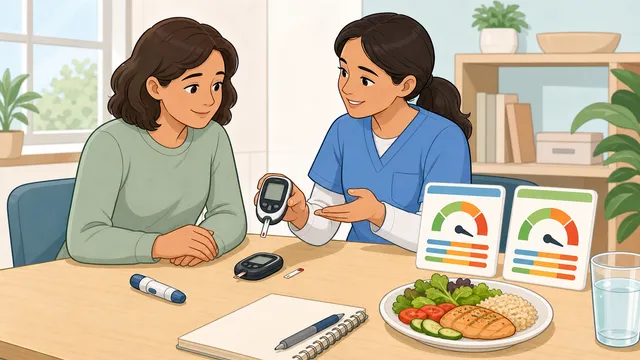
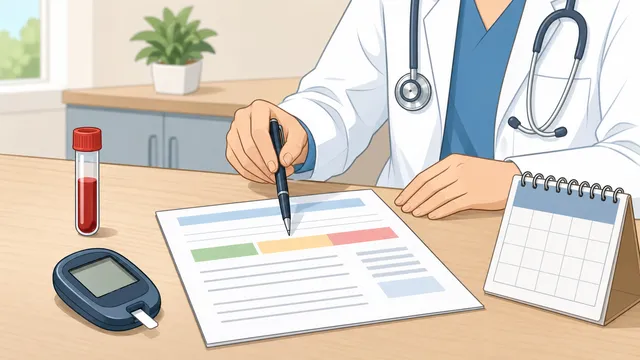
Log a series of glucose readings and get an educational pattern analysis showing trends, in-range percentage, and escalation notes for concerning values.
Health estimate
Topic review: Maria Santos
Diet & Lifestyle Coach. Assigned as the health topic reviewer for nutrition, macro, calorie, and lifestyle diet calculators.
Glucose pattern log interpreter guide: how to review fasting and post-meal readings safely
A glucose pattern log interpreter is most useful when you stop looking at isolated numbers and start looking for repeat patterns across fasting, pre-meal, and post-meal readings. This guide explains what different reading types usually mean, why timing matters, and when a pattern is worth discussing promptly with a clinician rather than treating the result as a home diagnosis.
Why a pattern matters more than a single reading
One glucose result can be distorted by recent food, activity, stress, poor sleep, illness, medication timing, or meter technique. A pattern log is more helpful because it shows whether high or low readings are repeating in the same context: for example, fasting levels trending up across several mornings, or post-meal levels repeatedly spiking after similar meals.
That is why this page interprets logs rather than pretending to diagnose from one value. It is designed to help you notice whether readings are usually in an expected educational range, often borderline, or repeatedly concerning enough to justify clinical review.
What fasting, pre-meal, and post-meal readings can suggest
Fasting glucose is usually checked after at least 8 hours without food or caloric drinks. It reflects overnight liver glucose output and basal insulin activity. Persistently raised fasting readings can matter even when daytime readings look less dramatic, which is why repeated morning values are often useful in a log.
Post-meal glucose is different because it depends heavily on what was eaten, how much carbohydrate the meal contained, whether there was fibre or protein alongside it, and how soon after the meal the reading was taken. A reading taken at 60 minutes and one taken at 2 hours can tell different stories, so consistent timing matters if you want the pattern to mean anything.
Common reasons home glucose patterns can mislead
Timing is the biggest source of confusion. A “post-meal” value is much harder to compare if one entry was taken 45 minutes after eating and another was taken 2.5 hours later. The same applies if some “fasting” values were taken after coffee, milk, or a morning walk while others were truly fasted.
Meters and CGMs also have limitations. Finger-prick technique, strip storage, delayed handwashing, compression, interstitial lag on CGM, and incorrect unit conversion can all make a log noisier than it looks. That means the tool is best for spotting broad patterns, not for making fine medical decisions from small differences.
When a glucose log needs prompt follow-up
If your log shows repeated unexpectedly high readings, repeated lows, or wide swings that you cannot explain, the safe next step is clinical review rather than more self-experimentation. The same applies if you feel unwell, are pregnant, use insulin or sulfonylureas, or have symptoms such as excessive thirst, vomiting, confusion, shakiness, or fainting.
This page is intentionally conservative. It can help you organise observations before speaking to a clinician, but it should never be used to confirm diabetes, dismiss symptoms, or adjust medication on its own.
Frequently asked questions
Do I need a blood glucose meter or CGM to use this page?
Yes. You need readings from a finger-prick glucose meter or a continuous glucose monitor. This page only interprets the values you enter; it does not measure blood sugar itself.
Can this page diagnose diabetes or prediabetes?
No. Diagnosis needs formal testing such as HbA1c, fasting plasma glucose, or an oral glucose tolerance test interpreted in clinical context. A self-monitored log can be useful background information, but it is not a diagnosis on its own.
What if my readings are high only after some meals?
That usually means the meal context matters. Carbohydrate amount, meal composition, portion size, timing of the reading, illness, stress, and activity can all affect the result. Look for repeated patterns rather than assuming one meal proves a problem by itself.
When should I seek urgent help rather than keep logging readings?
Seek urgent advice if readings are accompanied by vomiting, severe thirst, drowsiness, confusion, collapse, or repeated significant lows. People who use insulin, are pregnant, or have symptoms suggesting diabetic ketoacidosis or severe hypoglycaemia should not rely on an educational log tool for decision-making.