Skip to content
Calcipedia
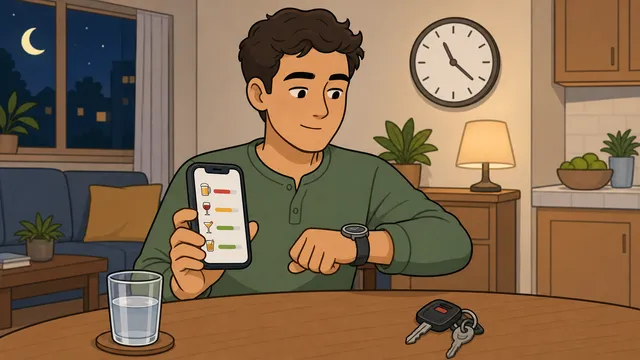
Sobriety Calculator instructional illustration

Sobriety Calculator

Calculate days sober, clean time, calendar years and months, target dates for sobriety milestones, and optional money, drink.

Last updated

Sobriety calculator for days sober, clean time, and milestones Enter a sobriety date or last-use date to calculate completed sober days, months, years, the next recovery milestone, and optional estimates for money, drinks, and calories avoided.

Date meaning

Quick examples

Optional habit context

Add previous weekly spending and drinks only if you want rough savings and alcohol-free totals beside the sobriety counter.

Enter your start date Choose the date you began your sober journey to see your progress.
← All Alcohol calculators

Health — Medical

Sobriety calculator guide: count days sober, clean time, milestones, and optional savings

Tracking sober time is one of the most widely used tools in recovery communities. This page also explains the main assumptions behind the sobriety calculator result, highlights the supporting figures shown by the calculator, and helps the reader use the estimate without overstating what a quick online tool can prove.

What this sobriety calculator does

The live tool answers the direct question people usually bring to a days sober calculator: how many completed sober days have passed since my sobriety date? It also shows weeks, months, calendar years, hours, the next milestone, and a milestone table covering common checkpoints such as 24 hours, 30 days, 60 days, 90 days, 6 months, 1 year, and longer anniversaries.

You can choose whether the date entered is the first full sober day or the last drink/use date. That matters because many recovery communities count the first alcohol-free or substance-free day as day one, while some people remember the last-use date more clearly. The calculator makes that assumption visible instead of hiding it inside the result.

Optional habit inputs let the page act as a sobriety counter and a practical progress planner. If you enter previous weekly spending or drinks per week, it estimates money saved, drinks avoided, and calories avoided. Those figures are rough motivation aids, not clinical measurements.

Why milestones matter in recovery

Recovery communities have long used milestone dates - 30 days, 90 days, six months, one year - as structured recognition points. Research on habit formation and self-efficacy supports the idea that milestone acknowledgement increases perceived competence and reinforces the identity shift from "person who drinks" to "person in recovery." Reaching and marking these points is associated with improved long-term sobriety rates in AA and other programmes.

The strongest use of a sobriety milestone calculator is not to make the number feel like the only thing that matters. It is to give the next week, month, or anniversary a concrete shape. For some people, the count is motivating. For others, especially after a relapse or during stressful periods, day counting can feel heavy. Use the number as one support tool, not as the definition of recovery.

How the clean time calculation works

The calculation compares the selected start point with the current local time in the browser. Completed sober days are counted with whole 24-hour periods, so a result of 30 days means 30 full days have elapsed since the first sober date and time used by the tool.

Calendar years, months, and days are shown separately because they answer a different question from total days. Someone may want to know both "how many days sober am I?" and "how long have I been sober in years, months, and days?" The page shows both so the result works for daily counters, anniversaries, chips, keychains, and clean-time check-ins.

If you select last drink/use date, the calculator moves the effective first sober date to the following calendar day. This mirrors the common recovery convention that the sobriety date is the first full day without alcohol or the tracked substance.

Completed sober days = floor((current time - first sober date/time) / 24 hours)

Counts whole completed 24-hour periods from the first sober date and optional start time.

Estimated money saved = previous weekly spending x completed sober days / 7

Turns optional spending context into a rough progress estimate.

Estimated drinks avoided = previous drinks per week x completed sober days / 7

Estimates avoided drinks from the user's previous weekly pattern.

What happens to the body over time

Physiological changes begin within hours of the last drink. Liver fat begins reducing within days to weeks. Blood pressure typically improves within a month. At three months, sleep architecture improves significantly as REM rebound normalises. At six months, liver enzyme levels in heavy drinkers often return to normal or near-normal ranges. One year of sobriety is associated with meaningful reductions in cancer risk from alcohol-related sites, as well as improved immune function.

Those timeframes are broad and should not be read as promises for a specific person. Alcohol withdrawal can be medically serious, and longer-term recovery depends on drinking history, dependence, health conditions, medication, nutrition, sleep, mental health, and the support available. A sober date calculator can show elapsed time, but it cannot tell whether detox, treatment, counselling, medication, or emergency care is needed.

How to use the milestone table

The milestone table is designed for quick interpretation. Reached rows show what has already been completed, while upcoming rows show how many days remain. The next milestone card adds a progress bar between the previous and next checkpoint so the result is more actionable than a single total-day number.

The table also shows the target calendar date for each checkpoint. That makes the page useful as a sobriety date calculator and milestone planner: you can see not only that a 30-day, 90-day, 6-month, or 1-year anniversary is coming, but the date it lands on.

Common searches such as sober calculator, clean time calculator, sobriety counter, and sobriety date calculator all point to the same practical need: people want to know where they are now and what is next. The table helps answer both questions without requiring separate date math.

Worked example: 90 days sober

Suppose someone enters a first sober day that was 90 completed days ago. The calculator will show 90 days sober, 12 full weeks, a calendar-month breakdown, and mark the 30-day, 60-day, and 90-day checkpoints as reached. The next visible target becomes 6 months, with the remaining days shown beside it.

If the same person enters previous weekly spending of 75 and 24 drinks per week, the page also estimates roughly how much money has not been spent on alcohol and how many drinks have been avoided. That makes the result useful beyond the anniversary itself because it connects the date count with practical changes.

If you had a relapse or reset

Relapse handling is personal and programme-specific. Some people reset the counter to keep the date literal. Some keep a separate longest streak, annual sober days, or recovery start date. Others decide with a sponsor, counsellor, clinician, or support group how they want to track progress.

The calculator can support any of those choices because it only counts from the date you enter. The more important recovery step is an honest plan for today: reconnecting with support, reviewing triggers, reducing risk, and getting professional help if withdrawal, mental-health risk, or dependence is present.

When professional support matters

If you are stopping alcohol after heavy drinking, do not rely on a web calculator to manage withdrawal. Shaking, sweating, nausea, agitation, insomnia, hallucinations, seizures, confusion, a racing heart, or needing alcohol to feel physically steady can indicate a need for medical support.

In the United States, SAMHSA's treatment locator can help people and families find nearby substance-use and mental-health services. NIAAA also provides an Alcohol Treatment Navigator for evidence-based treatment options. If you are outside the United States, use your local emergency number or health service if symptoms are severe or urgent.

Further reading

What this page does not do

This page does not diagnose alcohol use disorder, substance use disorder, relapse risk, withdrawal severity, or treatment need. It also does not verify abstinence. It is a date calculator, milestone tracker, and optional progress estimator.

The savings and calorie outputs are intentionally approximate. Drink prices, serving sizes, ABV, mixers, and replacement habits all change the real-world impact. Use those fields for motivation and planning, not as an exact financial or nutrition record.

Frequently asked questions

What if I had a relapse? Should I reset the counter?

How to handle relapses is a personal and programme-specific decision. Many recovery communities treat a reset as an honest acknowledgement of reality and a renewed commitment to sobriety. Others use rolling streaks or track "sober time" differently. There is no single right answer - what matters is continued engagement with recovery, not the number itself.

Is this calculator for alcohol only?

This calculator works for any substance or behaviour you are tracking sobriety from. Enter either the first sober day or the last-use date and choose the matching date mode. The support links on this page focus mainly on alcohol because alcohol withdrawal can require medical help.

How many days sober am I?

Enter your sobriety start date and optional start time. The calculator counts completed 24-hour periods from that first sober date, then shows total days, weeks, months, years, hours, and your next milestone.

Should I enter my last drink date or my first sober day?

Use the mode that matches the date you know. If you enter the first full sober day, choose First sober day. If you enter the date of the last drink or use, choose Last drink/use date and the calculator will count from the following day.

Why does my sober day count differ from another app?

Different sobriety counters may count from midnight, from an exact time, from the last-use date, or from the first sober day. This page counts completed 24-hour periods from the effective first sober date and optional start time, so small differences are expected.

What are common sobriety milestones?

Common milestones include 24 hours, 1 week, 30 days, 60 days, 90 days, 6 months, 9 months, 1 year, 18 months, 2 years, 3 years, 5 years, and 10 years. Different groups may use different chips, keychains, or anniversary customs.

Can counting sober days be unhelpful?

Yes, for some people. Counting can be motivating, especially early on, but it can also create shame or pressure after a reset. If the counter feels stressful, use it less often and focus on support, safety, and today's recovery actions.

Does the money saved estimate include all costs of drinking?

No. It only multiplies your previous weekly spending by the time elapsed. It does not include transport, food, replacement purchases, healthcare costs, missed work, or other indirect costs.

Are calories avoided exact?

No. Calories per drink vary by serving size, ABV, mixer, and brand. The calculator uses your entered calories per drink and previous drinks per week to create a rough estimate.

Can this calculator tell me if I am recovered?

No. Recovery is broader than elapsed time. The count can mark progress, but it cannot evaluate cravings, mental health, withdrawal risk, social support, treatment progress, or safety.

When should I get medical help for alcohol withdrawal?

Seek medical help if you have shaking, sweating, nausea, severe anxiety, hallucinations, confusion, seizures, a racing heart, or feel physically unwell when cutting down or stopping. Severe withdrawal can be dangerous and needs professional care.

Can I use this as a clean time calculator for drugs?

Yes for date counting. The calculator can count clean time from any substance or behaviour. It does not provide substance-specific detox, withdrawal, or treatment advice, so use qualified support when medical or mental-health risk is involved.


Also in Alcohol

Related

More from nearby categories

These related calculators come from the same leaf category, nearby sibling categories, or the same top-level topic.