

How to Dress for Wind Chill, Heat Index, and Dew Point
Understand how wind chill, heat index, and dew point affect what the temperature actually feels like — and dress accordingly.
The thermometer is only part of the story
I spent four years working on wind farm installations in the North Sea, off the coast of Aberdeen. On paper, the air temperature on a typical January morning might read minus two Celsius — cold, certainly, but manageable if you dress for it. The problem was that the temperature on paper bore almost no resemblance to what it felt like standing on a turbine platform with a 40-knot wind tearing across the water. My first winter offshore, I showed up with gear rated for the forecast temperature. By lunchtime on day one, I understood that the forecast temperature was nearly irrelevant. What mattered was the effective temperature — what your body actually experiences after wind, humidity, and moisture transport do their work.
This is a lesson most people learn the hard way, whether it’s shivering through a spring hike because the breeze turned a comfortable 8 degrees into a bitter minus-five wind chill, or wilting on a summer afternoon because 32 degrees with 80% humidity felt closer to 42. The raw number your weather app shows you is a starting point, not a verdict. To dress properly — and more importantly, to stay safe — you need to understand the three modifiers that sit between the thermometer reading and how your body actually feels: wind chill, heat index, and dew point.
Wind chill: why moving air steals your heat
Your body maintains its core temperature partly by warming a thin layer of air against your skin. In still conditions, that layer acts as insulation. Wind destroys it. Moving air strips that warm boundary layer away faster than your body can regenerate it, accelerating heat loss dramatically.
The wind chill index quantifies this effect. It tells you the equivalent temperature your skin would experience in calm conditions based on the actual air temperature and wind speed. At minus five Celsius with a 30 km/h wind, the wind chill drops to roughly minus thirteen. That is not a trivial difference — it is the difference between uncomfortable and dangerous, between needing a decent jacket and needing full wind-proof layering with covered extremities.
On the North Sea platforms, we followed strict wind chill protocols. Below a certain threshold, exposed skin could develop frostbite in under ten minutes. We planned our deck work around wind chill forecasts, not air temperature forecasts, because the air temperature alone would have told us it was fine to be outside when it absolutely was not.
Use the Wind Chill Calculator to see what the temperature actually feels like at your current or forecast wind speed. Try entering conditions for your next outdoor activity and see how dramatically wind changes the picture:
Use this wind chill calculator to estimate the winter feels-like temperature from air temperature and wind speed, then compare the result with frostbite timing bands and practical cold-weather planning guidance.
Quick scenarios
School run: 24.8 °F with 20 km/h wind.Dog walk: 35.6 °F with 35 km/h wind.Winter hike: 10.4 °F with 30 km/h wind.Ski lift: -0.4 °F with 45 km/h wind
Wind chill result
-7.8°F
Actual air temperature: 10.4°F. Wind makes it feel 18.2°F colder.
Cold stress builds faster and uncovered skin becomes a real problem over time.
Feels-like drop
18.2°F
How much colder exposed skin experiences versus the thermometer reading.
Frostbite timing
Not in timing band
Conditions are outside the standard quick-onset frostbite bands.
Converted wind speed
30 km/h
18.6 mph for the same wind exposure.
Formula status
In range
The NOAA and Environment Canada wind chill formula applies directly to this combination.
Planning note
The wind is stripping away a large chunk of warmth, so shorten exposed time, protect your face, and avoid standing still at stops or trail junctions.
Validity note
This combination sits inside the formal NOAA and Environment Canada validity range.
| Risk band | Range (°C) | Range (°F) | Exposure window | Practical action |
|---|---|---|---|---|
| Little to no risk | 0 °C and warmer | 32 °F and warmer | No frostbite timing band | Dress for comfort, and treat wet clothing or long exposure as the main concern. |
| Low risk | -9.9 to -0.1 °C | 14.1 to 31.9 °F | Frostbite not usually expected quickly | Use a hat and gloves before a long walk, commute, or wait outdoors. |
| Moderate risk Current | -27.9 to -10 °C | -18.2 to 14 °F | Long exposure can lead to frostbite | Cover exposed skin, reduce stationary time, and use windproof outer layers. |
| High risk | -39.9 to -28 °C | -39.8 to -18.4 °F | 10 to 30 minutes | Plan short trips, cover all exposed skin, and avoid waiting still in the wind. |
| Very high risk | -47.9 to -40 °C | -54.2 to -40 °F | 5 to 10 minutes | Treat outdoor exposure as time-limited and keep an immediate warm shelter option. |
| Severe risk | -54.9 to -48 °C | -66.8 to -54.4 °F | 2 to 5 minutes | Avoid routine outdoor exposure unless it is essential and you can retreat fast. |
| Extreme risk | Colder than -55 °C | Colder than -67 °F | Under 2 minutes | Postpone outdoor exposure where possible and use emergency-level cold precautions. |
The practical takeaway: if wind is in the forecast, your base layer strategy matters far more than your outer layer. A windproof shell over a moisture-wicking base will outperform a thick fleece every time, because the shell preserves that boundary layer of warm air while the base layer manages sweat. Bulk alone does not solve a wind problem.
Heat index: when humidity turns warm into dangerous
Heat works against you through a different mechanism. Your body cools itself by evaporating sweat from the skin surface. When humidity is low, sweat evaporates efficiently and you cool down. When humidity is high, evaporation slows to a crawl, and your internal cooling system starts to fail. The air temperature might read 33 degrees, but at 70% relative humidity, your body experiences conditions equivalent to roughly 41 degrees. That is heat stroke territory.
I have worked on projects in the Niger Delta where the ambient temperature was a seemingly moderate 31 degrees, but the humidity was so dense that every surface dripped with condensation by mid-morning. Crew members who had spent years working in dry 40-degree Middle Eastern heat were the first to struggle, because they had learned to judge danger by the thermometer alone. They did not account for how much harder their bodies had to work when the air was already saturated with moisture.
The Heat Index Calculator combines air temperature and relative humidity to show you what the conditions actually feel like. This is especially critical for planning exercise, outdoor work, or any extended time in the sun:
Result
Feels like
122.6°F
Actual: 95°F
Heat cramps or exhaustion likely; heat stroke possible with prolonged exposure.
Heat index (°C)
50.3 °C
Heat index (°F)
122.6 °F
Temperature (°C)
35 °C
Humidity
70%
Dressing for high heat index conditions means prioritising airflow and moisture management. Loose-fitting, light-coloured clothing in breathable fabrics lets air circulate against your skin and gives sweat the best chance of evaporating. Cotton holds moisture and becomes a damp compress; synthetic wicking fabrics or merino wool move moisture away from the skin where it can actually do its job. And a hat with a brim matters more than most people realise — direct sun on your head and neck dramatically increases your heat load regardless of what the thermometer says.
Dew point: the comfort metric nobody checks
Most people look at temperature and maybe humidity. Almost nobody checks the dew point, which is a shame, because it is arguably the single best indicator of how comfortable the air will feel.
The dew point is the temperature at which air becomes saturated and water vapour begins to condense. When the dew point is below about 10 degrees Celsius, the air feels dry and pleasant. Between 10 and 16 degrees, it is comfortable for most people. Above 16 degrees, the air starts to feel noticeably sticky. Above 20 degrees, it becomes oppressive — the kind of heavy, clinging mugginess that makes everything harder.
Unlike relative humidity, the dew point does not shift with temperature throughout the day. Relative humidity might read 50% at noon and 95% at dawn for the same amount of moisture in the air, because relative humidity is temperature-dependent. The dew point stays constant as long as the actual moisture content does not change, making it a far more reliable indicator of how muggy conditions will feel from morning to evening.
Try the Dew Point Calculator to determine the dew point from your current temperature and humidity readings:
Use this dew point calculator to solve for dew point from air temperature and relative humidity, or reverse it to solve for relative humidity from air temperature and dew point. The result helps you read comfort, mugginess, and condensation risk faster than a static dew point chart because it keeps the moisture number tied to a practical interpretation.
Quick scenarios
Comfortable room: 71.6 °F and 50% RH; surface 59 °F.Sticky summer: 86 °F and 75% RH; surface 71.6 °F.Window fog check: 68 °F with 60.8 °F dew point; surface 59 °F.Cold dry air: 41 °F and 40% RH; surface 35.6 °F
Solve for
Use a window, duct, pipe, wall corner, or drink-glass surface temperature to estimate condensation risk and a safe RH ceiling.
Result
Dew point
62.1 °F
At 77.0 °F and 60.0% RH, the dew point is 62.1 °F.
- Air temperature
- 77.0 °F
- Dew point
- 62.1 °F
- Relative humidity
- 60.0%
- Temp-dew spread
- 8.3 °C
- Comfort band
- Humid
- Moisture margin
- Moderate drying margin
- Surface temperature
- 60.8 °F
- Surface-dew margin
- -0.7 °C
- Safe RH ceiling
- 57.4%
What this usually feels like
This is the “getting sticky” band where rooms start to feel muggy and the air loses drying margin.
The moisture load is meaningful, but there is still some buffer before the air reaches saturation at the current temperature.
Planning note
Watch indoor surfaces
Use this range for planning checks: if you cool the room or a surface by several degrees, relative humidity can climb quickly and comfort can drop.
Surface check
Condensation likely
The selected surface is at or below the dew point, so water can form on glass, metal, ducts, or other cool materials. Keep relative humidity at or below about 57.4% if that surface temperature is the limiting cold spot.
Comfort guide
Use the dew point band, not just the humidity percentage
This quick table mirrors the competitor gap around dew point comfort levels, sticky thresholds, and when condensation becomes more plausible indoors.
| Band | Dew point (°C) | Dew point (°F) | How it feels | What to watch |
|---|---|---|---|---|
| Dry | Below 10 °C | Below 50 °F | Air in this band usually feels dry to comfortable, and sweat can evaporate easily. | Condensation is usually low unless a surface is much colder than the surrounding air. |
| Comfortable | 10 to 15.9 °C | 50 to 60.7 °F | Moisture is noticeable but still comfortable for many indoor spaces and routine outdoor use. | Normal ventilation is often enough unless windows, ducts, or slab surfaces run cold. |
| Slightly humid | 16 to 17.9 °C | 60.8 to 64.3 °F | This is the “getting sticky” band where rooms start to feel muggy and the air loses drying margin. | Start watching windows, chilled drinks, and poorly insulated ducts for early condensation. |
| Humid | 18 to 20.9 °C | 64.4 to 69.6 °F | The air now feels properly humid, and many people will describe the room or weather as muggy. | Ventilation, air conditioning, or dehumidification often matters more than temperature changes alone. |
| Very humid | 21 to 23.9 °C | 69.8 to 75.1 °F | This band is oppressive for many people, especially once air temperature is also warm. | Expect fast condensation on cold surfaces and reduced comfort without active moisture control. |
| Extremely humid | 24 °C and above | 75.2 °F and above | The air is carrying very heavy moisture, so heat stress and severe stickiness become much more likely. | Treat this as a high-moisture environment that usually needs cooling, dehumidification, or reduced exposure time. |
When the dew point is high — above 18 or 19 degrees — your clothing choices should shift accordingly. Fabrics that breathe become non-negotiable. Cotton denim, heavy canvas, and anything that traps air against the skin will leave you drenched and miserable. Performance fabrics designed for moisture transport earn their price on high dew point days.
When clothing is not enough on its own
This is the part people tend to skip, because everyone likes to believe the right jacket or the right fabric solves the problem. Sometimes it does. Sometimes the correct answer is simply that the conditions are bad enough to shorten your exposure, add breaks, or go indoors.
If wind chill drops far enough, exposed skin can cool dangerously quickly no matter how sensible your layering is. If heat index climbs high enough, airflow and hydration help, but they do not make hard physical effort safe indefinitely. And when dew point is very high, your body can struggle to cool itself even if the actual air temperature looks merely warm rather than alarming.
So use the calculators to plan your clothing, but use common sense to plan your exposure as well. In severe cold, cover fingers, ears, nose, and any other exposed skin, and watch for numbness, waxy skin, or a loss of dexterity. In severe heat, watch for dizziness, headache, nausea, unusual fatigue, confusion, or a sudden drop in sweating. At that point the conversation has moved beyond “what should I wear?” and into “where is the nearest shade, shelter, water, or medical help?” Clothing is part of weather safety. It is not the whole of it.
Putting it all together: a systems approach to getting dressed
Engineers think in systems, and weather is a system with multiple interacting variables. Checking only the temperature is like sizing a pipe based only on flow rate without accounting for pressure and viscosity — you will get the wrong answer.
Before heading out, I run through a quick mental checklist. In cold conditions, I check the wind chill first and plan my layering around wind protection. In warm conditions, I check the heat index and prioritise ventilation and moisture management. In any season, I glance at the dew point to gauge how clammy the air will feel and adjust fabric choices accordingly.
The goal is not to overdress or underdress. It is to match your clothing system to the actual thermal environment your body will encounter, not the single number the forecast gives you. Your comfort, your performance, and in extreme conditions your safety all depend on looking past the thermometer and understanding what the air is truly doing to your body.
Calculators used in this article
Science / Physics
Wind Chill Calculator
Estimate wind chill, winter feels-like temperature, and frostbite timing from air temperature and wind speed using the NOAA and Environment Canada formula.
Science / Physics
Heat Index Calculator
Estimate apparent temperature from air temperature and relative humidity using the NWS Rothfusz heat index formula.
Science / Physics
Dew Point Calculator
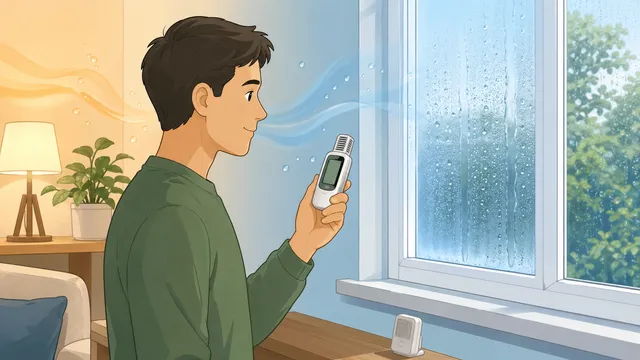
Calculate dew point from temperature and humidity, reverse-solve RH, then check comfort bands, condensation risk, cold-surface margin, and safe RH ceiling.