Which container type should I choose?
A 20ft container is better for heavy, dense goods because it typically has a higher weight-to-volume ratio limit. A 40ft or 40ft high cube is more efficient for light, bulky goods where you will fill the volume before hitting the weight limit. The high cube is useful for tall pallets or items.
Why is the practical estimate lower than the theoretical maximum?
Real loading involves irregular item sizes, fragile goods that cannot be stacked, load-securing bracing, and human error in placement. The 85% factor is a common industry rule of thumb. For purpose-built items loaded by machine, efficiency can reach 95%; for irregular or fragile goods it may be 70% or lower.
Does this account for pallets?
No — the calculator treats items as directly stacked in the container. If goods will be palletised first, use the pallet calculator to find how many items fit per pallet, then calculate how many pallets fit in the container using the pallet footprint and pallet+load height as the item dimensions.
How many boxes fit in a 20ft or 40ft container?
There is no single answer because the result depends on the box dimensions, whether the boxes can be rotated, how efficiently they can be packed, and whether payload weight becomes the limiting factor. A container loading calculator gives the fastest way to estimate the count for your exact carton size.
Does the calculator account for weight as well as volume?
Yes, if you enter both the item weight and a maximum payload. The calculator still works out the geometry-based count first, but then compares that with the payload-based maximum and uses the lower number as the recommended planning cap.
What if the cartons must stay upright?
Then the result can be materially lower than the all-rotations answer. Upright-only handling removes some of the possible orientations that would otherwise increase the fit count, which is why a good container loading calculator should let you compare free rotation, upright-only, and fully fixed loads.
How does box orientation change the result?
A few centimetres in the width or height direction can decide whether an extra column or layer fits. This page tries all six orientations of the box dimensions and keeps the best result, which is more reliable than assuming the box must stay in the same orientation you typed.
Can a load fit inside a container but still be difficult to load through the door?
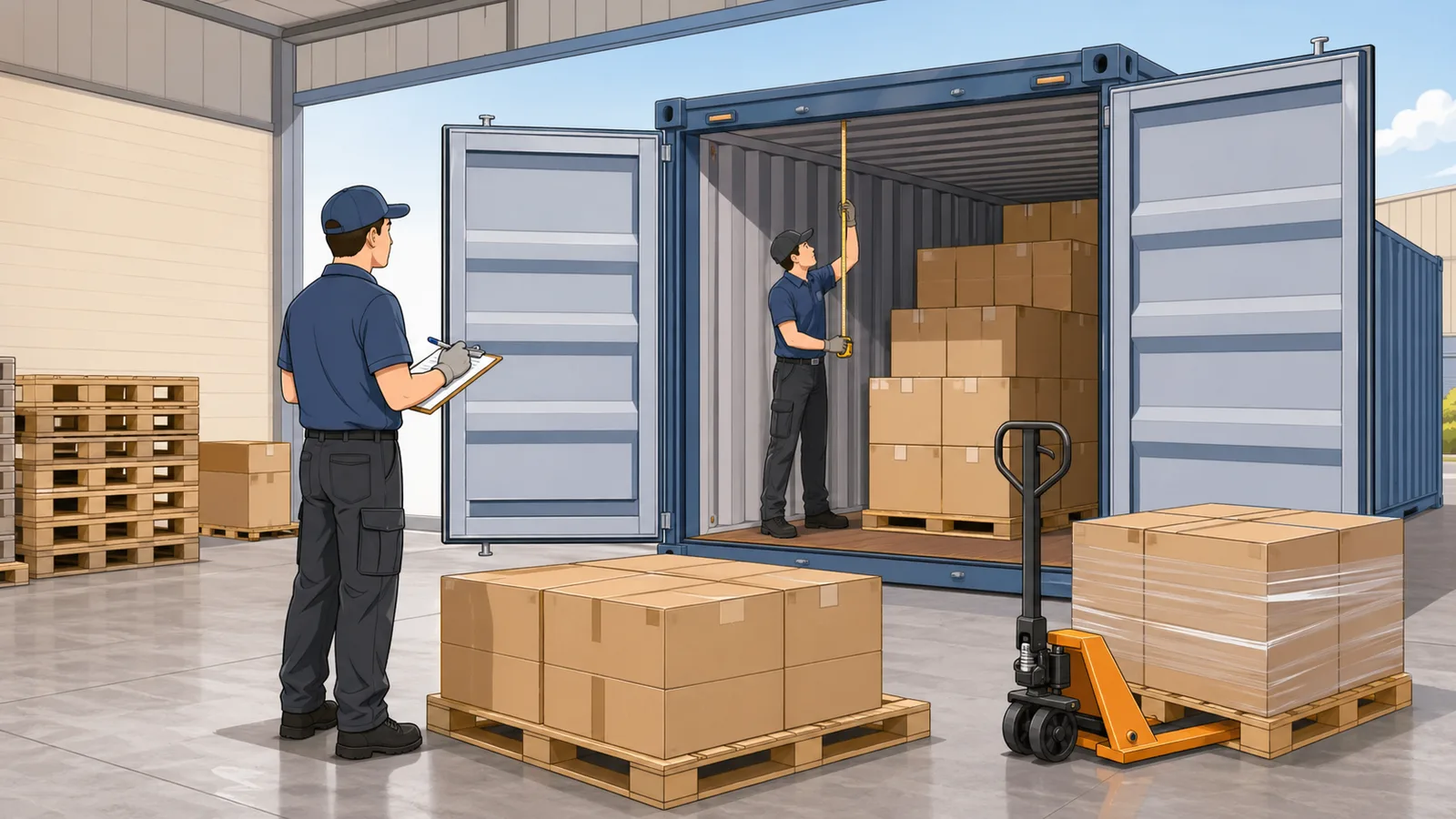
Yes. Internal dimensions describe the usable envelope once the cargo is inside, but the door opening is typically smaller than the full internal width or height. Tall pallet loads, machinery, and awkward cartons can therefore fit inside on paper while still creating a door-clearance problem during loading.
What is the difference between the theoretical and practical container loading result?
The theoretical result assumes perfect packing with no wasted space. The practical result applies an 85% efficiency factor to account for gaps, bracing, handling space, and the fact that real loads rarely fill every last corner. For regular machine-loaded cartons the gap may be smaller; for fragile or awkward goods it may be larger.
How many containers do I need for the full shipment?
Take the recommended usable count per container and divide the total shipment quantity by that number, rounding up to the next whole container. Then check how many units are left for the final container, because a lightly loaded last container can change the most economical equipment choice.
Can I use this for pallets as well as loose cartons?
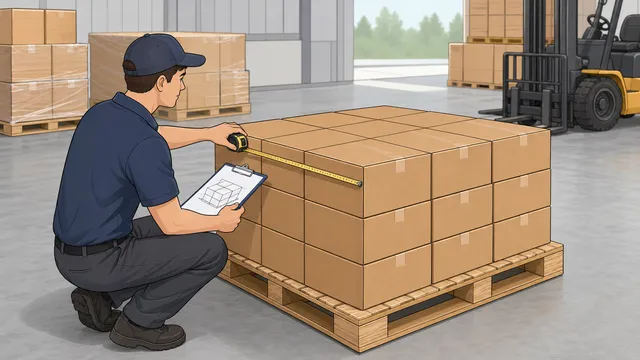
Yes, but only as an estimate. Enter the loaded pallet footprint and loaded height as the item dimensions. The result is useful for comparing pallet counts between 20ft, 40ft, and high-cube containers, but it does not replace a true loading plan that accounts for forklift access and securing rules.
Is this a real loading plan or a quick capacity estimate?
It is a quick planning estimate, not a 3D loading plan. The calculator is useful for quoting, procurement checks, and early feasibility work, but a warehouse, freight forwarder, or specialist loading tool may still produce a lower final count once handling constraints are included.
When does weight become the limiting factor instead of space?
Weight becomes the binding constraint when the payload-based maximum number of units is lower than the space-based practical estimate. Dense goods often hit this point first, especially in 20ft containers where volume is limited but the payload allowance is still substantial.
How should I compare 20ft, 40ft, and 40ft high-cube options?
Run the same item dimensions through all three container types and compare the practical estimate, any weight-limited count, and the commercial cost per usable unit. A 20ft often suits dense freight; a 40ft or high cube often suits lighter, bulkier goods that need more cubic space.
Should I use the carrier's exact payload limit or a typical default?
Use the exact payload limit whenever you have the real container specification for the booked equipment. A typical default is good for early planning, quoting, and comparing scenarios, but live container build, carrier policy, and route rules can shift the final allowed payload.