How much fiber should I eat per day?
There is no single adult number that fits everyone. The reference depends on age and sex, and female life-stage adjustments matter for pregnancy and lactation. That is why this calculator uses the age-based Adequate Intake table first instead of repeating a generic adult target for every user.
Is 14 grams per 1,000 calories the same as the age-based target?
Not always. The 14 g per 1,000 kcal rule is a density check, while the age-based value is the reference table target. For some people they are close; for others, especially on higher calorie intakes, the calorie-density estimate will be higher. A practical interpretation is to use the age-based number as the reference floor and the calorie rule as a planning cross-check when intake is known.
How fast should I increase fiber if my intake is low?
Usually gradually. A common practical approach is to increase by roughly 3 to 5 g every few days while also increasing fluids and spreading fiber across meals. That slower build gives the gut time to adapt and is often much more sustainable than trying to jump from a low intake to a high target overnight.
What if fiber makes my IBS or digestive symptoms worse?
That is a real reason not to rely on a generic target alone. Some digestive conditions respond differently to fiber type, dose, and timing, and some people need a slower build or a different strategy entirely during active symptoms. If fiber worsens pain, bloating, diarrhea, constipation, or other GI symptoms, get individualized guidance rather than assuming the calculator target should be forced.
What foods are the easiest way to raise fiber intake?
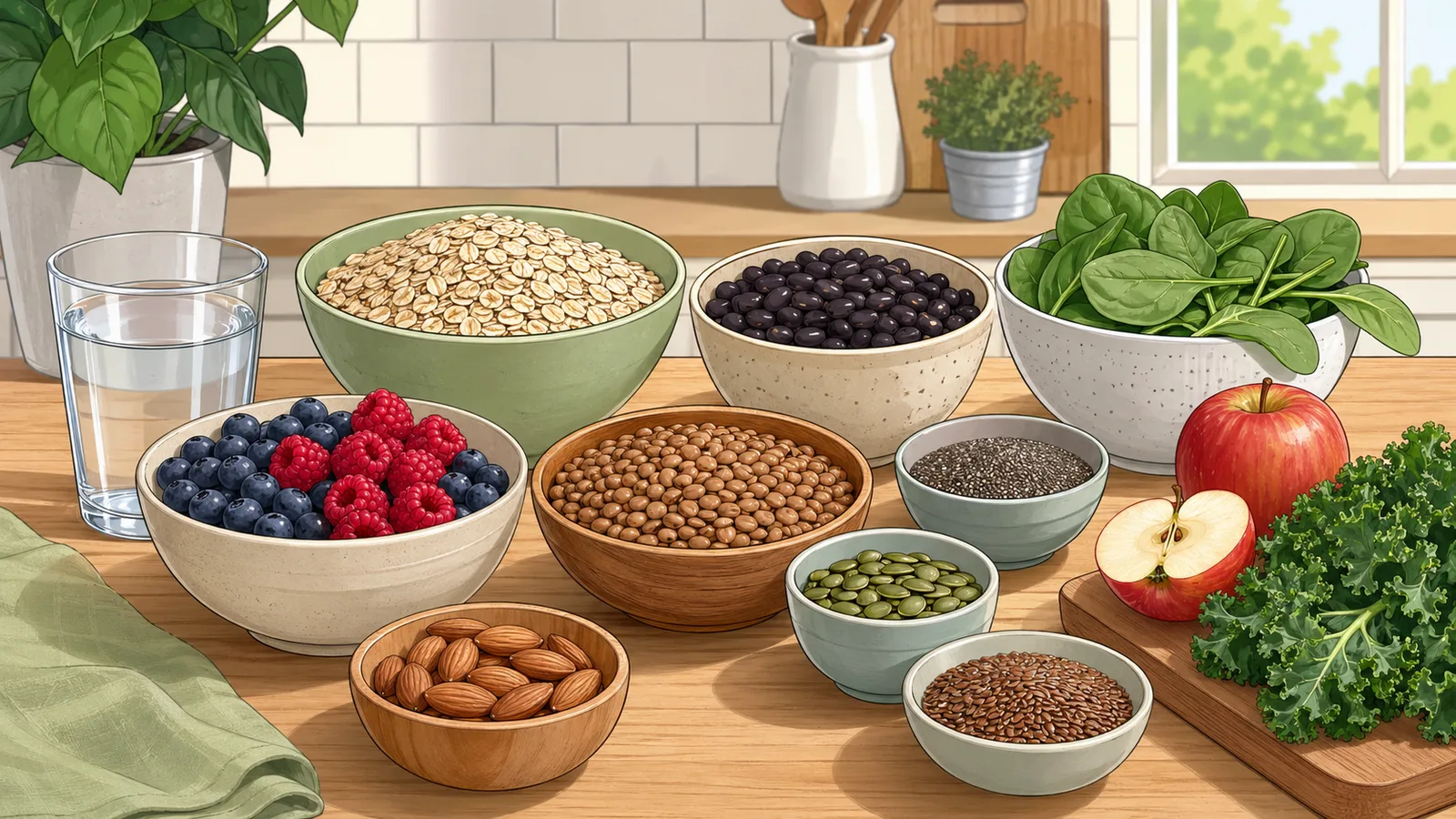
Legumes, berries, pears, oats, bran cereals, whole grains, vegetables, nuts, and seeds are often the easiest way to add meaningful fiber without relying entirely on supplements. The best choice is usually the one you can repeat consistently and tolerate well.
Should I split my fiber target evenly across meals?
Not exactly. The meal-spread rows are planning aids, not strict meal rules. They help show whether the daily target is realistic across breakfast, lunch, dinner, and snacks. It is fine if one meal carries more fiber than another, as long as the overall day is tolerable and repeatable.
Do I need to track soluble and insoluble fiber separately?
Most people do not need to track the two fiber types separately. The calculator shows a soluble and insoluble planning split for context because different foods contribute differently, but whole foods usually contain both. If a digestive condition changes your tolerance, individual guidance matters more than a generic split.
Does drinking more water matter when increasing fiber?
Usually yes. Fiber increases are often tolerated better when fluid intake rises too, especially if the previous diet was both low in fiber and low in fluids. That does not mean more water fixes every digestive symptom, but it is one of the simplest ways to make a gradual increase more comfortable.
Why does the calculator ask for calories if age and sex already set a target?
Age and sex set the population reference target, while calories unlock the separate 14 g per 1,000 kcal density rule. The calculator shows both because someone eating more energy may have a practical planning target that is higher than the age-based floor alone.
Why is the planning target sometimes higher than the reference target?
The planning target uses the higher of the age and life-stage reference and the calorie-density estimate. If the 14 g per 1,000 kcal rule gives a higher number, the calculator treats that as the stricter daily planning target while still showing the original reference value.
Is the 28 g Daily Value on food labels my personal fiber target?
Not necessarily. The FDA Daily Value helps compare packaged foods and %DV claims, but personal fiber planning can differ by age, sex, life stage, and calorie intake. Use the Daily Value as label-reading context and the calculator's planning target for the day.
Is this fiber calculator for adults only?
No. The live table covers child, adolescent, adult, pregnancy, and lactation ranges based on the reference bands in the source data. The value of the calculator is that it does not flatten all of those groups into one generic adult number.