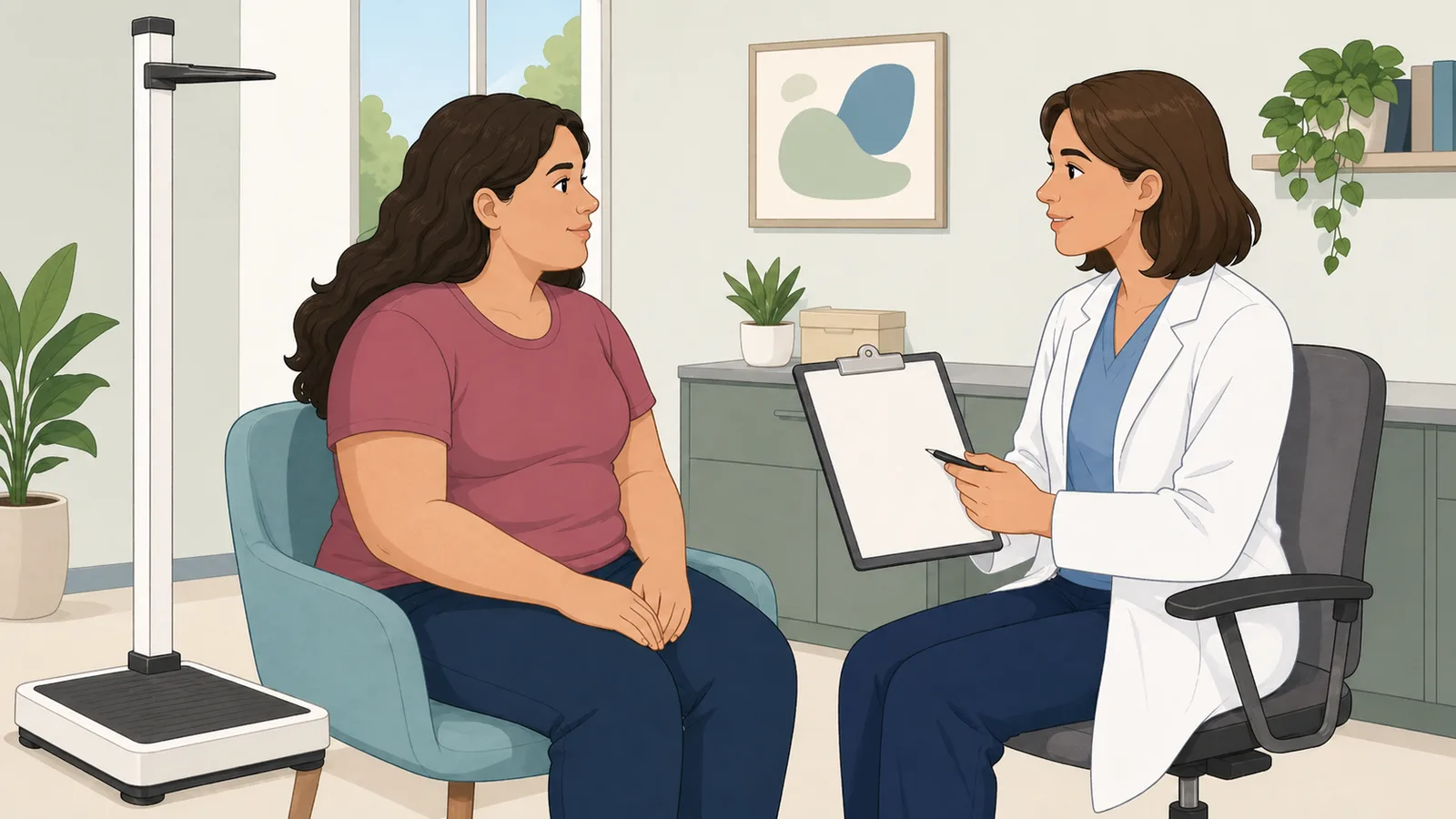
Screen BMI, age context, and weight-related health conditions against the FDA label framework for GLP-1 weight-loss medications such as Wegovy, Zepbound.
Health estimate
Editorial responsibility: Calcipedia editorial team
This page is maintained against the site trust model for its topic and updated when formulas, sources, or guidance materially change.
Use this GLP-1 eligibility calculator to screen BMI against the FDA label thresholds for Wegovy, Zepbound, and Saxenda. It is a first-pass check, not a prescribing decision.
BMI 30+
Likely eligible without a weight-related condition.
BMI 27 to 29.9
Likely eligible only if at least one listed condition is present.
Below BMI 27
Usually below the obesity-label screening line.
How the screen works This calculator compares your BMI with the two FDA label thresholds used for chronic weight-management GLP-1 medicines. It does not decide insurance approval, contraindications, or whether a clinician will prescribe the medication.
BMI 31.14 meets the BMI 30 screening line.
31.14
BMI
Class I obesity
BMI band
86.7 kg
BMI 30 line
78.03 kg
BMI 27 line
Likely eligible — BMI ≥ 30 Based on FDA label criteria, you may fit the chronic weight-management screening rule for a GLP-1 medicine. A prescribing clinician still decides whether treatment is appropriate after reviewing your history, side effects, contraindications, and access rules.
Selected conditions
No weight-related condition selected. BMI alone is enough because your BMI is at or above 30.
FDA weight-management medicines that fit this screen
Wegovy (semaglutide 2.4 mg)
First GLP-1 approved for chronic weight management in non-diabetic adults (2021).
Zepbound (tirzepatide 5–15 mg)
Dual GIP/GLP-1 receptor agonist; highest mean weight loss in pivotal trials to date (SURMOUNT-1).
Saxenda (liraglutide 3 mg)
First daily injectable GLP-1 approved for weight management (2014); now largely superseded by weekly injections.
Clinician-review checklist
No extra review flags selected. Still confirm contraindications, pregnancy status, medication interactions, and insurance rules with the prescribing clinician.
How to read the thresholds
BMI 30 line
At your height, the BMI 30 threshold is 86.7 kg. This is the main screening line for GLP-1 weight-management medicines.
BMI 27 line
At your height, the BMI 27 threshold is 78.03 kg. This only matters if you also have a listed weight-related condition.
The calculator also uses BMI as a general weight-status band. Your current band is Class I obesity. That helps explain the screening result, but it is not the same thing as a prescription decision.
This is not medical advice Eligibility is determined by a licensed clinician considering your full medical history. Insurance coverage, contraindications, and prior authorisation requirements also apply.
GLP-1 eligibility calculator: FDA label screening for Wegovy, Zepbound, and Saxenda
Use this GLP-1 eligibility calculator to screen whether your BMI and weight-related health conditions fit the FDA label thresholds for Wegovy, Zepbound, or Saxenda.
What this GLP-1 eligibility calculator screens
This GLP-1 eligibility calculator uses a first-pass FDA label screen for chronic weight-management medicines: BMI 30 kg/m² or higher on its own, or BMI 27 kg/m² or higher with at least one listed weight-related condition. That is the same screening logic most searchers mean when they ask who qualifies for GLP-1 injections, but the calculator keeps the label boundary visible instead of implying that every medication in the class is interchangeable.
The page intentionally keeps diabetes-label products such as Ozempic and Mounjaro out of the main obesity-label verdict. Those medicines can still come up in the same conversation, but they are not the same thing as an FDA-labeled weight-management result. That distinction matters because a searcher may want a single GLP-1 eligibility check while a prescriber still needs to sort out label status, dose, contraindications, and insurance.
BMI = weight in kilograms / height in metres squared
This is the standard BMI formula used by the calculator before it checks the FDA screening thresholds.
BMI 30 weight = 30 × height in metres squared
At your height, this shows the body weight that corresponds to the BMI 30 screening line.
BMI 27 weight = 27 × height in metres squared
At your height, this shows the body weight that corresponds to the BMI 27 line used when a weight-related condition is present.
BMI 30 versus BMI 27 with a weight-related condition
The calculator treats the BMI 30 branch as the simplest path to potential eligibility. If a person is at or above that line, the screen can point to Wegovy, Zepbound, or Saxenda as weight-management medicines that fit the label framework, subject to clinician review. If BMI is between 27 and 29.9, the screen only moves into the likely-eligible branch when at least one of the listed conditions is present.
The conditions used here are the common weight-related examples that often appear in label discussions: high blood pressure, type 2 diabetes or prediabetes, dyslipidaemia, obstructive sleep apnoea, and cardiovascular disease. That does not mean every person with one of those diagnoses should be prescribed a GLP-1 medicine. It means the BMI screen no longer blocks the conversation by itself, so a clinician can move on to the rest of the decision.
Worked example: two common screening scenarios
A person who is 170 cm tall and weighs 90 kg has a BMI of about 31.1. On the calculator, that lands above the BMI 30 threshold, so the result is likely eligible on BMI alone even if no weight-related condition is checked. The page then shows the weight-management medicines that fit the screen, along with the reminder that a clinician still needs to check the wider medical picture.
A second person who is 172 cm tall and weighs 80 kg has a BMI of about 27.0. That result only moves into the likely-eligible branch if at least one listed condition is selected, such as hypertension. In that case, the calculator uses the BMI 27 plus comorbidity rule, which is the exact branch many people are trying to understand when they search for a Wegovy eligibility calculator or a Zepbound eligibility calculator.
Insurance, contraindications, and access
Meeting the BMI screen does not guarantee access. Some plans require prior authorisation, step therapy, previous weight-management attempts, or a separate diagnosis pathway before they will pay for treatment. A person can fit the BMI rule and still be blocked by plan policy, programme exclusions, or shortages that have nothing to do with the calculator itself.
A real prescribing decision also has to review contraindications and caution flags such as a history of medullary thyroid carcinoma, MEN2, pancreatitis concerns, pregnancy planning, troublesome gastrointestinal side effects, or another treatment that makes more sense first. This is why the page is positioned as a screening tool rather than a medical decision engine.
Age, review flags, and prior-authorisation preparation
The calculator now separates the BMI screen from the questions that commonly decide whether a GLP-1 appointment can move forward: age group, pregnancy or breastfeeding, thyroid-cancer contraindications, pancreatitis or gallbladder history, diabetes medicines, and insurance or self-pay review. These items do not change the BMI formula, but they can change the clinical conversation and the paperwork a prescriber needs to complete.
For adults, the usual chronic weight-management screen remains BMI 30 or higher, or BMI 27 or higher with at least one weight-related condition. Adolescents need a paediatric obesity specialist and age-specific interpretation, while children under 12 are outside the adult BMI screen used here. That is why a strong GLP-1 eligibility calculator should not stop at a yes/no BMI result; it should also help the user prepare the next questions for clinician review, medication safety, and plan coverage.
Why Ozempic and Mounjaro are handled separately
Ozempic and Mounjaro often appear in the same search session because people are comparing GLP-1 and GIP/GLP-1 medicines by name, dose, or price. But they sit in diabetes-label pathways, not the obesity-label framework this calculator is screening. That is why the page names them in the copy but does not treat them as the main weight-management result.
Keeping that distinction visible avoids a common source of confusion: the same molecule or family label does not guarantee the same approved use. Wegovy and Saxenda are weight-management brands, while Ozempic and Mounjaro are usually part of diabetes conversations first. A reliable GLP-1 eligibility screen should say that clearly instead of flattening the differences.
How to use the result in a clinician conversation
The best use for the calculator is as a short list of questions for your next appointment: does my BMI meet the screen, does a selected condition count in my situation, is there any contraindication that changes the answer, and what would my insurance or clinic require next? That turns a generic search result into a structured conversation.
If the calculator says you are below the line, that does not mean the topic is closed forever. Weight-management plans can still involve lifestyle treatment, a different diagnosis pathway, or a follow-up once the clinical picture changes. The page simply tells you whether the usual FDA label screen is open right now.
Frequently asked questions
Does BMI 27 automatically qualify me for GLP-1 treatment?
No. BMI 27 to 29.9 only moves you into the likely-eligible branch if you also have at least one listed weight-related condition. Even then, the final decision still belongs to a clinician who can review contraindications, prior treatment history, and access rules.
Which conditions count as weight-related comorbidities here?
The calculator uses the common examples shown on the page: high blood pressure, type 2 diabetes or prediabetes, dyslipidaemia, obstructive sleep apnoea, and cardiovascular disease. Those are the typical screening examples, not a promise that every person with one of those diagnoses is automatically a candidate for treatment.
Does this calculator tell me whether insurance will approve treatment?
No. Insurance approval can be stricter than the FDA label screen and may require prior authorisation, previous weight-loss attempts, or a plan-specific pathway. The calculator can tell you whether the BMI screen is open, but it cannot tell you whether a payer will cover the medication.
Are Ozempic and Mounjaro the same as Wegovy and Zepbound?
They are not the same from a label point of view. Ozempic and Mounjaro are primarily diabetes-label products, while Wegovy and Zepbound are the weight-management brands most people mean when they ask about GLP-1 eligibility for obesity treatment.
What if my BMI is below 27?
If BMI is below 27, the calculator usually treats the obesity-label screen as not met. That does not mean you have no treatment options, but it does mean the standard FDA weight-management threshold used on this page is not open yet.
Why does the page mention Saxenda as well as Wegovy and Zepbound?
Saxenda is still part of the FDA-approved chronic weight-management set, so it belongs in the screening result. Including it keeps the page accurate for people comparing the current weight-management brands rather than assuming only the newest weekly injections count.
Can a clinician still prescribe a GLP-1 if I do not meet the BMI screen?
Sometimes, but that becomes a clinical judgment and may involve off-label use, a different diagnosis, or a different treatment plan. The calculator only tells you whether the common obesity-label screening rule is met; it does not set the final treatment decision.
Do I have to be an adult to qualify for GLP-1 weight-loss medication?
Most GLP-1 weight-management eligibility searches are about adult prescribing, where the first-pass screen is BMI 30 or BMI 27 with a weight-related condition. Some adolescent uses exist, but they require paediatric specialist assessment and cannot be reduced to the same adult BMI result. Children under 12 should not use this adult eligibility screen as a prescribing guide.
What should I check before asking for Wegovy, Zepbound, or Saxenda?
Bring your current height and weight, any prior or baseline BMI documentation, a list of weight-related conditions, current medicines, pregnancy or breastfeeding status, and any history of thyroid cancer, MEN2, pancreatitis, gallbladder disease, or severe gastrointestinal symptoms. If insurance coverage matters, also ask what prior authorisation needs to show and whether the plan uses starting BMI, current BMI, diagnosis codes, previous treatment attempts, or a separate obesity-medicine pathway.
Can I still be eligible if my current BMI dropped after earlier GLP-1 treatment?
Continuation rules can differ from initial eligibility rules. A payer or clinician may look at baseline BMI, documented response, ongoing medical need, tolerability, and maintenance-dose plans rather than only today's BMI. This calculator screens the usual initial obesity-label threshold, so people already on treatment should use it as a prompt to ask how their plan handles continuation, not as the final answer.