Skip to content
Calcipedia
Body Metrics Calculator instructional illustration

Body Metrics Calculator

Use this body metrics calculator to compare BMI, BAI, BRI, body fat distribution, waist-to-height ratio, waist-to-hip ratio.

Last updated

Body metrics calculator Compare BMI, BMI limitations for women, BMI target weight, BAI, BRI, waist-to-height ratio, waist-to-hip ratio, body shape context, and body type context from one shared measurement set. The results are screening estimates and descriptive heuristics, not diagnoses.
Quick scenarios

Measurement quality comes first

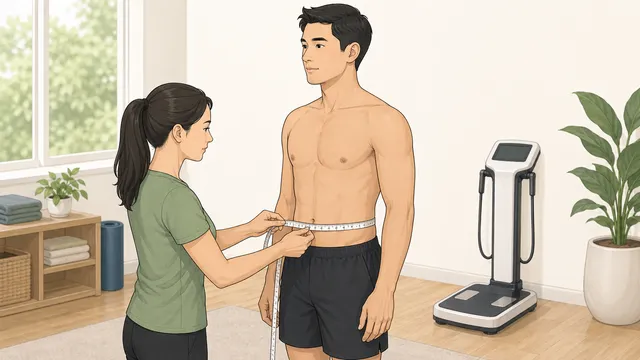
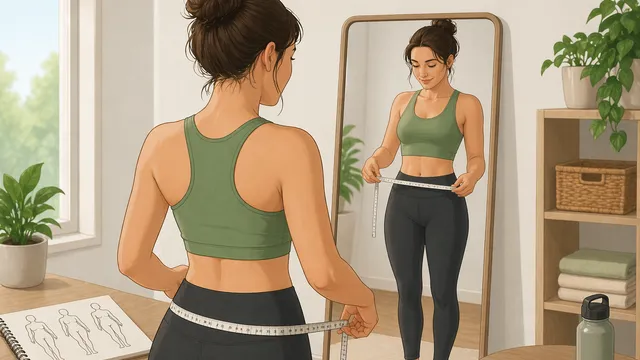
  • Measure waist after a normal exhale, with the tape level and snug but not compressing the abdomen.
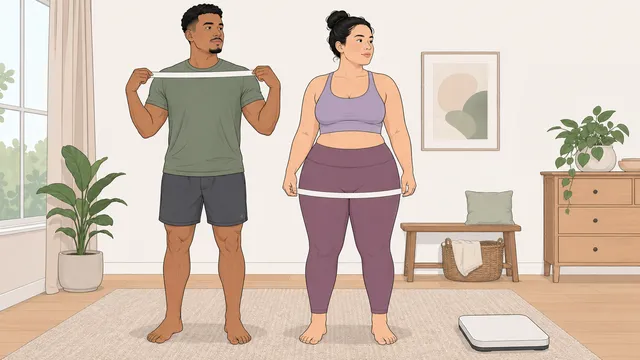
  • Measure hips at the widest repeatable point around the hips and buttocks, again with a level tape.
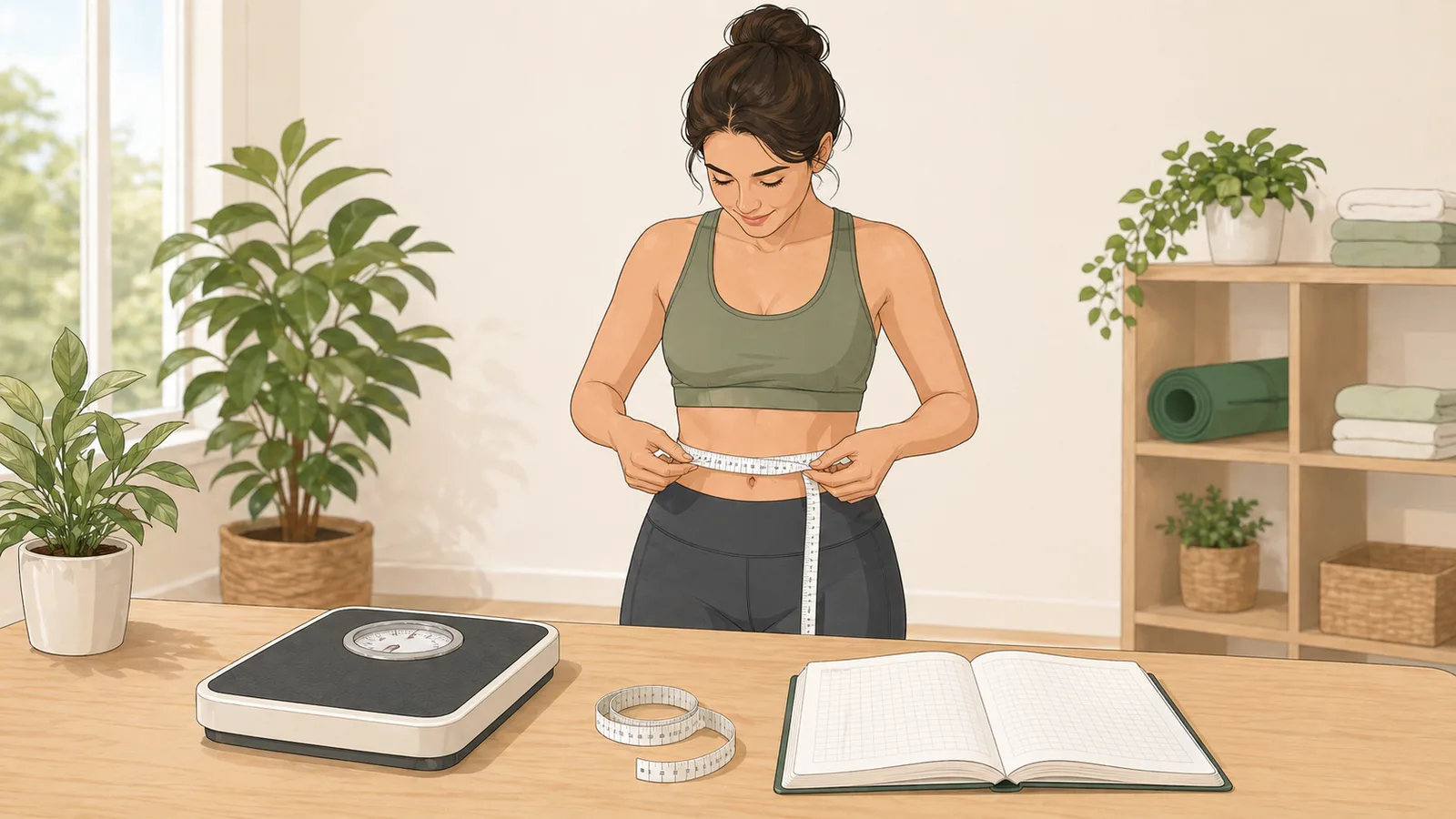
  • Take two readings when the result matters. If the numbers differ noticeably, remeasure before interpreting the body metrics.

Result

26.93 BMI

BMI and waist screens both deserve attention. BMI is 26.93 (Overweight), waist-to-height ratio is 0.5, waist-to-hip ratio is 0.824, BAI is 28.8%, and BRI is 3.36.

Combined screening signal

BMI and waist screens both deserve attention

BMI is above the healthy adult band and at least one waist-based screen is raised, even though BAI stays in its normal range. That disagreement is exactly why a broad body metrics calculator is more useful than any one number alone.

Waist target to keep under half of height

84 cm

The common half-height waist line is 84 cm, and the current waist is already 0 cm below it.

Remeasure first, then verify with a narrower body-composition tool

This reads more like a waist-led risk pattern than a pure weight-only issue

Repeat waist and hip measurements once or twice under the same conditions. If the pattern persists, use the body fat calculator or a clinician-guided assessment to add narrower body-composition context.

This reads more like a waist-led risk pattern than a pure weight-only issue Both waist-to-height ratio and waist-to-hip ratio are elevated, so the broad pattern is more convincing than any one formula in isolation.

26.93

BMI: Overweight

70.3 kg

BMI target: Target BMI 24.9

28.8%

BAI: Normal

3.36

BRI: Low BRI

0.5

Waist-to-height: Increased central adiposity

0.824

Waist-to-hip: Moderate-risk screen

Pear (triangle)

Body shape: Moderate risk

Mesomorph

Body type: Overweight range

ModuleResultHow to read it
BMI26.93 · OverweightAbout 5.7 kg less would return to BMI 24.9 at this height.
BMI target70.3 kg · Target BMI 24.9The upper edge of the healthy BMI range is usually the most practical first BMI target, with the midpoint acting as a deeper second-stage goal.
BAI28.8% · NormalWithin the healthy body adiposity range.
BRI3.36 · Low BRIBelow the lower reference band used in recent mortality research; interpret alongside nutrition, muscle mass, and clinical context.
Waist-to-height0.5 · Increased central adiposityThe half-height target at this height is 84 cm; the entered waist is 0 cm below that line.
Waist-to-hip0.824 · Moderate-risk screenThis is above the usual female lower-risk threshold. It is a screening signal rather than a diagnosis, and it works best alongside BMI, waist-to-height ratio, and clinical context.
Body shapePear (triangle) · Moderate riskLower-body-led proportions: hips are carrying more width than the bust, so the silhouette reads as pear-like.
Body typeMesomorph · Overweight rangeThis result points to a more athletic build, with a stronger tendency toward muscularity and shoulder width than either extreme leanness or fat storage.
Women/BMI limitations This result combines BMI with waist-aware relative fat mass and waist-to-height context, which is more informative for women than BMI alone. Raised central-adiposity risk. Raised waist-to-height risk. Together they add central-fat context that BMI cannot provide on its own. Before menopause, BMI still misses fat distribution, so waist and body-composition context remain useful even without menopause-related abdominal-fat redistribution. Body shape and body type context Body shape: Pear (triangle). Lower-body-led proportions: hips are carrying more width than the bust, so the silhouette reads as pear-like. Body type: Mesomorph. This result points to a more athletic build, with a stronger tendency toward muscularity and shoulder width than either extreme leanness or fat storage. These labels preserve the old body-shape and body-type calculator intents without treating silhouettes or somatotypes as fixed health categories.

BMI target weight and milestones

The upper edge of the healthy BMI range is usually the most practical first BMI target, with the midpoint acting as a deeper second-stage goal.

CheckpointTarget BMITarget weightChange
BMI 24.9 (enter healthy range)24.970.3 kg5.7 kg
BMI 22.5 (healthy midpoint)22.563.5 kg12.5 kg
Non-diagnostic use These modules are screening estimates. BMI does not measure body fat directly, BAI and BRI depend on tape placement, waist ratios do not diagnose cardiometabolic disease, and body shape or body type labels are descriptive heuristics rather than medical categories. Target-weight planning should be checked against medical context when health decisions are involved.
← All Body Metrics calculators

Body Metrics

Body metrics calculator for BMI, BAI, BRI, and waist ratios

This body metrics calculator brings several adult screening measures into one view: BMI, BMI target weight, women/BMI limitation context, BAI or Body Adiposity Index, BRI or Body Roundness Index, waist-to-height ratio, and waist-to-hip ratio. It works as a broad body composition calculator and BMI calculator companion for comparing patterns, not as a diagnostic body-composition test or a way to diagnose health status from one number.

What the body metrics calculator compares

A broad body metrics calculator is useful when a single measure feels too narrow. BMI uses weight and height, BAI uses hip circumference and height, BRI uses waist circumference and height, waist-to-height ratio checks the half-height rule, and waist-to-hip ratio compares central waist size with hip circumference. Each module answers a different screening question.

The calculator deliberately keeps the measurements together so differences are visible. A person can have an elevated BMI with a lower waist ratio, a moderate BMI with a higher waist ratio, or BAI and BRI results that point in different directions because hip and waist measurements capture different aspects of body shape.

The output is most useful for adults who want a compact body measurement dashboard before choosing a more specific calculator. If the goal is a dedicated body fat percentage formula or a drug-dose-related body surface area estimate, the specialist pages linked from the calculator are a better fit.

For body shape calculator or body type calculator intent, the master keeps the health-relevant part: waist, hip, height, BMI, BAI, BRI, and ratio context. Style labels such as apple, pear, hourglass, ectomorph, mesomorph, or endomorph are descriptive shortcuts rather than validated diagnoses, so this page treats them as secondary body-shape context instead of the main result.

BMI = weight (kg) / height (m)^2

The standard adult body mass index formula used for the BMI module.

BAI = hip circumference (cm) / height (m)^1.5 - 18

The Body Adiposity Index formula introduced by Bergman and colleagues.

BRI = 364.2 - 365.5 x sqrt(1 - (waist / 2pi)^2 / (height / 2)^2)

The Body Roundness Index geometry from waist circumference and height.

Waist-to-height ratio = waist / height; waist-to-hip ratio = waist / hip

The two tape-measure ratios used for central-adiposity and body-shape context.

Why BMI needs limitations beside the headline result

BMI remains common because it is fast, reproducible, and easy to compare across adult screening bands. Its weakness is that it treats body weight as one mass. It does not know whether weight comes from fat, muscle, bone, fluid, or pregnancy-related change, and it does not show where fat is carried.

The women/BMI limitation module exists because the same BMI value can hide different body-composition patterns. Menopause transition, age-related muscle change, and abdominal fat redistribution can make waist-aware metrics more informative than BMI alone. The calculator therefore shows BMI with waist and hip measures rather than letting the BMI score dominate the interpretation.

A BMI target weight can still be useful for planning, especially when someone wants to see what BMI 24.9 or another chosen BMI means in kilograms. The target module should not be treated as a prescription. It is a translation of a BMI threshold into body weight at the entered height.

How BAI and BRI add different body composition context

BAI uses hip circumference and height, so it can be useful when a person wants a weight-free adiposity estimate. It is not a direct body fat scan, and validation varies by population, but it gives a different view from BMI because hip circumference is part of the formula.

BRI uses waist circumference and height to estimate body roundness. It is more focused on central shape than BMI or BAI, and it pairs naturally with waist-to-height ratio. If BRI and waist-to-height ratio both look elevated, the shared waist measurement is usually the reason.

The safest way to read BAI and BRI is as screening context. They can help decide whether to open a specialist body fat calculator, repeat tape measurements, or discuss a surprising result with a qualified healthcare professional, but they do not replace clinical body-composition assessment.

Waist-to-height and waist-to-hip ratios

Waist-to-height ratio is simple: divide waist circumference by height. The common half-height interpretation makes it easy to see whether waist circumference is below or above 50% of height. This can reveal central-fat context that BMI does not show.

Waist-to-hip ratio compares waist circumference with hip circumference and uses sex-specific screening bands. It is useful when the question is body-shape distribution rather than overall weight. A higher waist-to-hip ratio can deserve attention even when BMI is not extreme.

Both ratios depend heavily on measurement technique. Tape position, posture, breathing, clothing, and whether the tape is level can move the result. Repeating measurements under similar conditions is more useful than overreacting to one unexpected number.

When BMI and waist metrics disagree

A combined BMI and waist ratio calculator is most useful when the modules do not line up neatly. Someone can have a BMI in the healthy range but still have a waist-to-height ratio at or above the common 0.5 line, which is why body fat distribution matters as much as total weight for many screening questions. That is the practical meaning behind the familiar advice to keep your waist less than half your height.

The reverse disagreement matters too. A person can have an overweight BMI while waist-to-height ratio and waist-to-hip ratio stay calmer, especially when body weight reflects more lean mass or a broader frame. In that situation, the safest next step is usually to recheck the tape measurements, compare the pattern with a body fat percentage calculator, and avoid treating BMI alone as the verdict.

How body shape and body type intent fits into the master page

Some visitors arrive from body shape calculator or body type calculator searches and expect a label. The safer consolidation choice is to separate descriptive shape language from measurable screening signals. Waist-to-hip ratio can describe whether the waist is high or low relative to the hips, waist-to-height ratio checks whether waist size is high relative to height, and BRI translates waist and height into a roundness estimate.

Somatotype-style body type labels are even looser. Ectomorph, mesomorph, and endomorph language may be useful in casual fitness discussion, but those labels do not measure body fat percentage, visceral fat, lean mass, or cardiometabolic risk. If body type intent is retained or redirected into this master page, the article should keep that limitation visible and point users back to measurements rather than identity labels.

That is why the result sheet is built around measurable body metrics instead of a single body shape verdict. The practical question is not whether one label sounds flattering or worrying; it is whether BMI, waist-to-height ratio, waist-to-hip ratio, BAI, BRI, and any specialist body fat result tell a consistent pattern.

When to use the retained specialist calculators

The body metrics master page is intentionally broad. It does not replace formulas that need their own inputs, caveats, and interpretation. Body fat percentage calculators, circumference-based military equations, skinfold protocols, and body surface area formulas all answer narrower questions.

Use the retained specialist pages when their formula matches the decision. The body fat calculator is better for body fat percentage estimates, the Navy body fat calculator is better for the US Navy circumference method, the skinfold body fat calculator is better for caliper readings, and the body surface area calculator is better for BSA formulas.

That separation protects accuracy. A master calculator can compare screening measures well, but specialist calculators should remain available where the method, measurement protocol, or clinical caution is materially different.

Worked example

Suppose an adult enters 168 cm, 76 kg, an 84 cm waist, and 102 cm hips. The BMI is about 26.9, which is in the adult overweight screening band. At the same height, a BMI target of 24.9 corresponds to about 70.3 kg, so the target-weight module shows a gap of roughly 5.7 kg.

The same measurements give a waist-to-height ratio of 0.50 and a waist-to-hip ratio of about 0.824 for the female screening bands. BAI reads about 28.8%, while BRI is about 3.36. Those results do not all say the same thing because the formulas are looking at different parts of the measurement set.

The practical interpretation is not that one number is the verdict. The useful signal is the pattern: BMI is above the standard healthy band, waist-to-height sits on the half-height line, and BAI remains in its sex-specific normal range. That is exactly why a comparison page is more informative than a single metric.

Frequently asked questions

What is the best body metrics calculator to use first?

Use a broad body metrics calculator first when you want context rather than one isolated result. BMI gives a weight-height screen, BAI adds hip-and-height adiposity context, BRI adds waist-and-height roundness context, and the waist ratios help interpret central body shape. After that, choose a specialist page if you need a dedicated body fat formula or body surface area estimate.

Is BMI, BAI, or BRI more accurate?

They measure different things, so accuracy depends on the question. BMI is widely validated for population screening but does not measure fat directly. BAI was designed as a hip-and-height adiposity estimate, while BRI focuses on waist-based body roundness. None is a direct scan, and none should be treated as a diagnosis by itself.

Why does the calculator include BMI limitations for women?

BMI uses the same formula for adult women and men, but body-composition patterns can differ. Menopause transition, age-related muscle change, and central fat distribution can make waist-aware measures more useful than BMI alone. The women/BMI limitation module keeps those caveats visible.

Can I use the BMI target weight as a weight-loss prescription?

No. The BMI target module translates a chosen BMI into body weight at the entered height. That can help with planning, but it is not a clinical prescription and may be inappropriate for pregnancy, eating disorder history, illness, athletic body composition, or other situations that need professional guidance.

Is this also a body shape calculator or body type calculator?

It preserves the useful measurement intent behind those searches, but it does not treat shape or somatotype labels as the main answer. Waist-to-hip ratio, waist-to-height ratio, BRI, BAI, and BMI give more transparent body-metrics context than labels such as apple, pear, hourglass, ectomorph, mesomorph, or endomorph. Use any body shape or body type wording as descriptive shorthand, not as a diagnosis or fixed identity.

Why are body fat and skinfold calculators still separate?

Body fat formulas need their own inputs and caveats. Skinfold methods require caliper sites, age, sex, protocol selection, and measurement technique. Navy-style body fat equations require specific circumference inputs. Keeping those pages separate avoids hiding protocol-specific assumptions inside a broad dashboard.

Does body surface area belong in a body metrics master page?

Body surface area is a body-size metric, but it serves a different purpose from BMI, BAI, BRI, and waist ratios. BSA formulas are often used for medical, pharmacology, and physiology context, so the dedicated body surface area calculator remains the better place for formula selection and caution notes.

How should I measure waist and hip circumference?

Measure waist with a level tape around the abdomen, usually after a normal exhale, without pulling the tape tight. Measure hips around the widest part of the hips and buttocks. Use the same tape position and similar conditions each time if you are tracking changes.

Can athletes use this calculator?

Athletes can use the calculator for context, but BMI can overstate risk when high body weight comes from muscle. Waist-based ratios and specialist body fat methods may add better context, but training history, sport demands, and professional assessment matter more than one online screening score.

Should children or teenagers use these body metrics?

No. This master page is built for adult screening. Children and teenagers need age- and sex-specific growth references, and adult BMI or waist-ratio bands can be misleading during growth and puberty.

What should I do if the body metrics disagree?

Disagreement is common because the formulas measure different things. Check measurement technique first, then look at the pattern. A high waist ratio with a moderate BMI points toward central-adiposity context, while a high BMI with lower waist ratios may need body composition and muscle-mass context.

Can I have a normal BMI but a high waist-to-height ratio?

Yes. That is one of the main reasons to compare BMI with waist-based metrics. A normal BMI does not guarantee that waist size is below the common half-height threshold, so a raised waist-to-height ratio can still flag central-fat distribution that deserves attention.

Which number should I trust first when BMI and waist ratios conflict?

Trust the pattern rather than a single verdict. Recheck waist and hip measurements first, because tape placement errors are common. If the disagreement remains, use the result as a cue to add a narrower body fat estimate or clinical context instead of assuming BMI or one ratio has to be the sole winner.

Guides

Featured in articles

Step-by-step guides that use this calculator to solve real problems.

Also in Body Metrics

Related

More from nearby categories

These related calculators come from the same leaf category, nearby sibling categories, or the same top-level topic.