Skip to content
Calcipedia
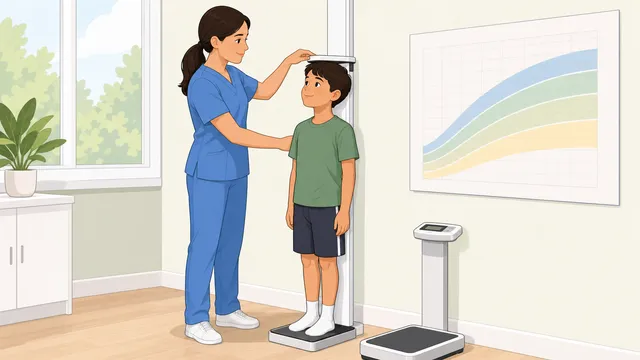
Child Weight Percentile Calculator instructional illustration

Child Weight Percentile Calculator

Look up child weight percentile using CDC weight-for-age chart data, with a percentile sheet for clinical context and a paediatric screening explanation.

Last updated

Child weight percentile calculator Check where a child or teenager sits on the CDC weight-for-age chart, compare the result with key percentile lines, and use the answer as a screening reference rather than a stand-alone diagnosis.

Units

Sex on growth chart

Quick examples

Use percentile as screening context

One point is not a diagnosis: a low or high percentile can still be normal for a child who tracks steadily.

Trend matters most: crossing percentiles over time often matters more than one isolated measurement.

Under age 2 is different: infants are usually assessed on WHO infant standards rather than the CDC 2-to-20-year charts used here.

Result

Enter valid child measurements This tool is for ages 2 years up to, but not including, 20 years. Enter a valid birth date, measurement date, and weight.
← All Body Metrics calculators

Paediatric Growth

Child weight percentile calculator guide: CDC weight-for-age charts and limitations

A child weight percentile calculator compares a child’s weight with the CDC weight-for-age growth-chart reference for children and teenagers aged 2 to 20 years. This child weight percentile calculator can help flag whether the child is lighter or heavier than average for age and sex, but weight-for-age alone is only a screening tool and should not be treated as a stand-alone diagnosis.

How to use the child weight percentile calculator

Start with the child’s date of birth, the measurement date, sex, and a measured weight. The calculator converts that into exact age in months, then compares the weight with CDC weight-for-age reference values so you can see where the child sits on the chart.

This is most useful when you want a fast screening answer to the question child weight percentile calculator users usually mean: is this child lighter or heavier than most children of the same age and sex, and does the number look consistent with the rest of the growth history?

Why weight-for-age needs context

Weight percentile by itself does not account for height, body composition, puberty stage, or frame size. A child can have a high weight-for-age percentile because they are taller than average, while a low weight-for-age percentile can still be normal for a naturally smaller child who is tracking steadily.

That is why weight-for-age is best used together with height-for-age, BMI-for-age, and the child’s longer growth record. A screening result is most useful when it helps parents or clinicians decide whether a fuller review of the pattern is needed.

How the CDC weight-for-age percentile is calculated

This calculator uses the CDC 2000 weight-for-age LMS growth reference for ages 2 years up to, but not including, 20 years. It converts the dates into exact age in months, interpolates the CDC values for that age and sex, and then transforms the entered weight into a z-score and percentile.

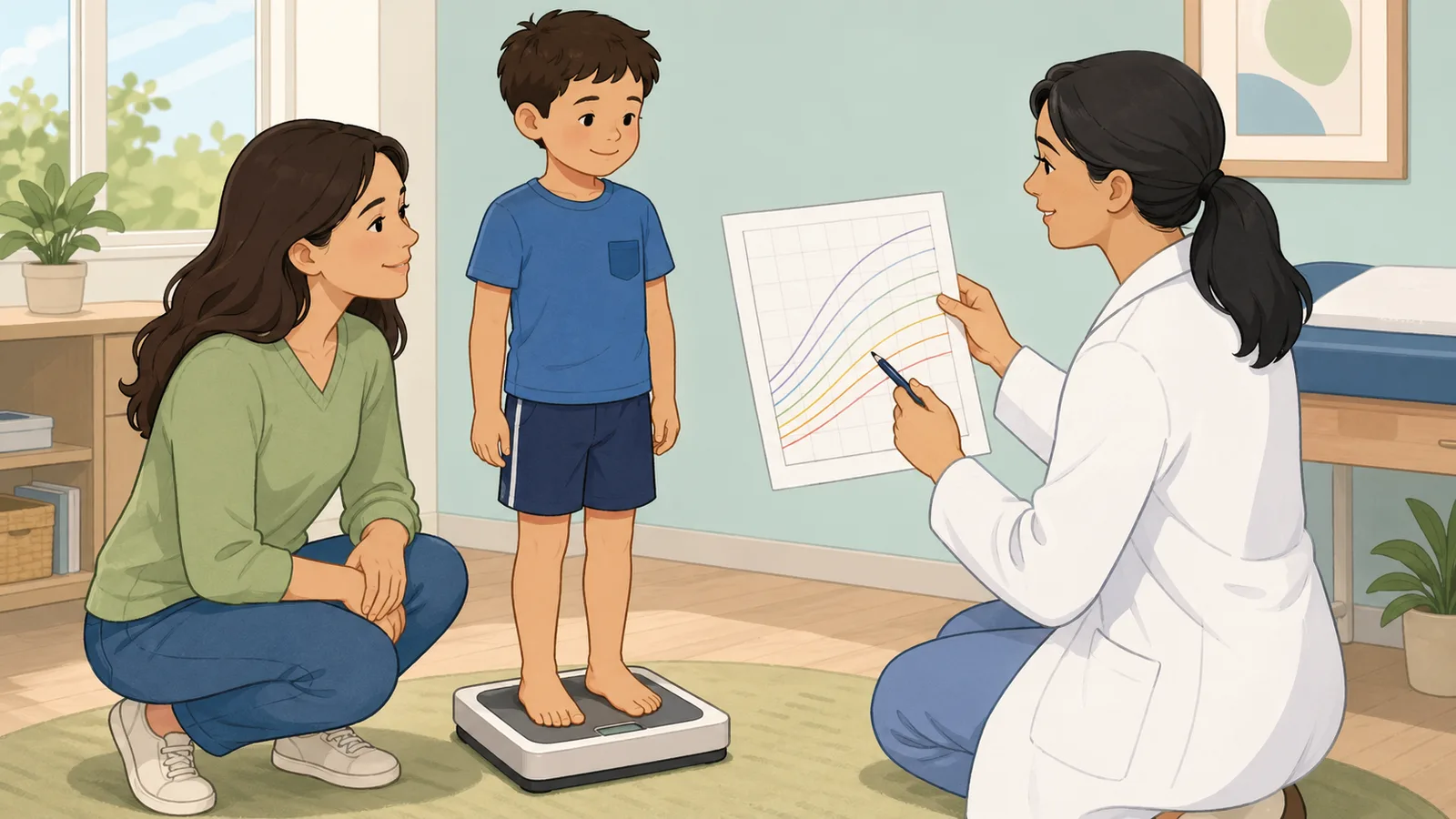
The percentile sheet shows several chart lines so you can see where the entered weight sits relative to common reference percentiles. That table is often easier to use in practice than a single percentile label because it shows the broader weight range represented on the CDC chart.

z = (((measurement / M)^L) - 1) / (L × S)

CDC LMS transformation used to calculate the weight-for-age z-score.

percentile = Φ(z) × 100

The weight-for-age z-score is then converted into percentile rank.

Worked examples

A 10-year-old girl weighing 32 kg on the assessment date sits around the 44th percentile in the CDC weight-for-age reference. That is close to the middle of the chart and would usually be interpreted as an ordinary screening result when height and growth history are also reassuring.

A 6-year-old boy weighing 65 lb sits around the 98th percentile for weight-for-age. That does not automatically mean obesity, because weight-for-age does not account for stature, but it is the kind of result that should be interpreted alongside height, BMI-for-age, and the overall growth pattern.

When a weight percentile should prompt review

Low weight-for-age can be associated with recent illness, feeding difficulty, inadequate intake, absorption problems, or other medical conditions, but it can also reflect a small, healthy body build. High weight-for-age may simply reflect taller stature, yet rapid upward crossing of percentiles can warrant closer assessment.

If there is poor appetite, vomiting, diarrhoea, fatigue, swelling, developmental concern, sleep-disordered breathing, or a clear change in growth trajectory, paediatric interpretation is more important than the percentile number itself.

  • Use weight-for-age as a screening measure, not a diagnosis.
  • Interpret results with height-for-age and BMI-for-age whenever possible.
  • Trend over time matters more than one isolated weighing.
  • Children under 2 years should be assessed on infant growth standards instead of this CDC weight-for-age tool.

Weight percentile versus BMI percentile

Weight percentile compares a child with other children of the same age and sex, but it does not account for height. BMI percentile adds height into the picture, which is why BMI-for-age is usually the better screening tool when you want to know whether body size is proportionate for stature.

That is why a child weight percentile calculator is best thought of as a first-pass screening tool. If the weight result is surprising, the next question is usually how the child’s height, BMI, and growth trend look together rather than whether the percentile number is somehow wrong on its own.

How to weigh a child for a cleaner chart result

Measurement technique can shift a weight-for-age percentile enough to make a borderline result look more reassuring or more concerning than it really is. Use a reliable scale on a level floor, weigh the child in light clothing, and avoid comparing a fully clothed evening weight with a clinic-style morning weight as though the two were identical.

If you are using the result to compare growth over time, try to keep the scale, clothing, and timing reasonably consistent. A CDC child weight percentile calculator can only interpret the number entered; it cannot know whether shoes, heavy clothing, a recent meal, or a different scale changed the measurement.

What the quick examples are meant to show

The calculator includes quick examples for a typical weight-for-age result, a lower screening result, and a higher screening result. They are not targets for a real child to match. They are included so parents and carers can see how the percentile sheet, z-score, chart-line gaps, and paediatric caution messages change when the same tool is used in different scenarios.

This also helps with searches such as weight percentile calculator child users often make after seeing a growth chart at a check-up. The most useful output is not just the percentile label; it is the combination of chart line, median comparison, warning band, and next-step context.

Why chart family matters

Different growth-chart calculators can disagree when they use different references. In US paediatric practice, CDC guidance uses WHO standards from birth to age 2 and CDC 2000 growth charts from age 2 onward. This page deliberately uses the CDC 2-to-20-year weight-for-age reference, while infant tools should use infant growth standards instead.

That distinction matters near the second birthday and when comparing results from different websites. A child growth percentile calculator based on WHO standards, a CDC weight-for-age percentile calculator, and a BMI-for-age calculator are related tools, but they are not interchangeable answers to the same question.

Frequently asked questions

Is weight percentile the same as BMI percentile?

No. Weight percentile compares weight with age and sex only. BMI percentile uses both height and weight, so it is better for screening whether body size is proportionate to stature in children aged 2 years and older.

What is a normal weight percentile for a child?

There is no single perfect percentile that every child must sit on. A result around the middle of the chart is common, but the more important question is whether the child follows a steady pattern over time and whether height, BMI-for-age, appetite, and development all look reassuring.

How do I calculate child weight percentile?

Use the child’s date of birth, measurement date, sex, and weight to determine exact age in months, then compare the weight with the CDC weight-for-age reference for that age and sex. This calculator does that work for you and shows the percentile sheet so you can see the broader chart context.

Can a high weight percentile be normal?

Yes. A child who is tall, broad-framed, or muscular can have a high weight-for-age percentile without an abnormal BMI-for-age. The key is to review the result with height, BMI, and the longer growth trend.

What should I do if my child is below the 5th percentile?

A low percentile does not automatically mean there is a problem, but it is worth reviewing if the child is losing percentiles, not growing as expected, or has feeding, gastrointestinal, developmental, or other health concerns. A paediatric clinician can interpret the full growth pattern.

What age range is this calculator for?

It is designed for ages 2 years up to, but not including, 20 years, which matches the CDC 2000 weight-for-age reference used here.

Should I use this for babies under 2?

No. Infants and younger babies are usually assessed with WHO infant growth standards rather than the CDC 2-to-20-year weight-for-age charts used in this calculator.

Why do some child weight percentile calculators give different answers?

Differences usually come from chart family, age rounding, interpolation method, units, or whether the tool is built for babies, children, or teenagers. This page uses exact dates and the CDC 2-to-20-year weight-for-age LMS reference, so it should not be compared directly with a WHO infant calculator or a BMI-for-age calculator without checking what each tool is measuring.

Does a high weight-for-age percentile mean obesity?

No. Weight-for-age does not include height, so it should not be used by itself to label overweight or obesity. A taller child may naturally weigh more than peers of the same age. Use BMI-for-age and clinical context when the practical question is whether weight is proportionate for height.

How should I weigh my child at home?

Use a reliable scale on a level surface, remove shoes and heavy clothing, and keep the measurement routine as consistent as possible if you are comparing results over time. If a result looks unexpected, recheck the date fields and repeat the weighing before drawing conclusions from a single entry.

What does it mean if my child crosses percentile lines?

Crossing one chart line after a measurement error or short illness may not be meaningful, but a repeated upward or downward shift across major percentile lines is more important than one isolated result. That pattern should be interpreted with height, BMI-for-age, appetite, symptoms, and paediatric growth history.

Guides

Featured in articles

Step-by-step guides that use this calculator to solve real problems.

Also in Body Metrics

Related

More from nearby categories

These related calculators come from the same leaf category, nearby sibling categories, or the same top-level topic.