Estimate body fat percentage with the US Navy circumference method, then compare fat mass, lean mass, BMI, FFMI, waist-to-height ratio, and tape-test context.
Health estimate
Topic review: Elena Vasquez
Fitness Coach & Wellness Writer. Assigned as the health topic reviewer for fitness, energy-expenditure, and body-composition calculators.
US Navy circumference method Estimate body fat percentage from tape measurements, then compare fat mass, lean mass, BMI, FFMI, and waist-to-height ratio so the result is useful beyond a single percentage.
Sex
Units
Tape landmarks
Neck: just below the larynx, tape as close to level as anatomy allows.
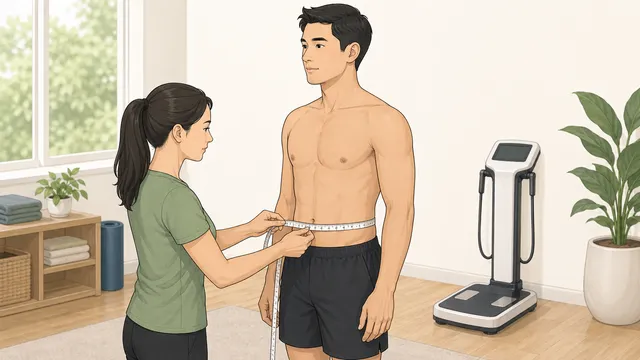
Waist: natural waist for Navy BCA procedure; keep the tape level after a relaxed exhale.
Fitness
16.5%
Body fat
13.2 kg
Fat mass
66.8 kg
Lean mass
21.1
FFMI
Body fat percentage
16.5%
Fat mass
13.2 kg / 29.1 lbs
Lean mass
66.8 kg / 147.3 lbs
Likely estimate band
12.5%–20.5%
Circumference value
18.5 in
Waist-to-height ratio
0.5
BMI / FFMI
25.2 / 21.1
Category
Fitness
How we calculate this US Navy Circumference Method (Hodgdon & Beckett 1984). Measurements are taken at the neck, waist and entered into a logarithmic equation. Results are an estimate and may vary from DEXA or hydrostatic methods.
How much confidence to put in this reading
Averaging two close tape readings helps reduce the normal variation caused by tape angle, posture, breathing, and tension.
The US Navy circumference method estimates body fat percentage from measurements of the neck, waist, and hips — no calipers or lab equipment needed. It was developed by Hodgdon and Beckett in 1984 and remains one of the most widely used field tests for body composition.
How the Navy formula works
The formula uses the natural logarithm of circumference differences to estimate body density, then converts to body fat percentage. For men it needs waist and neck measurements; for women it also needs the hip circumference. The equations differ by sex because fat is distributed differently across the body.
Used when sex is set to female. Waist, hip, neck, and height are converted to inches before applying the equation.
Fat mass = body weight × body fat percentage
The calculator also converts the percentage into fat mass and lean mass so the result is easier to use for trend tracking.
How to measure correctly
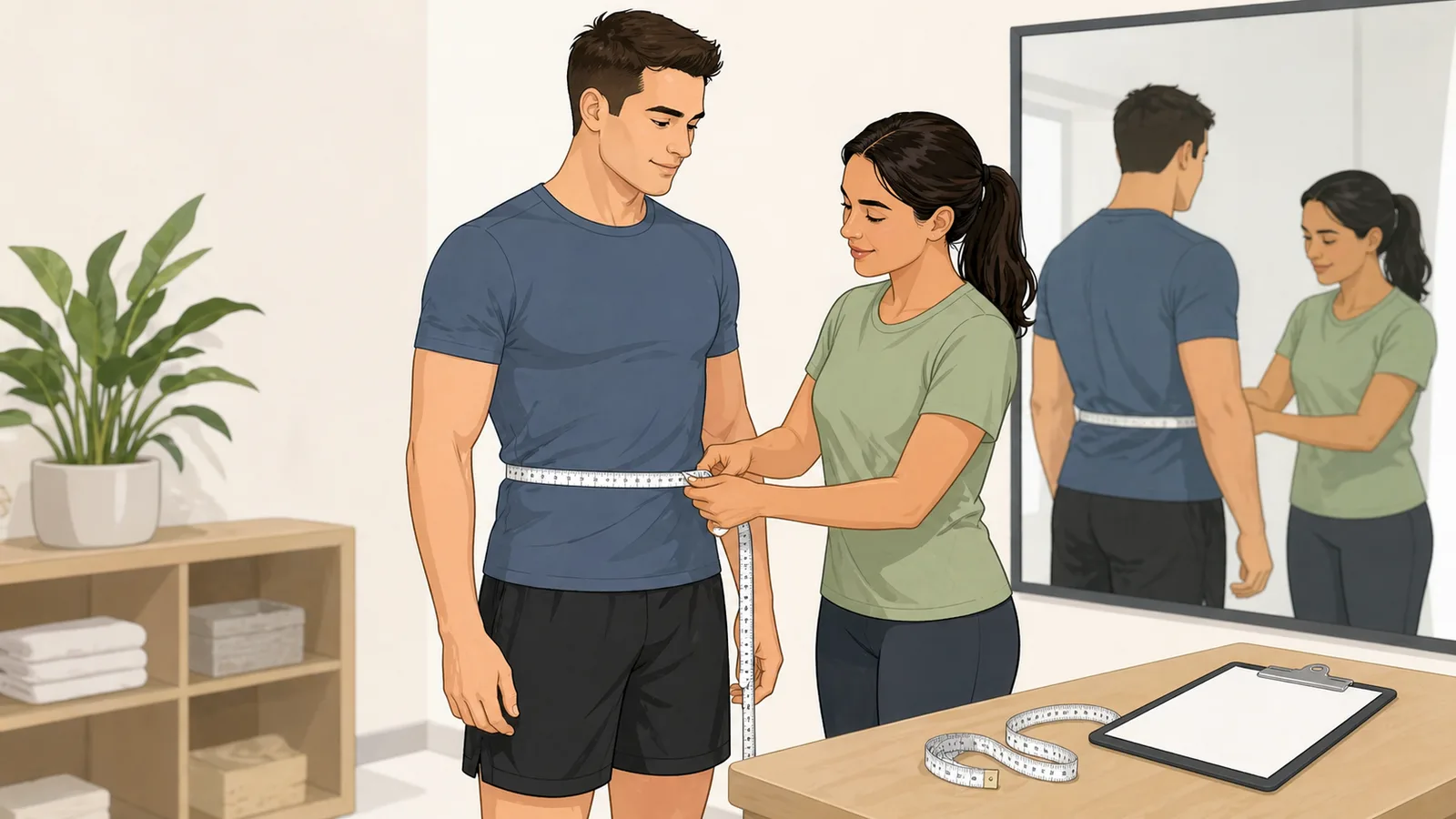
Waist is measured at the navel for men, or at the narrowest point for women. Neck is measured just below the larynx, angled slightly downward. Hips (women only) are measured at the widest point. Take each measurement twice and average them; use a flexible tape pulled snug but not compressing the skin.
Understanding your result
Results are classified using commonly cited ACE-style body fat categories: essential fat, athletic, fitness, average, and obese. These are population-level reference ranges, not clinical diagnoses. The Navy method typically has a margin of error of roughly ±3–4 percentage points compared with more direct body-composition methods.
What the extra outputs add
Many Navy body fat calculators stop at a single percentage. This page also shows fat mass, lean mass, BMI, FFMI, waist-to-height ratio, and the circumference value used by the tape method. Those extra outputs help you understand whether the result is mostly a body-composition signal, a measurement-technique signal, or a broader weight-and-waist signal.
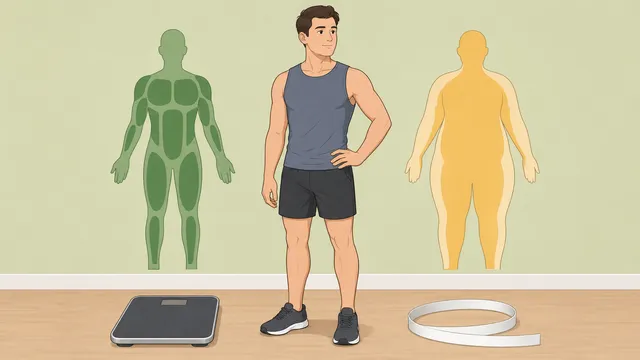
FFMI is especially useful when someone is muscular, because a higher body weight can reflect lean mass rather than fat mass. Waist-to-height ratio gives a separate waist-size context that does not depend on the neck measurement. Neither value replaces the Navy method, but together they make the estimate easier to interpret and compare over time.
Official Navy tape-test details to know
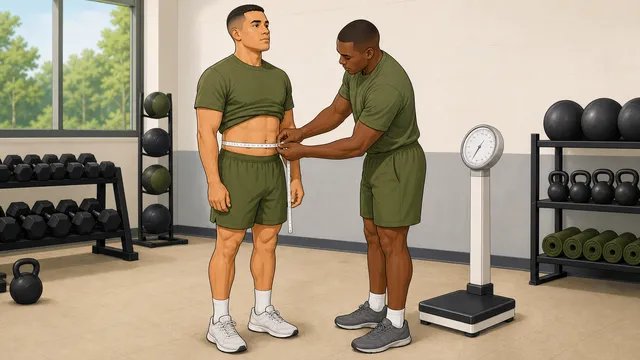
The official Navy Physical Readiness Program is more specific than a casual home tape measurement. Current command-administered procedures can include repeated measurements, prescribed tape placement, relaxed posture, and rounding rules for official use.
This calculator uses your entered measurements directly so it can work as a general US Navy body fat calculator online. If you are preparing for an official Navy BCA, follow the current governing instruction, command procedure, official forms, and Command Fitness Leader instructions rather than treating any website result as the final record.
How to use this for trend tracking
A tape-measure body fat estimate is most useful when repeated consistently. Measure under similar conditions, avoid sucking in or flexing, keep the tape level, and average two close readings if possible. A one-off result can be noisy; a consistent series of readings can still show whether waist, fat mass, and lean mass are moving in the direction you expect.
Do not compare a Navy tape estimate too literally with a DEXA scan, bioelectrical impedance scale, skinfold test, or visual body-fat chart. Those methods use different assumptions and can disagree even on the same day. Pick one method for home trend tracking, then use clinical or professional testing when precision matters.
Limitations
Circumference-based methods work less well for very muscular individuals (they may overestimate fat) and for people with unusual fat distribution. Age, ethnicity, and hydration status can also affect accuracy.
Frequently asked questions
How accurate is the Navy body fat calculator?
It is generally accurate to within ±3–4% compared to DEXA scan in population studies. Individual accuracy varies based on measurement technique and body type.
Where exactly do I measure my waist?
For men, measure around the abdomen at the level of the navel. For women, measure at the narrowest point of the torso, usually an inch or two above the navel.
Do I need special equipment?
No. A flexible measuring tape is all you need. A second person can help ensure the tape is level and not twisted.
Is this the same as the official Navy BCA?
No. The calculator uses the Navy circumference equation as an educational estimate, but an official Navy Body Composition Assessment follows the current Guide 4 procedure, official measurement rules, and command-administered recording process. Use this page to understand the math and trend your own measurements, not as an official PRIMS result.
Why does the calculator show BMI, FFMI, and waist-to-height ratio?
Those outputs add context that a single body fat percentage cannot provide. BMI shows height-adjusted weight, FFMI estimates lean mass relative to height, and waist-to-height ratio gives a separate waist-size signal. Together they help you see whether the Navy estimate is consistent with the rest of your body-composition picture.
Should I round measurements before entering them?
For casual tracking, enter the measurements you actually recorded and repeat the same method next time. For official Navy BCA preparation, follow the current Guide 4 rounding rules and local instructions. The official procedure includes repeated readings and half-inch rounding, so a casual home entry may not exactly match an official tape-test result.
Why is my Navy method result different from another calculator?
Differences usually come from tape landmarks, rounding rules, unit conversion, whether waist is entered at the navel or natural waist, and whether the site uses the equation or a table lookup. This calculator converts measurements to inches internally and uses the Hodgdon and Beckett equations, then shows the circumference value so you can check the inputs.
Can muscular people get misleading Navy body fat estimates?
Yes. The method uses body shape relationships, so a very large neck, narrow waist, or unusually muscular build can shift the estimate. That does not make the method useless, but it means the result should be interpreted alongside FFMI, training history, waist change, and more direct body-composition methods when precision matters.