Skip to content
Calcipedia
Child Height Percentile Calculator instructional illustration

Child Height Percentile Calculator

Use this child height percentile calculator to look up CDC height-for-age percentile for children and teenagers, compare the result with chart lines.

Last updated

Child height percentile calculator Check where a child or teenager sits on the CDC height-for-age chart, compare the result with key percentile lines, and use the answer as a growth-screening reference rather than a diagnosis.

Units

Sex on growth chart

Use percentile as screening context

One point is not a diagnosis: a low or high percentile can still be normal for a child who tracks steadily.

Trend matters most: crossing percentiles over time often matters more than one isolated measurement.

Under age 2 is different: infants are usually assessed on WHO infant standards rather than the CDC 2-to-20-year charts used here.

Result

Enter valid child measurements This tool is for ages 2 years up to, but not including, 20 years. Enter a valid birth date, measurement date, and height.
← All Body Metrics calculators

Paediatric Growth

Child height percentile calculator guide: CDC stature-for-age charts and safe

A child height percentile calculator compares a child’s measured height with the CDC stature-for-age growth-chart reference for children and teenagers aged 2 to 20 years. If you are wondering what percentile your child’s height is, the result shows where that measurement sits relative to children of the same age and sex, but the safest interpretation still looks at growth trend over time rather than one isolated point.

What a height percentile can and cannot tell you

Height percentile is a screening description, not a diagnosis. A child at the 10th percentile is not automatically unhealthy, just as a child at the 90th percentile is not automatically abnormal. There is no single normal height percentile. Many healthy children are naturally shorter or taller because of family pattern, ethnicity, or timing of puberty.

The more important clinical question is whether growth is following a fairly consistent path. A child who has always tracked near the 10th percentile can be perfectly well, while a child who falls sharply from one centile band to another may need review even if the current percentile does not look extreme.

This is why parent-intent searches such as what percentile is my child’s height, girl height percentile calculator, or boy height percentile calculator need more than a single number. The percentile is a chart position, but the growth story comes from repeated measurements, puberty timing, family pattern, nutrition, and symptoms.

How the CDC stature-for-age method works

This calculator uses the CDC 2000 growth-chart LMS method for children and adolescents aged 2 years up to, but not including, 20 years. It converts the entered birth date and measurement date into exact age in months, interpolates the CDC growth-chart values for that age and sex, and then converts the height measurement into a z-score and percentile.

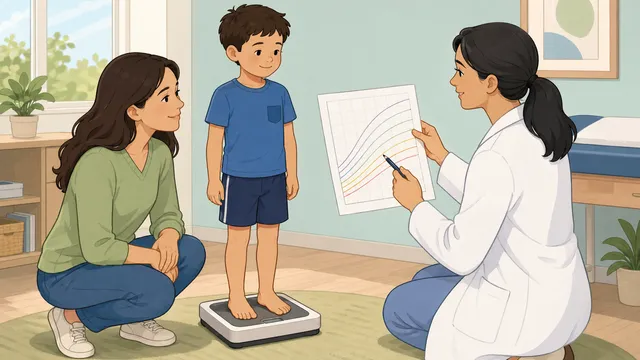
The percentile sheet alongside the main result shows several chart lines so you can compare the entered height with the 3rd, 10th, 25th, 50th, 75th, 90th, and 97th percentile reference values. That makes it easier to answer the practical question most parents ask: is my child near the middle of the chart, or closer to the lower or upper screening bands?

z = (((measurement / M)^L) - 1) / (L × S)

CDC LMS transformation used to convert height into a z-score for the selected age and sex.

percentile = Φ(z) × 100

The z-score is converted to percentile using the standard normal cumulative distribution function.

CDC charts, WHO charts, and why children under 2 are handled differently

For children younger than 2 years, clinicians usually use WHO growth standards and recumbent length rather than the CDC stature-for-age charts used on this page. That is why an under-2 toddler can appear to have a different percentile depending on which chart family is used. The references are built from different source populations and measurement methods.

Once a child reaches age 2 years, US practice typically switches to standing height on the CDC charts. If you are comparing older clinic records with a new height percentile result, make sure you are not mixing infant length standards with child stature-for-age charts as though they were interchangeable.

That distinction is one of the biggest reasons online height percentile tools can seem to disagree. A WHO child height percentile calculator and a CDC child height percentile calculator are not always answering with the same reference family, and children under 2 years should not be interpreted on this page as though the chart family were interchangeable.

Worked examples

A 10-year-old girl measuring 138 cm on the assessment date sits almost exactly on the 50th percentile in the CDC reference. That means her height is close to the chart median for girls of the same age. For a parent searching for a girl height percentile, this is the classic mid-curve result.

By contrast, a 6-year-old boy who measures 40 inches falls below the 1st percentile on the CDC chart. That does not prove disease, but it is the kind of result that should be reviewed alongside previous growth records, family heights, puberty timing, and any symptoms affecting nutrition or general health.

These examples are useful because parents often search for a child height percentile chart by age rather than for the LMS method itself. The practical question is usually whether the child is near the middle of the chart, near a lower screening band, or changing pattern over time.

When a height percentile needs follow-up

Short stature is usually defined clinically by a combination of low percentile, slow growth velocity, and wider context rather than by one number alone. A very tall percentile is often normal too, but rapid upward crossing of centiles or unusually early growth spurts can also justify review.

If there are feeding problems, chronic gastrointestinal symptoms, fatigue, delayed puberty, longstanding illness, or a clear drop away from the child’s previous curve, a paediatric clinician should interpret the result rather than relying on a home calculation alone.

That professional review matters even more if the child’s height percentile is being used to answer a real medical concern, such as poor growth after chronic disease, treatment effects, endocrine symptoms, or parental worry about puberty timing. This calculator is a screening aid, not a diagnosis of short stature, growth hormone deficiency, or constitutional delay.

  • Use this calculator for ages 2 years up to, but not including, 20 years.
  • Measure height carefully with shoes off and a straight standing posture.
  • Trend over months or years matters more than one isolated result.
  • Children under 2 years are usually assessed with infant length charts instead of the CDC stature-for-age chart used here.

How to measure height more accurately at home

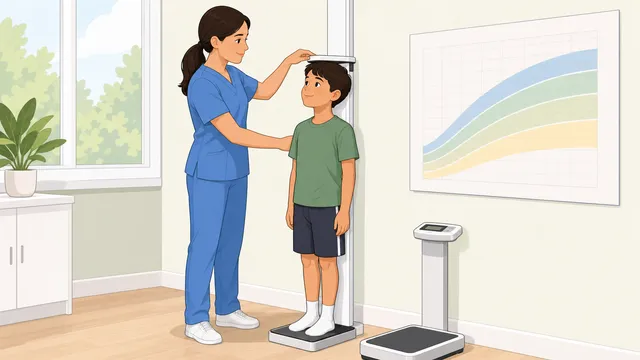
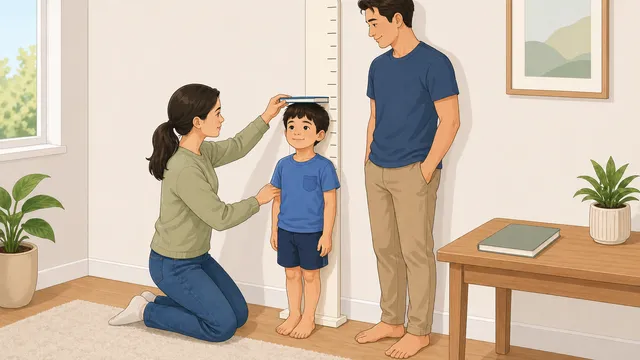
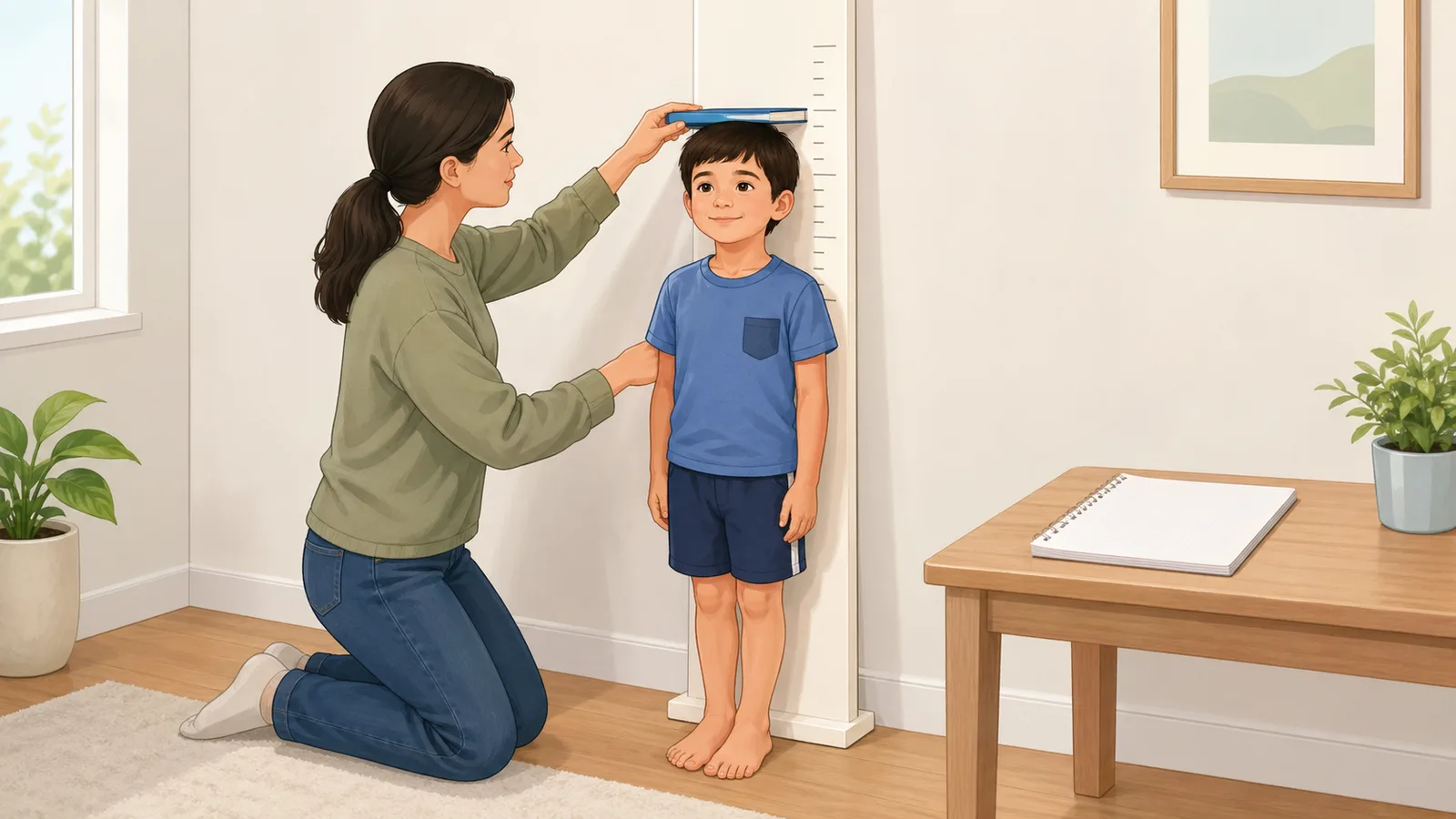
Measurement quality matters because small technique errors can shift percentile enough to make a result look more alarming or more reassuring than it should. Measure with shoes off, heels on the floor, the child standing straight against a wall or stadiometer, and the head positioned level. Repeat the measurement if posture or cooperation was poor.

If the result seems surprising, check the date fields and measure again before drawing conclusions. Parent-intent searches like what is a normal height percentile for a child often assume the chart is the whole answer, but a poorly measured height can mislead before the chart is even involved.

How to use the growth channel snapshot

The growth channel snapshot translates the percentile into more concrete comparison points. Instead of only seeing that a child is near one part of the curve, you can see how far today’s height sits from the nearest lower chart line, how close it is to the 50th percentile, and how much separates it from the next higher line.

That is useful because many parent questions are really comparison questions: is this result close to the middle of the chart, clearly below it, or sitting near a higher screening band? The snapshot answers that without treating the 50th percentile as a target every child should reach.

When family height pattern matters

Percentile alone cannot tell you whether a child is growing as expected for the family. A child from shorter parents may track a lower percentile steadily and still be completely healthy, while a child from taller parents may need closer review if the curve drops away from the established family pattern.

That is why paediatric interpretation looks beyond the chart itself. Family heights, puberty timing, nutrition, chronic symptoms, and growth velocity all help explain whether the percentile is simply descriptive or whether it represents a genuine growth concern.

Why growth trend matters more than one measurement

A single percentile answers where a child sits on the chart today. Growth trend answers whether the child is following a stable path over time. In paediatric growth assessment, the second question is usually more important than the first.

That is why clinicians look for repeated measurements and growth velocity, not just a single centile position. A child can be short and healthy if they keep tracking steadily, and a child with a middling percentile can still need review if the curve has flattened or crossed downward unexpectedly.

Frequently asked questions

What age range does this child height percentile calculator cover?

It covers children and teenagers from age 2 years up to, but not including, 20 years. That matches the CDC 2000 stature-for-age growth-chart reference used here.

What is a normal child height percentile?

There is no single normal percentile. Many healthy children track below the 25th percentile or above the 75th percentile for years. The key question is whether the child is following a fairly consistent curve rather than drifting sharply down or up across percentiles.

Why does the calculator need exact dates instead of just age in years?

Growth-chart percentiles are sensitive to age, especially in younger children. Using exact dates allows the calculator to estimate age in months rather than rounding everyone to a whole year, which improves accuracy.

When should I follow up a very low or very high height percentile?

Follow-up matters more when the percentile is extreme, when height is crossing centile bands rather than tracking steadily, or when there are other concerns such as poor weight gain, chronic illness, delayed puberty, very early puberty, or a strong mismatch with family height pattern.

What percentile is my child's height?

It is the position of your child’s measured height relative to children of the same age and sex on the selected chart. For example, the 50th percentile sits near the middle of the reference, while the 10th percentile means about 10% of children in the reference are shorter and about 90% are taller.

Is there a normal child height percentile?

There is no single normal percentile. Many healthy children are naturally short, average, or tall. What matters more is whether the child is following a reasonably steady growth path over time and whether there are symptoms or pattern changes that justify review.

How is child height percentile calculated by age?

This page converts birth date and measurement date into exact age in months, then applies the CDC LMS stature-for-age method for the selected sex. The entered height becomes a z-score, and that z-score is converted into a percentile rank.

Why do CDC and WHO height percentile results differ?

They use different reference families and, for younger children, different measurement conventions. WHO standards are generally used under age 2 with recumbent length, while this page uses the CDC 2-to-20-year standing-height charts. Comparing the two as though they were identical can make the percentile look inconsistent.

Can this calculator be used for both boys and girls?

Yes. The calculator uses sex-specific CDC chart references, so the same height can map to a different percentile for a boy and a girl of the same age.

How should I measure my child's height at home?

Measure with shoes off, heels on the floor, standing straight against a wall or stadiometer, and the head level. Recheck the measurement if posture was poor or if the result seems unexpectedly low or high, because measurement technique can move the percentile enough to change interpretation.

What does the growth channel snapshot add beyond the percentile label?

It shows how far the current height sits from nearby chart lines such as the nearest lower line, the 50th percentile, and the nearest higher line. That gives a more practical sense of where the child sits on the chart without pretending the middle line is the goal for every child.

Should I worry if my child is far below the 50th percentile?

Not automatically. The 50th percentile is the chart midpoint, not the definition of normal. Many healthy children track well below the middle because of family pattern, ethnicity, or puberty timing. Concern rises more when growth crosses downward over time, symptoms are present, or the result does not fit the child’s longer growth story.

Does one measurement below a chart line prove short stature?

No. One low result can reflect measurement error, posture, temporary illness, or an expected family pattern. Short stature is a clinical question interpreted from repeated growth data and context, not from a single home percentile result.

Guides

Featured in articles

Step-by-step guides that use this calculator to solve real problems.

Also in Body Metrics

Related

More from nearby categories

These related calculators come from the same leaf category, nearby sibling categories, or the same top-level topic.