What age range is this calculator for?
It is designed for ages 2 years up to, but not including, 20 years. That matches the CDC child and teen growth-chart reference set. Children younger than 2 years are usually assessed with weight-for-length rather than BMI-for-age.
Does a high percentile mean a child is unhealthy?
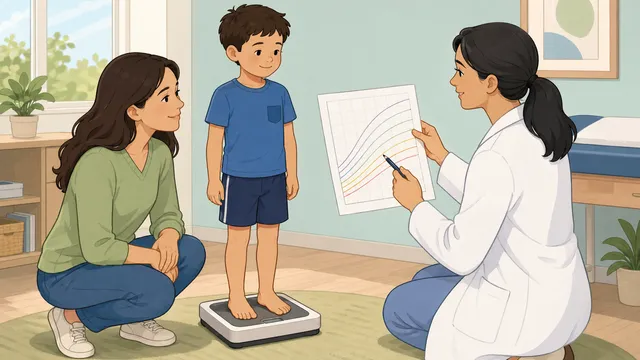
Not by itself. A high BMI-for-age percentile is a screening result that should be interpreted alongside growth trend, puberty stage, family history, blood pressure, diet, activity, and medical history. It tells you the child should be assessed in context, not that a diagnosis has already been made.
Why does the calculator show percent of the 95th percentile?
Percent of the 95th percentile is useful when a BMI is already above the obesity cutoff. It helps describe how far above the threshold the result sits and is part of the CDC approach for higher BMI values, where plain percentile labels become less informative.
Should I use this for sports-active or muscular teenagers?
Use it carefully. BMI still does not distinguish lean mass from fat mass, even in paediatric growth charts. Athletic teenagers can have a higher BMI because of muscle, so the result should be interpreted alongside body build, puberty, and clinical assessment.
What does the 95th percentile mean?
The 95th percentile is the CDC obesity screening cut-off for BMI-for-age. A child at the 95th percentile has a BMI greater than or equal to 95% of peers of the same age and sex in the reference population. It is a screening line, not a diagnosis by itself.
What is severe obesity on the CDC scale?
Severe obesity is commonly defined as 120% of the 95th percentile or, in some contexts, BMI 35 kg/m² and above. This calculator reports the same-height threshold sheet and the percent of the 95th percentile so that higher results are easier to interpret.
Is this the same as adult BMI?
No. Adult BMI uses fixed cut-offs, but child and teen BMI has to be read against age- and sex-specific percentile curves because growth changes the interpretation. The same BMI value can mean very different things in a 7-year-old and a 17-year-old.
How often should BMI-for-age be checked?
For most families, BMI-for-age is most useful when it is checked as part of routine growth monitoring rather than every day or every week. The trend over time matters more than any single reading, and paediatric clinics usually interpret it alongside height and weight changes.
Why can the percentile change when the height and weight stay the same?
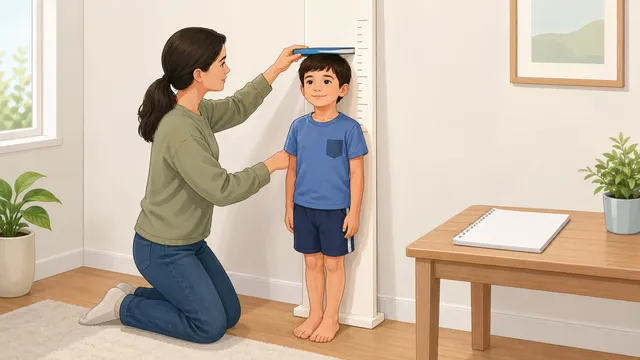
Because the CDC chart compares BMI with children of the same exact age and sex. A child who is measured a few months later moves to a different point on the curve, so the same BMI can map to a different percentile even if the body measurements have not changed much.
What if the result is close to the 85th or 95th percentile?
A near-threshold result is a good reason to check dates and measurements carefully rather than overreacting to one reading. Small changes in height, weight, or chart age can move a borderline result, so the same-height threshold sheet and repeated measurements over time are more useful than a single label.
What is class I, II, or III paediatric obesity?
These are severity descriptions used after BMI-for-age is already at or above the 95th percentile. Class I usually means the BMI is above the 95th percentile but below 120% of it. Class II commonly means 120% of the 95th percentile or BMI 35 kg/m², and class III commonly means 140% of the 95th percentile or BMI 40 kg/m².
Should I worry if the result says 99th percentile?
A 99th-percentile result should not be ignored, but it still needs clinical context. The more useful next questions are how far above the 95th percentile the BMI sits, whether the growth trend has changed, and whether there are symptoms or health concerns that need medical review.
Why might a clinic result differ from my home calculation?
Differences often come from more accurate height measurement, slightly different dates, or different rounding. In children and teenagers, even a small change in height or exact age can shift the percentile enough to make the category look different.
Is this valid for children younger than 2 years?
No. Children younger than 2 years are usually screened with weight-for-length rather than BMI-for-age, so this calculator is intentionally limited to ages 2 years up to, but not including, 20 years.
Can puberty change how BMI-for-age should be interpreted?
Yes. Puberty changes height velocity, body composition, and timing of growth spurts. That does not make the BMI-for-age result useless, but it does mean a paediatric clinician may interpret the same percentile differently depending on puberty stage and growth trend.