Use this FFMI calculator to estimate Fat-Free Mass Index, normalised FFMI, fat-free mass, body-fat source confidence, body-fat sensitivity.
Last updated
FFMI calculator with normalised muscularity context Calculate fat-free mass index from weight, height, and body fat percentage, then compare raw
FFMI, normalised FFMI, body-fat sensitivity, same-lean-mass target weights, and sex-specific
reference bands in one place.
Sex reference
Units
Above average
Fat-free mass index
21.6 normalised FFMI
Use the score as a relative muscularity benchmark and track it with the same body-fat method over time.
21.5
FFMI
21.6
Normalised FFMI
68 kg
Fat-free mass
12 kg
Fat mass
0.1
Height adjustment
25
Reference threshold
FFMI
21.5
Normalised FFMI (height-adjusted)
21.6
Fat-free mass
68 kg / 149.91 lb
Fat mass
12 kg / 26.46 lb
Category
Above average
Normalised FFMI context FFMI = fat-free mass (kg) ÷ height² (m); normalised FFMI = FFMI + 6.1 × (1.8 − height in m). 3.4 FFMI points below the common 25 reference threshold for men. The reference bands are population-level
comparison ranges and do not prove training status, health, or drug use.Body-fat input confidence: General body-fat estimate FFMI is only as reliable as the body-fat percentage entered. Use the sensitivity rows to see how a few percentage points changes the result.
If the body-fat estimate is off
FFMI depends heavily on body fat percentage. These rows show how much the same scale
weight would change if the body-fat input were a few percentage points lower or higher.
Scenario
Body fat
Fat-free mass
Normalised FFMI
-5 percentage points
10%
72 kg
22.8
-2 percentage points
13%
69.6 kg
22.1
Entered body fat
15%
68 kg
21.6
+2 percentage points
17%
66.4 kg
21.1
+5 percentage points
20%
64 kg
20.3
Same fat-free mass at common body-fat levels
These target-weight rows keep the current fat-free mass fixed and solve backward for
what total body weight would look like at common body-fat checkpoints.
Body fat
Target weight
Context
8%
73.9 kg / 163 lb
Very lean checkpoint
10%
75.6 kg / 166.6 lb
Very lean checkpoint
12%
77.3 kg / 170.4 lb
Very lean checkpoint
15%
80 kg / 176.4 lb
Common fitness checkpoint
20%
85 kg / 187.4 lb
Common fitness checkpoint
25%
90.7 kg / 199.9 lb
Higher-body-fat checkpoint
30%
97.1 kg / 214.2 lb
Higher-body-fat checkpoint
Sex-specific FFMI reference bands
Compare the normalised FFMI score against broad reference bands for the selected sex.
Use the same measurement method over time before treating a small category shift as real.
Normalised FFMI
Band
How to read it
< 18
Below average
Lower relative fat-free mass for the entered height.
18-20
Average
Typical recreational range for many adult men.
20-22
Above average
Often consistent with regular resistance training.
22-25
Excellent / athletic
High muscularity; common competitor pages call this advanced or athletic.
25-26
Superior
Near the classic Kouri natural-limit discussion; input accuracy matters a lot here.
> 26
Exceptional / enhanced range
Population-level flag only, not evidence about an individual.
FFMI calculator guide: fat-free mass index, normalised FFMI, and muscularity context
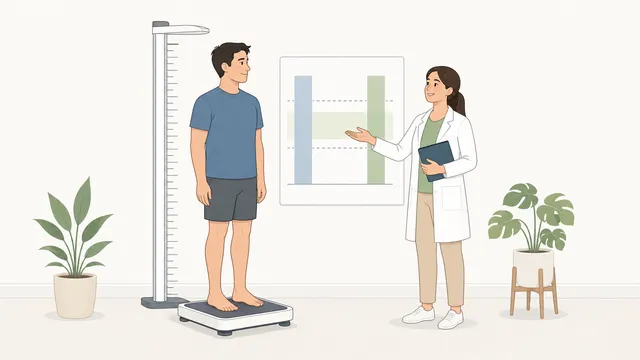
An FFMI calculator estimates Fat-Free Mass Index from body weight, height, and body fat percentage. It is often described as a BMI for lean mass because it compares fat-free mass with height rather than comparing total weight with height. This page calculates raw FFMI, normalised FFMI, fat-free mass, fat mass, body-fat sensitivity rows, and same-lean-mass target weights so the result is more useful than one isolated muscularity score.
What FFMI measures
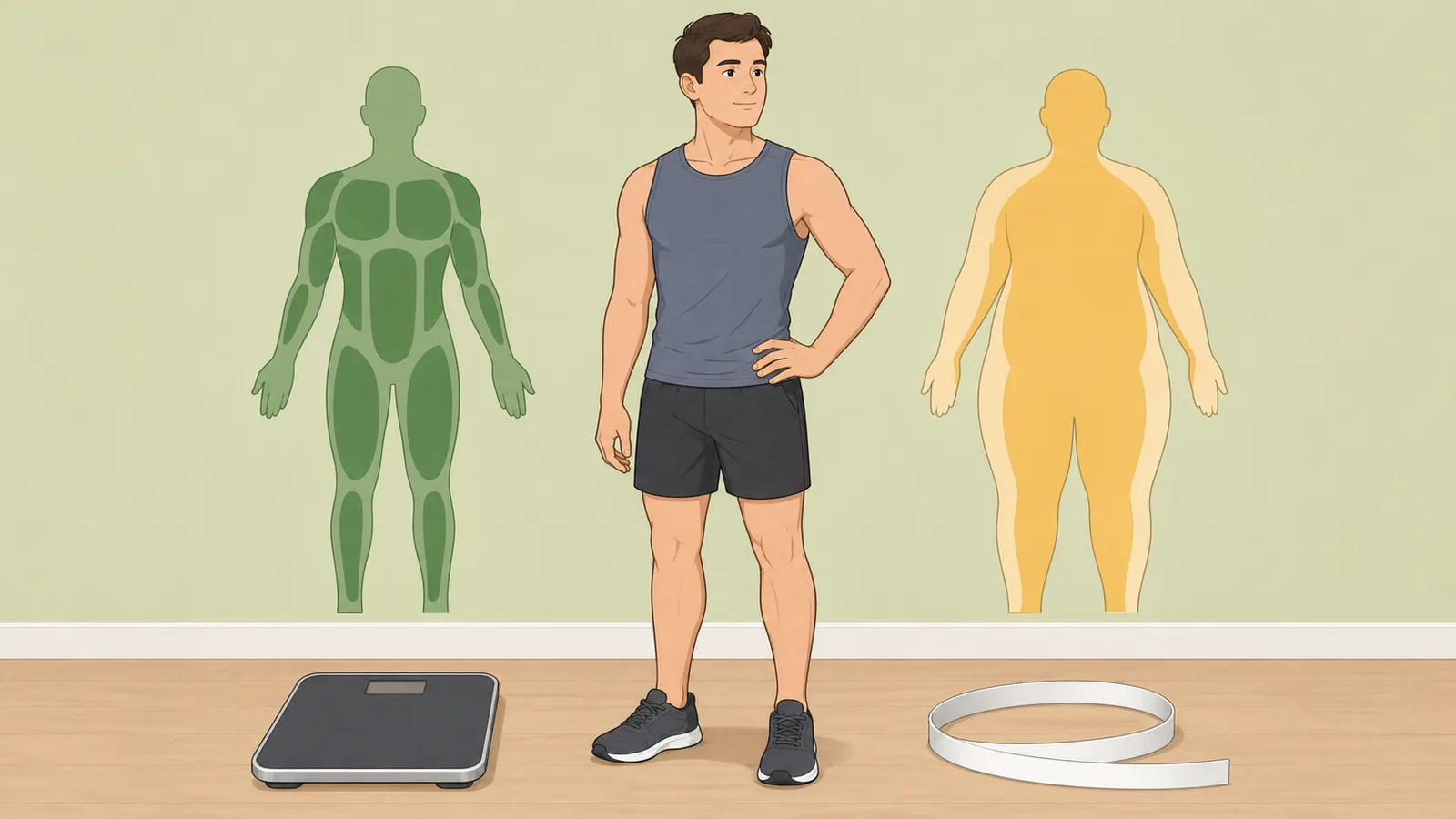
FFMI stands for Fat-Free Mass Index. It estimates how much fat-free mass a person carries relative to height. Fat-free mass includes skeletal muscle, bone, organs, connective tissue, water, and other non-fat tissue. That means FFMI is related to muscularity, but it is not a direct muscle-mass scan.
This is why people often use an FFMI calculator when BMI feels incomplete. BMI uses total body weight, so it can classify a muscular person as heavier without showing whether that weight is mostly fat or mostly lean tissue. FFMI starts by removing estimated fat mass from body weight, then compares the remaining fat-free mass with height.
Core FFMI formulas
The calculator first converts weight and height to metric units when needed. It then estimates fat-free mass from the body fat percentage entered by the user. Raw FFMI divides that fat-free mass by height in metres squared. Normalised FFMI applies a height adjustment so people who are taller or shorter than the reference height can be compared more fairly.
The normalised formula is the number usually discussed in relation to the classic Kouri et al. FFMI research and the commonly cited male reference threshold near 25. Because the formula depends so heavily on body fat percentage, the result should be read with measurement uncertainty in mind.
Fat-free mass = body weight × (1 − body fat % / 100)
This removes estimated fat mass from total body weight.
FFMI = fat-free mass (kg) / height² (m)
This expresses fat-free mass relative to height, similar in structure to BMI but using fat-free mass.
This adjusts the raw score toward a 1.8 m reference height so comparisons across heights are less distorted.
Raw FFMI vs normalised FFMI
Raw FFMI is the direct fat-free-mass-to-height calculation. Normalised FFMI adds a correction for height. Competitor pages often show both because each answers a slightly different question: raw FFMI describes the direct calculation, while normalised FFMI is usually better for comparing people of different heights.
For someone close to 1.8 metres tall, the two numbers will be almost the same. A shorter person receives a small upward adjustment, while a taller person receives a small downward adjustment. The adjustment is not perfect, but it is useful when comparing relative muscularity across different frames.
How to use the body-fat sensitivity rows
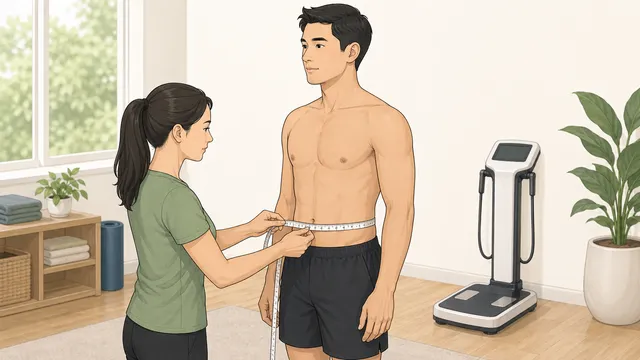
Body fat percentage is usually the weakest input in an FFMI calculation. A DEXA scan, skinfold estimate, bioelectrical impedance scale, Navy-style circumference method, or visual estimate can each produce a different body-fat number. If the body fat input is wrong, the fat-free mass and FFMI result will be wrong too.
The sensitivity rows show what happens if the same body weight is a few percentage points leaner or softer than the headline entry. This is especially important when a result sits near a category boundary or near a commonly cited natural-limit threshold. A small body-fat error can move the normalised FFMI score enough to change the interpretation.
Use the same body-fat method over time when tracking trends.
Treat a single FFMI result as an estimate, not a verdict.
Recheck unusually high results with better body-composition data before drawing conclusions.
Compare trend direction more than small changes of a few tenths.
Choosing the body-fat estimate source
Some competitor FFMI calculators ask only for body fat percentage, while others add an age field even though age is not part of the standard FFMI formula. The more useful input question is where the body-fat percentage came from. A scan or clinician-led assessment, caliper or tape method, bioelectrical impedance scale, and visual estimate should not all carry the same confidence.
The live calculator therefore asks for the body-fat estimate source and uses it as interpretation guidance rather than changing the equation. That keeps the FFMI formula transparent while helping you decide whether the headline score is a strong estimate, a trend-tracking estimate, or a broad planning range.
Use scan-based or clinician-led estimates when precision matters.
Use calipers or tape measurements for trend tracking only when the technique is consistent.
Treat BIA scale readings cautiously when hydration, meals, or recent training changed.
Treat visual estimates as broad ranges, especially near high FFMI thresholds.
Same-lean-mass target weights
Many people using a fat-free mass index calculator are really asking a planning question: what would my scale weight be if I kept the same fat-free mass but changed body fat percentage? The target-weight rows answer that by holding fat-free mass constant and solving backward for common body-fat checkpoints.
These rows are planning context, not a promise. Lean mass can rise during a gaining phase and fall during aggressive dieting. Still, the table helps translate a body-composition score into practical checkpoints, such as what the same fat-free mass would weigh at 10%, 15%, 20%, or 25% body fat.
FFMI reference ranges and natural-limit caveats
The best-known FFMI reference comes from Kouri, Pope, Katz, and Oliva, who compared male athletes who reported anabolic-androgenic steroid use with athletes who did not. Their work is why many online FFMI calculators mention a normalised male threshold around 25.
That threshold is often overinterpreted. It is a population-level reference from a specific research context, not a lie detector and not an individual biological ceiling. Body-fat estimation errors, unusual frame size, sport background, ethnicity, age, and measurement method can all affect the number. This page therefore treats high FFMI as a prompt to review inputs and context rather than as proof of enhancement.
FFMI vs BMI, lean body mass, and body fat percentage
BMI, lean body mass, body fat percentage, and FFMI are related but not interchangeable. BMI compares total weight with height. Body fat percentage estimates the fat share of total weight. Lean body mass or fat-free mass estimates the non-fat part of body weight. FFMI then indexes that fat-free mass against height.
A strong body-composition workflow usually uses these measures together. BMI remains useful as a simple population screening measure, body fat percentage explains fat-versus-lean composition, lean body mass gives the absolute amount of non-fat weight, and FFMI adds a height-adjusted muscularity reference.
Suppose someone weighs 80 kg, is 178 cm tall, and estimates body fat at 15%. Fat-free mass is 80 × (1 − 0.15), or 68 kg. Raw FFMI is 68 divided by 1.78², which is about 21.5. Normalised FFMI is then adjusted slightly because the person is just below 1.8 m tall.
The useful interpretation is not just that the score is above average. The better question is how stable that result is. If the body-fat estimate were actually 17% instead of 15%, fat-free mass and normalised FFMI would both fall. That is why the live calculator shows body-fat sensitivity rows alongside the headline score.
When FFMI is useful and when it is not
FFMI is useful for strength athletes, physique athletes, and fitness users who want a height-adjusted lean-mass benchmark. It can help compare body-composition changes across time, especially when body weight alone is hard to interpret because both fat and lean mass are changing.
It is less useful as a health diagnosis or as a claim about whether a person is natural or enhanced. The equation does not know training age, genetics, medical history, ethnicity, drug exposure, hydration, or whether the body-fat estimate was measured well. Use FFMI as one body-composition reference point, not as a complete assessment.
Frequently asked questions
What is FFMI?
FFMI means Fat-Free Mass Index. It compares fat-free mass with height, usually by dividing fat-free mass in kilograms by height in metres squared. It is often used as a muscularity benchmark because it removes estimated fat mass from total body weight before comparing the result with height.
How do you calculate FFMI?
First estimate fat-free mass: body weight × (1 − body fat percentage / 100). Then divide fat-free mass in kilograms by height in metres squared. This page also calculates normalised FFMI by adding 6.1 × (1.8 − height in metres).
What is normalised FFMI?
Normalised FFMI is a height-adjusted version of FFMI. It adjusts the raw FFMI score toward a 1.8 metre reference height so that shorter and taller people can be compared more fairly.
What is a good FFMI for a natural athlete?
For men, a normalised FFMI around 22 to 25 is often interpreted as excellent or athletic, while values near or above 25 need careful input review. For women, comparable high ranges are usually a few points lower. These are broad reference ranges, not individual limits.
Does FFMI prove steroid use?
No. A high FFMI score does not prove anabolic steroid use. It can be influenced by body-fat measurement error, height or weight errors, frame size, sport background, and unusual genetics. Treat very high results as a reason to review the inputs and context.
Why does body fat percentage matter so much?
FFMI is calculated from fat-free mass, and fat-free mass is derived from body fat percentage. If the body-fat estimate is off by a few percentage points, the calculated fat-free mass and normalised FFMI can change meaningfully.
Is FFMI the same as lean body mass?
No. Lean body mass or fat-free mass is an amount of body weight. FFMI turns that amount into an index by dividing it by height squared. Two people can have different absolute lean mass but similar FFMI if their heights differ.
Is FFMI better than BMI?
FFMI answers a different question. BMI compares total body weight with height and does not separate fat from lean tissue. FFMI starts with estimated fat-free mass, so it is more useful for muscularity context, but it requires a body-fat estimate and is not a general health diagnosis.
Should I use raw FFMI or normalised FFMI?
Use raw FFMI for the direct formula result and normalised FFMI when comparing across different heights or reading common reference bands. The normalised value is usually the one discussed in relation to the classic FFMI threshold near 25 for men.
Can women use an FFMI calculator?
Yes. Women can use the same FFMI formula, but interpretation ranges are generally lower because average fat-free mass and hormonal context differ. This page switches the reference bands when female mode is selected.
What body fat percentage should I enter?
Use the most reliable estimate you have, such as a recent DEXA scan, consistent caliper measurement, or a circumference-based body fat calculator. If the estimate is rough, read the sensitivity rows before relying on the headline FFMI score.
Does age change the FFMI formula?
No. The standard FFMI and normalised FFMI formulas use weight, height, and body fat percentage, not age. Age can still affect how you interpret the result because training history, health status, and expected lean-mass levels change across life stages, but it does not change the arithmetic on this page.
Can FFMI track muscle gain over time?
Yes, if body-fat measurement is consistent. FFMI can help show whether fat-free mass is trending upward relative to height. It is best used alongside training performance, body weight, waist measurements, photos, and recovery markers.