Body fat calculator using circumference measurements Use this body fat percentage calculator to estimate body fat from height, neck, waist, and when needed hip measurements, then split total weight into fat mass and lean mass with same-lean-mass target context.
Field estimate, not a scan
This body fat calculator uses circumference equations similar to the Navy-style field method. It is useful for planning and trend tracking, but it is still an estimate rather than a DXA, Bod Pod, hydrostatic weighing, or clinical body-composition measurement.
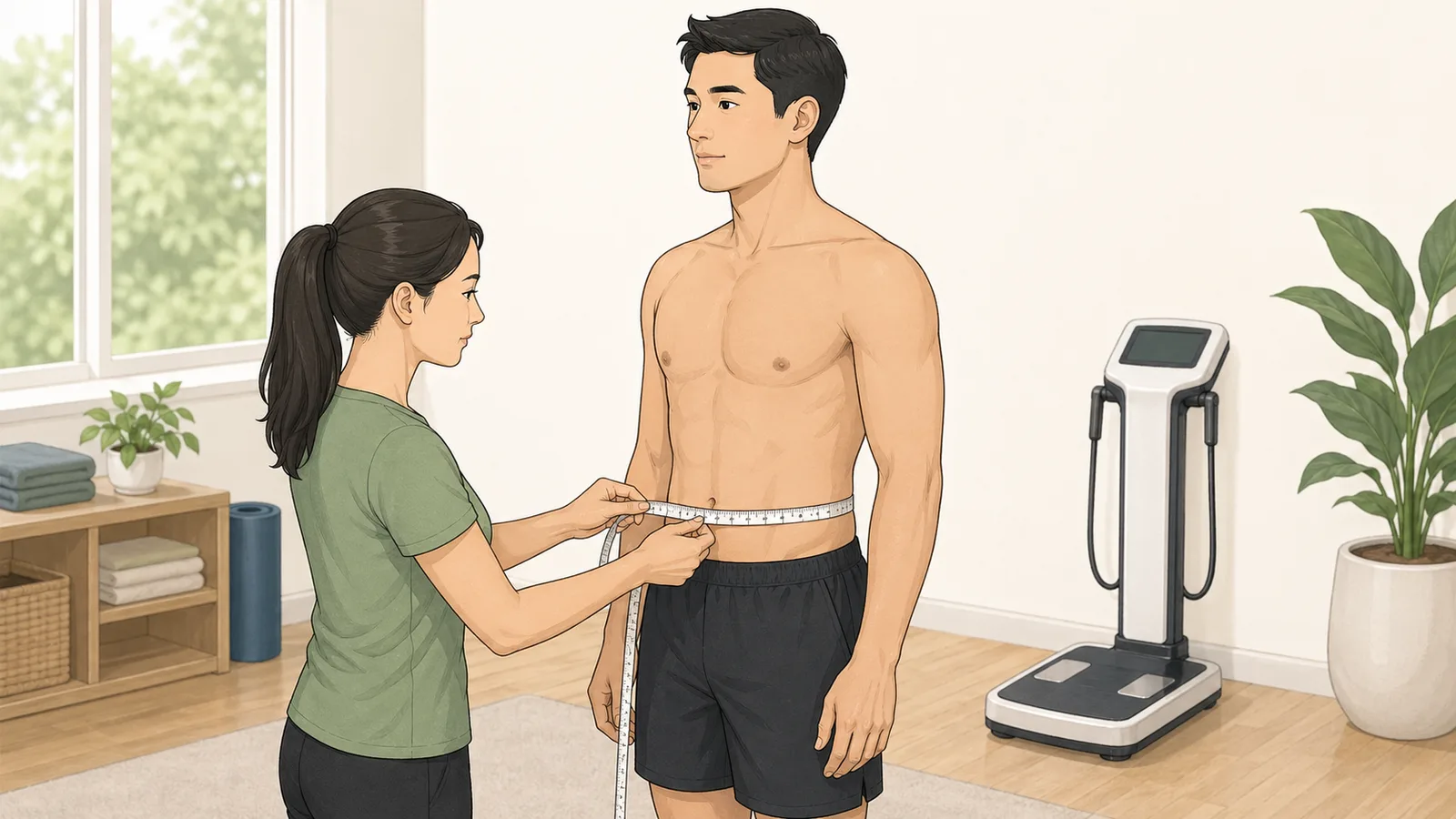
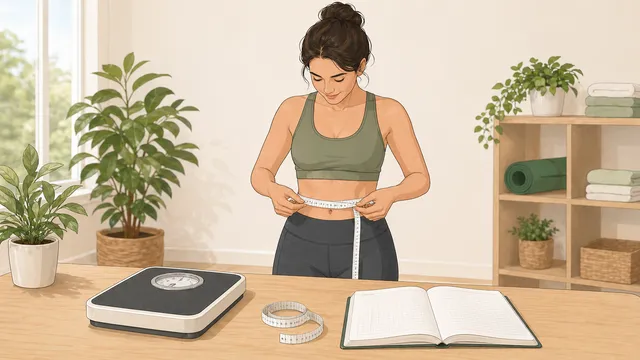
Tape-measure technique
Averaging two close tape readings reduces noise from tape angle, posture, breathing, and tension.
Keep the tape level and snug without compressing soft tissue.
Measure after a relaxed exhale rather than sucking in the stomach.
Repeat the same landmark and method when comparing body fat percentage over time.
Estimated result
16.44%
Body composition band: Fitness range.
16.44%
Body fat percentage
12.82 kg
Fat mass
65.18 kg
Lean mass
Fitness range
Interpretation
0.48
Waist-to-height context
How to read the body fat result Use the percentage for broad body-composition context, then compare the fat-mass and lean-mass split before changing calories or protein targets. One body-fat percentage point equals about 0.78 kg at this body weight, so small tape-measure errors can move the planning numbers.
Same-lean-mass target check
At 15% body fat with the same lean mass, estimated scale weight would be 76.68 kg (-1.32 kg from now).
Target body fat
15%
Estimated target weight
76.68 kg
Scale change if lean mass holds
-1.32 kg
Reference ranges used for quick context
These ranges are population-level orientation points, not clinical cut-offs for every age, sport, or medical context.
Body fat percentage, circumference formulas, and fat mass versus lean mass explained
A body fat calculator estimates body fat percentage from simple body measurements rather than from imaging or lab equipment. In this body fat percentage calculator, body fat is estimated from circumference measurements and then used to split total body weight into fat mass and lean mass, giving a more informative picture than body weight alone.
What body fat percentage is measuring
Body fat percentage describes how much of total body weight is fat tissue rather than lean tissue. That makes it more informative than scale weight by itself, because two people can weigh the same amount and still have very different proportions of fat mass and lean mass. A body fat percentage calculator is therefore often used alongside BMI, lean body mass, and waist-based measurements when someone wants a broader view of body composition.
This calculator uses a circumference method rather than a skinfold, BIA, or DXA measurement. That makes it practical for a free online body fat calculator, because it only requires tape measurements and body weight. The tradeoff is that it remains an estimate rather than a direct measurement, so it works best as a planning and trend-tracking tool rather than a perfect composition verdict.
Core body fat formulas
The live calculator uses circumference-based equations similar to those used in military body composition methods. In male mode it uses height, neck, and waist measurements. In female mode it uses height, neck, waist, and hip measurements. Once body fat percentage is estimated, the calculator converts that percentage into fat mass and lean mass using total body weight.
Fat mass = body weight × (body fat % / 100)
This converts the estimated body fat percentage into the amount of total body weight attributed to fat mass.
Lean mass = body weight − fat mass
Lean mass is the remainder after subtracting estimated fat mass from total body weight.
Body fat % is estimated from logarithmic relationships among height and circumference measurements
The calculator uses circumference equations rather than BMI or skinfold formulas, so the estimate depends on neck, waist, and in female mode hip measurements.
Why body fat estimates can disagree
Different body fat methods do not always agree closely. Circumference methods, skinfold calipers, bioelectrical impedance, and DXA scans each rely on different assumptions and sources of measurement error. That is why a body fat percentage from one method may differ from the result produced by another method on the same day.
Even within circumference methods, the estimate can shift if the tape placement changes or if the measurements are taken inconsistently. That is why this kind of body fat calculator is best used for trend tracking under consistent conditions rather than as a precise diagnostic test for one exact percentage point.
Circumference-based estimates are practical, but they are not direct body-fat measurements.
Small errors in neck, waist, or hip measurement can change the result.
Hydration, posture, and how tightly the tape is pulled can affect circumference inputs.
Trend consistency is usually more useful than treating one reading as a perfect body-fat truth.
How to get better measurements from a body fat percentage calculator
Circumference methods work best when the tape is used the same way each time. Measure at the same time of day, stand upright without sucking in the stomach, keep the tape level, and pull it snug without compressing soft tissue. Neck and waist placement matter enough that sloppy technique can move the result by several percentage points.
It also helps to treat one method as your home-base method. If you alternate between a Navy-style body fat calculator, gym bioimpedance scales, and skinfold readings, the numbers may disagree even when your body composition has not changed much. A consistent method is usually more useful than a supposedly superior method used inconsistently.
Body fat calculator versus body weight or BMI alone
Scale weight and BMI are still useful screening tools, but they answer different questions. Weight tells you total mass. BMI gives a height-adjusted mass screen. A body fat calculator tries to estimate how much of that total mass is fat tissue, which is why many people use all three measures together instead of choosing only one.
That distinction matters in both directions. A muscular person can have a higher BMI but a moderate body fat percentage, while someone else can sit inside a normal BMI range and still carry more fat mass than expected. Body fat percentage therefore adds useful context, even though the estimate is still imperfect.
How to interpret the result well
The body composition band shown by the calculator should be treated as a rough category, not as a diagnosis. A body fat result is most useful when paired with wider context such as waist size, training history, health markers, and how the measurement changes over time. A free body fat calculator online can help people understand whether progress is mostly fat loss, mostly lean-mass change, or a mix of both.
This tool is especially useful when used together with a lean body mass calculator, calorie calculator, or protein calculator. Taken together, those tools can help translate body composition into practical nutrition and training decisions. But for clinical decisions, a more formal assessment method may be appropriate if precision matters.
Many people use a body fat calculator because they want more than a percentage; they want to know what a lower or higher body-fat target could mean for scale weight if lean mass stayed similar. The live calculator now includes a same-lean-mass target check for that reason. It keeps the estimated lean mass fixed, applies the target body fat percentage you enter, and solves for the implied body weight.
That target row is a planning aid, not a guarantee. During real fat loss or muscle gain, lean mass can change because of training, protein intake, energy deficit size, glycogen, water, and measurement error. The useful takeaway is whether the target seems roughly realistic, how much scale change it implies, and how sensitive the plan is to a few body-fat percentage points.
Target weight = lean mass / (1 − target body fat %)
This estimates the total body weight that would correspond to the same lean mass at a chosen body fat percentage.
One body-fat percentage point = body weight × 0.01
This shows how much fat-mass planning can move when the estimated body fat percentage changes by one point.
Frequently asked questions
How accurate are circumference-based body fat estimates?
Circumference formulas including the U.S. Navy method are practical estimation tools but can have margins of error of 3–5 percentage points compared with clinical methods such as DEXA scanning or hydrostatic weighing. They are most useful for tracking directional changes over time rather than as precise absolute measurements.
What is a healthy body fat percentage range?
General reference ranges for adults: women typically have essential fat around 10–13%, with athletic at 14–20%, fit at 21–24%, and acceptable at 25–31%. For men, essential fat is around 2–5%, with athletic at 6–13%, fit at 14–17%, and acceptable at 18–24%. These are population guidelines rather than clinical thresholds.
Why does BMI sometimes give a different signal to body fat percentage?
BMI is a height-weight ratio that cannot distinguish fat from muscle. A muscular person may show an overweight BMI but have a healthy body fat percentage. Conversely, a sedentary person with low muscle mass might have a normal BMI but an elevated body fat percentage. Using both measures together gives a more complete picture.
What measurements does a body fat calculator need?
This calculator uses body weight, height, neck circumference, and waist circumference. In female mode it also requires hip circumference. Those measurements feed the circumference equation used to estimate body fat percentage.
Is this the same as the Navy body fat calculator?
It is closely related. The calculator uses circumference equations similar to the U.S. Navy body fat method, which is one of the most common tape-measure field methods. It is still an estimate, not a scan or lab test.
Why can the same person get different body fat results from different tools?
Different tools use different assumptions. Circumference equations, skinfold calipers, bioelectrical impedance, DXA scans, and visual body-fat charts do not measure the same thing in the same way, so disagreement is common even on the same day.
Should I use body fat percentage to set calories or protein?
It can be helpful as a planning input, especially when you want to estimate lean mass or choose a slower fat-loss target. But it should be used as one piece of context alongside body weight, training goals, performance, recovery, and overall health.
How often should I check body fat percentage?
For most people, every few weeks is enough. Daily or near-daily body fat readings are noisy and can encourage overreaction to normal measurement variation. The bigger value comes from consistent trend tracking over time.
What target body fat percentage should I use?
Choose a target that fits your sex, training history, health context, and timeline rather than copying the leanest number in a chart. Athletic-range body fat can be realistic for some trained people and unrealistic or unnecessary for others. The target row is most useful for checking whether a goal implies a small, moderate, or very large scale-weight change if lean mass stays similar.
Why does the calculator show a same-lean-mass target weight?
A same-lean-mass target weight translates body fat percentage into a practical planning number. It answers the question: if your estimated lean mass stayed the same, what would your total body weight be at the target body fat percentage? Real lean mass can change during dieting or gaining, so use the row as a scenario check rather than a promise.
Guides
Featured in articles
Step-by-step guides that use this calculator to solve real problems.