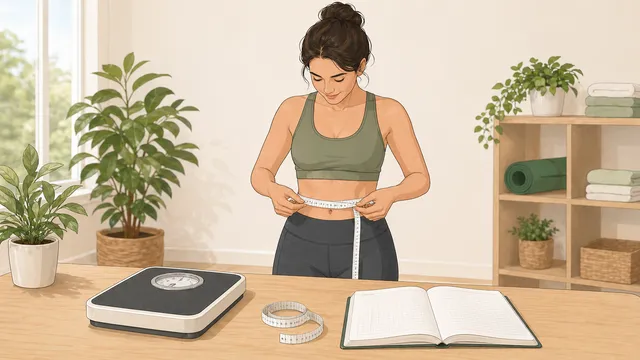
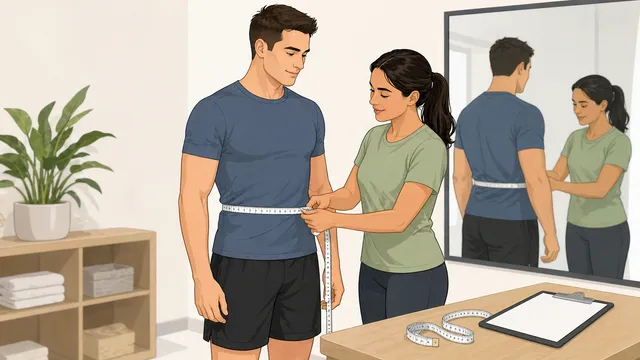
Estimate lean body mass from body fat percentage or Boer, James, and Hume height-and-weight formulas, then compare fat mass, lean share, formula spread.
Last updated
Lean body mass calculator with two estimation routes Use body fat percentage when you already have a body-composition estimate, or switch to Boer,
James, or Hume when you only know sex, weight, and height. The planning tables then turn the
result into lean-mass checkpoints, target-weight context, and protein anchors.
Estimation route
Use this route when you already trust a body-fat estimate from calipers, BIA, DEXA, or another calculator.
Lean body mass sheet
62.4 kg
At 78 kg and 20% body fat, estimated lean mass is 62.4 kg and fat mass is 15.6 kg.
15.6 kg
Fat mass
80%
Lean share
20%
Fat share
78 kg
Body weight
Planning context This sits in the athletic-to-lean reference band, so small body-fat estimate errors can still move lean-mass planning by a meaningful amount.Body-fat input confidence: General body-fat estimate Because the body-fat source is not specified, treat the sensitivity rows as the practical confidence range around the headline lean-mass estimate.
Body composition sheet
This result splits the current body weight into estimated lean and fat components from
the body-fat percentage you entered.
Body weight used
78 kg
Body fat entered
20%
Lean body mass
62.4 kg
Fat mass
15.6 kg
Fat-to-lean ratio
0.25 fat : 1 lean
Mass per 1 body-fat point
0.78 kg
Same body weight at common body-fat levels
These rows keep the same scale weight and show how lean and fat mass would change at
different body-fat percentages.
Body fat %
Lean mass
Fat mass
10%
70.2 kg
7.8 kg
15%
66.3 kg
11.7 kg
20%
62.4 kg
15.6 kg
25%
58.5 kg
19.5 kg
30%
54.6 kg
23.4 kg
If the body-fat estimate is off
Home body-fat readings often swing a few percentage points depending on the method,
hydration, and timing. These rows show how the lean-mass estimate changes if the same
scale weight is a little leaner or softer than the headline input suggests.
Scenario
Body fat %
Lean mass
Fat mass
Why it matters
-5 body-fat points
15%
66.3 kg
11.7 kg
Useful when home body-fat readings may drift a few percentage points between methods or testing days.
-2 body-fat points
18%
63.96 kg
14.04 kg
Useful when home body-fat readings may drift a few percentage points between methods or testing days.
Current estimate
20%
62.4 kg
15.6 kg
Your current body-fat estimate.
+2 body-fat points
22%
60.84 kg
17.16 kg
Useful when home body-fat readings may drift a few percentage points between methods or testing days.
+5 body-fat points
25%
58.5 kg
19.5 kg
Useful when home body-fat readings may drift a few percentage points between methods or testing days.
If lean mass stayed the same
This table keeps the current lean mass fixed and shows what scale weight would look like
at different body-fat levels. It is useful when you want to translate body-composition
goals into realistic target-weight checkpoints instead of chasing one abstract lean-mass number.
Body fat %
Target weight
Fat mass
Planning note
12%
70.91 kg
8.51 kg
A leaner body-fat target usually requires more caution around sustainability and performance.
15%
73.41 kg
11.01 kg
A leaner body-fat target usually requires more caution around sustainability and performance.
20%
78 kg
15.6 kg
Shows what the scale could read if current lean mass stayed unchanged while body-fat level changed.
25%
83.2 kg
20.8 kg
Shows what the scale could read if current lean mass stayed unchanged while body-fat level changed.
30%
89.14 kg
26.74 kg
Shows what the scale could read if current lean mass stayed unchanged while body-fat level changed.
Lean-mass protein anchors
Some lifters and clinicians prefer to anchor protein to lean mass instead of total scale
weight. These rows turn the current lean-mass estimate into rough daily protein checkpoints.
Use case
g/kg lean mass
Protein / day
When it helps
Maintenance floor
1.6
99.84 g
Useful as a steady baseline when training is consistent but body-weight change is not the main goal.
Recomposition target
1.8
112.32 g
Common middle ground when trying to maintain lean mass during fat loss or improve body composition.
Aggressive cut or heavy training
2.2
137.28 g
Often used when calorie intake is tighter or training stress is higher.
How to use this result Lean body mass is a rough body-composition reference, not a direct muscle measurement.
Use it alongside body-fat, protein, or maintenance-calorie planning if you need a more
complete picture.
Lean body mass calculator guide: lean mass, fat mass, and body composition explained
A lean body mass calculator estimates how much of total body weight is not body fat. This page also explains the main assumptions behind the lean body mass calculator result, highlights the supporting figures shown by the calculator, and helps the reader use the estimate without overstating what a quick online tool can prove.
What lean body mass means
Lean body mass is commonly used as a simple way to describe the part of body weight that is not fat mass. In everyday calculator use, it is often treated as a shorthand for the body’s non-fat component, which includes muscle, bone, organs, water, and other lean tissues. That makes a lean body mass calculator useful when you want a quick body-composition estimate rather than just a scale weight.
This matters because two people can weigh the same amount but have very different body composition. A body composition calculator can therefore give more context than body weight alone. Total weight does not show how much is fat mass and how much is lean tissue, while a lean mass estimate helps separate those two ideas.
Lean body mass vs fat-free mass
Searchers often use lean body mass, lean mass, and fat-free mass as if they mean the same thing. In everyday use they are close enough to overlap, but research papers and calculator labels do not always use the terms in exactly the same way. That is why two pages can look similar and still give slightly different wording or results.
If you came here looking for a lean mass calculator or a fat-free mass calculator, the key idea is the same: use total body weight and an estimate of body fat percentage to separate the fat component from the non-fat component. The wording changes, but the underlying body composition question is usually the same.
Core lean body mass formulas
The live calculator now supports two practical routes. If you already know body fat percentage, it uses the simplest possible body-composition split. First it converts body weight to kilograms if needed. Then it calculates fat mass from body fat percentage and subtracts that from total body weight to estimate lean body mass. The same result can also be expressed as a lean-mass percentage.
If you do not know body fat percentage, the page can also estimate lean body mass from sex, body weight, and height using established anthropometric formulas such as Boer, James, and Hume. Those formula-based routes are useful for general estimation, but they are still indirect estimates rather than direct body-composition measurements.
Fat mass = body weight × (body fat % / 100)
This converts a body fat percentage into the amount of total body weight attributed to fat mass.
Lean body mass = body weight − fat mass
Lean body mass is estimated as the remainder once fat mass has been subtracted from total body weight.
Lean mass % = 100 − body fat %
This shows what proportion of total body weight is lean rather than fat.
Boer, James, and Hume equations estimate lean body mass from sex, weight, and height
These formula families are useful when body fat percentage is not available, but different equations can produce slightly different lean-mass estimates for the same body size.
When to use body fat percentage vs Boer, James, or Hume
If you have a reasonably trustworthy body fat percentage estimate, the direct body-fat route is usually the clearest lean mass calculator workflow. It simply splits your current body weight into fat mass and lean mass and avoids layering one estimate on top of another. That makes it easier to understand why the result changed: usually because body weight changed, body fat percentage changed, or both.
If you do not know body fat percentage, Boer, James, and Hume give a practical height-and-weight route instead. Those formulas are common because many people know their sex, weight, and height but have no credible body-fat reading. They are useful for screening, broad planning, and comparing methods, but they should still be treated as estimates rather than proof of your exact lean mass.
This is also why different lean body mass calculators disagree. One page may use your body fat percentage directly, while another may infer lean mass from height and weight with Boer, James, or Hume. Those are not identical workflows, so matching the method to the information you actually have is more important than chasing one supposedly perfect number.
Formula spread is worth looking at before you trust a single height-and-weight estimate. Boer, James, and Hume can be close for many mid-range body sizes, but the James equation includes a squared weight-to-height term and can behave less intuitively at higher body sizes. When the formula comparison table shows a wide spread, use the range as a caution signal rather than treating the selected equation as exact.
Use the body-fat route when you already trust the body-fat input.
Use Boer, James, or Hume when body fat percentage is unknown.
Expect small differences between formulas because they were fitted from different populations.
Treat any formula-based lean mass estimate as planning context, not a direct scan.
Why the estimate depends on body fat accuracy
A lean body mass result is only as good as the body fat percentage that goes into it. If the body fat estimate is off, the lean mass estimate will be off too. That is why a lean body mass calculator and a body fat calculator are closely linked in practice. Skinfold calipers, bioelectrical impedance, DXA scans, and visual estimation can all produce different body fat values, which means they may also produce different lean-mass results.
For day-to-day use, consistency matters more than chasing one exact number. If you measure body fat the same way each time, a lean mass estimate can help track trends during fat loss, muscle gain, or recomposition. But it should still be treated as an estimate, not as a perfectly precise body scan.
Lean body mass is not the same thing as skeletal muscle alone.
Body fat percentage errors feed directly into lean-mass errors.
Hydration and measurement method can change body-composition estimates.
Trend tracking is often more useful than fixating on one single reading.
Choosing a body-fat estimate source
The calculator now asks where the body-fat percentage came from because that changes how much confidence you should place in the headline lean body mass result. A scan or clinician-led assessment is usually a stronger input than a visual estimate, while calipers, tape methods, and bioelectrical impedance scales can be useful when they are repeated consistently under similar conditions.
This does not make one method perfect. Hydration, recent exercise, device settings, tape placement, and the person taking the measurement can all move the body-fat input. The source selector is therefore not a second formula; it is an interpretation aid that reminds you how widely to read the sensitivity rows around the lean-mass estimate.
How to use lean body mass well
A lean body mass calculator can be useful when setting protein targets, estimating calorie needs, or checking whether weight changes are mostly fat or mostly lean tissue. It is especially helpful when paired with other practical tools such as a protein calculator, body fat calculator, or maintenance calories calculator.
It is less useful as a stand-alone health judgement. A higher or lower lean-mass value is not automatically good or bad without context such as age, sex, training status, medical history, and actual function. A free online lean body mass calculator is best used as a simple body-composition reference, not as a complete assessment of health or performance.
The strongest everyday use cases are practical ones: checking how much the lean-mass estimate changes if body-fat readings drift a few points, translating a body-fat target into a rough target body weight while keeping lean mass constant, and using lean mass as an anchor for protein planning when scale weight alone feels misleading.
Many searchers do not just want one lean-mass number. They want to know what scale weight would correspond to the same lean mass at a different body-fat level. That is why the live calculator includes same-lean-mass target-weight rows. These keep lean body mass fixed and solve backwards for what total body weight would look like at common body-fat checkpoints such as 12%, 15%, 20%, 25%, and 30%.
This is not a promise that lean mass will stay unchanged during dieting or bulking. It is a planning shortcut. The table is most useful for creating realistic checkpoints, such as seeing whether a desired body-fat percentage implies a target weight that is close to your current weight or much further away than expected.
Why lean-mass sensitivity matters
Body-fat inputs are usually the weakest link in a lean body mass estimate. Home impedance scales, calipers, scans, and visual estimates can differ by several percentage points. The sensitivity rows on this page show how much lean mass and fat mass move if the same body weight is a little leaner or a little softer than the headline estimate.
That makes the calculator more useful for real decisions. If a protein target or target weight changes only slightly when body-fat input drifts by two points, the plan is fairly robust. If the target swings much more, the body-fat estimate deserves more caution than the single headline result suggests.
Worked example: calculating lean mass from weight and body fat percentage
Suppose someone weighs 78 kg and estimates body fat at 20%. The calculator first estimates fat mass as 15.6 kg, then subtracts that from total body weight to estimate lean body mass at 62.4 kg. It also shows the lean percentage, which in that case is 80% of total body weight.
That does not mean the person has 62.4 kg of muscle. Lean body mass includes muscle, bone, organs, body water, and other non-fat tissues. The useful takeaway is usually whether the estimate stays broadly stable over time during fat loss, muscle gain, or weight maintenance rather than whether one single reading looks impressive.
Frequently asked questions
What is lean body mass?
Lean body mass (LBM) is everything in your body except stored fat: muscle, bone, organs, blood, and connective tissue. It is calculated as total body weight minus fat mass. LBM is more metabolically active than fat and drives basal metabolic rate.
Which formula does the calculator use?
This page now supports both routes. If you enter body fat percentage, it uses the direct body-composition split: fat mass equals total body weight multiplied by body fat percentage, and lean body mass equals total body weight minus fat mass. If you do not know body fat percentage, it can also estimate lean body mass from sex, weight, and height using Boer, James, or Hume formulas.
Is lean body mass the same as fat-free mass or muscle mass?
Lean body mass, lean mass, and fat-free mass are often used interchangeably in casual fitness language, but they are not always identical in research definitions. Lean body mass includes muscle, but it also includes organs, bone, body water, connective tissue, and other non-fat tissues. That is why a lean body mass calculator should not be treated as a direct muscle-mass scanner.
How accurate is a lean body mass calculator?
The result is only as good as the body fat percentage that goes into it. If the body fat estimate is off, the lean mass estimate will also be off. That makes it more useful for consistent trend tracking than for pretending to give a perfectly precise body-composition measurement.
Do I need body fat percentage to use a lean body mass calculator?
No. If you know body fat percentage, that route is usually more direct because it splits total body weight into lean and fat components immediately. If you do not know body fat percentage, many lean body mass calculators use height-and-weight equations such as Boer, James, or Hume instead. Those formula estimates are still useful, but they are one step more indirect.
Why do people use lean body mass for protein or calorie targets?
Lean body mass gives more context than body weight alone when you are setting nutrition targets. It helps people avoid basing every number on scale weight when body composition has changed.
Can I use lean body mass to estimate a target body weight?
Yes, but only as a planning shortcut. If you hold lean body mass constant and change the assumed body-fat percentage, you can estimate what total body weight would be at that body-fat level. That is useful for checkpoint planning, but real lean mass can still rise or fall during a cut or gain phase.
Why does the calculator show sensitivity rows around my body-fat estimate?
Because body-fat percentage is often the least certain input. A reading that is off by two to five percentage points can meaningfully change the lean-mass estimate, so the sensitivity rows show how much the result would move if the same scale weight were a little leaner or softer than the headline input.
Why can Boer, James, and Hume formulas give different lean body mass results?
They were developed from different datasets and use different relationships between height, weight, and sex. The James formula also includes a squared weight-to-height term, so it can diverge more at higher body sizes. The comparison rows are there to show the range instead of hiding formula uncertainty behind one number.
Which body-fat estimate source should I choose?
Choose the source that best describes where your body-fat percentage came from. A scan or clinician-led assessment is usually a stronger input, calipers or tape methods depend heavily on consistent technique, BIA scales can shift with hydration and timing, and visual estimates should be treated as the broadest planning range. The selector does not change the formula; it changes the confidence guidance around the result.
Guides
Featured in articles
Step-by-step guides that use this calculator to solve real problems.