Skip to content
Calcipedia
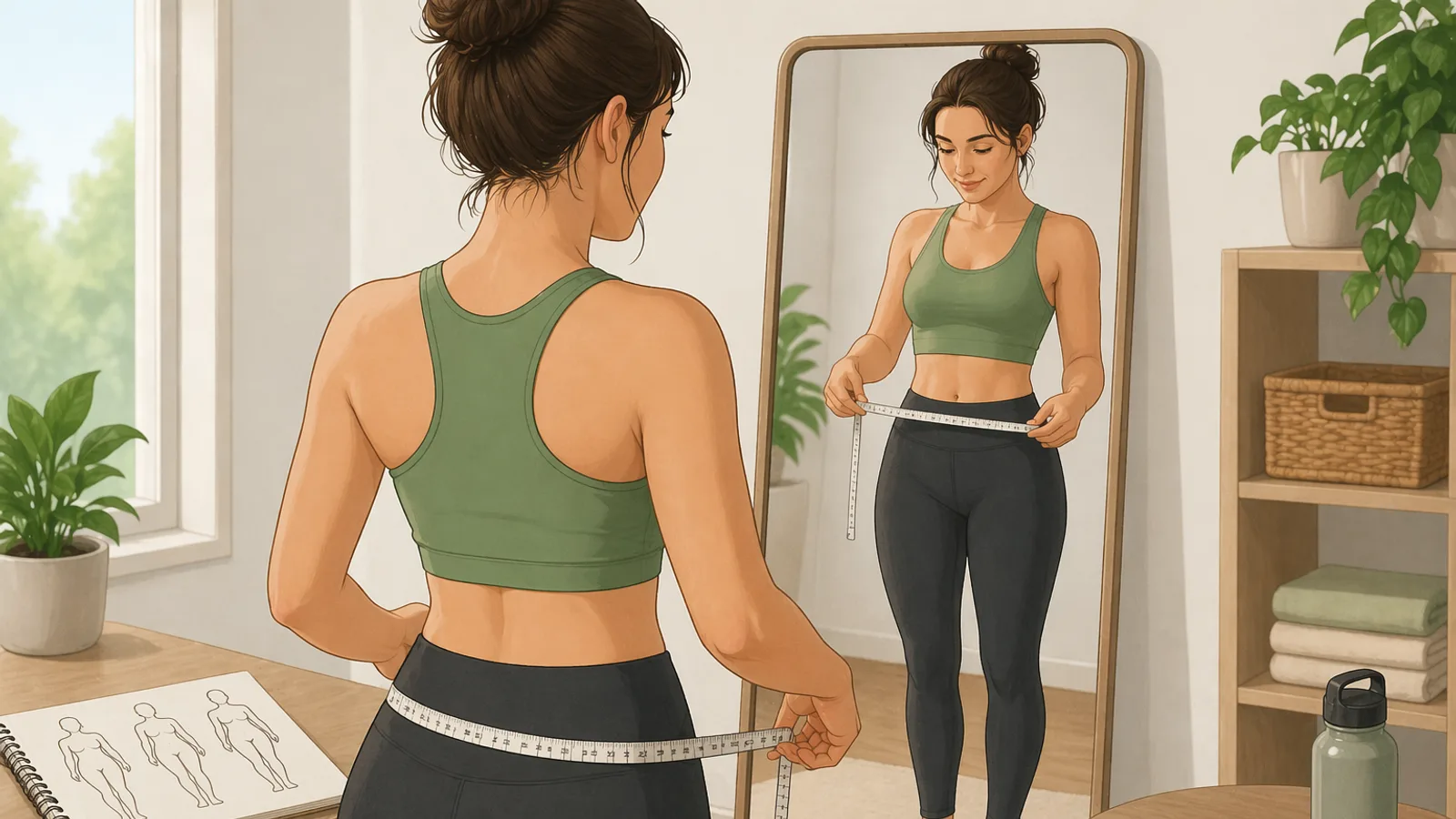
Body Shape Calculator instructional illustration

Body Shape Calculator

Use this body shape calculator to identify your body type from shoulders, bust or chest, waist, and hip measurements, then interpret waist-to-hip.

Last updated

Quick scenarios

Units

Body shape calculator Use this body shape calculator to identify your body type from shoulder, bust or chest, waist, and hip measurements, then compare the result with waist-to-hip ratio and waist-to-height ratio context.

How to use the result

Shoulder input is optional because many measurement systems classify from bust, waist, and hips alone. Add shoulders when you want a stronger inverted-triangle or rectangle check; use the waist-to-hip and waist-to-height ratios for health context.

Enter values Fill in the required fields above to calculate.
← All Body Metrics calculators

Health — Body Metrics

Body shape calculator guide: apple, pear, hourglass, and waist-to-hip ratio meaning

Body shape classification — apple, pear, hourglass, rectangle, and inverted triangle — describes how body mass is distributed across the torso.

Why fat distribution matters more than weight

The location of fat stores has a greater impact on metabolic health than total fat mass. Visceral fat — stored deep in the abdominal cavity, associated with the apple shape — is metabolically active in a harmful way. It releases inflammatory cytokines and free fatty acids directly into the portal circulation, contributing to insulin resistance, dyslipidaemia, and elevated cardiovascular risk. Subcutaneous fat stored in the hips and thighs (pear shape distribution) is far less metabolically active and carries substantially lower risk.

The waist-to-hip ratio (WHR) and waist-to-height ratio (WHtR) quantify this. The WHO defines elevated cardiovascular risk at WHR > 0.85 in women and > 0.90 in men. The WHtR threshold of 0.5 — "keep your waist circumference below half your height" — is a simple rule of thumb that performs comparably to more complex measures in predicting cardiometabolic risk across populations.

What each body shape category usually means

An apple shape usually means more measurement emphasis around the waist and upper torso. A pear shape means relatively more size through the hips and thighs than the waist. Hourglass describes a clearly narrower waist with bust and hip measurements that are closer to each other. Rectangle usually means the bust, waist, and hip measurements sit closer together, while inverted triangle means the upper body measures wider than the hips.

Those categories are descriptive, not diagnostic. They summarise proportions rather than health status. That matters because searchers often want a simple label, but what usually matters more clinically is where the waist sits relative to the hips and to height, not whether the silhouette matches a fashion category perfectly.

How to measure bust, waist, and hips accurately

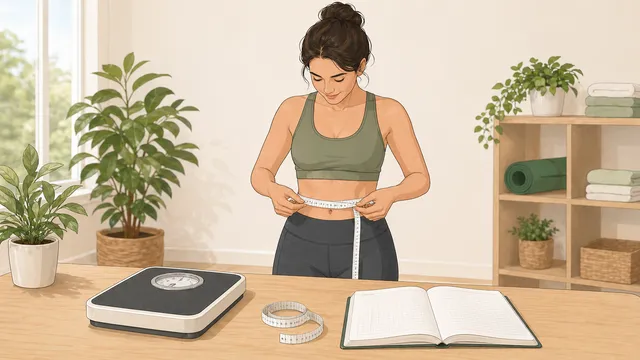
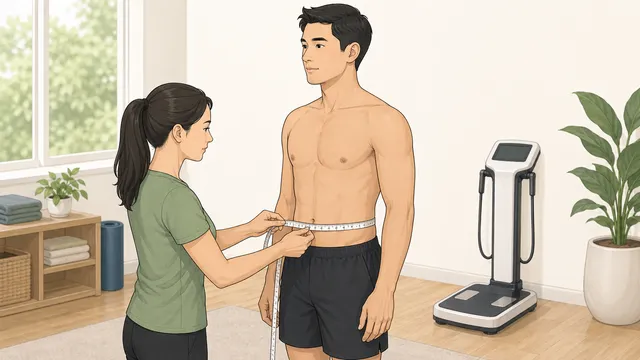
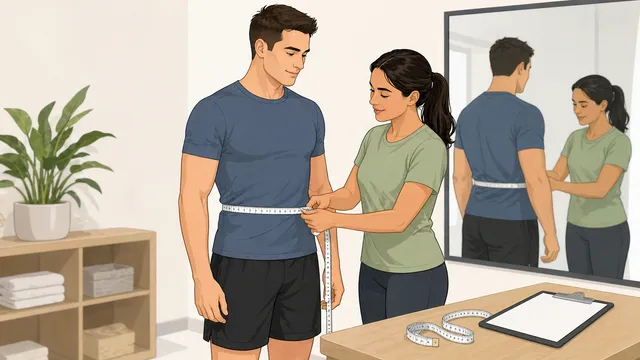
Use a flexible tape measure and keep it level all the way around the body. Bust or chest is measured around the fullest part, waist at the natural waist or narrowest point between the ribs and hips, and hips at the widest part of the buttocks. Measure against light clothing or directly on the body, and avoid pulling the tape tight enough to indent the skin.

Small tape-measure errors can change a body shape classification when measurements are close to the category boundaries. If you are using the result for health tracking rather than simple curiosity, repeat the measurements two or three times and use the average.

When to add shoulder measurements

Many body shape calculators use bust, waist, and hips only, but shoulder width can change the result when the upper body is visibly broader than the hips. That is especially relevant for inverted triangle, rectangle, and some hourglass-borderline results because a broad shoulder line can create a different silhouette than bust circumference alone.

The shoulder field in this calculator is optional. If you leave it at zero, the tool works from bust or chest, waist, and hips. If you add a shoulder circumference, the classification uses it when it is the stronger upper-body signal, while still showing the bust or chest relationship separately in the proportion sheet. This keeps the body shape calculator useful for quick measurement checks and for users comparing shoulder-based body type calculator methods.

Why waist-to-height ratio often matters more than shape labels

The strong search intent around body shape pages is often a mix of style and health curiosity. For health, waist-to-height ratio usually carries more value than the shape label itself because it focuses on abdominal size relative to the whole body. A person with an hourglass or rectangle label can still carry excess central adiposity if the waist remains high relative to height.

That is why this page reports both WHR and WHtR rather than stopping at apple, pear, or hourglass. The shape label helps describe body proportions, but the waist-based ratios add a more useful risk screen for cardiometabolic health.

Further reading

How this body shape calculator classifies your measurements

The descriptive shape label comes from the relationship between the upper body, waist, and hips rather than from weight alone. In this calculator, hourglass is assigned when the upper body and hips are close to each other and the waist is clearly smaller, rectangle is used when the upper body, waist, and hips sit much closer together, inverted triangle is used when the upper body is noticeably wider than the hips, apple is used when the waist is the widest or nearly the widest measurement, and pear is used when the hips exceed the upper body. The upper-body signal is bust or chest by default, with shoulders used when you provide them and they are broader. Those thresholds answer the apple pear hourglass calculator intent searchers often have when they want a quick, explainable category from a few tape-measure values.

That classification step is useful for descriptive body type calculator measurements, but it is not a medical diagnosis or a universally standardised research tool. Waist-to-hip ratio and waist-to-height ratio are better established health screens than the style-oriented shape labels themselves, which is why this page shows all three rather than pretending a single category answers every question.

Waist-to-hip ratio = waist circumference / hip circumference

WHO waist-to-hip ratio cut-points are used to describe lower, moderate, or higher cardiometabolic risk by sex.

Waist-to-height ratio = waist circumference / height

A waist-to-height ratio below 0.5 is commonly used as a practical lower-risk screening target in adults.

How to read the proportion sheet

The proportion sheet explains the calculator result in plain language. If bust or chest sits well above the waist, the upper body is carrying more width. If hips sit well above the waist, the lower body is doing more of the visual work. If bust, waist, and hips are close together, the result tends to sit in the rectangle family and small tape-measure differences can move it around.

That extra context matters when a result feels borderline. A one-centimetre change can alter a shape label, but the direction of the proportions usually stays the same. Looking at the proportion sheet alongside the waist-based ratios gives a clearer answer than the label alone.

What to do when the label sits between two shapes

Borderline cases are common because body shape is a continuum, not a set of hard bins. If you measure close to two categories, the safest approach is to repeat the tape measure a couple of times, look at the proportion sheet, and focus more on the waist-based ratios than on a single decorative label.

That is especially useful after weight loss, muscle gain, pregnancy, or menopause. Those are the times when a person may ask whether body shape can change, but the more useful question is often whether the waist is moving in a healthier direction relative to height and hips.

Worked example: what is my body shape with 96 cm bust, 72 cm waist, and 98 cm hips?

Suppose a woman measures 96 cm at the bust, 72 cm at the waist, 98 cm at the hips, stands 170 cm tall, and weighs 64 kg. The bust and hips are only 2 cm apart, while the waist is 24 to 26 cm smaller than both. That pattern fits the calculator's hourglass rule because the upper and lower body are close in size and the waist is clearly narrower.

The same example also produces useful ratio context. Waist-to-hip ratio is about 0.73, which sits below the WHO higher-risk threshold for women, and waist-to-height ratio is about 0.42, which is below the common 0.5 screen. That shows why a worked example matters: the body shape label gives a descriptive answer to what is my body shape, while the ratios give a more clinically useful snapshot of whether central fat distribution looks more or less concerning.

When shape labels and health markers point in different directions

A descriptive body shape and a metabolic risk screen do not always tell the same story. A person can have an hourglass or rectangle silhouette and still have a waist-to-height ratio above 0.5, particularly if the waist remains high relative to height despite balanced bust and hip measurements. Conversely, someone with a pear shape may still need clinical assessment if blood pressure, blood sugar, lipids, or family history point to higher risk despite favourable tape-measure ratios.

That is why body shape should be treated as context, not verdict. If the ratios here are unexpectedly high, or if you are following this result because of weight gain around the waist, metabolic concerns, menopause-related body-composition change, or polycystic ovary syndrome, use the calculator as a screening prompt and discuss the bigger picture with a qualified healthcare professional.

Measurement mistakes that can change the result

Most inaccurate results come from measuring the wrong landmark rather than from the formula itself. Common mistakes include measuring the waist at the navel instead of the narrowest point, letting the tape slope downward across the back, pulling the tape tight enough to compress soft tissue, or taking bust and hip measurements over bulky clothing. These errors can easily move a user from pear to hourglass, or from lower-risk to borderline waist-to-hip ratio territory.

If you are between two body shapes, do not over-interpret a single pass. Repeat the measurements, record them to the nearest half centimetre, and look for consistency over time. That is especially useful after weight loss, pregnancy, menopause, or a new resistance-training programme, because those are exactly the periods when people search can body shape change and what if I am between two body shapes.

Frequently asked questions

Can I change my body shape?

Genetic factors strongly influence fat distribution patterns. However, abdominal fat (apple shape) is more responsive to exercise and dietary change than lower-body fat. Aerobic exercise and calorie restriction preferentially reduce visceral fat. Resistance training maintains lean mass while losing fat mass, improving overall composition without necessarily changing the fundamental shape category.

Is the hourglass shape the healthiest?

Not necessarily. The healthiest metabolic profile is typically associated with low waist circumference relative to height, regardless of shape category. A person with an hourglass shape but a high waist measurement may still carry cardiovascular risk. Waist-to-height ratio below 0.5 is a more clinically meaningful target than shape classification.

What measurements do I need for a body shape calculator?

Most body shape calculators need bust or chest, waist, and hip measurements, and some also use shoulder width. This calculator lets you enter shoulders as an optional extra so an inverted-triangle or broad-shoulder result is not missed when bust or chest alone understates the upper-body line. For health interpretation, waist circumference and height are especially useful because they allow waist-to-height ratio to be calculated alongside the descriptive shape label.

Does an apple shape always mean poor health?

No. Apple shape is a pattern, not a diagnosis. It signals that paying attention to waist-related markers may be more important, but health risk still depends on factors such as waist size, blood pressure, blood lipids, blood glucose, activity level, and overall medical history.

How do I measure bust, waist, and hips accurately for a body shape calculator?

Use a flexible tape measure and keep it level all the way around the body. Measure bust or chest at the fullest part, waist at the natural waist or narrowest point between ribs and hips, and hips at the widest part of the buttocks. Stand normally, breathe out gently, and avoid pulling the tape tight enough to compress the skin. If the result matters for health tracking rather than curiosity, repeat each measurement two or three times and use the average.

What if I am between two body shapes?

That is common because body shape categories are simplified labels applied to a continuum of real bodies. If your bust and hips are close together but your waist reduction is only moderate, or if your waist and hips are almost equal, you may sit near the border between hourglass, rectangle, apple, or pear. In that situation, the best approach is to repeat the measurements carefully and treat the label as descriptive shorthand rather than an identity. Waist-to-hip ratio and waist-to-height ratio usually provide the more stable health context when the shape label feels borderline.

What does the proportion sheet add beyond the body shape label?

The proportion sheet shows which measurement relationships are driving the label, such as bust versus waist, hips versus waist, and bust versus hips. That makes it easier to understand borderline results because you can see whether the upper body, lower body, or waist is doing most of the work.

Why can a small measurement change alter my body shape result?

Body shape categories are based on measurement thresholds, so a one-centimetre change can matter when you are close to a boundary. That is why it helps to repeat the tape measure more than once and look at the pattern of the measurements rather than a single isolated pass.

Should I pay more attention to the label or the waist ratios?

For health context, the waist-based ratios usually matter more than the label. The label is useful shorthand for body proportions, but waist-to-hip ratio and waist-to-height ratio are more informative if your goal is to understand central fat distribution and screening risk.

Can body shape change with weight loss, muscle gain, pregnancy, or menopause?

Yes, but usually within the limits of your underlying skeletal frame and genetic fat-distribution pattern. Weight loss can reduce abdominal size and shift an apple pattern toward a less central distribution. Muscle gain can broaden the upper body or glutes enough to change the silhouette. Pregnancy, postpartum recovery, and menopause can all redistribute fat or alter waist measurements. The category can change, but it is better to think in terms of changing proportions rather than a permanent new body type.

Is waist-to-hip ratio better than BMI?

For abdominal-fat screening, waist-to-hip ratio is often more informative than BMI because it captures where fat is distributed rather than total mass relative to height. BMI is still useful as a broad population-level screen, but it cannot distinguish muscle from fat or tell whether a person's weight is concentrated around the waist. That said, waist-to-hip ratio is not a perfect replacement for BMI; the two measures answer different questions. In practice, waist-to-hip ratio, waist-to-height ratio, BMI, and clinical context work best together rather than in competition.

What is a healthy waist-to-hip ratio for women and men?

WHO cut-points are commonly used as a practical guide. For women, waist-to-hip ratio below 0.80 is often described as lower risk, 0.80 to 0.84 as intermediate, and 0.85 or higher as higher risk. For men, below 0.90 is often described as lower risk, 0.90 to 0.99 as intermediate, and 1.00 or higher as higher risk. These are screening categories rather than diagnoses, so a result outside the lower-risk range should be interpreted alongside blood pressure, blood tests, lifestyle, and other clinical factors.

Why does waist-to-height ratio matter if I already know my body shape?

Waist-to-height ratio matters because it keeps the waist measurement in proportion to the whole body instead of comparing it only with the hips. A person can have a balanced hourglass or rectangle shape and still have a high waist relative to height. That is why many clinicians and researchers like the simple rule of keeping waist circumference below half of height. The shape label answers the body type calculator question, but waist-to-height ratio is often the more useful screen for whether abdominal size may deserve closer attention.

Do men have body shape types too?

Yes. Men can also be described with labels such as rectangle, inverted triangle, apple, or pear, although the language used in fashion and fitness content sometimes differs from female-oriented body shape pages. The important point is that the descriptive labels still sit underneath the same waist-based health logic: central fat storage around the abdomen tends to matter more metabolically than whether the shoulders or hips look broader in a mirror.

Does dress size or body weight determine body shape?

No. Dress size and body weight tell you how large the body is overall, but body shape is about proportion. Two people with the same weight or clothing size can have very different waist, bust, and hip relationships. That is why body shape calculators rely on circumference measurements rather than guessing from scale weight alone, and why a body fat calculator or BMI calculator should not be treated as a substitute for a body shape measurement check.

What mistakes make body shape calculator results inaccurate?

The biggest problems are measuring at the wrong landmarks, using inconsistent units, letting the tape sag across the back, measuring over thick clothing, or rounding aggressively when you are already near a category boundary. Another common mistake is assuming the first result must be exact even when the bust, waist, and hip values are only a centimetre or two apart. If the answer looks surprising, repeat the process slowly and focus more on the underlying ratios than on the label alone.

Should a body shape calculator include shoulders?

It depends on the question you want answered. If you want a quick bust-waist-hip body shape result, shoulders are optional. If you are trying to distinguish rectangle, inverted triangle, and hourglass-like proportions, shoulders can be useful because the shoulder line may be broader than the bust or chest measurement. This calculator accepts shoulders but does not force them, so you can run both versions and compare whether the label changes.

Can I use inches instead of centimetres?

Yes. The calculator supports metric and imperial inputs. The shape classification only needs consistent units, so inches and centimetres produce the same category when they represent the same body measurements. Internally, the calculator converts measurements to a common scale before calculating waist-to-hip ratio, waist-to-height ratio, and the proportion sheet.

Also in Body Metrics

Related

More from nearby categories

These related calculators come from the same leaf category, nearby sibling categories, or the same top-level topic.