Estimate body frame size — small, medium, or large — from height and wrist circumference or elbow breadth using frame-size reference methods.
Last updated
Body frame size calculator Estimate small, medium, or large frame from height and wrist circumference or elbow breadth. It works well alongside ideal body weight tools when you want a frame-adjusted reference point.
Quick examples
Sex
Units
Measurement method
Medium frame
Medium
Medium
Frame size
9.89
Height / wrist ratio
Formula
Height-to-wrist ratio method
height ÷ wrist circumference = body frame ratio
Thresholds
Male thresholds: small > 10.4, medium 9.6-10.4, large < 9.6
Frame
Ratio threshold (male)
Small
> 10.4
Medium
9.6–10.4
Large
< 9.6
What frame size tells you Medium frame — average bone structure. Standard ideal weight and body composition reference ranges apply. This estimate used the height-to-wrist ratio method with 9.89 height-to-wrist ratio. Body frame size reflects skeletal structure and is often used alongside ideal body weight formulas to adjust for bone density. It is an estimate — bone structure is influenced by genetics, ethnicity, and individual variation.
This body frame size calculator estimates your frame as small, medium, or large using either the height-to-wrist circumference ratio or an elbow breadth cross-check, methods used in nutritional assessment and ideal body weight interpretation.
What is body frame size?
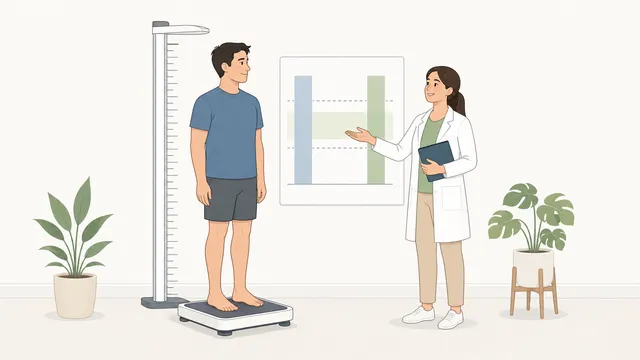
Body frame size is a classification of skeletal structure that reflects bone density, width, and overall skeletal robustness. A person with a large frame has denser, wider bones relative to their height; a small frame individual has lighter bone structure. Frame size affects how much lean mass and body weight a person can 'healthily' carry.
Frame size classification is used alongside height and sex in ideal body weight formulas (such as Hamwi, Devine, and Robinson) to adjust reference weights upward for larger frames and downward for smaller frames.
How frame size is measured
Two common methods exist: wrist circumference measurement and elbow breadth measurement. This calculator uses the height-to-wrist circumference ratio (r = height / wrist in cm). For men: small r > 10.4, medium r 9.6–10.4, large r < 9.6. For women: small r > 11.0, medium r 10.1–11.0, large r < 10.1.
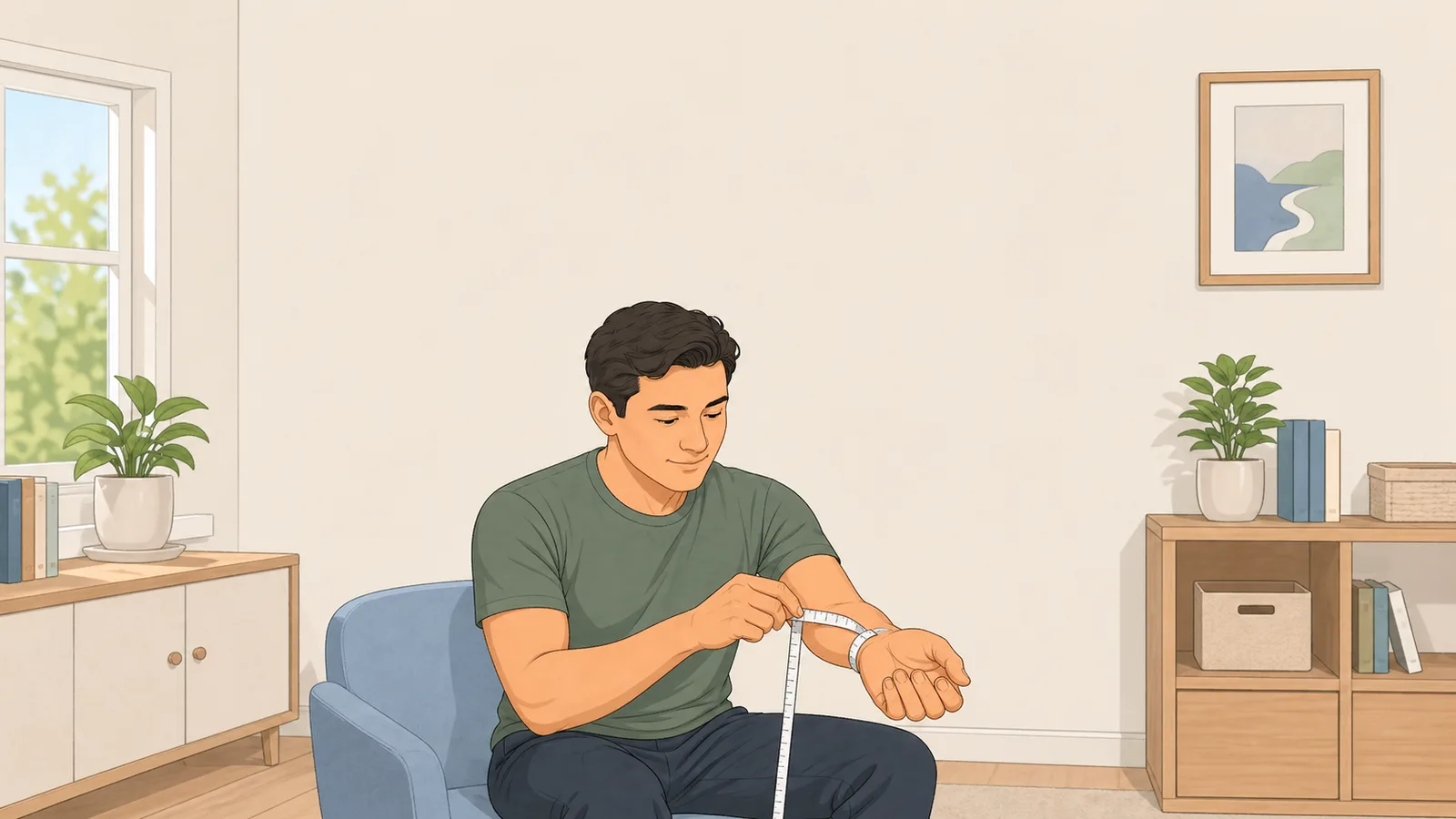
The wrist circumference method is practical and requires only a tape measure. Wrist circumference reflects bony prominence with minimal soft tissue contribution, making it a reliable proxy for skeletal frame. Measure just below the wrist bone (distal radius).
Wrist ratio vs elbow breadth method
Competitor frame size calculators often offer both wrist circumference and elbow breadth because they answer the same question with different measurement trade-offs. Wrist circumference is easier to capture at home with a flexible tape measure, while elbow breadth more directly measures skeletal width across the elbow joint and is less affected by ordinary changes in body fat.
For the elbow breadth method, bend the arm to a right angle and measure the distance between the two bony points of the elbow. The result is compared with a sex-and-height medium-frame band. If the elbow breadth is below the medium band, the calculator returns small frame; if it is inside the band, medium frame; if it is above the band, large frame.
The two methods can disagree, especially for people with narrow wrists but broader shoulders, or people whose wrist circumference is affected by soft tissue, swelling, or measurement placement. When the wrist and elbow methods disagree, treat the result as a sign that frame size is approximate rather than a fixed medical category.
Wrist method ratio = height (cm) / wrist circumference (cm)
Higher ratios point toward smaller frames because wrist circumference is smaller relative to height.
Elbow method = elbow breadth compared with a sex-and-height medium-frame band
Elbow breadth below the medium band is small frame; inside the band is medium frame; above the band is large frame.
Frame size and ideal weight
The Hamwi formula (1964) for estimating ideal body weight incorporates frame size: baseline weight plus or minus 10% for large or small frame. For example, a 175 cm man has a Hamwi baseline of approximately 72 kg; a large frame adjusts this upward to 79 kg, a small frame downward to 65 kg.
Frame size adjustment is a rough correction rather than a precise individualisation. It captures some of the variation in skeletal mass that BMI and simple height-weight tables do not account for, but it is one factor among many in body composition assessment.
How to use the body frame size calculator
Enter height and wrist circumference in either metric or imperial units, then compare the ratio result with the small, medium, and large frame thresholds. If you are using the page as a body frame size calculator female or body frame size calculator male query, the thresholds differ slightly by sex because the reference ranges are sex-specific.
If your measurement lands close to a threshold, treat the answer as a borderline estimate rather than a hard label. A one-millimetre change in wrist measurement can move a result when the ratio is already near the cut-off, so repeat the measurement if you want a more stable answer.
Worked example: frame size by wrist circumference
A 178 cm man with an 18 cm wrist has a height-to-wrist ratio of 9.89, which sits in the medium frame range for men. A 168 cm woman with a 14 cm wrist has a ratio of 12.00, which lands in the small frame range for women. Those examples show why the body frame size calculator is more useful than guessing from height alone — wrist circumference materially changes the result.
The same logic is why frame-size estimates can be paired with ideal body weight tools. Once you know whether a frame is small, medium, or large, you can interpret reference weight tables more carefully instead of treating every height as if skeletal structure were identical.
When to use frame size instead of BMI alone
BMI is a helpful population screen, but it cannot tell you whether a person has a small or large skeletal frame. A body frame size calculator adds that context by looking at the relationship between height and wrist circumference. That makes it better suited to users who want a body frame size estimate, a frame size calculator, or a height-to-wrist ratio method rather than a general obesity screen.
If you are near a target weight range, frame size can explain why a single BMI number feels too blunt. It does not replace BMI, body fat percentage, or a clinical assessment; it simply adds a skeletal-structure reference that some body composition formulas still rely on.
Frequently asked questions
How do I measure my wrist correctly?
Measure the circumference of your wrist just below the wrist bone — at the narrowest point between the wrist joint and the hand. Use a flexible tape measure and keep it snug but not tight. Measure your non-dominant wrist if possible.
Does frame size affect my target weight?
Frame size is used in some ideal body weight formulas to adjust the target weight by roughly 10% in either direction. However, most modern body composition guidance focuses on body fat percentage and lean mass rather than frame-adjusted ideal weight, as these are more directly linked to health outcomes.
Can frame size change over time?
Bone structure is largely fixed in adulthood, so frame size classification does not change significantly after skeletal maturity. However, small differences in wrist girth due to body weight changes, oedema, or measurement technique can shift someone near a threshold between categories.
What is the body frame size calculator used for?
It is used to estimate whether someone has a small, medium, or large skeletal frame from height and wrist circumference. People often use the result to interpret ideal body weight formulas, compare frame-adjusted reference ranges, or simply answer what body frame size am I with a more objective measurement.
How do I measure wrist circumference for frame size?
Wrap a flexible tape measure around the wrist just below the wrist bone, where the wrist is narrowest. Keep the tape snug but not tight and measure in centimetres or inches using the same unit for both height and wrist. If you are close to a threshold, repeat the measurement two or three times and use the average.
What if my body frame size result is borderline?
Borderline results are common because the cut-offs are only a few tenths apart in ratio terms. If the calculator puts you right near the medium range, measure again and compare the result with other markers such as ideal body weight, waist circumference, or body composition goals. A borderline answer should be treated as approximate rather than definitive.
Is body frame size the same as body type?
No. Body frame size is based on skeletal proportion, while body type usually refers to the visual distribution of fat and muscle. A person can have a small frame and still carry more abdominal fat, or a large frame and still look narrow through the waist. The two ideas overlap, but they answer different questions.
Do I need elbow breadth to estimate body frame size?
No. The wrist ratio method is usually enough for a quick at-home estimate because it only requires height and wrist circumference. Elbow breadth is useful as a cross-check when you have callipers, when your wrist result feels borderline, or when you want a frame size calculator that more directly reflects skeletal width.
How do I measure elbow breadth for frame size?
Bend the arm at roughly 90 degrees and measure across the two bony prominences of the elbow joint. A sliding calliper is best, but a careful thumb-and-finger transfer to a ruler can give a rough at-home estimate. Keep the measurement in centimetres or inches to match the unit system you selected.
What should I do if the wrist and elbow methods disagree?
Use the disagreement as context rather than forcing one label. Wrist circumference is easier to measure but can be affected by soft tissue and placement; elbow breadth is closer to bone width but harder to measure accurately without callipers. If the two methods disagree, treat body frame size as a broad range and use body composition, waist measures, and clinical context for health decisions.