Can your body type change?
The underlying tendency you have toward leanness, muscularity, or fat storage is influenced by genetics, but the visible result from a body-type calculator can still change a lot. Weight loss, resistance training, muscle gain, detraining, ageing, and lifestyle changes all alter BMI and body proportions, which means the most accurate label today may not be the same one a few years from now.
How accurate is a body type calculator?
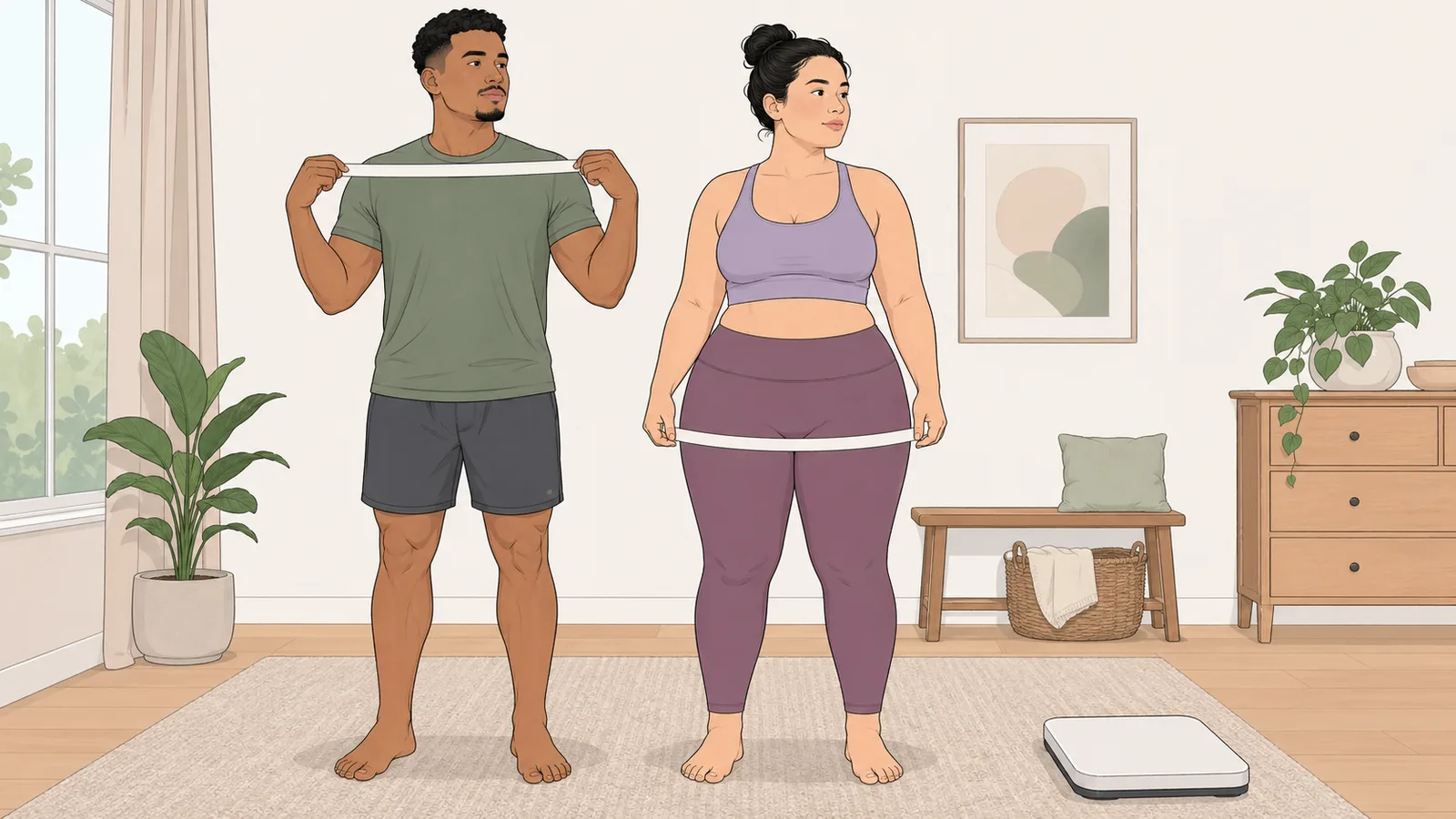
It is only approximate. BMI, wrist size, and shoulder-to-hip ratio are rough proxy measures, not direct measurements of body fat, lean mass, or metabolic rate. This tool is useful for descriptive orientation and training discussion, but it is not a medical assessment and it should not override more direct measures of body composition or health.
Why does this calculator show ectomorph, mesomorph, and endomorph scores?
A score breakdown is more transparent than a single body type test label. It shows whether one somatotype tendency clearly dominates or whether your measurements sit between ectomorph, mesomorph, and endomorph patterns. Use the strongest score as the main planning cue, then read close secondary scores as context.
What is the difference between body type and body shape?
Body type usually refers to broad build tendencies such as ectomorph, mesomorph, and endomorph. Body shape usually refers to where mass is distributed, using labels such as apple, pear, rectangle, or hourglass. You can have a mesomorphic-looking build and still carry an apple-style fat distribution, so the two ideas overlap but are not interchangeable.
Should I use this result to decide diet or training?
You can use it as a loose planning cue, but not as the whole plan. A leaner result may suggest focusing on adequate calories and progressive resistance training, while a heavier result may suggest more attention to calorie balance and conditioning. Even so, actual goals, training history, body-fat level, recovery, and medical context matter more than the label alone.
What body type is best for building muscle?
Mesomorphic traits are usually described as the easiest fit for muscle-building because they pair a broader frame with a stronger tendency toward muscularity. That does not mean ectomorphic or endomorphic people cannot build muscle. Training quality, calorie intake, protein intake, sleep, and time matter much more than the label itself.
Can a woman and a man with the same measurements get different results?
Yes. This calculator uses sex-specific frame-size logic and interprets measurements in the context of the source references, so the same numbers can be read slightly differently. That is one more reason to treat the result as a rough present-build estimate rather than a fixed biological category.
Does body type determine whether you should bulk or cut?
Not by itself. A somatotype-style result can help explain the likely challenge, such as adding size for a leaner build or managing calorie balance for a heavier build, but the decision to bulk, cut, or maintain should still depend on body-fat level, training experience, performance goals, and health context.
Is body type mostly genetic?
Genetics strongly influence frame, proportions, and tendencies toward muscularity or fat storage, which is why somatotype language became popular in the first place. But visible body type is still shaped by diet, training, age, hormones, sleep, illness, and major weight change. Genetics set a range; lifestyle and life stage still change what your build looks like now.