

What's Your Ideal Weight? A More Useful Way to Think About It
Explore what 'ideal weight' actually means using BMI, body type, and evidence-based calculators — and why the number on the scale isn't the full picture.
Why there is no single magic number
If you have ever typed “what is my ideal weight” into a search engine, you are not alone. It is one of the most common health-related questions people ask, and the answer they usually get is a single number pulled from a generic chart. But here is the truth that took me years of coaching — and my own complicated relationship with food growing up in the Philippines — to fully understand: there is no single magic number that defines your health.
As a diet and lifestyle coach, I work with people every day who feel defeated by a number on the scale. They compare themselves to charts, to friends, to the version of themselves from ten years ago. What I try to help them see is that “ideal weight” is not a destination. It is a range, influenced by your height, your frame, your muscle mass, your genetics, and so much more.
This article is for education, not diagnosis. If you have concerns about unexplained weight change, eating patterns, body image, menstrual changes, medication effects, or weight-related health conditions, please bring those concerns to your GP or healthcare provider. A calculator can offer context. It cannot tell you what your individual body needs medically.
Starting with the basics: ideal weight formulas
Several well-known medical formulas attempt to estimate an ideal body weight based on your height and sex. The Devine formula, the Robinson formula, the Miller formula — each was developed in a specific clinical context, often for calculating drug dosages rather than setting personal health goals. They give you a ballpark, and that ballpark can be genuinely useful as a reference point. But it is just that: a reference.
Try entering your details into the Ideal Body Weight Calculator to see what these formulas suggest:
Sex used in formula
Units
Ideal body weight formulas are adult height-based references. They are useful for comparison and dosing context, but they do not replace body-composition, pediatric, pregnancy, or clinician-led assessment.
Result
65.9 kg
Average ideal body weight across four classic formulas for a male at 170 cm (5 ft 6.9 in). The formula spread runs from 65.2 kg to 66.7 kg.
1.5 kg
Formula spread
63.6 kg
BMI 22 reference
63.6 kg
Weight at BMI 22
53.5 kg to 72 kg
Healthy BMI range
Robinson to Hamwi
Lowest to highest formula
Formula comparison
Compare the four classic formulas against the average so you can see how much the estimate moves depending on the equation used.
| Formula | Year | kg | lbs | Vs average |
|---|---|---|---|---|
| Hamwi | 1964 | 66.7 | 147.1 | +0.8 kg |
| Devine | 1974 | 65.9 | 145.4 | 0 kg |
| Robinson | 1983 | 65.2 | 143.7 | -0.7 kg |
| Miller | 1983 | 66 | 145.4 | +0.1 kg |
| Average | — | 65.9 | 145.4 | Baseline |
BMI comparison sheet
This adds a same-height healthy BMI corridor so you can compare a single IBW estimate with a wider adult reference range.
| Healthy BMI range | 53.5 kg to 72 kg |
| BMI 22 reference | 63.6 kg |
| Selected BMI 22 reference | 63.6 kg |
| Selected BMI vs average IBW | -2.3 kg |
| Average IBW | 65.9 kg |
Height vs average IBW
Use the reference table to see how the average IBW shifts with height for the same sex setting.
| Height (cm) | Height (in) | IBW (kg) | IBW (lbs) |
|---|---|---|---|
| 150 | 59.1 | 51.6 | 113.6 |
| 155 | 61 | 53.7 | 118.3 |
| 160 | 63 | 57.8 | 127.4 |
| 165 | 65 | 61.9 | 136.4 |
| 170 | 66.9 | 65.9 | 145.4 |
| 175 | 68.9 | 70 | 154.4 |
| 180 | 70.9 | 74.1 | 163.4 |
| 185 | 72.8 | 78.2 | 172.4 |
| 190 | 74.8 | 82.3 | 181.4 |
| 195 | 76.8 | 86.4 | 190.5 |
| 200 | 78.7 | 90.5 | 199.5 |
About ideal body weight formulas
IBW formulas were designed as dosing guides in clinical settings, not as personal weight targets. All formulas use height as the only input and produce a single-point estimate. Most health experts prefer a weight range (e.g. BMI 18.5–24.9) over a single IBW number.
That is why this calculator shows both the formula cluster and the healthy BMI corridor. If those references disagree with your current body-composition, training, or clinical context, treat the result as a discussion starter rather than a goal weight.
You will notice the calculator shows a range rather than one absolute number. That is intentional. Bodies are wonderfully diverse. Two people of the same height can have very different builds, carry muscle differently, and be equally healthy at different weights.
If the range surprises you — whether it feels too high or too low — take a breath. This result does not diagnose anything, and it does not tell you where your body “should” be tomorrow. What it can do is give you a reference band to compare against other markers. If you are already in that range, it may reassure you that your target does not need to be more aggressive. If you are outside it, that is not automatically a problem, but it may be a prompt to look at the rest of the picture rather than focusing only on the scale.
Understanding BMI: useful but limited
Body Mass Index is probably the most widely referenced weight metric in healthcare. It divides your weight by the square of your height to produce a single number, and that number is slotted into categories like “underweight,” “normal,” “overweight,” and “obese.” Doctors use it because it is fast and easy to calculate across large populations.
But BMI has real limitations. It does not distinguish between muscle and fat. It does not account for bone density, age, sex differences in body composition, or ethnic variation. The CDC describes BMI as a screening tool, not a diagnosis, and the NHS makes the same point: it is useful for many adults, but not accurate for everyone. Research and clinical guidance also show that some ethnic groups, including many Asian populations, can face metabolic risk at lower BMI thresholds. Growing up in a Filipino household, I saw firsthand how body shapes varied enormously among relatives who were all perfectly healthy.
That said, BMI still offers a useful starting point. If your BMI is significantly outside the typical range, it can be a prompt to have a deeper conversation with your doctor — not a reason to panic, but a reason to be curious.
Use the Body Metrics Calculator to check where you fall on the BMI scale:
Measurement quality comes first
- Measure waist after a normal exhale, with the tape level and snug but not compressing the abdomen.
- Measure hips at the widest repeatable point around the hips and buttocks, again with a level tape.
- Take two readings when the result matters. If the numbers differ noticeably, remeasure before interpreting the body metrics.
Result
26.93 BMI
BMI and waist screens both deserve attention. BMI is 26.93 (Overweight), waist-to-height ratio is 0.5, waist-to-hip ratio is 0.824, BAI is 28.8%, and BRI is 3.36.
Combined screening signal
BMI and waist screens both deserve attention
BMI is above the healthy adult band and at least one waist-based screen is raised, even though BAI stays in its normal range. That disagreement is exactly why a broad body metrics calculator is more useful than any one number alone.
Waist target to keep under half of height
84 cm
The common half-height waist line is 84 cm, and the current waist is already 0 cm below it.
Remeasure first, then verify with a narrower body-composition tool
This reads more like a waist-led risk pattern than a pure weight-only issue
Repeat waist and hip measurements once or twice under the same conditions. If the pattern persists, use the body fat calculator or a clinician-guided assessment to add narrower body-composition context.
26.93
BMI: Overweight
70.3 kg
BMI target: Target BMI 24.9
28.8%
BAI: Normal
3.36
BRI: Low BRI
0.5
Waist-to-height: Increased central adiposity
0.824
Waist-to-hip: Moderate-risk screen
Pear (triangle)
Body shape: Moderate risk
Mesomorph
Body type: Overweight range
| Module | Result | How to read it |
|---|---|---|
| BMI | 26.93 · Overweight | About 5.7 kg less would return to BMI 24.9 at this height. |
| BMI target | 70.3 kg · Target BMI 24.9 | The upper edge of the healthy BMI range is usually the most practical first BMI target, with the midpoint acting as a deeper second-stage goal. |
| BAI | 28.8% · Normal | Within the healthy body adiposity range. |
| BRI | 3.36 · Low BRI | Below the lower reference band used in recent mortality research; interpret alongside nutrition, muscle mass, and clinical context. |
| Waist-to-height | 0.5 · Increased central adiposity | The half-height target at this height is 84 cm; the entered waist is 0 cm below that line. |
| Waist-to-hip | 0.824 · Moderate-risk screen | This is above the usual female lower-risk threshold. It is a screening signal rather than a diagnosis, and it works best alongside BMI, waist-to-height ratio, and clinical context. |
| Body shape | Pear (triangle) · Moderate risk | Lower-body-led proportions: hips are carrying more width than the bust, so the silhouette reads as pear-like. |
| Body type | Mesomorph · Overweight range | This result points to a more athletic build, with a stronger tendency toward muscularity and shoulder width than either extreme leanness or fat storage. |
BMI target weight and milestones
The upper edge of the healthy BMI range is usually the most practical first BMI target, with the midpoint acting as a deeper second-stage goal.
| Checkpoint | Target BMI | Target weight | Change |
|---|---|---|---|
| BMI 24.9 (enter healthy range) | 24.9 | 70.3 kg | 5.7 kg |
| BMI 22.5 (healthy midpoint) | 22.5 | 63.5 kg | 12.5 kg |
Specialist pages to keep separate
Some formulas answer narrower questions than this broad body metrics calculator. Use these retained pages when their inputs match the question.
When you look at your BMI result, pair it with context. A higher BMI in a very muscular person does not mean the same thing as a higher BMI alongside high blood pressure, poor sleep, rising blood sugar, and increasing waist circumference. In the same way, a BMI in the “healthy” range does not automatically mean everything is optimal if you are feeling weak, undernourished, or dealing with symptoms that deserve attention.
That is why clinicians rarely stop at BMI alone. Waist circumference, blood pressure, blood sugar, cholesterol, fitness, sleep, and how you actually feel in your body all matter. If a calculator result worries you, the next step is not shame. It is better information.
Your body type matters more than you might think
One thing I wish more people talked about is body type — or somatotype, if you want the technical term. The concept groups body builds into three broad categories: ectomorph (naturally lean, longer limbs), mesomorph (muscular, medium frame), and endomorph (wider frame, stores fat more easily). Most of us are actually a blend of two types.
Understanding your body type is not about labelling yourself or deciding what you “should” look like. It is about context. If you have a naturally broader frame and denser bones, your comfortable weight range may be higher than someone with a narrower build — and that is completely fine.
I do want to be careful here, though: body-type tools are not the same thing as a medical assessment. They can be a helpful way to think about build and proportions, but they cannot diagnose your metabolic health, tell you how much body fat you carry, or decide what weight is healthiest for you on their own. Treat this as a descriptive tool, not a verdict.
The Body Type Calculator can help you get a sense of your natural build based on your measurements:
Heuristic only
Somatotypes are descriptive fitness shorthand, not medical diagnoses. This page uses BMI, frame size, and shoulder-to-hip proportion to estimate which tendency is most visible right now.
Quick setup
Choose a profile or enter your own measurements
How to measure
Use body weight in light clothing, standing height without shoes, wrist circumference at the narrowest point, hips at the fullest point, and shoulders around the widest part of the upper torso. Keep all entries in the same unit system; the Metric and Imperial buttons convert the current values together.
Body-type estimate
Mesomorph
Athletic, muscular build with a medium frame. Typically gains muscle and loses fat more readily than other types. Shoulders tend to be broader than hips.
BMI
22.7
Healthy-weight range
Frame size
Small frame
Shoulder-to-hip
1.13
Broader shoulders
Planning focus
Mesomorph
Body-type interpretation sheet
| Measure | Value | What it means |
|---|---|---|
| BMI | 22.7 | Healthy-weight range. BMI helps with overall mass context, but it does not separate muscle from fat. |
| Frame size | Small frame | Estimated from height and wrist circumference as a rough proxy for bone-frame size. |
| Shoulder-to-hip ratio | 1.13 | Broader shoulders. This ratio helps explain why the result leans more athletic or more lower-body dominant. |
| Interpretation | Mesomorph | This result points to a more athletic build, with a stronger tendency toward muscularity and shoulder width than either extreme leanness or fat storage. |
Somatotype tendency scores
The label above is the strongest current tendency, but the score sheet is more useful for mixed body types because it shows how ectomorph, mesomorph, and endomorph cues compare.
Higher when BMI is lower and frame size is smaller, which points toward a leaner present build.
Higher when frame size, healthy-weight mass, and shoulder-to-hip proportion point toward a more athletic build.
Higher when BMI, larger frame size, or hip-dominant proportions point toward more current body mass.
Typical characteristics
- •Athletic physique
- •Well-defined musculature
- •Broad shoulders
- •Efficient fat loss and muscle gain
- •Medium-to-large bone structure
Nutrition focus
Balanced macronutrient approach works well. Protein around 1.6–2.0 g/kg supports muscle maintenance. Carbohydrate timing around workouts can optimise performance.
Training focus
Responds well to both strength and cardio training. Can sustain higher training volumes. Mix of compound strength work and moderate cardio maintains body composition effectively.
Shoulder-to-hip ratio: 1.13 — broader shoulders (v-taper tendency)
If the result confirms what you already suspected — perhaps that you are naturally more slight, or naturally more solidly built — use that information gently. It can help you stop chasing a body shape that was never realistic for you in the first place. That is valuable. But if you want to understand health risk more clearly, body composition, waist measurements, fitness markers, and lab work will usually tell you more than somatotype labels alone.
Putting it all together: a gentler framework
So if no single number can define your ideal weight, how should you think about it? Here is the framework I use with my clients:
- Look at the range, not the point. All three calculators above give you ranges or categories. Your healthy weight exists somewhere within that range, and it can shift over time with age, activity level, and life changes like pregnancy or menopause.
- Pay attention to how you feel. Do you have energy throughout the day? Can you move comfortably? Are you sleeping well? These functional markers often tell you more about your health than any scale ever could.
- Consider your full picture. Blood pressure, blood sugar, cholesterol, waist circumference, mental health, stress levels, and sleep quality — these are the things that actually predict long-term health outcomes. Weight is one data point among many.
- Be sceptical of transformation culture. Social media is full of before-and-after photos and rigid meal plans. But sustainable health is not built on restriction and shame. It is built on consistent, gentle habits — eating enough vegetables, moving your body in ways you enjoy, drinking water, getting rest, and being kind to yourself on the days you eat an extra serving of your lola’s pancit.
If you want a practical way to use the calculators, try this:
- Use the ideal-weight calculator to get a broad reference range.
- Use BMI as a quick screening number, not a final conclusion.
- Use the body-type result only as build context, not as proof of health or ill health.
- Then ask whether your everyday health markers support what the calculators suggest.
A note on cultural context
In many cultures, including the one I grew up in, food is love. It is community. It is celebration. I never want anyone to feel like pursuing health means rejecting the foods and traditions that connect them to their family and heritage. The goal is balance, not perfection. You can honour your culture and nourish your body at the same time.
Your ideal weight is not a single number on a chart. It is the weight at which you feel strong, energised, and able to live the life you want. Use these tools as a starting point — and then keep going, with curiosity and compassion, from there.
Calculators used in this article
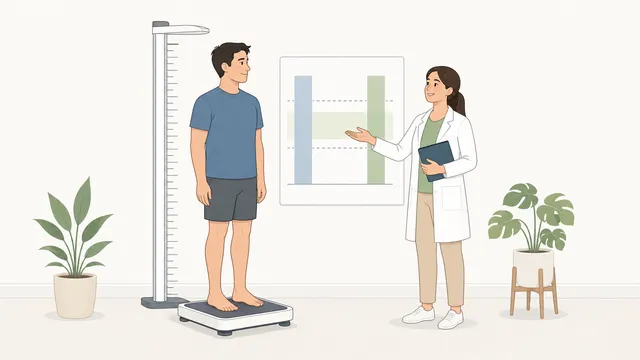
Health / Body Metrics
Ideal Body Weight Calculator
Compare Hamwi, Devine, Robinson, and Miller ideal body weight formulas with healthy BMI range, target BMI, and current-weight context.
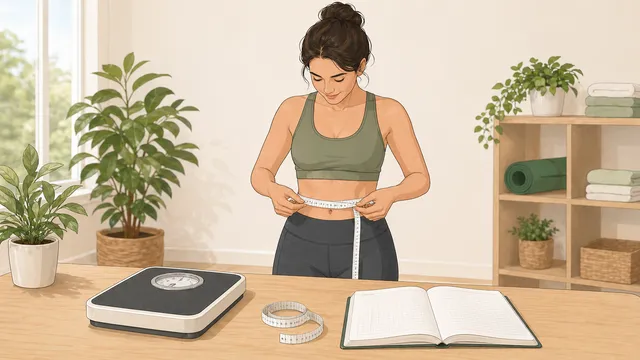
Health / Body Metrics
Body Metrics Calculator
Use this body metrics calculator to compare BMI, BAI, BRI, body fat distribution, waist-to-height ratio, waist-to-hip ratio.
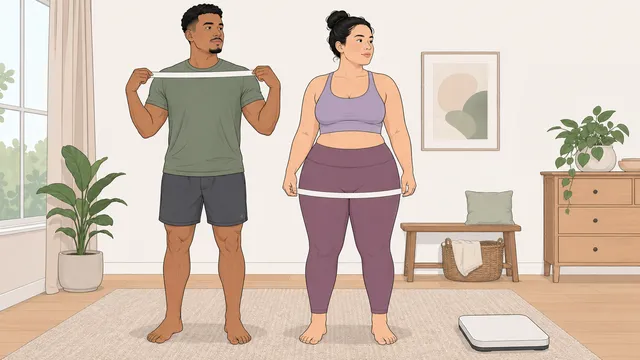
Health / Body Metrics
Body Type Calculator
Use this body type calculator to estimate whether your current build reads more ectomorphic, mesomorphic, or endomorphic from BMI, frame size.