Current Army body composition screening estimate Estimate Army body fat with the current one-site abdomen method, or switch
to the legacy multi-site tape formula for comparison with older Army body
fat calculator worksheets.
Planning tool, not an official ruling
The current Army method uses body weight and abdominal circumference.
Official screenings depend on the governing Army Body Composition Program
procedures, exemptions, repeated measurements, and command policy.
Quick scenarios
Units
Measurement guidance
Averaging close repeat measurements reduces noise from tape angle, breathing, posture, and tape tension.
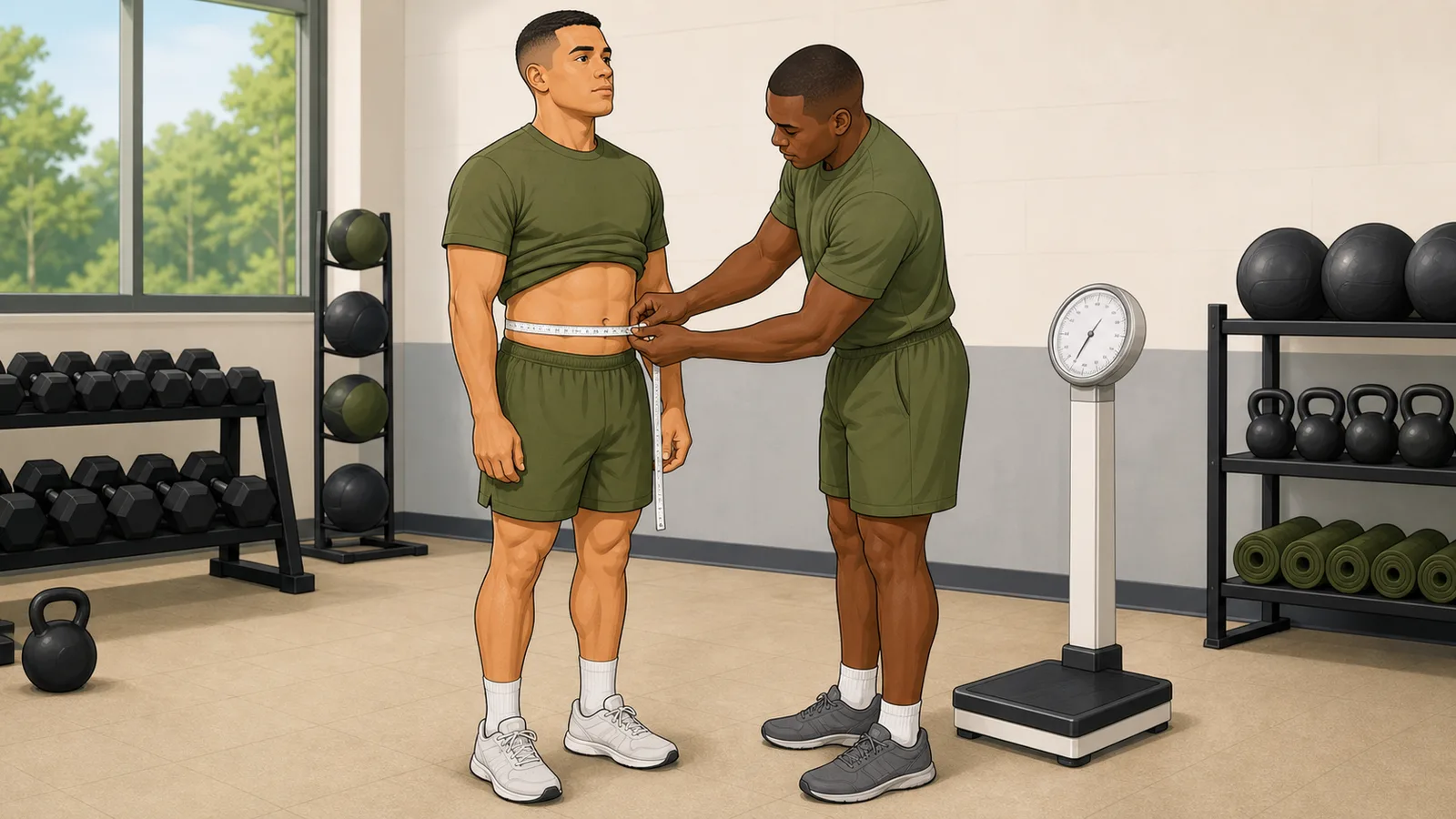
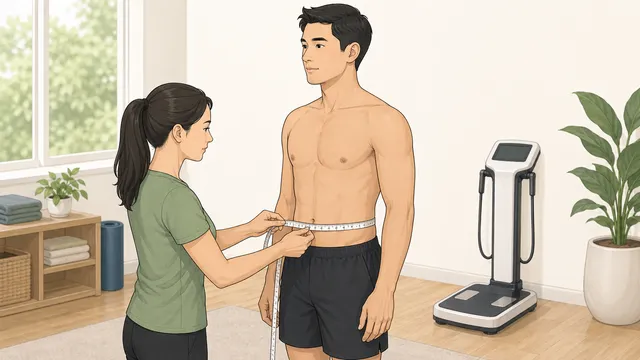
Current method: measure abdominal circumference at the navel after a normal exhale.
Keep the tape level and snug without compressing the skin.
Estimated result
18%
Unrounded estimate: 18.49%. Reference screening limit for the selected age and sex: 22%.
Within Army screening limit Uses body weight and abdominal circumference measured at the navel. Age is used only for the screening limit.
22%
Reference limit
+4 pts
Margin vs limit
34 in
Abdomen / waist input
Current one-site
Method used
Current-method abdomen check
At this weight, age band, and sex, the abdomen circumference associated
with the selected screening limit is about 35.76
in.
1.76 in under the limit
How to interpret this result
Rounded percentage: use the rounded figure for quick screening context, while remembering that official procedures control administrative decisions.
Current versus legacy: the one-site method is better aligned with current Army policy; the legacy mode is included because many older tape-test calculators still use neck, waist, hip, and height.
Measurement noise: small tape placement changes can move the estimate, so trend tracking should use the same landmarks and repeated readings.
Army body fat calculator: current one-site method, legacy tape test, and screening limits
An Army body fat calculator estimates body fat percentage from tape measurements instead of lab equipment. This version leads with the current U.S. Army one-site abdomen-and-weight screening method, compares the rounded result with age-banded Army body fat standards, and keeps the legacy neck, waist, hip, and height tape-test formula available for people checking older worksheets or competitor calculators.
What this Army body fat calculator is doing
This calculator is a practical Army body composition tool based on circumference measurements and body weight. In the current one-site mode it uses sex, age, body weight, and abdominal circumference at the navel. In legacy mode it uses the older multi-site tape formula: height, neck, and waist for men, plus hip circumference for women. That makes it useful both as a current Army body fat calculator and as an Army tape test calculator for historical comparison.
The result is best understood as a screening estimate. Tape-based methods are popular in military settings because they are cheap, repeatable, and easy to administer, but they are still estimators rather than direct measures of body composition. Small changes in tape position, posture, breathing, or how tightly the tape is pulled can move the result by several tenths of a point or more. The calculator shows the rounded percentage, the unrounded estimate, the age-and-sex screening limit, and the margin versus that limit so the number has context.
The formulas used by the calculator
The default calculation uses the current one-site Army screening equation. Measurements are converted to pounds and inches internally, then the calculator applies the sex-specific abdomen-and-weight equation and rounds the result to the nearest whole percentage point for screening context.
The legacy comparison mode keeps the long-standing circumference equations associated with older military tape testing. Measurements are converted to inches internally, then applied to sex-specific logarithmic formulas that estimate body fat from relative body shape, especially the relationship between height and trunk girths.
After estimating body fat percentage, the calculator compares the rounded result with Army age-band reference limits. In this implementation, men use 20%, 22%, 24%, and 26% thresholds across increasing age bands, while women use 30%, 32%, 34%, and 36%.
Used in the default current one-site mode when sex is set to male. Body weight is converted to pounds and abdominal circumference is converted to inches before the equation is applied.
Used only in legacy comparison mode. Waist, hip, neck, and height are measured in the same unit before conversion to inches.
Assessment = rounded body fat percentage ≤ age-band limit
The calculator labels the result as within or above the Army screening limit for the selected age and sex, and shows how many percentage points separate the result from that limit.
How current Army policy relates to this calculator
This part matters. Current Army body composition policy moved beyond the older multi-site tape-only workflow. Army guidance now uses a one-site abdomen circumference method for routine body composition screening and allows supplemental assessment methods when needed. That means a free Army body fat calculator online like this one is best treated as an educational estimator, not as an official pass-fail ruling.
The calculator therefore starts with the current one-site method instead of making users hunt for it after entering legacy neck and hip measurements. It also gives the abdomen circumference that would approximately meet the selected age-and-sex standard at the current body weight. That abdomen-limit readout is a planning aid: it helps users understand the sensitivity of the one-site tape test without pretending to replace the governing Army Body Composition Program process.
In practice, legacy mode is still useful because many people search for an Army tape test calculator to understand older neck, waist, hip, and height formulas, compare a past worksheet, or see why a competing calculator returns a different number. But if an official determination matters, the governing Army directive and local testing procedures control, not a browser calculator.
Use consistent tape landmarks each time if you are tracking progress.
Measure after a normal exhalation rather than sucking in or bracing.
Repeat the tape test and average sensible readings if you want a more stable estimate.
Treat the result as a planning tool, not as a diagnosis or guaranteed military compliance decision.
How to measure correctly for the Army body fat calculator
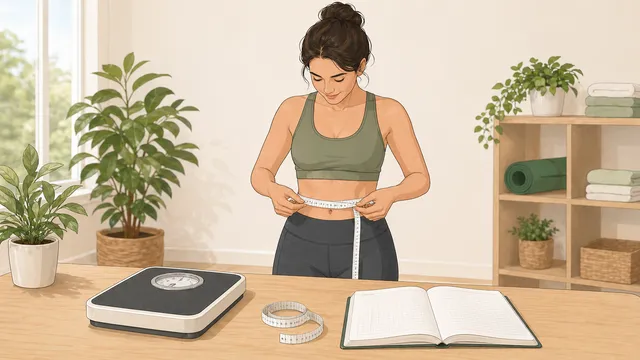
A tape-test estimate only works if the inputs are measured consistently. Keep the tape level, use the same landmarks every time, and avoid pulling the tape tight enough to compress the skin. If you are comparing results across days or weeks, measure at the same point in the day and under similar conditions.
For the most stable Army body fat calculator result, measure after a normal exhale, keep your posture relaxed, and repeat each circumference reading twice if possible. The calculator is meant to make the current abdomen method and the legacy formula easier to understand, not to replace a formal screening process.
Current method abdomen: measure at the navel after a normal exhale.
Body weight: use the weight tied to the screening context rather than a stale training-plan estimate.
Legacy neck: measure just below the larynx.
Legacy waist: measure at the appropriate tape-test landmark for the older worksheet being compared.
Legacy hips: measure at the widest point for women.
Use the same tape tension and stance each time you retest.
Why tape-test results can differ from other body fat methods
A tape-test body fat estimate does not measure fat directly. It predicts fat percentage from anthropometric relationships, so it can disagree with DEXA, Bod Pod, BIA, calipers, or a coach's visual estimate. People with unusually large necks, glutes, or muscular builds can sometimes see results that feel counterintuitive, and the current one-site method can move quickly when abdominal circumference changes by even a small amount.
That does not make the method useless. It means the method is designed for screening and standardization, not for perfect individual precision. For many users, an Army body fat calculator is most helpful when used the same way each time to track directional change, especially alongside waist measurement, body weight, and performance markers. The strongest use case is not a bare pass-fail number; it is seeing the rounded estimate, the margin to the Army body fat standard, and the assumptions behind the result.
How the Military Measures Body Composition — Military health reference explaining current service body-composition methods, including the Army’s one-site abdomen approach and legacy tape methods.
What measurements does the US Army body fat method use?
The current one-site Army body fat method uses sex, age, body weight, and abdominal circumference at the navel. The legacy multi-site tape formula uses height, neck, and waist for men, and height, neck, waist, and hip for women. This calculator supports both because search results and older worksheets often mix the two methods.
How accurate is the Army tape test compared to DEXA or hydrostatic weighing?
The tape test has an error range of approximately 3-5 percentage points compared to laboratory methods. It tends to overestimate body fat in very muscular individuals and underestimate it in people who carry fat elsewhere. Its advantage is simplicity and consistency in field conditions.
What are the Army body fat standards?
Maximum body fat allowances vary by age and sex. For men, the reference limit ranges from 20% (17-20 years) to 26% (over 40). For women, limits range from 30% to 36% by age group. This calculator compares the rounded estimate with those age-band limits for planning context; official consequences depend on current Army Body Composition Program procedures.
Is this the same as the current Army body composition test?
It is aligned with the current one-site abdomen-and-weight method for educational planning, and it also includes legacy multi-site mode for comparison. It is still not an official Army screening decision because real determinations depend on the current directive, the administering unit, required measurements, exemptions, and any allowed supplemental assessment.
How should I measure for an Army body fat calculator?
For current one-site mode, measure the abdomen at the navel after a normal exhale and enter the body weight tied to the screening context. For legacy comparison mode, keep the tape level and snug, measure the neck just below the larynx, use the correct waist landmark for the older worksheet, and measure hips at the widest point for women. Repeat readings if you want a steadier estimate.
Why might my result differ from a DEXA or scan-based body fat reading?
Circumference formulas estimate body fat from shape and size relationships, so they are sensitive to tape placement, posture, and body type. They are useful for screening and trend tracking, but they are not direct scan-based measurements.
Can I use metric or imperial measurements?
Yes. The calculator accepts both metric and imperial inputs and converts them internally before applying the selected formula. This is helpful for users outside the United States who still need to understand a U.S. Army body composition calculation published in pounds and inches.
Why does this calculator show an abdomen limit?
The abdomen limit estimates the abdominal circumference that would approximately meet the selected Army body fat standard at the current weight, age, and sex. It is a planning sensitivity check, not an official target or command decision.
Why do some Army tape test calculators ask for neck and hip measurements?
Many older and competing calculators still use the legacy multi-site circumference equations. Those formulas can be useful for historical comparison, but the current Army body composition screening workflow is centered on the one-site abdominal circumference method.