

How Much Sleep Do You Actually Need? A Science-Backed Guide
Understand sleep cycles, calculate your ideal bedtime, and learn how sleep quality affects your weight, recovery, and overall health.
The night I realized sleep was non-negotiable
Three months into rehabbing a torn ACL, I hit a wall. My knee wasn’t responding to physical therapy the way my surgeon expected, my mood was tanking, and I was gaining weight despite eating clean. My physiotherapist asked me a question I wasn’t ready for: “How much are you actually sleeping?”
The honest answer was five to six hours on a good night. I was staying up late researching recovery protocols, waking up early to stretch, and spending the hours between tossing and turning because my knee ached. I thought I was doing everything right — but I was sabotaging my own recovery by ignoring the single most powerful repair mechanism our bodies have.
That experience changed my entire approach to training. Today, when a new client walks into my studio, sleep is one of the first things we talk about. Not sets and reps. Not meal prep. Sleep.
How sleep cycles actually work
Your body doesn’t just “turn off” when you close your eyes. Sleep happens in repeating cycles of roughly 90 minutes each, and each cycle contains distinct stages that serve different purposes.
Light sleep (stages 1–2) acts as the transition zone. Your heart rate drops, your muscles relax, and your brain begins processing the day’s information. This accounts for about half of your total sleep time.
Deep sleep (stage 3) is where the physical magic happens. Human growth hormone floods your system, tissue repair kicks into high gear, and your immune system gets a significant boost. For anyone who trains — or anyone recovering from an injury — this stage is irreplaceable. You can’t supplement your way to deep sleep. You have to earn it by giving your body enough total sleep time.
REM sleep handles the mental side. This is where your brain consolidates memories, regulates emotions, and clears metabolic waste. Skimp on REM and you’ll notice it in your focus, your patience, and your decision-making long before you notice it in your body.
A full night typically includes four to six complete cycles. Wake up in the middle of a cycle and you’ll feel groggy regardless of how many hours you slept. Wake up between cycles and you’ll feel surprisingly alert — even on slightly less total sleep.
Calculate your ideal bedtime
This is where most people get it wrong. They pick a bedtime based on habit or convenience rather than aligning it with their wake-up time and natural cycle length. Counting backward in 90-minute blocks from when your alarm goes off gives you bedtime targets that work with your biology instead of against it.
Use the Sleep Calculator to find the bedtime that aligns with your wake-up schedule:
Mode
Suggested bedtimes
23:15 (7h 30m)
Bedtime suggestions use 90-minute sleep cycles, your fall-asleep buffer, and the selected age range.
Recommended sleep by age
National Sleep Foundation guidelines for daily sleep duration.
| Age group | Age | Hours |
|---|---|---|
| Newborn | 0–3 months | 14–17 |
| Infant | 4–11 months | 12–15 |
| Toddler | 1–2 years | 11–14 |
| Preschool | 3–5 years | 10–13 |
| School-age | 6–13 years | 9–11 |
| Teenager | 14–17 years | 8–10 |
| Young adult | 18–25 years | 7–9 |
| Adult | 26–64 years | 7–9 |
| Older adult | 65+ years | 7–8 |
About sleep cycle timing
Sleep cycles often last around 80-110 minutes and move through lighter, deeper, and REM sleep. Waking between cycles — rather than mid-cycle — often feels easier, but enough total sleep and a consistent wake time matter more than exact clock arithmetic. This calculator is a planning aid, not a medical tool. If you have persistent sleep difficulties, loud snoring, breathing pauses, or severe daytime sleepiness, consult a healthcare professional.
Cycle timing can reduce sleep inertia for some people, but regular wake times and enough total sleep matter more than hitting an exact minute.
If you need to wake at 6:30 AM, for example, ideal bedtimes might land around 9:00 PM, 10:30 PM, or midnight — each one representing a different number of full cycles. Most adults function best on five cycles (7.5 hours), though some genuinely need six (9 hours), and a rare few can thrive on four (6 hours).
Start with five cycles for two weeks. Track how you feel at midday — not first thing in the morning, since morning grogginess can take 20 minutes to clear regardless. If you’re dragging by 2 PM, you probably need to add a cycle.
That said, a calculator can only estimate a sensible schedule. It cannot diagnose insomnia, sleep apnea, restless legs, shift-work disorder, depression, or the million ordinary-life stressors that can wreck your rest. If you are giving yourself enough time in bed and still waking unrefreshed for weeks, do not turn the bedtime math into a personal character test. At that point the useful next step may be a sleep diary, a medication review, or a conversation with a GP or sleep specialist rather than another attempt to become “better” at bedtime.
Why poor sleep leads to weight gain
Here’s something that surprised me during my own recovery: when I finally fixed my sleep, I dropped four kilograms in six weeks without changing a single thing about my diet.
The science behind it is well-established. Sleep deprivation increases ghrelin (the hunger hormone) and decreases leptin (the satiety hormone). The result is that you feel hungrier, crave calorie-dense foods, and feel less satisfied after eating. One rough night won’t do much, but chronic sleep debt creates a hormonal environment that actively promotes fat storage.
There’s also a metabolic component. Insufficient sleep reduces insulin sensitivity, which means your body has a harder time processing carbohydrates efficiently. Over months, this contributes to elevated blood sugar, increased fat storage around the midsection, and a higher baseline weight.
Check your BMI to understand the full picture
Sleep and body composition are a two-way street. Carrying excess weight — particularly around the neck and torso — can disrupt breathing during sleep, reduce sleep quality, and make it harder to reach those deep recovery stages. Meanwhile, poor sleep makes it harder to maintain a healthy weight. Breaking the cycle often means addressing both sides simultaneously.
Knowing your BMI gives you a useful baseline. It’s not a perfect measure (it doesn’t account for muscle mass, and as someone who’s built like a swimmer, I know that firsthand), but it’s a quick way to understand where you stand relative to general health guidelines.
Use the Body Metrics Calculator to check your current BMI reading:
Measurement quality comes first
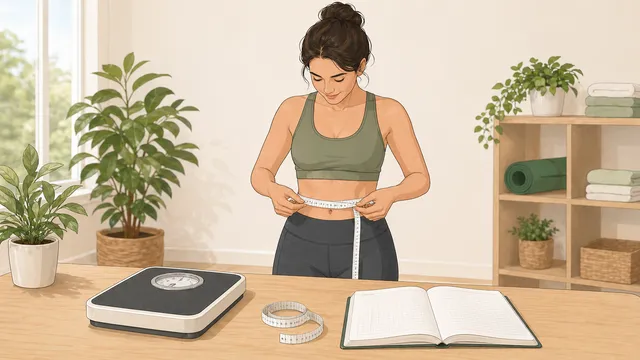
- Measure waist after a normal exhale, with the tape level and snug but not compressing the abdomen.
- Measure hips at the widest repeatable point around the hips and buttocks, again with a level tape.
- Take two readings when the result matters. If the numbers differ noticeably, remeasure before interpreting the body metrics.
Result
26.93 BMI
BMI and waist screens both deserve attention. BMI is 26.93 (Overweight), waist-to-height ratio is 0.5, waist-to-hip ratio is 0.824, BAI is 28.8%, and BRI is 3.36.
Combined screening signal
BMI and waist screens both deserve attention
BMI is above the healthy adult band and at least one waist-based screen is raised, even though BAI stays in its normal range. That disagreement is exactly why a broad body metrics calculator is more useful than any one number alone.
Waist target to keep under half of height
84 cm
The common half-height waist line is 84 cm, and the current waist is already 0 cm below it.
Remeasure first, then verify with a narrower body-composition tool
This reads more like a waist-led risk pattern than a pure weight-only issue
Repeat waist and hip measurements once or twice under the same conditions. If the pattern persists, use the body fat calculator or a clinician-guided assessment to add narrower body-composition context.
26.93
BMI: Overweight
70.3 kg
BMI target: Target BMI 24.9
28.8%
BAI: Normal
3.36
BRI: Low BRI
0.5
Waist-to-height: Increased central adiposity
0.824
Waist-to-hip: Moderate-risk screen
Pear (triangle)
Body shape: Moderate risk
Mesomorph
Body type: Overweight range
| Module | Result | How to read it |
|---|---|---|
| BMI | 26.93 · Overweight | About 5.7 kg less would return to BMI 24.9 at this height. |
| BMI target | 70.3 kg · Target BMI 24.9 | The upper edge of the healthy BMI range is usually the most practical first BMI target, with the midpoint acting as a deeper second-stage goal. |
| BAI | 28.8% · Normal | Within the healthy body adiposity range. |
| BRI | 3.36 · Low BRI | Below the lower reference band used in recent mortality research; interpret alongside nutrition, muscle mass, and clinical context. |
| Waist-to-height | 0.5 · Increased central adiposity | The half-height target at this height is 84 cm; the entered waist is 0 cm below that line. |
| Waist-to-hip | 0.824 · Moderate-risk screen | This is above the usual female lower-risk threshold. It is a screening signal rather than a diagnosis, and it works best alongside BMI, waist-to-height ratio, and clinical context. |
| Body shape | Pear (triangle) · Moderate risk | Lower-body-led proportions: hips are carrying more width than the bust, so the silhouette reads as pear-like. |
| Body type | Mesomorph · Overweight range | This result points to a more athletic build, with a stronger tendency toward muscularity and shoulder width than either extreme leanness or fat storage. |
BMI target weight and milestones
The upper edge of the healthy BMI range is usually the most practical first BMI target, with the midpoint acting as a deeper second-stage goal.
| Checkpoint | Target BMI | Target weight | Change |
|---|---|---|---|
| BMI 24.9 (enter healthy range) | 24.9 | 70.3 kg | 5.7 kg |
| BMI 22.5 (healthy midpoint) | 22.5 | 63.5 kg | 12.5 kg |
Specialist pages to keep separate
Some formulas answer narrower questions than this broad body metrics calculator. Use these retained pages when their inputs match the question.
If your BMI is above 25 and you’re also sleeping poorly, tackling both together will likely produce better results than focusing on either one in isolation. Small improvements in sleep quality can reduce cravings and give you more energy for movement, which in turn supports healthier body composition, which in turn improves sleep quality. It’s one of the rare virtuous cycles in health.
This is also where some nuance matters. BMI is a screening tool, not a verdict on your health or your habits. A higher BMI can raise the odds of snoring, reflux, and sleep-disordered breathing, but poor sleep can also show up in people whose weight looks perfectly ordinary on paper. If you have loud snoring, witnessed pauses in breathing, morning headaches, or daytime sleepiness that feels out of proportion to your actual sleep hours, it is worth getting medical guidance rather than assuming the problem is just stress or weak discipline.
Practical steps to improve your sleep tonight
You don’t need a complete lifestyle overhaul. Start with the changes that have the highest return for the least effort.
Fix your wake time first. Set one consistent alarm — including weekends — and stick to it for two weeks. Your body will start adjusting your natural sleepiness to compensate. This single change does more than any supplement or gadget.
Cut screens 45 minutes before bed. I know you’ve heard this before. I also know you’re probably still scrolling at midnight. The blue light issue is real, but the bigger problem is psychological arousal — your brain can’t wind down while you’re processing new information from social feeds or news.
Cool your room. Optimal sleep temperature for most people falls between 16°C and 19°C (60–67°F). Your core body temperature needs to drop slightly to initiate sleep, and a warm room fights that process.
Move your body, but time it right. Regular exercise dramatically improves sleep quality, but intense training within two hours of bedtime can elevate your heart rate and core temperature enough to delay sleep onset. Morning or afternoon sessions are ideal.
Manage the mental game. This is the one people skip, and it’s the one that mattered most during my ACL rehab. When you’re stressed or anxious, your nervous system stays activated regardless of how dark and cool your room is. A five-minute breathing exercise or a brief journaling session before bed can shift you out of fight-or-flight mode faster than any melatonin gummy.
When should you get help for poor sleep?
Most rough patches of sleep are exactly that: rough patches. Travel, stress, illness, pain, parenting, deadlines, grief, and shift changes can all throw you off for a while. But there is a point where “I should really sort my routine out” becomes “I should stop white-knuckling this and get assessed.”
If your sleep problem has lasted more than a few weeks, if you regularly need to nap just to function, if you are falling asleep while driving or at work, or if someone has told you that you snore heavily and stop breathing, take that seriously. The same goes for persistent insomnia, frequent waking with a racing heart, or sleep that is being disrupted by pain, hot flushes, anxiety, alcohol, or medication effects. Sleep calculators and bedtime routines are useful tools. They are not substitutes for treatment when the problem has moved into chronic-territory.
I say this because sporty, disciplined people are especially good at turning every problem into a self-improvement project. Sometimes that works. Sometimes the courageous move is getting support. If your body is waving the flag, listen.
Recovery isn’t just for athletes
I used to think recovery was something only competitive athletes needed to worry about. My torn ACL taught me otherwise. Whether you’re training for a marathon, chasing a toddler around the house, or sitting at a desk for nine hours, your body accumulates stress that requires repair. Sleep is when that repair happens.
You don’t need permission to prioritize rest. You don’t need to earn it by training hard enough. Sleep is the foundation that makes everything else work — your workouts, your nutrition, your focus, your mood. Get it right and the other pieces fall into place with remarkably less friction.
Start tonight. Use the calculators above, pick a bedtime that gives you five full cycles, and commit to it for fourteen days. If you feel better, keep going. If you do not, that is useful information too. Good sleep is not a moral achievement. It is a health input, and sometimes improving it means habits, sometimes it means recovery, and sometimes it means getting the right clinical help. I’ve seen this simple change transform clients who were stuck for months. It just might do the same for you.
Calculators used in this article

Health / Recovery / Sleep
Sleep Calculator
Use this sleep calculator to find bedtimes, wake-up times, and sleep-cycle options using age-based sleep-duration guidance, adjustable cycle length.
Health / Body Metrics
Body Metrics Calculator
Use this body metrics calculator to compare BMI, BAI, BRI, body fat distribution, waist-to-height ratio, waist-to-hip ratio.