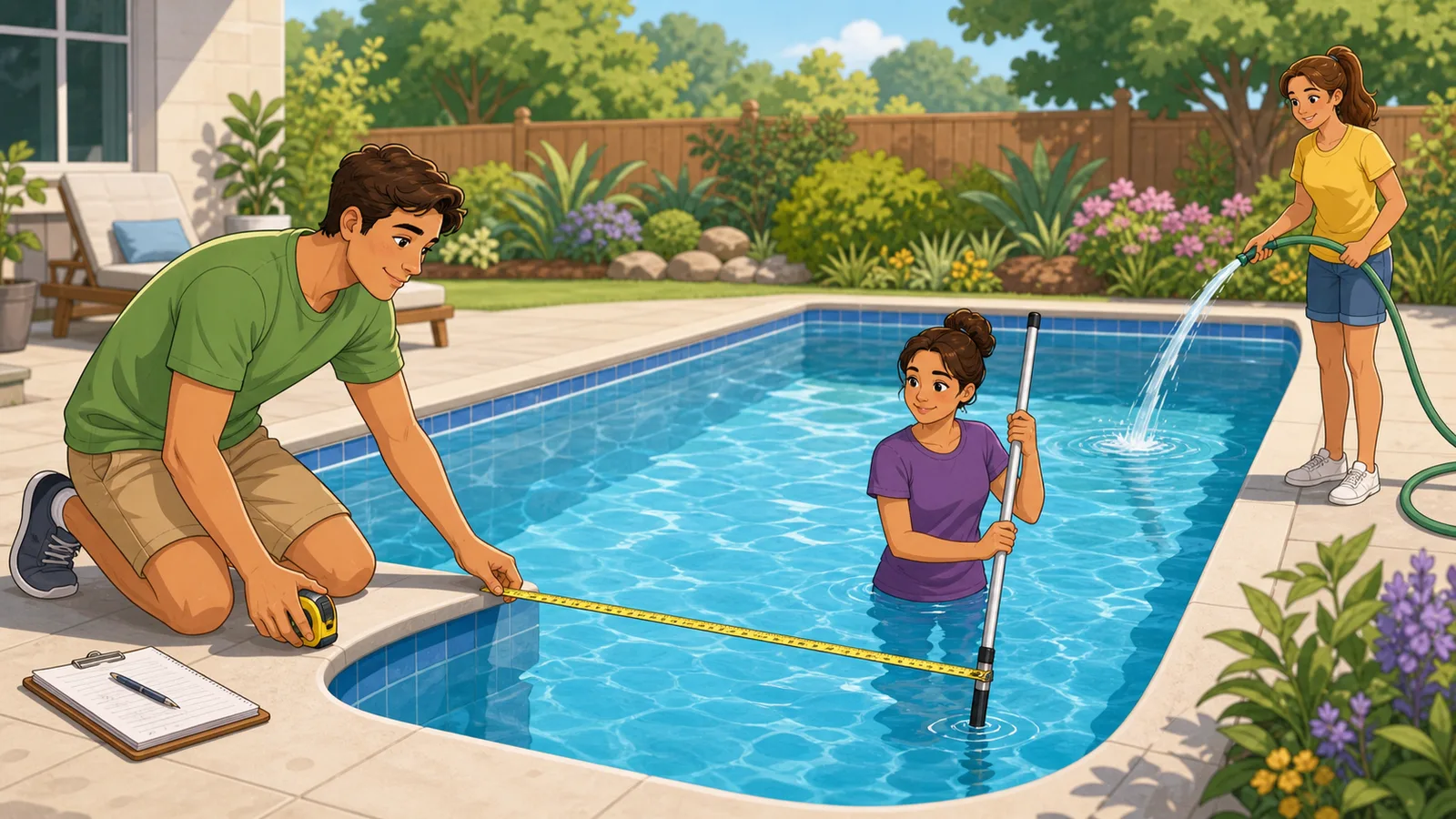
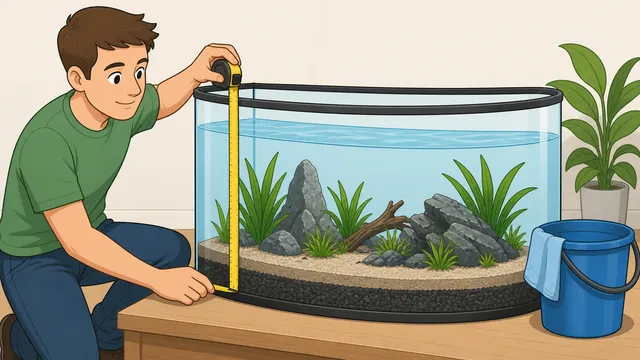
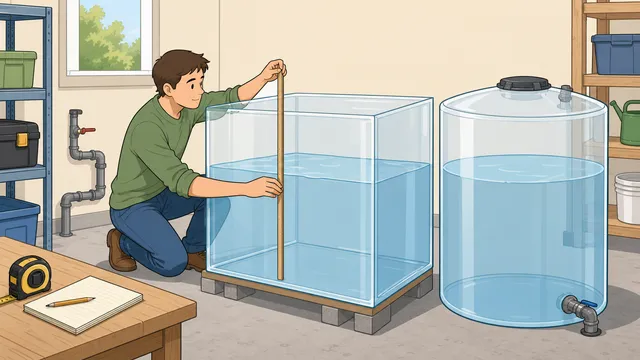
Use the pool volume calculator to estimate swimming pool water volume from shape and dimensions, with fill-time, turnover-rate, and water-weight planning.
Last updated
Pool volume planning worksheet Estimate pool gallons or litres from real water depth, then use the result for fill-time planning,
turnover-rate checks, and safer pool-chemistry testing.
Quick scenarios
Pool shape
Measurement units
Depth basis
Leave this at 0% for a clean rectangular, oval, or round pool. Use a small reduction when built-in
features displace water or a freeform outline makes the simple geometric estimate look too high.
Optional fill-rate estimate
Add hose or truck fill rate to estimate how long a fresh fill or top-up could take.
Rate unit
Measurement note
Use actual water depth, not the full shell depth to the coping or top rail. If your pool has
steps, tanning ledges, benches, or a freeform outline, treat this as a planning estimate and split
complex sections into smaller regular shapes.
Estimated pool volume
9,694.75 US gal
Equivalent to 36,698.63 litres or 36.7 m³
of water at an average depth of 4.5 ft.
36,698.63 L
Litres
36.7 m³
Cubic metres
1,296 ft³
Cubic feet
8,072.57 UK gal
UK gallons
80,906.64 lb
Water weight
36,698.63 kg
Water weight (metric)
Fill planning
At 12 US gal/min, a full fill would take about
13 hr 28 min.
6-hour turnover target26.93 gpm / 101.94 L/min
8-hour turnover target20.2 gpm / 76.46 L/min
How to use this result
Use the volume as your baseline for chlorine and pH testing, refill planning, salt and chemical
label checks, and pump-sizing conversations. If a measured salt or chemical dose suggests your real
pool holds a little less water, refine the worksheet rather than trusting the first estimate blindly.
Pool volume calculator: rectangular, oval, and round swimming pools
Calculating your swimming pool volume accurately is the foundation of safe water chemistry, refill planning, and pump-sizing decisions. Chlorine testing, salt additions, fill-time estimates, and turnover-rate checks all depend on knowing how many litres or gallons of water the pool actually holds at normal operating level. This pool volume calculator supports rectangular, oval, and round pool shapes with constant or variable depth.
Pool volume formulas by shape
A rectangular pool volume is Length × Width × Average Depth. For pools with a shallow end and a deep end, use the average depth: (shallow depth + deep depth) ÷ 2. This is the common starting point behind searches such as pool gallon calculator, pool size calculator, or swimming pool volume calculator.
An oval pool approximates an ellipse. The formula is (π ÷ 4) × Length × Width × Average Depth, which is approximately 0.785 × Length × Width × Depth. A round pool uses the circular area: π × (Diameter ÷ 2)² × Depth. If your pool is freeform, kidney shaped, or heavily stepped, split it into smaller regular sections and add the volumes.
Rectangular pool volume = Length x Width x Average Depth
Use the actual water-holding footprint and the actual water depth, not the shell depth to the coping.
Oval pool volume ≈ 0.785 x Length x Width x Average Depth
The 0.785 factor is the ellipse-area shortcut used for many oval and oblong pool estimates.
Round pool volume = π x (Diameter / 2)^2 x Depth
Round pools use circular area, then multiply by the operating water depth.
Why actual water depth matters more than shell depth
One of the most common pool-volume mistakes is measuring the shell or wall height instead of the water that the pool normally holds. A pool may be 4 feet deep to the rim, but if the water line sits several inches below that point, using the full shell depth can overstate the volume enough to skew chemical additions, salt dosing, and refill estimates.
That is why a strong pool volume calculator should work from water depth, not from the maximum physical depth of the structure. If the pool slopes, average the shallow end and deep end only after measuring the water-holding depth at both ends.
How pool volume affects testing, chlorine, and salt planning
Pool volume does not tell you exactly how much of a specific product to add, because chlorine strength, stabilizer content, and label directions differ by product. What it does give you is the baseline needed to interpret test results and to follow product labels accurately. CDC guidance for residential pools recommends keeping pH in the 7.0 to 7.8 range and free chlorine at at least 1 ppm in pools, or at least 2 ppm when cyanuric acid is in use.
In practice, this means volume should come first and chemical dosing second. Work out the pool gallons or litres, test the water, then follow the specific label instructions for the exact chlorine, salt, pH increaser, or alkalinity product you are using. That is safer than relying on one generic grams-per-1,000-litres rule.
Fill time, water weight, and turnover planning
Knowing the pool volume helps with more than chemistry. If you know the hose or truck fill rate, you can estimate how long a fresh fill could take. If you know the total gallons, you can also estimate the approximate flow rate needed for a 6-hour or 8-hour turnover target when discussing pumps and circulation with an installer or service company.
Water weight is another useful planning output. Every litre of pool water weighs about 1 kilogram, and every US gallon weighs about 8.34 pounds. That does not replace structural engineering, but it helps explain why even a modest-looking pool contains many tonnes of water.
How to estimate irregular, freeform, or heavily stepped pools
A freeform pool usually cannot be modeled perfectly with one length, width, and depth. The practical workaround is to split the pool into a few simpler shapes, such as rectangles, circles, or ovals, calculate each section separately, and add the results. This also works well for tanning ledges, attached spas, and step-out deep ends.
If built-in features occupy a large share of the footprint, treat the first result as a high estimate. After opening the pool, many owners refine the worksheet using measured chemical or salt changes so the working gallon figure better matches the real water volume.
The usable-volume reduction field is designed for that adjustment step. Leave it at 0% for a clean rectangle, oval, or round pool, or enter a small percentage when steps, benches, tanning ledges, raised floors, or a freeform outline clearly displace water from the simple geometric shape.
Limitations of volume estimates
Pool volume calculations are estimates. Real pools have rounded corners, benches, tanning ledges, and other features that reduce true volume slightly from the simple geometric figure. Treat results as a starting point and refine them when real testing or salt additions suggest the working volume is different.
Vinyl liner pools may have irregular profiles where shallow and deep sections meet. In these cases, calculate each section separately and add the volumes rather than forcing one average depth across the whole pool.
Frequently asked questions
How do I measure my pool for a volume calculation?
Measure the longest internal length and the widest internal width at water level. For depth, measure at the shallow end and at the deepest point. Use the average depth in the calculator for the most accurate result.
How much water does an average garden pool hold?
A typical UK garden pool measuring 6 m × 3 m with a constant depth of 1.35 m holds approximately 24,300 litres. A larger 10 m × 5 m pool with an average depth of 1.5 m holds around 75,000 litres.
Can I use this calculator for a paddling pool or hot tub?
Yes — a small rectangular paddling pool works the same way. For a round hot tub or spa, use the round shape option and enter the internal diameter and water depth, not the full shell height.
Why does the calculator show litres and gallons?
Pool chemistry and pump sizing are often discussed in litres, while product packaging or older guidance may use gallons. Showing both units makes it easier to follow label directions and compare supplier advice.
Should I include steps or benches in the volume?
No. Steps and benches reduce the true water volume slightly, but most calculators treat them as part of the main shape. If the pool has a lot of built-in features, the safest approach is to treat the result as a high estimate and adjust chemical doses after water testing.
How long will it take to fill my pool?
That depends on the pool volume and the actual fill rate. Once you know both, divide the total gallons or litres by the flow rate per minute to estimate fill time. Hose pressure, simultaneous water use elsewhere, and truck delivery rates can change the real result.
Why do my actual pool gallons seem lower than the calculator estimate?
Built-in steps, benches, tanning ledges, curved walls, and keeping the water line below the top of the shell all reduce the true water volume. A simple shape-based calculator is a planning estimate, so it is normal to refine the working gallon figure after real chemical or salt adjustments.
What usable-volume reduction should I enter for steps or tanning ledges?
Use 0% when the pool is close to a clean regular shape. For a pool with meaningful steps, benches, ledges, or a freeform outline, start with a small reduction such as 5% to 10% and refine it later if real salt, chlorine, or refill measurements suggest the working gallon figure is still too high.
Can I use this calculator for an above-ground pool?
Yes. Round and oval above-ground pools are common use cases. Just measure the water-holding diameter or footprint and the actual water depth, not the full wall height.
Guides
Featured in articles
Step-by-step guides that use this calculator to solve real problems.