Skip to content
Calcipedia
Portion Size Calculator instructional illustration

Portion Size Calculator

Use this portion size calculator to divide whole-recipe calories, macros, and cooked weight into serving size, serving count, per-portion nutrition.

Health estimate

Topic review: Maria Santos

Diet & Lifestyle Coach. Assigned as the health topic reviewer for nutrition, macro, calorie, and lifestyle diet calculators.

Reviewed 23 April 2026 Updated 29 April 2026 View reviewer profile Contact editorial team
Divide a cooked recipe into real portions Use whole-recipe calories, macros, and final cooked weight to calculate portion size by serving count, calorie target, macro target, or a weighed plate.

Example portion plans

Best practice

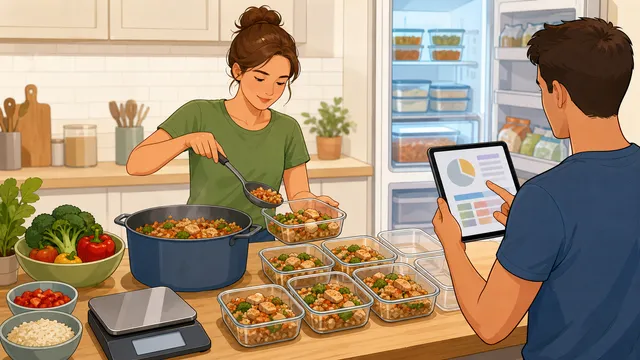
Weigh the finished cooked recipe after removing the pot or tray weight. Then either split it into equal containers or enter the grams from one plate to calculate that actual portion.

Result

300 g

per planned portion across 6 servings total

Recipe totals are divided across 6 planned servings.

400

Calories per planned serving

30 g

Protein per planned serving

35 g

Carbs per planned serving

15 g

Fat per planned serving

Your 300 g plate is about 400 kcal.

It contains 30 g protein, 35 g carbs, 15 g fat, and equals 1 planned serving.

How to portion this batch

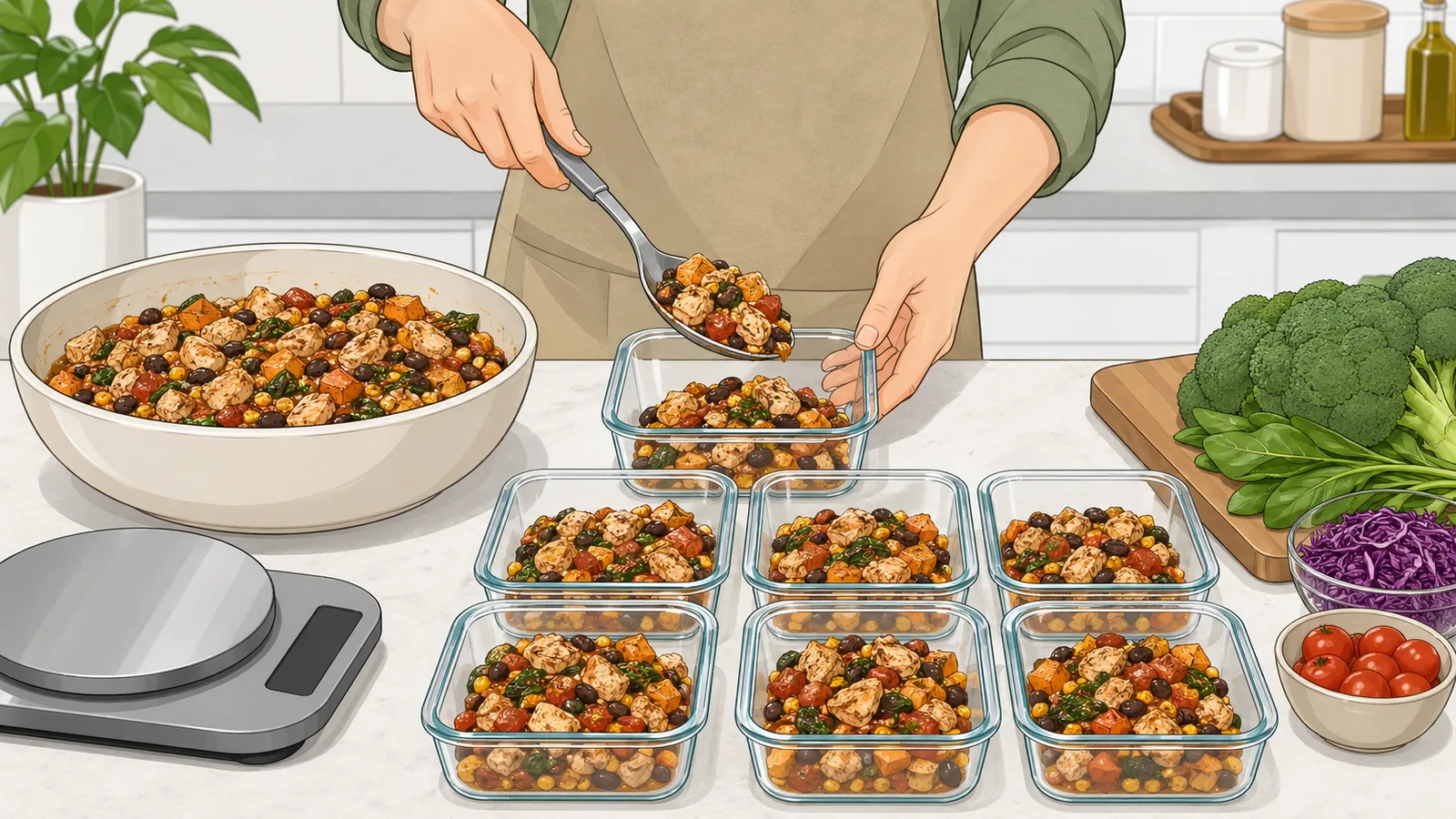
  • Fill each meal prep container to about 300 g for the planned serving size by grams.
  • Use the per-100 g row when one container is uneven and you need to log the actual recipe portion from a food scale.
  • If these portions cover several days, chill what you will eat soon and freeze later containers instead of relying on one long fridge run.

Per-serving and per-100 g context

Fixed servings with density context for portioning by lunch box, plate, or food scale.

Serving weight300 g
Calories per 100 g133 kcal
Protein / Carbs / Fat per 100 g10 g / 11.7 g / 5 g
Macro energy split30% protein · 35% carbs · 34% fat
Portion target typeCalories

Nearby whole-container plans

Use these rounded serving counts when you need equal lunch boxes or freezer containers instead of fractional portions.

ServingsWeight eachCaloriesProteinCarbsFat
6300 g400 kcal30 g35 g15 g
7257.1 g343 kcal25.7 g30 g12.9 g

Nutritional values depend on accurate recipe totals and final cooked weight. Actual values vary with ingredient brands, trimming, water loss, absorption, and measurement precision. For clinical, allergy-sensitive, or competitive nutrition use, verify the underlying food data carefully.

← All Meal Planning calculators

Health — Nutrition

Portion size calculator guide: recipe serving size, meal prep portions, calories

A portion size calculator turns whole-recipe calories, macros, and cooked weight into realistic serving sizes. Use it as a recipe portion calculator when you want equal meal prep containers, a serving size calculator when you need grams per serving, or a food portion calculator when you have weighed one plate and want to know what that portion contains.

Why portion planning matters more than people think

Once a meal is cooked, visual estimates become surprisingly unreliable. A tray of pasta bake, curry, chilli, soup, or stew can look like “about four portions” while actually producing six smaller portions or three very large ones depending on the dish density, serving utensils, and how hungry you are at the time.

That is why recipe-based portioning is useful for meal prep, calorie tracking, weight management, and macro planning. Instead of guessing from appearance alone, you start with the whole recipe total and divide it deliberately, either by number of portions, by a target calories-per-serving goal, by a macro target, or by the gram weight you want in each container.

How this portion size calculator works

The calculator starts with the nutrition for the entire cooked recipe: total calories, protein, carbohydrates, fat, and final cooked weight. From there it divides the recipe by your chosen method and reports calories, macros, serving weight, nutrition per 100 g, and nearby whole-container options.

If you know the number of servings, it divides the whole recipe by that count. If you know the target per portion, it reverses the calculation to estimate how many servings the recipe should make. The target can be calories, protein, carbohydrates, fat, or serving weight in grams.

Two ways to use a portion size calculator

The simplest approach is fixed servings: you decide that a recipe makes four, six, or eight portions and the calculator shows the calories and macros in each one. This works well when you are batch-cooking for a household, filling lunch boxes, or preparing freezer meals ahead of time.

The reverse approach starts with a target serving size. If you want each portion closer to 450 or 600 kcal, 30 g of protein, or 250 g by weight, the calculator estimates how many servings the recipe should make to land in that range. That is especially helpful when you are meal-prepping for a specific intake target rather than just sharing the dish evenly.

Serving size versus portion size

A serving size on a packaged food label is a standardized label amount, not a personal recommendation. A portion size is the amount you actually choose to eat at one time. Those two numbers can match, but they often do not.

For homemade recipes, the useful serving size is usually the one you can repeat: grams per container, calories per bowl, protein per lunch, or a known share of the cooked batch. This page focuses on that practical recipe and meal prep problem rather than trying to define a universal “correct” portion for every person.

Why weighed portions beat eyeballing leftovers

If accuracy matters, portioning by cooked weight is usually better than trying to split a dish by sight. That does not mean every homemade meal can be reduced to laboratory precision, but it does mean you can remove a lot of avoidable guesswork by weighing the finished dish or weighing equal containers before storage.

The biggest source of drift is inconsistency: using raw ingredient values for some items, cooked values for others, changing brands, draining liquids differently each time, or assuming the sauce and solids are evenly distributed when they are not. The calculator is strongest when the total recipe input is reasonably well built in the first place.

How to weigh a cooked recipe correctly

For the cleanest result, weigh the empty pot, pan, baking dish, or storage bowl first. After cooking, weigh the full container, subtract the empty container weight, and enter the remaining food weight as the final cooked weight.

For soups, stews, curries, and casseroles, stir well before portioning so the dense ingredients and sauce are distributed as evenly as possible. For foods with separate components, such as chicken and rice, you may get more consistent results by portioning each component separately rather than treating the plate as one mixed recipe.

Worked example: six containers from one batch

Imagine a chilli pot that totals 2,400 kcal, 180 g protein, 210 g carbs, 90 g fat, and weighs 1,800 g after cooking. If you split it into 6 containers, each portion comes out at about 300 g, 400 kcal, 30 g protein, 35 g carbs, and 15 g fat.

If instead you want each portion closer to 35 g of protein, the same recipe would need a slightly smaller serving count. If you want 250 g containers, the same cooked weight would produce 7.2 portions. This is why portion planning works best when the calculator can move both ways: from fixed container counts and from a calorie, macro, or serving-weight target.

Using the weighed plate or container check

The optional weighed portion field is for real life after the plan meets the plate. If you meant to serve 300 g but one container weighs 335 g, enter 335 g and the calculator estimates that actual plate's calories, protein, carbs, and fat from the whole-recipe totals.

This is especially useful when leftovers are uneven, when you are serving from a family-style dish, or when you want to log the portion you actually ate instead of pretending every container came out exactly equal.

When portion planning becomes weekly meal prep

Many meal prep portion calculators start from daily calories, meals per day, and prep days. That is useful for grocery planning, but it does not answer the homemade-recipe question of how many grams from this cooked batch belong in each container. This page starts from the recipe itself: total cooked weight, calories, macros, and the serving size you are actually trying to pack.

If you are planning a full week, use this page to set the grams and macros for each recipe portion, then plan storage separately. The first few containers can usually be treated as near-term meals, while later containers may need freezing or a second prep session depending on the food, cooling, and your local food-safety guidance.

If your real question is how much raw chicken, rice, vegetables, or other grocery weight to buy for several people and several days, use a batch cooking or recipe scaling workflow after you know the target portion size. The two jobs are related, but separating them keeps the portion-size calculation clearer.

Hand portions and visual guides still have a place

Hand portion methods and visual comparisons can be useful when you do not have a scale, especially for quick meals away from home. They help people estimate common portions such as a palm of protein, a cupped handful of grains, or a thumb-sized amount of fat.

For recipe calories and macros, though, visual guides are a fallback rather than the most precise method. A food scale plus cooked recipe weight usually gives a clearer answer when you need a repeatable meal prep portion size calculator.

What this page can and cannot tell you

This page can divide totals cleanly and help you build a repeatable portioning routine. It cannot confirm the nutrition of a recipe if the original inputs were rough guesses, missing ingredients, or based on mismatched raw and cooked food values.

So the useful question is not “is this exact to the calorie?” but “is this accurate enough to make my meal planning more consistent?” For most home cooks and trackers, moving from visual estimates to structured portioning is already a major improvement.

If nutrition values matter for diabetes care, kidney disease, allergy-sensitive meals, eating disorder recovery, athletic weigh-ins, or another clinical plan, use this as planning maths only and verify the underlying nutrition data with a qualified professional or a trusted food database.

Frequently asked questions

How do I calculate portion size from a recipe?

Add up the nutrition for the whole recipe, weigh the finished cooked food, then divide the totals by the number of portions you want. For example, a 2,400 kcal recipe weighing 1,800 g split into 6 portions gives 400 kcal and 300 g per portion.

What is the difference between serving size and portion size?

Serving size usually means the standardized amount used on a Nutrition Facts label. Portion size means the amount you actually eat. For homemade recipes, your useful portion may be a meal prep container, a bowl, a plate, or a specific gram weight.

How do I divide recipe calories into servings?

Divide the total recipe calories by the number of servings. If the recipe has 2,000 calories and you make 5 servings, each serving has about 400 calories before any rounding or ingredient-distribution differences.

Can I calculate a portion from a calorie target?

Yes. Enter the whole-recipe calories and cooked weight, choose a calorie target, and the calculator estimates the serving count and serving weight needed to land near that calorie target.

Can I calculate a portion from a protein or macro target?

Yes. If you know the whole recipe's protein, carbohydrate, or fat total, you can choose that macro as the target. The result estimates how many portions the recipe should make and what each portion contains.

Should I weigh food raw or cooked?

Use one system consistently. For mixed cooked recipes, the easiest workflow is usually to calculate nutrition from ingredient totals, then weigh the finished cooked recipe so water loss, absorption, and draining are reflected in the grams-per-serving result.

How do I calculate calories for a weighed plate?

Enter the whole-recipe totals and final cooked weight, then enter the grams on your plate or in your container. The calculator scales the recipe totals by that weight to estimate the calories and macros in the actual portion.

Why do my macro calories not match my calorie total?

Protein and carbohydrate are commonly estimated at 4 kcal per gram and fat at 9 kcal per gram, but labels and databases may include rounding, fiber handling, alcohol, sugar alcohols, or different data sources. A large mismatch is a sign to recheck the recipe inputs.

Is a food scale required?

No, but a scale makes the result much more repeatable. Without one, the calculator can still divide calories and macros by serving count, but it cannot know whether one scoop or container is larger than another.

Can I use hand portion sizes instead?

Hand portions can help when you need a quick estimate and do not have a scale. For meal prep, recipe logging, or macro targets, cooked weight is usually more consistent because it ties the portion back to the actual recipe total.

Is this accurate enough for weight loss meal prep?

It is often accurate enough to make meal prep more consistent, as long as the recipe totals are built carefully and the final cooked weight is entered correctly. It is still an estimate, not lab-tested nutrition analysis.

Can this calculate grocery quantities for weekly meal prep?

Not directly. This calculator is best for turning one cooked recipe into serving size by grams, calories, and macros. For grocery quantities across several days or people, first choose the target portion size here, then use a batch cooking or recipe scaling calculator to plan raw ingredients and total containers.

Can I use this for diabetes or a medical diet?

You can use it for planning, but do not rely on it as medical advice. If carbohydrate counts, sodium, allergens, renal nutrients, or clinical targets are important, verify the ingredient data and follow guidance from your clinician or dietitian.

Also in Meal Planning

Related

More from nearby categories

These related calculators come from the same leaf category, nearby sibling categories, or the same top-level topic.