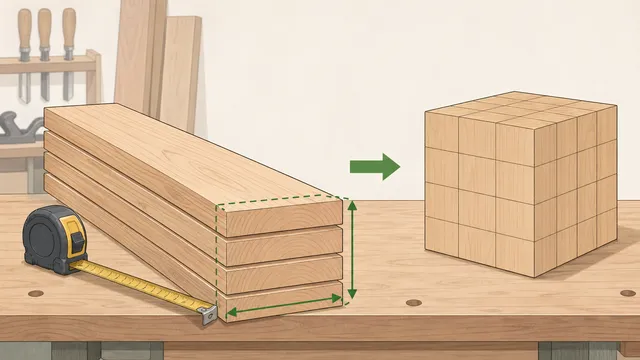
Compare nominal lumber and common sheet-goods sizes against actual inch and millimetre dimensions for board and panel planning.
Last updated
Home & DIY
Timber and sheet-goods reference
Cross-reference common dimensional lumber sizes and sheet goods in inches and millimetres. Switch between nominal and actual lookup, then compare the match against the full reference tables.
Reference type
Lookup mode
What this tool covers
Dimensional lumber uses common nominal boards and posts. Sheet goods cover standard panel sizes plus a short list of common thickness grades with their actual inch and millimetre values.
Result
Dimensional lumber
2×4
A standard nominal board size with actual dressed dimensions.
Actual inches
1.5 in × 3.5 in
Actual millimetres
38 mm × 89 mm
Reference note
Actual lumber sizes are dressed sizes. Nominal dimensions are the market names, not the finished measurements.
Dimensional lumber reference
The active table is highlighted below, and the other reference table stays visible for quick comparison.
Timber and sheet converter: nominal lumber, dressed sizes, and panel dimensions explained
A timber and sheet converter helps when site notes, supplier descriptions, and measured stock all describe the same material differently. Lumber is often bought by nominal size even though the dressed board is smaller in reality, while sheet goods mix panel format and nominal thickness with actual manufactured dimensions.
Why nominal and actual sizes differ
Nominal lumber sizes come from rough-sawn naming tradition, but planing and drying reduce the finished board dimensions. That is why a nominal 2×4 does not measure a full 2 inches by 4 inches once it is dressed for sale.
A lookup table is useful because the same mismatch repeats across common board sizes. It lets you translate supplier terminology into the dimensions that actually matter for framing, cabinetry, and fit checks.
How sheet goods are described
Sheet goods usually combine panel format and nominal thickness. A panel might be sold as 4×8×3/4 even though the actual thickness is closer to about 18 mm or 0.703 inches rather than a true 0.75 inches.
That distinction matters whenever a groove, dado, frame opening, or hardware specification depends on actual panel thickness instead of the nominal trade label.
1 in = 25.4 mm
Core bridge between imperial and metric board and panel measurements.
actual size < nominal size
Common timber rule of thumb because dressing and manufacturing reduce the finished dimensions.
When to use lookup instead of free conversion
A plain unit converter can translate inches to millimetres, but it cannot tell you whether a measurement corresponds to a standard stocked size. This tool adds that reference layer by matching the input against common lumber sizes and common sheet formats with realistic tolerances.
That makes it useful for framing checks, panel cut planning, joinery, trim work, and material specification reviews where trade names and real dimensions both need to stay visible.
Frequently asked questions
Why is a 2×4 not actually 2 inches by 4 inches?
Because the nominal name reflects a rough-sawn sizing convention, while the finished board has been dried and planed to smaller dressed dimensions before sale. The actual size is what matters for fit and layout.
Why does 3/4 inch sheet stock often measure about 18 mm?
Because sheet goods are commonly sold by nominal thickness, not exact finished thickness. Manufacturing tolerances and industry conventions mean the real panel is often slightly thinner than the trade label suggests.
Can I match metric measurements back to common imperial stock?
Yes. The lookup supports both inch and millimetre inputs, then checks them against common nominal lumber sizes or standard panel formats within a practical tolerance.
Does this replace checking the supplier datasheet?
No. It is a fast planning and translation reference. Final purchasing and joinery decisions should still confirm the exact stock dimensions, grade, and manufacturing tolerance from the supplier or product sheet.