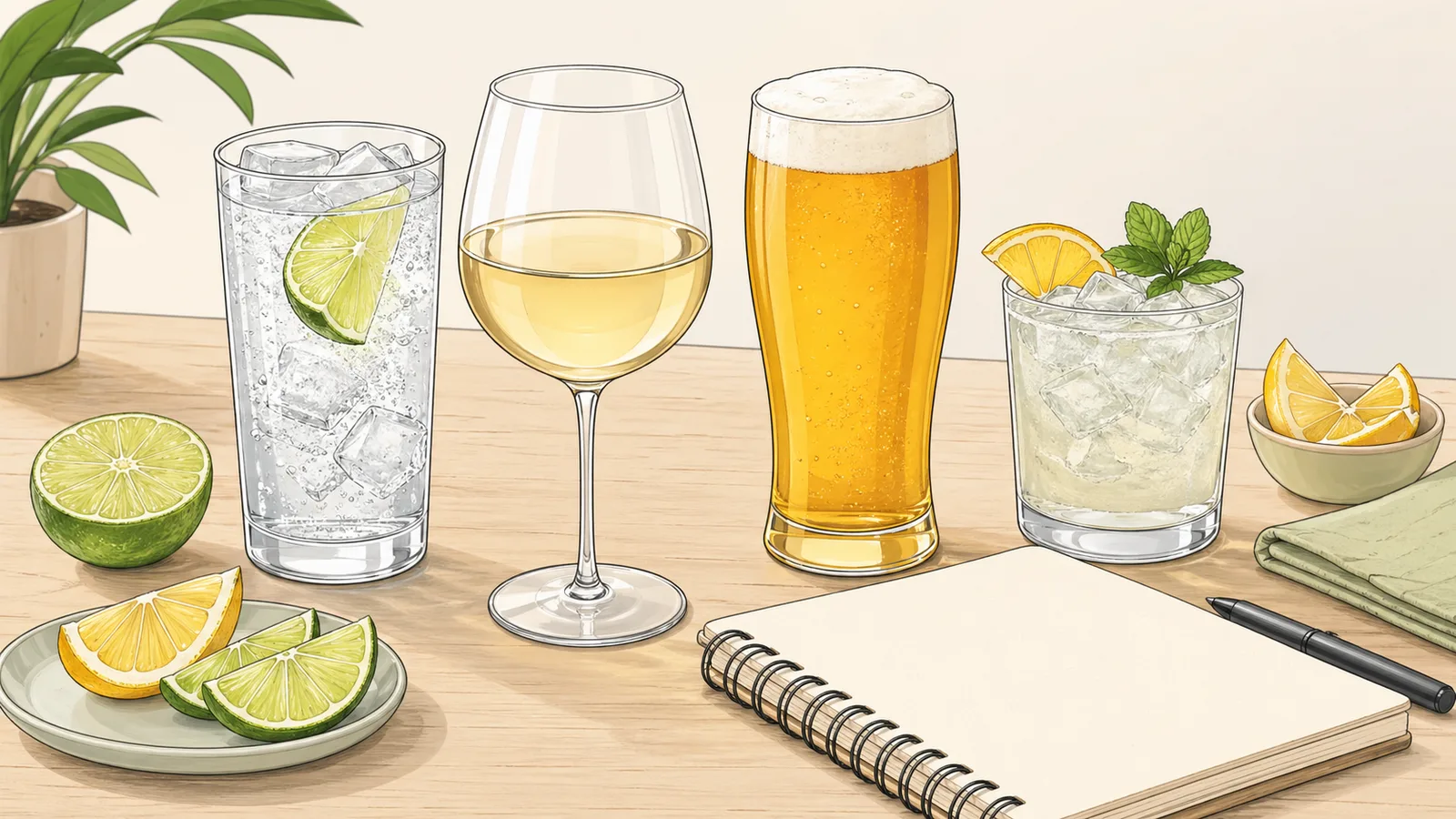
Calculate carbs in alcohol by drink type, with low-carb and keto-friendly comparisons, mixer-carb inputs, and drink-by-drink guidance for beer, wine, spirits.
Health estimate
Topic review: Maria Santos
Diet & Lifestyle Coach. Assigned as the health topic reviewer for nutrition, macro, calorie, and lifestyle diet calculators.
Alcohol itself does not contain carbohydrate. The total comes from the drink style, residual sugar, and any mixer, which is why beer, wine, spirits, liqueurs, and cocktails need different assumptions.
How the calculation works
Carbs are estimated from the drink category default, then any mixer carbs you enter are added before quantity is applied. Carb calories use the standard 4 kcal per gram conversion, which makes it easier to compare a session with a keto or low-carb day.
Quick comparisons
Add common low-carb alcohol and mixer scenarios without rebuilding the row by hand.
Result
Use the total to check a full session against your carb budget, then compare the result with the low-carb drink styles that come up most often in keto planning.
Very low-carb session: 4.4 g across 2 drinks, including any mixer carbs entered.
Very low-carb sessionLowest-carb choices usually start with spirits, dry wine, and drinks without sugary mixers.
4.4 g
This session contributes about 4.4 g of carbohydrate across 2 drinks, averaging 2.2 g per drink.
Carb calories
18 kcal
Counted drinks
2
Average per drink
2.2 g
Session breakdown
Spirit with zero-carb mixer0 g each0 g total
Dry wine glass4.4 g each4.4 g total
Daily carb-budget check
Strict keto day (5 g)0.6 g left
Tight low-carb day (10 g)5.6 g left
Typical keto ceiling (20 g)15.6 g left
Liberal low-carb day (30 g)25.6 g left
Typical drink comparison
Spirits (single shot)25 mL at 40% ABV0 g
Sparkling wine/champagne125 mL at 12% ABV1.9 g
Wine (red/white)175 mL at 12.5% ABV4.4 g
Beer (lager/ale)330 mL at 5% ABV11.6 g
Liqueur50 mL at 20% ABV12.5 g
Strong beer/IPA330 mL at 7% ABV13.2 g
Cocktail200 mL at 12% ABV16 g
Alcopop/RTD275 mL at 5% ABV24.8 g
Cider500 mL at 4.5% ABV25 g
Keto context
Low carb content. Wine and light beer can fit into low-carbohydrate diets in moderation.
Mixer context
This session leans toward lower-sugar drink styles, so most of the carb total is coming from the base drink rather than heavy mixers.
Method note
Note: alcohol itself (ethanol) contains no carbohydrates. The carbs shown here come from residual sugars in the drink. However, ethanol still provides 7.1 kcal/g and can disrupt ketosis regardless of carb content, as the liver prioritises ethanol metabolism.
Carb values are based on typical product profiles and are estimates. Actual values vary by brand and batch. Check the product label or manufacturer data for precise figures.
Alcohol carbs calculator guide: carbs in beer, wine, spirits, and keto-friendly drinks
This alcohol carbs calculator estimates carbohydrate grams in beer, wine, cider, spirits, liqueurs, and cocktails so you can compare low-carb alcohol choices without guessing. It is useful for searches like carbs in alcohol, low-carb alcohol, carbs in beer, carbs in wine, and which alcohol is lowest in carbs, because the total comes from residual sugar and mixers rather than ethanol itself.
Which alcoholic drinks are lowest in carbs
Ethanol itself contains no carbohydrates. Most of the carbs in alcoholic drinks come from residual sugars or carbohydrate-rich ingredients left after fermentation, which is why beer and cider usually rank much higher than neat spirits.
Dry wine, brut sparkling wine, and light beers generally sit lower than regular beer or cider, while sweet wines, dessert wines, liqueurs, ready-to-drink alcopops, and creamy cocktails usually sit at the high end of the range. For low-carb drink planning, the type of drink matters far more than the alcohol content alone.
Why mixers change the total
A spirit on its own can be effectively zero carb, but the mixer often determines the real carb total. Tonic, fruit juice, cola, syrup, and pre-mixed cocktail bases can add far more carbohydrate than the alcohol itself.
That is why users searching for carbs in vodka, carbs in gin, or carbs in rum often need the same follow-up answer: the spirit may be low carb, but the finished drink is only low carb if the mixer is too. Liqueurs and alcopops also start from a sweeter base before the mixer question even begins.
How to compare low-carb alcohol choices quickly
The calculator includes quick comparison rows for a spirit with a zero-carb mixer, dry wine, regular beer, and a sweet cocktail. Those examples mirror the practical decision many people are making: whether a lower-carb drink style is enough, or whether the mixer or serving size is what pushes the session over budget.
For mixed drinks, enter the estimated mixer carbs per drink rather than relying only on the base spirit. That makes vodka soda, gin with diet tonic, rum and cola, juice cocktails, and sweetened ready-to-drink cans easier to compare on the same screen.
Alcohol on keto: carbs are not the whole story
Even when carbohydrate content is very low, alcohol can temporarily interrupt ketosis because the liver prioritises ethanol metabolism over fatty acid oxidation. That means zero-carb spirits can still slow fat burning while the alcohol is being processed.
For people trying to stay in ketosis, the better question is often not just which drink has the fewest carbs, but whether the drink fits the day's carb budget, appetite, and recovery plan. Low-carb alcohol choices still affect judgement, sleep, and recovery even when the carb count looks friendly.
How to use the calculator in real life
Use the result to compare a session, not to turn alcohol into a health food. If you want the lowest-carb option, plain spirits or dry wine are usually better starting points than beer, sweet wine, or cocktail mixes.
That does not mean every low-carb drink is equally sensible. If you are counting carbs for keto, diabetes management, or weight loss, the most useful result is the one that helps you choose a drink you can track honestly and keep within your overall plan.
Worked example: one lager and two liqueurs
Suppose a session includes one 330 mL lager at the calculator's standard beer profile and two 50 mL liqueurs. Using the category defaults, the lager contributes about 11.6 g of carbohydrate and each liqueur contributes about 12.5 g.
That puts the full session at roughly 36.6 g of carbohydrate before mixers are counted. For many keto or tighter low-carb plans, that single session would use up most or all of a whole day's carb budget even though the drink count itself does not look especially large.
How the carb estimate is built
The calculator uses a drink-category carb density, then scales that estimate by the volume and quantity you enter. Carb calories are calculated separately using the standard 4 kcal per gram conversion so you can compare the carbohydrate load with other foods or drinks in a way that is easy to sanity-check.
That approach is deliberate. Searchers usually want a practical estimate fast, not a lab report, so the page keeps the maths visible while still leaving room for the kinds of drink-by-drink comparisons people actually need when planning a night out or a lower-carb week.
Carbs (g) = volume (mL) × carbs per 100 mL ÷ 100
This is the base estimate used for each drink type before quantity is applied.
Total carbs per drink = base drink carbs + mixer carbs entered
This lets a zero-carb spirit become a higher-carb mixed drink when tonic, juice, regular soda, syrup, or another sweetened mixer is included.
Carb calories = carbs (g) × 4
This converts carbohydrate grams into calorie equivalents using the standard nutrition conversion.
What this page does not count
The calculator is based on typical category values, so brand differences, home pours, and bar serving sizes can move the total up or down. A cocktail made with juice, syrups, or sweet liqueurs can also sit much higher than the same base spirit served neat.
It also does not convert the result into a medical recommendation. If you are managing a health condition, taking medication, pregnant, or worried about how alcohol affects sleep, mood, or blood sugar, use the result as a planning estimate and not as a substitute for personalised advice.
Frequently asked questions
Do spirits have carbs?
Plain distilled spirits are effectively zero carb because the fermentation sugars have already been converted to alcohol. The carb total rises once you add mixers, syrups, flavoured liqueurs, or sweetened ready-to-drink bases.
Which alcoholic drinks are lowest in carbs?
Neat spirits such as vodka, gin, whisky, rum, and tequila contain effectively zero carbohydrates. Dry white wine and brut sparkling wine are usually next lowest. Regular beer, cider, liqueurs, dessert wines, and sweet cocktails tend to be much higher.
Do mixers matter more than the spirit?
Often yes. A spirit may be low or zero carb, but tonic, juice, cola, syrup, or premixed cocktail bases can add far more carbohydrate than the alcohol itself. That is why the same spirit can be low carb in one drink and high carb in another.
How should I count mixer carbs in a cocktail?
Use the drink category for the base drink, then add the mixer carbs per drink if you know them from a label, menu, or recipe. Diet soda, soda water, and many zero-sugar mixers may add little or no carbohydrate, while juice, regular cola, tonic, syrups, and sweet cocktail mixes can add enough carbs to change the result completely.
Are low-carb beers really low carb?
Usually lower than regular beer, yes, but not zero. Always check the label because different brands use different brewing methods and the carb content can vary more than people expect.
Can I stay in ketosis if I drink alcohol?
Sometimes, but it depends on the drink, the mixer, your daily carb budget, and how your body responds to alcohol. Even very low-carb drinks can temporarily slow ketone production while alcohol is being metabolised.
How accurate are the carb values?
They are planning estimates, not laboratory measurements. The values are based on drink-category defaults, so the result is most useful for comparing sessions, budgeting a night out, or deciding whether a drink is likely to fit a low-carb day.
Is alcohol itself zero carb?
Yes. Ethanol does not contain carbohydrate, but alcoholic drinks can still be high in carbohydrates if the recipe includes sugar, juice, syrup, or a carb-heavy base ingredient.