Skip to content
Calcipedia
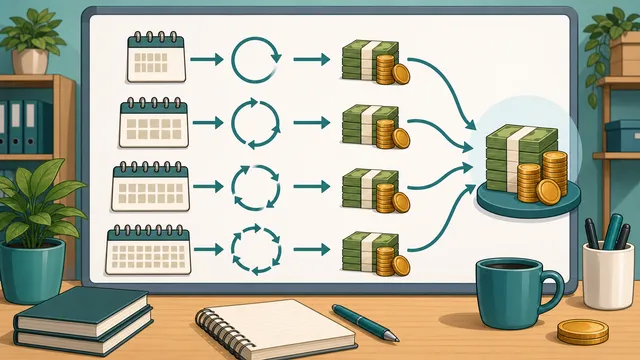
Basis Point Calculator instructional illustration

Basis Point Calculator

Calculate basis point changes between rates, convert bps to percentage points and decimal form, and estimate annualized, quarterly.

Last updated

Translate, compare, and size basis-point moves Convert a rate move across basis points, percentage points, and decimal form, or calculate the move directly from a before-and-after rate pair. Add an optional amount to estimate the annualized impact of the change.

Mode

Quick scenarios

Percentage points are not percent change

A move from 4.50% to 4.75% is 25 basis points and 0.25 percentage points. Relative to the starting 4.50% rate, that same move is about a 5.56% increase in the rate level.

Quick checkpoints

1 bps = 0.01% = 0.0001 decimal. 25 bps = 0.25%. 100 bps = 1.00%.

Enter a rate move Add a signed basis-point, percent, or decimal move to convert it. Optionally add a starting rate and amount to see the before-and-after level and the annualized amount impact.
← All Saving & Investing calculators

Rate Move Basics

Basis point calculator guide: convert, compare

A basis point calculator converts a rate move between basis points, percentage points, and decimal form so you can compare quoted changes consistently. This version also lets you calculate the move directly from a starting rate and ending rate, then estimate the annualized impact on an entered balance, loan amount, portfolio value, or fee base with monthly, quarterly, and annualized checks.

What a basis point means

One basis point is one one-hundredth of one percentage point. That means 1 basis point equals 0.01% and 100 basis points equals 1.00%. Using basis points helps people discuss small rate changes precisely without confusing a percent move with a percentage-point move.

That distinction matters in lending, bond yields, fund fees, and policy rates. Saying a rate moved by 25 basis points is clearer than saying it moved by 0.25 percent, because the basis-point wording makes the size of the rate change explicit.

It also prevents a second, common mistake: mixing up percentage points with relative percent change. A move from 4.50% to 4.75% is a 25-basis-point or 0.25-percentage-point increase, but relative to the starting 4.50% rate it is about a 5.56% increase in the rate level. Those are different ideas, and finance conversations often need all three expressions.

How the conversion and comparison work

In move-conversion mode, the calculator first normalizes the entered signed move into basis points, then converts that same move into percentage points and decimal form. If you also provide a starting rate, it applies the move to that base rate so you can compare the before and after levels side by side.

In rate-comparison mode, the calculator works the other way around. You enter the starting rate and ending rate in the same unit, and the tool calculates the implied basis-point move between them. That is helpful when you already know the two quoted levels and want the basis-point change without doing the subtraction manually.

Keeping the sign matters just as much as the size. A negative move means a cut, narrowing spread, or lower yield, while a positive move means an increase or widening spread. The sign stays intact through every unit conversion so you can discuss the direction of the move correctly.

1 basis point = 0.01% = 0.0001 decimal

The core identity used to convert the same signed move across the three quoting formats.

After rate = Base rate + Rate move

Applies the converted move to the optional starting rate to show the new rate level.

Basis-point change = (Ending rate − Starting rate) × 100

When the two rates are entered in percent, multiplying the percentage-point difference by 100 produces the move in basis points.

Worked examples: yield moves, fee changes, and balance impact

Suppose a starting yield is 4.50% and it rises by 25 basis points. The same move is 0.25% or 0.0025 in decimal form. The after rate becomes 4.75%.

Now add an amount. If the entered balance is 250,000, that same 25-basis-point move corresponds to an annualized change of 625 on that amount because 0.25% of 250,000 is 625. That framing is useful for mortgage-rate conversations, bond-yield comparisons, fund-fee differences, and spread-based pricing discussions.

The same logic works for fees and expense ratios. If an annual fee falls from 0.65% to 0.50%, the change is -15 basis points. On a 500,000 portfolio, that is an annualized fee difference of 750. The calculator does not tell you whether the product is better overall, but it does standardize the quoted rate move and the simple annual amount effect.

That is why basis points are so common in finance. They let people talk about small but meaningful moves in yields, policy rates, mortgage pricing, fee schedules, and spread pricing without ambiguity.

Annualized amount impact = Entered amount × decimal rate move

Translates the rate change into a one-year amount difference on a balance, principal amount, or fee base.

Monthly, quarterly, and annualized impact checks

Many basis point calculators stop at bps-to-percent conversion. That is useful for notation, but it does not answer the practical question most borrowers, investors, analysts, and fee reviewers ask next: what does this move mean on the amount in front of me?

The calculator therefore keeps the annualized amount impact visible and also prorates that simple annual figure into monthly and quarterly equivalents. Those period checks are not loan-payment schedules or compounding models. They are fast materiality checks that help you decide whether a 10 bps fee cut, 25 bps rate hike, or 50 bps spread change is worth a deeper model.

For example, a 25 bps move on 500,000 is 1,250 annualized, about 312.50 quarterly, and about 104.17 monthly before any compounding, amortization, taxes, or product-specific rules. That is often enough to triage whether the rate change is small, material, or worth comparing with an APR, APY, mortgage, bond, or fee calculator.

Quarterly impact = annualized impact / 4

Straight-line quarter check for quick materiality, not a compounding schedule.

Monthly impact = annualized impact / 12

Straight-line monthly check for quick communication and scenario screening.

When to use this calculator instead of the converter

Use the basis point calculator when the question involves a rate move, two quoted rates, or an amount impact. It is built for questions such as how many basis points separate 4.50% and 4.75%, what a 25 bps policy move means on a 500,000 balance, or how much a 15 bps fee reduction changes an annual fee base.

Use the sibling basis points converter when the job is only notation translation: bps to percent, percent to bps, decimal to bps, per mille, or ppm. Keeping those intents separate reduces keyword cannibalisation and makes each page clearer for searchers.

What this calculator does not do

This calculator standardizes quoting and shows a simple one-year amount translation only. It does not explain why the rate moved, whether the quoted move is nominal or effective, how the market convention defines the spread, or how the new rate affects bond prices, duration, present value, amortization, or security valuation.

It also does not model compounding, changing balances, coupon timing, accrued interest, margin rules, or institution-specific pricing sheets. The monthly and quarterly figures are straight prorations of the simple annualized impact, not amortization schedules or security-pricing outputs. If you are working on a mortgage, savings product, bond trade, swap spread, or fund-fee disclosure, the exact economic effect can differ from the simple annualized amount impact shown here.

Use it as a translation and communication tool before moving into the next calculation, such as a bond-yield comparison, basis-sensitive fee estimate, APR/APY review, or investment-return scenario.

Further reading

Frequently asked questions

How many basis points are in 1%?

There are 100 basis points in 1 percentage point. A 0.50% move equals 50 basis points, and a 0.25% move equals 25 basis points. In decimal form, 100 basis points equals 0.01 and 25 basis points equals 0.0025. If you are comparing yields, fees, or spreads, basis points and percentage points describe the quoted rate move, not the relative performance of the investment or loan itself.

Why do finance professionals use basis points instead of percent?

Because basis points reduce ambiguity when talking about small changes in rates, yields, fees, and spreads. They make it clear that the number refers to a rate move, not to percentage growth of some other amount. That matters because a statement like “rates rose 0.25%” can be misheard. In market language, “up 25 basis points” is clearer and immediately understood as a 0.25-percentage-point move.

Does a negative basis-point move mean the same thing as a gain or loss?

No. It only means the quoted rate moved lower. Whether that is favorable depends on the context. A lower mortgage rate can be favorable for a borrower, while a lower bond yield can imply a higher bond price. A narrower fee can be beneficial to an investor, while a lower spread can reduce a lender's margin. The basis-point move tells you the direction and size of the rate change, not whether the economic outcome is good or bad.

Can I use this for fees and spreads too?

Yes. Basis points are often used for fund expense ratios, advisory fees, credit spreads, mortgage pricing adjustments, and other quoted rate differences, not just central-bank or bond-yield moves. The calculator can also translate the move into a simple annualized amount effect on an entered base amount. What it does not do is model compounding, changing balances, security pricing, or institution-specific spread conventions.

How much is 25 basis points on 500,000?

A 25 basis point move equals 0.25%, or 0.0025 in decimal form. On 500,000, the simple annualized effect is 1,250. Straight-line monthly and quarterly checks are about 104.17 and 312.50 before compounding, amortization, taxes, or product-specific rules.

Is the monthly basis-point impact a payment estimate?

No. The monthly figure is a straight proration of the simple annualized rate impact. It is useful for quick materiality checks, but it is not a mortgage payment, loan amortization, bond-price, or compounding model.

Should I use the basis point calculator or the basis points converter?

Use this calculator for before-and-after rates, basis-point changes between two quoted rates, and amount-impact scenarios. Use the basis points converter when you only need notation conversion between bps, percent, decimal, per mille, and ppm.

Also in Saving & Investing

🇺🇸 403(b) Calculator 🇺🇸 529 Plan Calculator AFFO Calculator After-tax Cost of Debt Calculator Altman Z-Score Calculator Annuity Calculator APC Calculator Appreciation Calculator Beta Stock Calculator Bitcoin ETF Calculator Black Scholes Calculator Bond Calculator Budget Calculator CAGR Calculator Call Option Calculator Capital Gains Yield Calculator CAPM Calculator Carried Interest Calculator Cash Back Calculator 🇺🇸 CD Calculator CD Ladder Calculator Cell Phone Plan Calculator College Cost Calculator College Value Calculator Compound Interest Calculator Cost of Capital Calculator Cost of Equity Calculator 🇺🇸 Cost of Living Comparison Calculator Covered Call Calculator Credit Spread Calculator Cross Price Elasticity Calculator Current Ratio Calculator DCF Calculator Debt Service Coverage Ratio Calculator Debt to Asset Ratio Calculator Debt to Equity Ratio Calculator Debt-to-Capital Ratio Calculator Defensive Interval Ratio Calculator Discount Rate Calculator Dividend Calculator Dividend Discount Model Calculator Dividend Payout Ratio Calculator Dividend Yield Calculator Dollar Cost Averaging Calculator Dream Come True Calculator DRIP Calculator DuPont Analysis Calculator Earnings per Share Calculator Earnings Per Share Growth Calculator EBITDA Multiple Calculator Economic Value Added Calculator Effective Annual Rate Calculator Effective Duration Calculator Effective Interest Rate Calculator Enterprise Value Calculator Equivalent Rate Calculator EV to Sales Calculator Expected Utility Calculator Expense Ratio Calculator FIRE Calculator Fixed Deposit (FD) Calculator Forex Compounding Calculator Forward Premium Calculator Forward Rate Calculator Free Float Calculator Future Value Calculator Futures Contracts Calculator Graham Number Calculator Hedge Ratio Calculator Index Return Calculator Interest Calculator Interest Coverage Ratio Calculator Interest Rate Calculator Intrinsic Value Calculator Inventory Turnover Calculator Investment Calculator Investment Fee Calculator Investment Return Calculator Jensen's Alpha Calculator LGD Calculator Liquid Net Worth Calculator Long-Term Care Calculator Lottery Annuity Calculator Margin Call Calculator Margin Interest Calculator Margin of Safety Calculator Market Capitalization Calculator Maturity Value Calculator Maximum Drawdown Calculator 🇺🇸 Mega Millions Payout Calculator Million to Billion Converter Millionaire Calculator MIRR Calculator Money Counter Money Market Account Calculator Money Weight Calculator Moving Average Calculator MVA Calculator NAV Calculator Net Worth Calculator Operating Cash Flow Ratio Calculator Opportunity Cost Calculator Optimal Hedge Ratio Calculator Options Profit Calculator Options Spread Calculator PayPal Fee Calculator PEG Ratio Calculator 🇺🇸 Pennies to Dollars Calculator Portfolio Beta Calculator Position Size Calculator 🇺🇸 Powerball Calculator Present Value Calculator Price Elasticity of Demand Calculator Price Elasticity of Supply Calculator Price to Book Ratio Calculator Price to Cash Flow Ratio Calculator Price to Earnings Ratio Calculator Price to Sales Ratio Calculator Put Call Parity Calculator Quick Ratio Calculator Residual Income Calculator Retention Ratio Calculator Return on Capital Employed Calculator Rule of 72 Calculator Sabbatical Calculator Savings Calculator Savings Goal Calculator Savings Interest Rate Calculator Savings Plan Calculator Scrap Gold Calculator Scrap Silver Calculator Sinking Fund Calculator SIP Calculator Stock Average Calculator Stock Calculator Stock Profit Calculator Stock Split Calculator Sustainable Growth Rate Calculator Tax Equivalent Yield Calculator Unit Price Calculator Unlevered Beta Calculator US Income Percentile Calculator Value at Risk Calculator Wedding Budget Calculator Zakat Calculator

Related

More from nearby categories

These related calculators come from the same leaf category, nearby sibling categories, or the same top-level topic.