Skip to content
Calcipedia
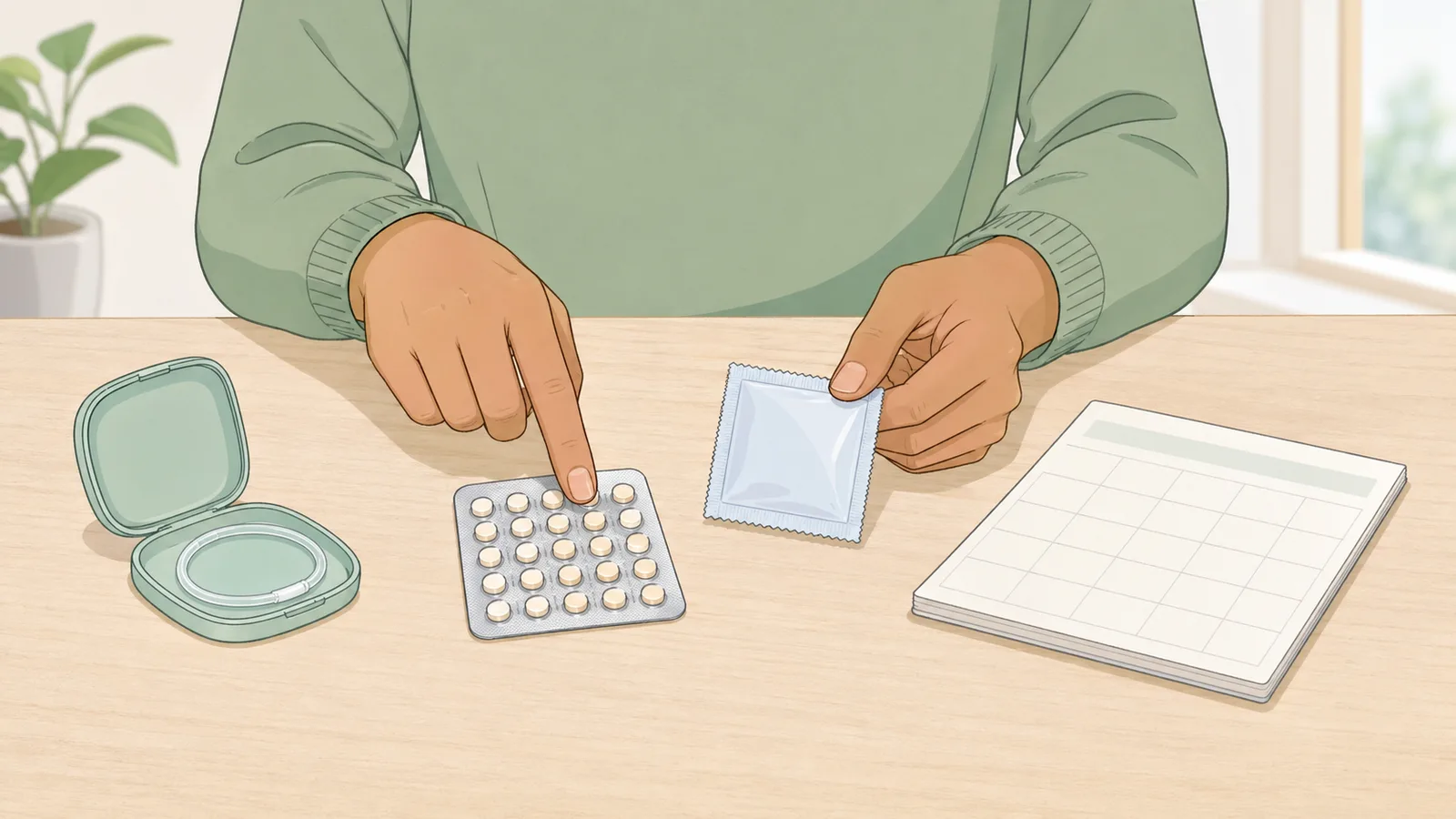
Birth Control Calculator instructional illustration

Birth Control Calculator

Use this birth control calculator to compare birth control effectiveness, pregnancies per 100 users per year, multi-year pregnancy risk, STI notes.

Health estimate

Topic review: Sarah Johansson

Maternal Health Writer. Assigned as the health topic reviewer for pregnancy, fertility, ovulation, and women’s health calculators.

Reviewed 25 April 2026 Updated 25 April 2026 View reviewer profile Contact editorial team
Contraception comparison Use this birth control calculator to compare birth control effectiveness side by side, estimate what that annual risk looks like over several years, and balance pregnancy prevention against STI protection, hormones, reversibility, and upkeep.

Usage scenario

Typical use includes missed pills, late repeats, condom errors, and other real-life inconsistencies.

Planning horizon

Longer horizons show why a method that looks manageable over one year can still add up to a meaningfully different cumulative pregnancy risk over several years.

What matters most?

These chips do not hide methods. They change the “best fit” interpretation so the planner can separate lowest pregnancy risk from the method that best matches your real-world priorities, including whether estrogen exposure needs a closer clinical check.

Leave all chips off if you want a pure effectiveness comparison.

Quick comparison sets

Select up to 4 methods

3/4 selected

Lowest pregnancy risk in your selection

Implant

99.9% effective in the typical-use comparison, with an estimated 0.1% annual pregnancy risk and 0.5% cumulative risk over 5 years.

Best fit for your priorities

Implant

0/6 chosen priorities matched.

Planning interpretation

Use the priority chips to balance pregnancy prevention with STI protection, hormones, estrogen exposure, reversibility, maintenance, and prescription access.

0.5

Pregnancies per 100 users over 5 years for Implant

0

Selected methods meeting every chosen priority

1

Selected methods with STI protection

Selected methods at a glance

Annual pregnancy risk and pregnancies per 100 users per year are the same first-year scale. The added 5-year column helps show why a “low but not zero” yearly risk can still accumulate meaningfully when the same method is relied on for several years, while the priority score keeps STI protection, estrogen exposure, reversibility, and upkeep visible.

External condom · BarrierCombined pill · HormonalImplant · Long-acting reversible
MethodAnnual risk5-year cumulative riskPregnancies / 100 users / yearEffectivenessPriority fitSTIUpkeep
Implant
0.1%
0.5%0.199.9%Not scoredNoLong-acting
Combined pill
7%
30.43%793%Not scoredNoDaily
External condom
13%
50.16%1387%Not scoredYesEvery sex act

Implant

99.9% lower risk vs no contraception

One of the most effective reversible methods because there is almost no day-to-day user error after insertion.

Combined pill

91.8% lower risk vs no contraception

Effectiveness drops with missed pills, vomiting, severe diarrhoea, or some medicine interactions.

External condom

84.7% lower risk vs no contraception

Also reduces STI risk when used correctly from start to finish of vaginal, anal, or oral sex.

Clinical interpretation matters These are population-level estimates. If you have migraines with aura, a history of blood clots, are postpartum, are taking interacting medicines, need STI protection, may need to avoid estrogen, or need advice after a missed dose or condom failure, speak with a GP, pharmacist, or sexual-health clinician rather than relying on the comparison alone.
← All Fertility & Pregnancy calculators

Health — Contraception

Birth control effectiveness, typical use, and method comparison explained

A birth control calculator is most useful when it helps you compare methods in a realistic way rather than just ranking them by a single headline percentage.

Typical use vs perfect use

The gap between typical use and perfect use is largest for user-dependent methods such as condoms, pills, diaphragms, and fertility-awareness methods. Perfect use assumes the method is used correctly every time. Typical use reflects real life: missed pills, late injections, incorrect condom use, delays starting a new pack, and other normal human inconsistencies.

That distinction matters because many people searching for the best birth control option are really asking two separate questions: how effective is the method in theory, and how effective is it likely to be in my real routine? A method that fits your lifestyle well may outperform a theoretically stronger method that is hard for you to use consistently.

This is why a birth control effectiveness calculator needs context, not just a table. A side-by-side comparison is useful only if it reminds you that user error, comfort, access to repeat prescriptions, and willingness to keep using the method all shape the real result.

Which birth control methods are most effective?

Long-acting reversible contraception, especially the implant and hormonal or copper IUDs, usually sits at the top of effectiveness tables because there is very little day-to-day user error once the method is in place. Sterilisation procedures are also highly effective, but they are not the same decision as choosing a reversible method.

Condoms, pills, patches, rings, and fertility-awareness methods can still be reasonable choices, but they depend much more on correct, repeated action. People who search for a NuvaRing calculator are usually trying to compare the vaginal ring against pills, condoms, or long-acting methods in exactly this kind of side-by-side table. That is why birth control comparison pages often group methods by how much user attention they require, not just by whether they are hormonal or non-hormonal.

The most effective method on paper is not always the best birth control method for a specific person. Side effects, insertion or procedure preferences, future pregnancy plans, bleeding patterns, migraine history, and breastfeeding or postpartum context can all matter as much as the headline effectiveness percentage.

Why estrogen exposure deserves its own comparison

Competitor birth control comparison tools often group methods as hormonal or non-hormonal, but that can hide an important distinction. Combined pills, patches, and vaginal rings contain estrogen, while progestogen-only pills, injections, implants, hormonal IUDs, and non-hormonal options do not. For some users, that difference is more useful than a broad hormonal label.

The calculator now includes an avoid-estrogen priority so a user can keep estrogen-containing methods visible while seeing the fit trade-off directly. This is especially useful for people who have been told to ask about migraines with aura, clot risk, blood-pressure concerns, smoking and age, breastfeeding, postpartum timing, or other factors that may affect combined hormonal contraception suitability.

This priority is still not a medical eligibility check. It does not decide whether a method is safe for you. It simply makes a common clinical decision point visible so the next conversation with a GP, pharmacist, sexual-health clinician, or prescribing clinician can be more focused.

What lowers real-world contraceptive effectiveness

Missed pills, starting a pack late, not using backup protection when advised, delayed injections, and condoms slipping, breaking, or being used partway through sex can all lower real-world effectiveness. Vomiting, severe diarrhoea, and some enzyme-inducing medicines can also affect specific hormonal methods.

This is also where people sometimes mix up pregnancy prevention and STI prevention. Condoms are less effective for pregnancy prevention than the highest-performing long-acting methods, but they remain the main contraceptive method that also reduces sexually transmitted infection risk. In practice, many people use condoms plus another contraceptive method for both reasons.

People also search for missed pill calculator or late injection guidance because method-specific timing rules matter. This comparison page can flag where the risk gap becomes important, but it cannot replace the product instructions or clinician advice that tells you exactly when to use backup protection or emergency contraception.

Pearl Index, annual risk, and pregnancies per 100 users

Competitor pages and clinical summaries sometimes describe contraceptive performance with Pearl Index language or with pregnancies per 100 users per year. Those are both ways of expressing the same underlying idea: how many pregnancies occur over a year in a group of people using a method. A 7% annual risk is the same scale as roughly 7 pregnancies per 100 users per year.

This calculator keeps the annual-risk and effectiveness wording front and centre because it makes the typical-use versus perfect-use comparison easier to read, but the pregnancies-per-100 figure is still useful when you want to compare contraceptive methods with the same language used in clinical tables. That is especially helpful when a user searches for birth control failure rate, Pearl Index, or contraceptive effectiveness comparison.

The numbers are still population averages, not personal predictions. A method with a low annual risk can still be the wrong fit if the timing, side effects, access, or medical history make it difficult to use correctly.

Why a multi-year view changes the answer

A 1-year failure-rate table is helpful, but many people are not choosing a method for only one year. They want to know what relying on the same method over 3, 5, or even 10 years looks like. That is why the calculator now shows a longer planning horizon instead of leaving the comparison at a single-year headline.

The longer horizon does not mean a person will definitely become pregnant if a method has a non-zero annual failure rate. It means that repeating the same yearly risk over several years changes the cumulative probability. A method with a 7% annual risk does not stay emotionally or practically equivalent to “7 out of 100” once it is the main method across many years.

That longer-horizon framing is especially useful when someone is comparing user-dependent methods against long-acting contraception. The annual difference between two methods may look modest at a glance, but over several years the cumulative gap can become far more clinically and personally meaningful.

Why method fit can matter as much as the headline risk

A method can rank very well on pregnancy prevention and still be a poor personal fit if it conflicts with your priorities. Some people need STI protection, some want a non-hormonal option, some want the method to be fully reversible, and some want to avoid procedures, prescriptions, or frequent maintenance. A useful birth control comparison has to make those trade-offs visible rather than pretending effectiveness is the only meaningful variable.

That is why the planner now separates lowest pregnancy risk from best fit for the priorities you choose. If STI protection matters, condoms may rise in the fit comparison even though an implant or IUD still has a lower pregnancy rate. If estrogen avoidance is selected, progestogen-only and non-hormonal methods can score differently from combined pills, patches, and rings. If low maintenance matters more than avoiding procedures, long-acting methods often move ahead quickly. The point is not to produce one universally correct winner. The point is to show how the answer changes when your real-life constraints change.

This is also how people actually search. Someone typing best birth control method, non hormonal birth control comparison, or pill vs condom effectiveness is not always asking for the same kind of answer. The most accurate response is often a comparison that says, “lowest pregnancy risk is here, but the best fit for your priorities may be somewhere else.”

Why STI protection is a separate planning question

Pregnancy prevention and STI protection overlap only partly. Condoms are not the strongest method for pregnancy prevention alone when compared with the implant or IUDs, but they remain the main contraceptive method in this comparison that also reduces STI risk. That is why some people use condoms together with another, more effective pregnancy-prevention method instead of treating the choice as either-or.

This dual-protection idea is one of the most important interpretation gaps on competitor pages. A user searching for which birth control is best may really mean, “Which method gives me strong pregnancy prevention while still addressing STI risk?” The honest answer is often not a single method. It is a strategy that pairs condoms with another ongoing contraceptive method where appropriate.

The planner’s STI-priority view is meant to surface that distinction quickly. It does not turn condoms into the lowest-pregnancy-risk method. It reminds you that the lowest-pregnancy-risk method may not be the same as the method that best addresses the STI part of the decision.

Why the best birth control method depends on more than effectiveness

A birth control comparison is most helpful when it keeps effectiveness in proportion. The most effective method is not automatically the best fit if it clashes with your preferences, bleeding tolerance, estrogen-related cautions, access to repeat care, comfort with procedures, or plans for pregnancy in the near future. A method that is slightly less effective on paper may still be the better personal choice if you are more likely to keep using it correctly.

This is also where medical context matters. Postpartum timing, breastfeeding, migraines with aura, clot history, uncontrolled blood pressure, and medicines that interact with hormonal contraception can change which options are appropriate. The table helps narrow the question, but it does not decide suitability by itself.

That is why population-level comparisons and clinician advice are complementary rather than competing. Use the table to understand the trade-offs, then use method-specific guidance or a clinician conversation when your medical history or priorities make the decision more individual.

Worked example: comparing condoms, the pill, and the implant

Suppose someone compares an external condom, the combined pill, and the implant under typical use. The implant usually sits at the lowest annual pregnancy risk because there is almost no day-to-day user action after insertion. The pill normally performs better than condoms for pregnancy prevention alone, but missed pills, vomiting, severe diarrhoea, or interacting medicines can still reduce protection in real life.

That does not mean the implant is automatically the right answer for everyone. The pill may be easier to stop, condoms offer STI protection, and some people prefer to avoid hormones or procedures. The value of the comparison is that it makes the tradeoff visible: lower pregnancy risk often comes with a different balance of reversibility, maintenance burden, hormone exposure, or clinician involvement.

The multi-year view makes the example stronger. Over a five-year planning window, the implant still carries a very low cumulative pregnancy risk, while the pill and condoms accumulate a much larger risk if they remain the only method used. If STI protection is also a priority, the practical answer may be condom plus another method rather than just picking the single most effective method on the list.

How to compare hormonal, non-hormonal, reversible, and permanent options

Hormonal versus non-hormonal is not the same question as reversible versus permanent. A copper IUD is non-hormonal and reversible. An implant is hormonal and reversible. Vasectomy and tubal ligation are permanent and should not be treated as casual substitutes for methods that can simply be stopped. The planner works better when those distinctions are visible instead of folded into one generic ranking.

This also explains why a “best method” answer should be handled carefully. A person who wants to avoid hormones may still accept a long-acting reversible method if it is non-hormonal, while someone else may accept hormones but want to avoid a procedure or prescription barrier. Those are different decision frames, and the fit-based comparison is designed to surface them more directly.

If a method is only attractive because the annual failure rate looks low, but it clashes with whether you want a procedure, a prescription, or a reversible option, that is usually a sign to slow down and compare the trade-offs explicitly rather than chasing the best-looking percentage.

When emergency contraception or backup protection matters

Emergency contraception is not a regular birth control method, so it should not be interpreted with the same yearly failure-rate table used for ongoing methods. Instead, it is a time-sensitive backup option after unprotected sex, a condom failure, or a significant problem with the usual method. The copper IUD is generally the most effective emergency option when it can be fitted in time, and emergency contraceptive pills work best the sooner they are taken.

Backup protection matters after some missed pills, late starts, method switches, vomiting, severe diarrhoea, and medicine interactions as well. If you need to interpret what to do after a missed dose, a late injection, or a condom failure, use the method-specific product guidance or speak with a pharmacist, GP, or sexual-health clinician rather than relying on a headline comparison table alone.

That clinical step is especially important if you have migraines with aura, a history of blood clots, high blood pressure, recent childbirth, or medicines that may interact with hormonal contraception. These factors can change which methods are suitable and whether you need a clinician’s help to choose safely.

Further reading

Frequently asked questions

Which contraceptive method is most effective?

The implant and hormonal IUD/IUS usually sit among the most effective reversible methods because they remove most day-to-day user error once fitted. Vasectomy and tubal ligation are also highly effective, but they are permanent decisions rather than reversible contraception. For someone who wants a non-hormonal option, the copper IUD remains one of the strongest pregnancy-prevention choices.

What is the difference between typical use and perfect use?

Perfect use assumes a method is used exactly as directed every time. Typical use reflects real life, including missed pills, late injections, condom mistakes, delays replacing a ring or patch, and other routine inconsistencies. The gap matters most for user-dependent methods and is one reason long-acting reversible contraception usually performs so well in real life.

Can this page be used as a NuvaRing calculator?

Yes. In this comparison, NuvaRing-style vaginal ring use is represented by the vaginal ring method row, so you can compare its typical-use and perfect-use pregnancy risk against pills, condoms, injections, implants, and IUDs. The exact guidance for missed or delayed ring changes still depends on the product instructions and clinical advice.

How effective is the pill compared with condoms?

Both depend on correct use, but they fail in different ways. Missed pills, late starts, vomiting, severe diarrhoea, and medicine interactions can lower pill effectiveness, while condoms can slip, break, or be used inconsistently. Pills usually rank better for pregnancy prevention alone, but condoms remain the main method in this comparison that also reduces STI risk.

What does pregnancies per 100 users per year mean?

It is another way of expressing the same annual failure rate shown in the calculator. If a method has a 7% annual risk, that means roughly 7 pregnancies per 100 users in one year under the chosen use scenario. The number is useful because it makes the risk scale easy to compare across methods, especially when a clinical table or a Pearl Index-style summary uses the same per-100 language.

Is the Pearl Index the same as birth control failure rate?

They are closely related ways of talking about contraceptive effectiveness, but the exact definition can vary by source. In general, both are trying to show how many pregnancies happen over a year of use, usually as pregnancies per 100 users. This calculator uses first-year typical-use and perfect-use failure rates because they are easier to compare directly across methods and easier to interpret alongside the real-world use scenario.

Why are IUDs and implants usually more effective in real life?

They remove most of the repeated user action that lowers real-world effectiveness for pills, patches, rings, condoms, and fertility-awareness methods. Once fitted correctly, there is very little day-to-day room for error, which is why their typical-use and perfect-use figures are often very close together.

Does the best birth control method depend on side effects and medical history?

Yes. Effectiveness matters, but it is not the whole decision. Bleeding changes, hormone preferences, estrogen-related cautions, migraine with aura, clot history, blood-pressure issues, breastfeeding, postpartum timing, and medicine interactions can all change which method is a sensible option. That is why the best birth control method is not always the single most effective one on the chart.

Is avoiding estrogen the same as choosing non-hormonal birth control?

No. Non-hormonal methods avoid hormones altogether, while estrogen-free methods can still include progestogen-only options such as some pills, injections, implants, and hormonal IUDs. The avoid-estrogen priority is included because combined pills, patches, and vaginal rings are a different clinical conversation from progestogen-only or non-hormonal methods. Use it as a planning filter, not as a diagnosis or eligibility decision.

Can this page help after a missed pill or late injection?

Only at a high level. The comparison can remind you that missed or delayed use changes real-world risk, but it cannot replace method-specific instructions. If you need to know whether to use backup protection or emergency contraception after a missed pill, late injection, delayed ring change, or condom failure, use the product guidance or speak with a pharmacist, GP, or sexual-health clinician.

Do any birth control methods also protect against STIs?

Condoms are the main method in this comparison that also reduces STI risk. Other contraceptive methods may be stronger for pregnancy prevention alone, but they do not replace condoms when STI protection is part of the goal. That is why some people use condoms plus another method together.

How should postpartum or breastfeeding change the comparison?

Postpartum timing and breastfeeding can change which methods are suitable or when they can be started. Some people can use long-acting or progestogen-only methods early, while others need more specific timing or clinical advice. This page can highlight the trade-offs, but postpartum contraceptive choice should be checked against current clinical guidance.

Do medicine interactions affect hormonal birth control effectiveness?

Yes, some medicines can reduce the effectiveness of specific hormonal methods. This is especially important with certain enzyme-inducing medicines. If there is any concern about an interaction, use the product guidance or ask a pharmacist or clinician rather than assuming the standard table still applies unchanged.

Is fertility awareness a realistic birth control option for everyone?

No. Fertility-awareness or calendar-based methods are highly user-dependent and require consistent tracking, education, and a plan for fertile days. They can be a realistic option for some people, but they have a much wider gap between typical use and perfect use than long-acting methods.

When should I think about emergency contraception or backup condoms?

Think about it after unprotected sex, condom failure, significant pill mistakes, a late restart, or another problem that may have reduced protection. The right next step depends on the method, the timing, and where you are in your cycle, so use the product guidance or get advice from a pharmacist, GP, or sexual-health clinician. Emergency contraception should be treated as a backup response, not compared as if it were a routine year-round method.

Why does a 5-year comparison tell a different story from a 1-year comparison?

Because a non-zero annual risk accumulates when the same method is relied on repeatedly over several years. A method that looks “good enough” over one year may separate much more sharply from a long-acting method when you model the same risk over 3, 5, or 10 years. The longer view does not predict your exact future. It helps show the planning consequences of staying with the same method over time.

Can the best-fit method be different from the lowest-risk method?

Yes. The lowest-risk method for pregnancy prevention may not be the best fit if you need STI protection, want a non-hormonal option, need the method to be reversible, or want to avoid a prescription or procedure. That is why the planner separates the lowest pregnancy risk from the method that best matches your selected priorities.

What if I need strong pregnancy prevention and STI protection at the same time?

That is often a dual-protection question rather than a single-method question. Condoms are the main method here that also reduces STI risk, but long-acting reversible methods and sterilisation usually perform better for pregnancy prevention alone. In practice, some people use condoms together with another method to cover both priorities.

Does lower maintenance usually mean lower risk?

Often, but not always. Long-acting methods usually perform well because they remove day-to-day user error, which makes them both lower maintenance and lower risk in many comparisons. But maintenance is still a separate question from whether the method is hormonal, reversible, easy to start, or acceptable to you personally.

Also in Fertility & Pregnancy

Related

More from nearby categories

These related calculators come from the same leaf category, nearby sibling categories, or the same top-level topic.