Skip to content
Calcipedia
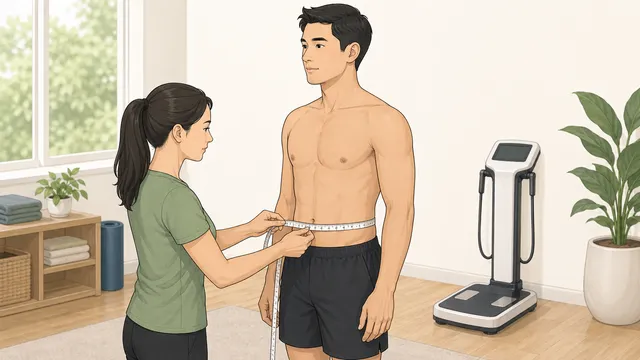
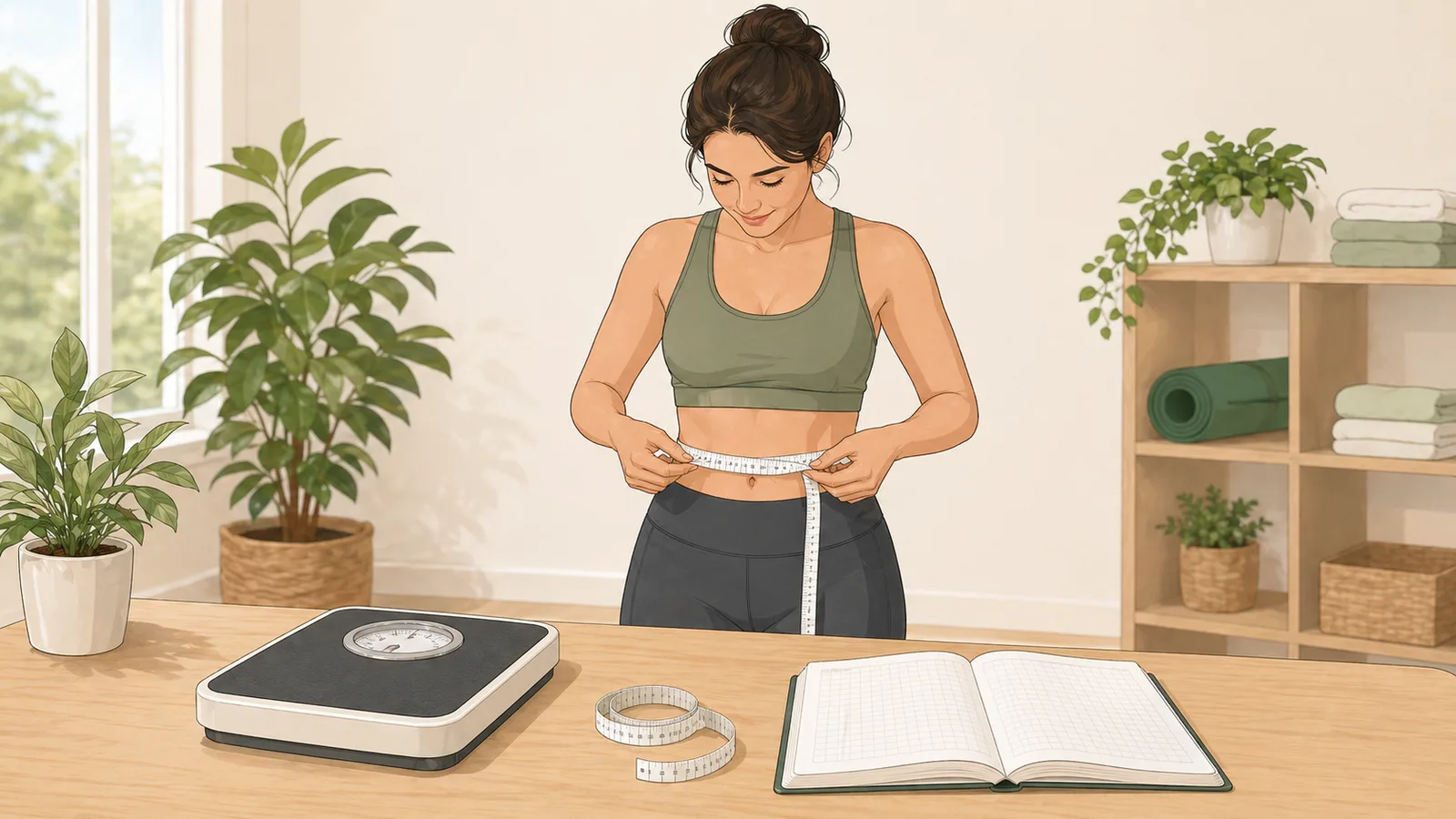
Body Measurement Progress Calculator instructional illustration

Body Measurement Progress Calculator

Track body weight alongside neck, waist, hip, chest, arm, thigh, and calf measurements with a body measurement tracker that shows inches lost.

Health estimate

Topic review: Maria Santos

Diet & Lifestyle Coach. Assigned as the health topic reviewer for nutrition, macro, calorie, and lifestyle diet calculators.

Reviewed 25 April 2026 Updated 25 April 2026 View reviewer profile Contact editorial team
Body measurement tracker Track neck, waist, hip, chest, arm, thigh, and calf measurements alongside scale weight to spot inches lost and body recomposition progress that a single weigh-in can hide.

Quick examples

Units

Weight units

Tracker-style results work better with a fixed interval Apps that rank well for this intent usually anchor progress to a dated check-in rhythm. Enter the number of days between entries so the page can show weekly change instead of only raw before-versus-now differences.

Body measurements (cm)

Neck
Waist
Hips
Chest
Upper arm
Thigh
Calf
Enter values Enter start and current weight to see the body measurement progress summary.
← All Goal Planning calculators

Health & Nutrition

Body measurement tracker guide: inches lost, waist changes, body measurement charts

Scale weight is one signal, not the whole picture. This page also explains the main assumptions behind the body measurement tracker result, highlights the supporting figures shown by the calculator, and helps the reader use the estimate without overstating what a quick online tool can prove.

Why measurements capture what the scale misses

Body recomposition — gaining muscle while losing fat — produces a common and confusing pattern: weight holds steady or increases while circumferences decrease. This happens because a kilogram of muscle is denser and takes up roughly 18% less volume than a kilogram of fat. Without measurement data, an individual on an ideal recomposition programme might conclude their diet is failing.

Waist circumference is particularly valuable because central (visceral) adiposity is one of the strongest modifiable risk factors for cardiometabolic disease, independently of total body weight. Reductions in waist circumference predict improved metabolic markers even when total weight loss is modest.

Which measurements are worth tracking

The most useful progress logs usually include waist, hips, chest, upper arm, thigh, calf, neck, and body weight. That mix captures both fat loss and muscle gain much better than scale weight alone, which is why current body-measurement apps tend to offer the same set of fields.

If you only want to track one measurement, choose waist. If you want a fuller picture, track waist plus hips, chest, neck, thigh, calf, and one arm measurement so changes do not get hidden by day-to-day water fluctuations or posture differences.

Further reading

  • Hevy - Track body measurements — Current measurement-tracking app showing the body parts people most often log for progress.
  • Remeasure — Current body progress tracker that focuses on measurement history, ratios, and body-composition context.

Why the interval between entries matters

A body measurement tracker becomes more useful when each entry is anchored to a known check-in rhythm such as 7, 14, or 28 days. Competitor apps lean heavily on calendar-based logging, reminders, and charts because progress is easier to interpret when you know whether the tape change happened over one week or over one month.

That is why this page now asks for the number of days between check-ins when you have it. A five-centimetre waist reduction over 28 days tells a different story from the same change over 7 days. Weekly-rate context helps you decide whether the pace looks realistic, noisy, or unusually fast and worth double-checking for measuring error.

Measurement consistency

Day-to-day measurement variation of 1–2 cm is normal due to food and water content in the gut, posture differences, and tape tension. For reliable comparisons, always measure at the same time of day (morning, pre-food is most consistent), use the same anatomical landmarks, maintain consistent tape tension, and track rolling averages over 4-week periods.

If you are using the result to judge fat-loss progress, pair the measurements with weekly photos and weight trend data. That combination is much more informative than any single weigh-in, and it explains why body measurement trackers often show chart history rather than just one latest value.

How to read the trend

A shrinking waist with stable scale weight is one of the clearest signs of recomposition. A shrinking waist plus a slightly higher scale weight can also be a good sign if you are resistance training, because muscle gain and glycogen repletion can offset the scale while body shape improves.

Do not overreact to one noisy tape reading. The useful question is whether the trend over 3 to 6 weeks is moving in the direction you want.

Body measurement tracker vs scale weight

A body measurement tracker is most helpful when the scale is not telling the full story. Weight can stay flat while the waist drops, hips tighten, and the upper body changes shape. That is especially common in body recomposition, where fat loss and muscle gain happen at the same time.

The reverse can happen too: weight can drop quickly while measurements barely move, which may suggest water loss, poor training recovery, or a calorie target that is too aggressive for sustainable progress. That is why a body measurement tracker works best when it is paired with a weight trend rather than used as a standalone score.

  • Use measurements to capture shape change that the scale can miss.
  • Use body weight to see whether the overall energy trend is moving up or down.
  • Use both together to decide whether the plan is producing genuine progress.

How a body measurement chart improves decision-making

People often search for a body measurement chart because raw numbers alone are hard to interpret. A chart or tracker-style summary answers more practical questions: which sites are shrinking fastest, whether the waist is moving in the same direction as total weight, and whether one site is increasing while the others are shrinking.

This calculator does not store a full history like an app, but it now borrows the most useful part of chart thinking: it shows total change, average site change, the biggest reduction, the biggest increase, and weekly-rate context when you know the check-in interval. That makes the result more usable for real planning than a plain before-and-after tape dump.

How to measure consistently

Measure at the same time of day, ideally in the morning before eating, and use the same tape tension each time. Changing the time of day, clothing, or posture can create noise that looks like real change when it is only measurement variation.

Keep the tape level, stay relaxed rather than braced, and measure the same anatomical landmarks every time. The waist should be measured at the same location, the hips at the widest point, and the other sites in a repeatable spot you can find again on the next check-in.

  • Use the same tape tension every time.
  • Measure in the same posture and at roughly the same time of day.
  • Record the same landmarks for neck, waist, hips, chest, arm, thigh, and calf.

Which measurements are worth watching first

If you only want to track one measurement, choose waist. It tends to show central fat change more clearly than many other sites. If you want a fuller body measurement progress picture, add hips, chest, neck, upper arm, thigh, and calf so both fat loss and muscle gain can show up in the log.

That mix is why searchers often move between a waist measurement tracker, an inches lost calculator, and a body measurement progress calculator. They are all trying to answer the same practical question: is the shape changing in a way the scale is not capturing?

  • Waist is the best single site for many users.
  • Hips and chest help show proportion changes.
  • Upper arm, thigh, calf, and neck can catch muscle gain, training changes, or body-shape shifts that the waist alone would miss.

Why kg, lb, cm, and inches are separated

Many body measurement tracker apps let people mix body-weight units and tape-measure units because real logs often come from different tools. Someone might weigh in pounds but use a centimetre tape, or weigh in kilograms but use an inches-based printable body measurement chart.

The calculator therefore treats weight units and tape units separately. Weight change is reported in kg or lb, while circumference changes are reported in cm or inches. That avoids the confusing situation where switching tape units also changes the meaning of the scale-weight field.

Worked example: scale flat, waist down, progress real

Suppose your weight is unchanged over 21 days, but your waist drops from 84 cm to 81.5 cm, your hips shrink slightly, and your upper arm grows a little. That is exactly the kind of pattern that a body recomposition tracker should catch: shape change without scale confirmation.

In that case, reacting only to body weight would be a mistake. The better decision is usually to keep the training and nutrition plan steady, continue logging measurements at a fixed interval, and let another 2 to 4 weeks of data confirm whether the trend remains consistent.

Using a tracker alongside other tools

A body measurement tracker is strongest when it sits next to other planning tools rather than replacing them. A calorie planner helps explain weight trend changes, a body fat calculator can estimate broader composition, and a body recomposition calculator can help if your goal is to lose fat while keeping muscle.

If you want a dynamic reference for the weight side of the trend, the NIDDK Body Weight Planner is a useful official guide. For measurement logging, apps such as Hevy or Remeasure can help keep the history visible over time rather than relying on memory.

Further reading

Frequently asked questions

Which measurement site is most important?

Waist circumference is the most clinically meaningful single measurement for many people because it reflects central adiposity better than most other sites. Hip and waist-to-hip context can add useful shape information, but if you only track one site, make it waist.

My weight is the same but my waist shrank — is that good?

Yes. That is one of the most common signs of body recomposition. It usually means shape is improving even if the scale is flat, which is exactly why a body measurement tracker is more useful than weight alone.

How often should I take body measurements?

Weekly or every two weeks is usually enough for most people. Measuring too often adds noise, while measuring too rarely makes it harder to see which changes happened over a realistic interval.

Should I track progress photos too?

Yes, if you can. Photos make it easier to see changes in shape and posture that tape measurements do not always capture, especially when the scale is moving slowly.

What is a body measurement tracker?

A body measurement tracker records changes in waist, hips, chest, arms, thighs, and body weight over time. It is useful because it shows inches lost or gained even when the scale is slow to move.

Which measurement should I track first?

Waist is usually the most important single measurement because it tends to reflect central fat changes well. If you have room to track more, add hips, chest, neck, upper arm, thigh, and calf for a more complete body measurement progress picture.

Should I measure before or after workouts?

Measure before workouts and ideally before eating, because exercise, swelling, and the pump can temporarily change tape measurements. The more consistent the timing, the easier it is to see genuine inches lost over time.

Should I use inches or centimetres?

Use whichever unit you can measure consistently. Inches are common in some tracking apps and centimetres are common elsewhere. The important part is to use the same unit every time so the trend is easy to compare.

Why do my measurements change before the scale does?

That is common during recomposition. Fat loss, better posture, glycogen changes, and muscle gain can alter circumference before the scale moves very much. Measurements often reveal progress earlier than weight alone.

What if one site increases while the others decrease?

That can still be a good sign. Small increases in arm or thigh measurements can reflect muscle gain while waist or hip measurements shrink. Look at the full pattern, not one site in isolation.

Can I use this for body recomposition?

Yes. Body recomposition is one of the best use cases for a body measurement progress calculator because it helps show fat-loss changes and muscle-related changes together. If the scale is flat but the waist is shrinking, the tracker is doing its job.

Why should I enter the days between check-ins?

Because progress rates make more sense when they are tied to time. A two-centimetre waist change over 7 days tells a different story from the same change over 28 days. The interval helps the page produce a more tracker-like reading.

Is this the same as a body measurement chart?

It serves a similar purpose, but as an interactive tracker summary rather than a printable sheet. A body measurement chart helps you see change over time; this page does that by comparing start and current measurements, then adding weekly-rate context and pattern interpretation.

Why does the calculator include neck and calf measurements?

Neck and calf measurements appear in many body-progress apps and printable body measurement charts because they add useful context beyond waist and hips. They are optional, but adding them can make the pattern clearer when limb or upper-body changes are part of your goal.

Can I use pounds for weight and centimetres for body measurements?

Yes. Weight units and tape units are separate in the calculator, so you can use kg or lb for scale weight and cm or inches for body measurements. Use whatever matches your scale and tape, then keep those units consistent across check-ins.

Also in Goal Planning

Related

More from nearby categories

These related calculators come from the same leaf category, nearby sibling categories, or the same top-level topic.