Skip to content
Calcipedia
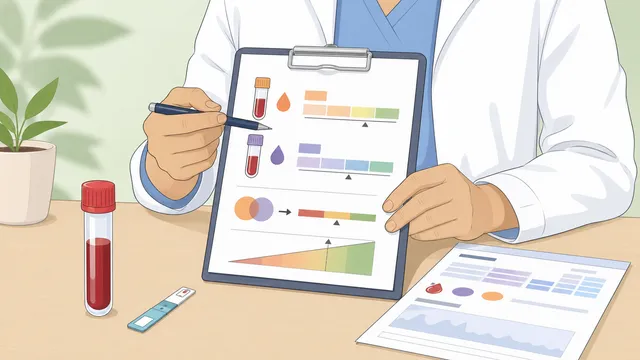
HOMA-IR Calculator instructional illustration

HOMA-IR Calculator

Use this HOMA-IR calculator to estimate insulin resistance from fasting insulin and glucose, convert glucose and insulin units, interpret the score.

Health estimate

Editorial responsibility: Calcipedia editorial team

This page is maintained against the site trust model for its topic and updated when formulas, sources, or guidance materially change.

Reviewed 30 April 2026 Updated 5 May 2026 Contact editorial team
HOMA-IR calculator for insulin resistance Estimate HOMA-IR from fasting insulin and fasting glucose, convert glucose units live, cross-check QUICKI from the same sample, and keep fasting and lab-variation cautions visible while you interpret the result.

Input

Estimate HOMA-IR from one fasting sample

Enter fasting insulin and fasting glucose from the same morning blood draw after roughly 8 to 12 hours without food or caloric drinks. HOMA-IR is a screening and research index, not a stand-alone diagnosis.

Example fasting samples

Result

HOMA-IR

2.22

10 µIU/mL (69.5 pmol/L) insulin · 4.99 mmol/L (90 mg/dL) glucose

Early insulin resistance

QUICKI cross-check

0.3385

Higher QUICKI generally means better insulin sensitivity.

HOMA-Beta context

133.8%

Approximate HOMA1 beta-cell function context from the same fasting sample.

Formula used

(fasting insulin × fasting glucose mg/dL) / 405

Sample requirement

Same fasting draw

Do not mix insulin and glucose from different dates.

How to read this result

HOMA-IR of 2.0–2.9 suggests early or mild insulin resistance. Lifestyle factors such as diet quality, activity, sleep, and weight management are worth reviewing.

Discuss the result with a clinician if it fits with elevated HbA1c, fasting glucose, triglycerides, waist circumference, PCOS features, fatty liver, or other metabolic risk factors.

HOMA-Beta is an approximate fasting beta-cell function context measure from the same HOMA1 model. It is not a stand-alone pancreatic function test and is most useful beside HOMA-IR, QUICKI, fasting status, and clinician review.

HOMA-IR thresholds are approximate research bands rather than universal diagnostic cut points. Fasting insulin assay differences, population differences, and clinical context can shift interpretation.

Use fasting insulin and fasting glucose from the same blood draw after an overnight fast of roughly 8 to 12 hours. Mixing values from different dates can produce a mathematically valid but clinically misleading score.

HOMA-IRInterpretationPractical context
< 1.0Optimal insulin sensitivityUsually a lower-resistance fasting pattern.
1.0–1.9Normal rangeUseful as a baseline when labs are repeated consistently.
2.0–2.9Early insulin resistanceReview metabolic context and trend with a clinician.
≥ 3.0Significant insulin resistanceClinical assessment is usually warranted.
Medical notice HOMA-IR is a research and screening tool, not a diagnostic test. Insulin resistance is a continuum and should be interpreted alongside clinical history, symptoms, and other metabolic markers by a qualified clinician.

HOMA-IR is calculated from fasting values only. Results are most meaningful when both samples are drawn after an overnight fast of at least 8 hours. Lab-to-lab variation in insulin assays can cause significant differences, so compare trends from the same laboratory when possible.


← All Diabetes calculators

Health — Medical

HOMA-IR calculator guide: insulin resistance, fasting insulin, glucose

This HOMA-IR calculator estimates insulin resistance from fasting insulin and fasting glucose using the Homeostatic Model Assessment formula.

How to use this HOMA-IR calculator

Enter fasting insulin and fasting glucose from the same morning blood draw. HOMA-IR is a same-sample calculation: using insulin from one date and glucose from another date can produce a number that looks precise but does not represent a real fasting metabolic state.

The calculator accepts glucose in either mg/dL or mmol/L. When glucose is entered in mg/dL, it uses the mg/dL formula directly. When glucose is entered in mmol/L, it uses the mmol/L formula. The result also shows a QUICKI score from the same sample because QUICKI and HOMA-IR are complementary fasting surrogate measures.

What HOMA-IR measures

Insulin resistance is a state in which cells in muscle, fat, and liver do not respond normally to insulin and cannot easily take up glucose from the bloodstream. The pancreas compensates by producing more insulin, which temporarily maintains normal blood glucose levels. HOMA-IR captures this dynamic: a high HOMA-IR indicates that elevated insulin is required to maintain the observed fasting glucose level.

The original HOMA model was derived from mathematical modelling of the glucose-insulin feedback loop. In practical calculator form, the commonly used HOMA-IR approximation multiplies fasting insulin by fasting glucose and divides by a unit-specific constant. Lower values generally suggest better insulin sensitivity; higher values suggest more insulin resistance.

HOMA-IR = (fasting insulin [µIU/mL] × fasting glucose [mmol/L]) / 22.5

Use this formula when fasting glucose is reported in mmol/L.

HOMA-IR = (fasting insulin [µIU/mL] × fasting glucose [mg/dL]) / 405

Use this equivalent formula when fasting glucose is reported in mg/dL.

QUICKI = 1 / (log10 fasting insulin [µIU/mL] + log10 fasting glucose [mg/dL])

The live calculator also reports QUICKI from the same fasting sample as an insulin-sensitivity cross-check.

HOMA-Beta % = (20 × fasting insulin [µIU/mL]) / (fasting glucose [mmol/L] − 3.5)

The live calculator reports this approximate HOMA1 beta-cell context when fasting glucose is high enough for the denominator to be valid.

Worked example: fasting insulin 10 and glucose 5.0 mmol/L

If fasting insulin is 10 µIU/mL and fasting glucose is 5.0 mmol/L, the HOMA-IR formula gives (10 × 5.0) / 22.5 = 2.22. If the same glucose is entered as about 90 mg/dL, the equivalent formula is (10 × 90) / 405 = 2.22.

That lands in an early insulin-resistance band in this calculator. The same sample gives a QUICKI score of about 0.3385, which points in the same direction from the insulin-sensitivity side. The page frames that result as a prompt for wider metabolic review rather than a diagnosis on its own.

How to interpret a HOMA-IR score

Many educational HOMA-IR calculators use broad bands such as below 1.0 for optimal insulin sensitivity, 1.0 to 1.9 for a broad normal range, 2.0 to 2.9 for early insulin resistance, and 3.0 or higher for significant insulin resistance. Those ranges are useful for orientation, but they are not universal diagnostic cut points.

A HOMA-IR score becomes more meaningful when it is interpreted beside the rest of the metabolic picture: fasting glucose, HbA1c, triglycerides, HDL cholesterol, blood pressure, waist circumference, medication use, PCOS features, fatty liver risk, family history, and symptoms. A clinician may also consider whether the insulin and glucose results were truly fasting and whether repeat testing is needed.

  • Lower HOMA-IR usually means less insulin is needed to hold fasting glucose steady.
  • Higher HOMA-IR suggests the body may be using more insulin to maintain the observed fasting glucose.
  • Borderline scores are often most useful as trend markers when repeated from the same lab.
  • Very high or discordant results should be discussed with a clinician rather than interpreted from the calculator alone.

Why fasting status and the same laboratory matter

HOMA-IR is designed for fasting steady-state conditions. Food, caloric drinks, acute illness, poor sleep, strenuous recent exercise, stress, pregnancy, and some medications can change insulin or glucose enough to distort a single result. For most routine use, fasting insulin and glucose should come from the same blood draw after roughly 8 to 12 hours without calories.

Insulin assays are not standardized as tightly as many common chemistry tests. That means a HOMA-IR of 2.4 from one laboratory may not be directly interchangeable with 2.4 from another laboratory. For trend monitoring, repeat samples from the same laboratory and similar fasting conditions are more useful than mixing assay systems.

HOMA-IR vs QUICKI

HOMA-IR and QUICKI use the same fasting insulin and fasting glucose values, but they describe the sample from opposite directions. HOMA-IR estimates insulin resistance, so lower is generally better. QUICKI estimates insulin sensitivity, so higher is generally better.

The live calculator reports QUICKI as a cross-check because it helps users avoid reading HOMA-IR in isolation. When HOMA-IR is higher and QUICKI is lower, both measures are pointing toward reduced insulin sensitivity. When values are borderline, the paired view supports a more careful conversation about repeat testing and clinical context.

Further reading

  • QUICKI calculator — Estimate insulin sensitivity from fasting insulin and fasting glucose and compare it with HOMA-IR.
  • Blood sugar converter — Convert glucose between mg/dL and mmol/L and compare common glucose threshold bands.
  • A1c calculator — Convert HbA1c and estimated average glucose for longer-term blood sugar context.

HOMA-IR, HOMA-Beta, and insulin units

Some laboratory reports show fasting insulin as µIU/mL or µU/mL, while others show pmol/L. The calculator can convert pmol/L into the µIU/mL value used by the HOMA-IR, QUICKI, and HOMA-Beta equations, then shows both units in the result panel so a unit mismatch is easier to catch before the score is interpreted.

HOMA-Beta is included as secondary context because some users search for a fuller homeostatic model assessment rather than only the insulin resistance index. It estimates fasting beta-cell function from the same steady-state sample, but it should not be treated as a direct pancreatic function test. The result is most useful as a prompt to review HOMA-IR, QUICKI, glucose, insulin, HbA1c, medication history, and fasting conditions together.

Clinical context

HOMA-IR is a research and screening tool, not a clinical diagnostic test. Insulin assay methods vary significantly between laboratories, which means that a result of 2.5 from one laboratory cannot be directly compared with 2.5 from another. Reference ranges cited in the literature are typically laboratory-specific. HOMA-IR is most useful for comparing values longitudinally from the same laboratory, or for population-level screening.

Lifestyle factors that can improve insulin sensitivity include weight loss where appropriate, aerobic exercise, resistance training, dietary patterns that reduce excess refined carbohydrates, adequate protein and fibre intake, and improved sleep. Some people also need medication or treatment of underlying conditions. HOMA-IR should guide questions for clinical review, not replace diagnosis or treatment planning.

What this HOMA-IR calculator cannot tell you

The calculator cannot diagnose diabetes, prediabetes, metabolic syndrome, PCOS, fatty liver disease, or cardiovascular risk. Those decisions depend on established diagnostic criteria, clinical history, examination, and broader laboratory testing.

HOMA-IR is also less reliable when fasting steady-state assumptions break down, such as in significant hepatic or pancreatic disease, insulin-treated diabetes, acute illness, pregnancy, or major medication effects. If a result is unexpected, extreme, or inconsistent with other labs, re-check the units and discuss it with a qualified clinician.

Frequently asked questions

What is a normal HOMA-IR value?

Most studies place the upper limit of normal HOMA-IR at 2.0–2.5, with optimal insulin sensitivity below 1.0. However, reference ranges vary significantly by ethnicity, age, body composition, and the insulin assay used. A HOMA-IR of 3.0 or above is typically considered clinically meaningful insulin resistance in research, though the clinical threshold for intervention depends on the full clinical picture.

Can I test HOMA-IR with home equipment?

Not accurately. HOMA-IR requires a laboratory-measured fasting insulin value. Home glucose meters can provide the fasting glucose component, but insulin must be measured via a blood draw and laboratory assay. Most standard health screening panels do not include fasting insulin — it typically requires a specific request to your GP or clinician.

How do I calculate HOMA-IR with mg/dL glucose?

Use HOMA-IR = fasting insulin in µIU/mL × fasting glucose in mg/dL ÷ 405. If glucose is in mmol/L, use fasting insulin × fasting glucose ÷ 22.5 instead.

Do insulin and glucose need to be from the same blood draw?

Yes. HOMA-IR should use fasting insulin and fasting glucose from the same blood draw after an overnight fast. Mixing values from different dates can make the score misleading.

Is HOMA-IR a diabetes test?

No. HOMA-IR estimates insulin resistance from fasting values. Diabetes and prediabetes are diagnosed with established glucose, HbA1c, or oral glucose tolerance criteria, not HOMA-IR alone.

Why does this calculator show QUICKI too?

QUICKI uses the same fasting insulin and glucose sample but expresses insulin sensitivity rather than insulin resistance. Showing both helps cross-check whether the same sample points consistently toward better or worse insulin sensitivity.

What is HOMA-Beta?

HOMA-Beta, sometimes written HOMA-%B, is an approximate fasting beta-cell function estimate from the original HOMA model. It uses fasting insulin and fasting glucose from the same sample. This calculator shows it as context only, because beta-cell function cannot be fully judged from a fasting surrogate formula alone.

Can I enter fasting insulin in pmol/L?

Yes. Select pmol/L beside the fasting insulin input. The calculator converts pmol/L into µIU/mL before calculating HOMA-IR, QUICKI, and HOMA-Beta, then displays both insulin units in the result.

Can HOMA-IR be high when fasting glucose is normal?

Yes. Fasting glucose can remain normal while fasting insulin is elevated. That can raise HOMA-IR and suggest the body is using more insulin to hold glucose steady.

Why can HOMA-IR thresholds vary between sources?

Thresholds vary because insulin assays, populations, age, body composition, ethnicity, and study methods differ. HOMA-IR bands are best treated as approximate screening context rather than universal diagnostic cutoffs.

Can medications affect HOMA-IR?

Yes. Corticosteroids, some antipsychotics, diabetes medications, GLP-1 medicines, insulin therapy, acute illness, pregnancy, and major stress can alter fasting insulin or glucose and change HOMA-IR interpretation.

What should I do with a high HOMA-IR result?

Re-check that the units and fasting sample are correct, then discuss the result with a qualified clinician. The result is usually interpreted alongside HbA1c, fasting glucose, lipids, blood pressure, body composition, symptoms, and medical history.

Also in Diabetes

Related

More from nearby categories

These related calculators come from the same leaf category, nearby sibling categories, or the same top-level topic.