Skip to content
Calcipedia
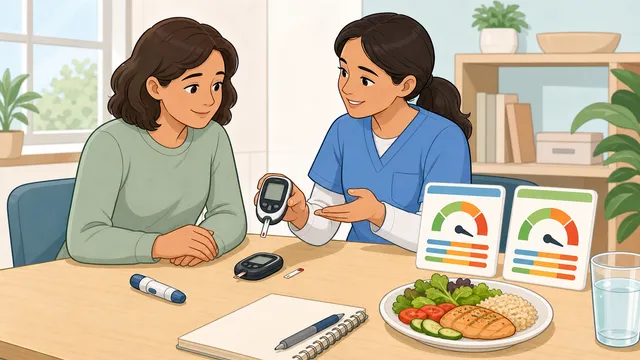
QUICKI Calculator instructional illustration

QUICKI Calculator

Use this QUICKI calculator to estimate insulin sensitivity from fasting insulin and glucose, convert mg/dL, mmol/L, µU/mL, or pmol/L lab units.

Health estimate

Editorial responsibility: Calcipedia editorial team

This page is maintained against the site trust model for its topic and updated when formulas, sources, or guidance materially change.

Reviewed 1 April 2026 Updated 29 April 2026 Contact editorial team
QUICKI calculator for insulin sensitivity Use this QUICKI calculator to estimate insulin sensitivity from fasting insulin and fasting glucose, convert glucose units live, and cross-check the same sample against a HOMA-IR reading.

Fasting Lab Values

Estimate insulin sensitivity from one fasting sample

Enter fasting insulin and glucose from the same blood draw after roughly 8 to 12 hours without food or caloric drinks. QUICKI is a research-facing insulin sensitivity calculator, not a stand-alone diagnostic test.

Example fasting samples

Before you interpret the score

  • Use fasting insulin and fasting glucose from the same morning draw.
  • Compare repeats from the same laboratory whenever possible.
  • Do not treat QUICKI, HOMA-IR, or this page as a diagnosis of diabetes or insulin resistance on their own.

Result

QUICKI Score

0.3385

Interpretation

Insulin Resistant

0.25 (resistant)0.38+ (normal)

Reduced insulin sensitivity pattern. This range is often used in research to flag higher insulin resistance, but the meaning depends on assay method and the rest of the metabolic panel.

Compare with HbA1c, fasting plasma glucose, lipids, blood pressure, waist measures, medication history, and repeat same-lab results.

HOMA-IR cross-check

2.22

Early insulin resistance

Glucose used

90 mg/dL

4.99 mmol/L

Fasting insulin used

10 µU/mL

69.5 pmol/L · same-draw fasting sample assumed

How to read this result

This sample falls below the 0.34 QUICKI threshold often used to flag insulin resistance in research settings.

QUICKI is most useful when fasting insulin and fasting glucose come from the same morning draw and are compared with repeat results from the same laboratory, because insulin assays vary between labs.

Use fasting insulin and fasting glucose from the same blood draw after an overnight fast of roughly 8 to 12 hours.

HOMA-IR and QUICKI are inverse views of the same fasting sample: higher QUICKI suggests better insulin sensitivity, while higher HOMA-IR suggests more resistance.

QUICKI rangeInterpretationNext step
0 to 0.3Severely Insulin ResistantRe-check the units and fasting status first, then discuss the result with a qualified clinician rather than treating the score as a diagnosis.
0.3 to 0.34Insulin ResistantCompare with HbA1c, fasting plasma glucose, lipids, blood pressure, waist measures, medication history, and repeat same-lab results.
0.34 to 0.38Borderline / Mildly ReducedUse the paired HOMA-IR value and future same-laboratory fasting samples to see whether the signal is stable, improving, or worsening.
≥ 0.38Normal Insulin SensitivityKeep the score in context with symptoms, family history, body composition, HbA1c, fasting glucose, and clinician guidance when metabolic risk is being assessed.
HOMA-IR rangeCross-reference
0 to 1Optimal insulin sensitivity
1 to 2Normal range
2 to 3Early insulin resistance
≥ 3Significant insulin resistance
Medical notice QUICKI is a research and educational tool for estimating insulin sensitivity. It is not a clinical diagnostic test and should not be used alone to diagnose insulin resistance or diabetes. Consult your GP or endocrinologist for interpretation in the context of your full clinical picture.
← All Diabetes calculators

Health — Diabetes

QUICKI calculator guide: insulin sensitivity score, formula, and HOMA-IR comparison

This QUICKI calculator estimates insulin sensitivity from fasting insulin and fasting glucose using the Quantitative Insulin Sensitivity Check Index. It works as a QUICKI score calculator, an insulin sensitivity calculator, and a practical cross-check against HOMA-IR when you want to understand the same fasting sample from both directions.

How to use this QUICKI calculator

Enter fasting insulin and fasting glucose from the same morning blood draw. The page accepts glucose in either mg/dL or mmol/L, converts the units automatically, and then applies the QUICKI formula in the original mg/dL format used in the Katz validation paper.

After calculation, the page shows the QUICKI score, an interpretation band, the equivalent glucose in both units, and a HOMA-IR cross-reference from the same sample. That makes the page more useful than a bare QUICKI formula calculator because it helps you compare insulin sensitivity and insulin resistance together instead of reading one number in isolation.

Units and calculation details

The original QUICKI formula expects fasting insulin in µU/mL and fasting glucose in mg/dL. If your laboratory reports insulin in pmol/L, the calculator converts it to µU/mL before applying the formula. If glucose is reported in mmol/L, the calculator converts it to mg/dL before applying the same base-10 logarithm equation.

This unit handling matters because a unit mismatch can make a QUICKI index look dramatically better or worse than it really is. The result panel therefore shows the converted glucose and insulin values alongside the QUICKI score, so you can check whether the calculation reflects the lab report you intended to enter.

What QUICKI measures

QUICKI stands for Quantitative Insulin Sensitivity Check Index. It is a fasting surrogate measure of insulin sensitivity built from two laboratory values: fasting insulin and fasting glucose. Higher QUICKI values indicate better insulin sensitivity, while lower values indicate more insulin resistance.

The appeal of QUICKI is that it uses a simple fasting sample rather than a hyperinsulinaemic euglycaemic clamp, which is the research gold standard but is far more expensive and time-consuming. That makes QUICKI useful in metabolic research, large population studies, and educational comparisons when only routine fasting labs are available.

QUICKI = 1 / (log₁₀[fasting insulin in µU/mL] + log₁₀[fasting glucose in mg/dL])

Original QUICKI formula described by Katz et al.

Why the same fasting sample matters

QUICKI is only meaningful when fasting insulin and fasting glucose come from the same blood draw after an overnight fast, usually about 8 to 12 hours. Mixing glucose from one date with insulin from another can produce a mathematically valid score that is clinically meaningless.

The same-lab rule matters too. Fasting insulin assays vary between laboratories, and that can shift both QUICKI and HOMA-IR. If you are monitoring trend rather than just reading a single score, repeat testing from the same laboratory is usually more informative than comparing results across different assay systems.

QUICKI vs HOMA-IR

QUICKI and HOMA-IR are derived from the same fasting insulin and fasting glucose sample, but they frame the result differently. QUICKI measures insulin sensitivity, so higher is generally better. HOMA-IR measures insulin resistance, so lower is generally better. They are inverse views of the same metabolic snapshot.

That is why a useful QUICKI calculator should show a HOMA-IR comparison instead of pretending the QUICKI score stands alone. If the QUICKI score looks reduced and the HOMA-IR cross-check also looks elevated, both measures are pointing in the same direction. If the result is borderline, the paired view gives more context for discussion with a clinician.

Worked example: fasting insulin 10 and fasting glucose 90 mg/dL

With fasting insulin of 10 µU/mL and fasting glucose of 90 mg/dL, QUICKI equals 1 divided by the sum of log10(10) and log10(90). The score is about 0.3385. In the interpretation system used on this page, that sits near the insulin-resistant threshold rather than in a clearly normal band.

The same sample converts to roughly 4.99 mmol/L glucose and about 2.22 for HOMA-IR. That side-by-side result shows why the page pairs QUICKI with HOMA-IR: you can see the same fasting sample as both reduced insulin sensitivity and mildly elevated insulin resistance without doing a second manual calculation.

What this QUICKI calculator can and cannot tell you

This insulin sensitivity calculator is useful for education, research-style interpretation, and structured discussion of fasting insulin and glucose. It can help explain why a person with a 'normal' fasting glucose may still have reduced insulin sensitivity if the insulin value required to maintain that glucose is relatively high.

It cannot diagnose diabetes, pre-diabetes, metabolic syndrome, or insulin resistance on its own. Clinical interpretation still depends on the broader context: symptoms, HbA1c, fasting plasma glucose, body composition, medication use, pregnancy status, liver disease, assay method, and the clinician's judgement.

Why QUICKI thresholds are approximate

There is no single universal QUICKI cut point that applies perfectly across all populations, assays, and clinical settings. Many papers use values around 0.34 to flag insulin resistance and values around 0.38 or above to suggest normal insulin sensitivity, but those thresholds are still population-level approximations rather than diagnostic rules.

That is why this page frames the ranges as interpretation bands instead of absolute categories. The score is most useful as a structured estimate, especially when you compare it with HOMA-IR, repeated fasting labs from the same laboratory, and formal clinical follow-up when the metabolic picture is concerning.

How this page improves on a simple QUICKI index calculator

Many QUICKI index calculators stop after returning one number. This page adds same-sample warnings, live glucose and insulin unit conversion, HOMA-IR cross-checking, reference-band tables, and next-step interpretation so the result is easier to audit before you take it to a clinical conversation.

The added context is especially important for people comparing fasting insulin, fasting glucose, HbA1c, PCOS risk discussions, metabolic syndrome concerns, or lifestyle-change tracking. QUICKI can be a useful insulin sensitivity marker, but it is strongest when treated as one structured signal inside a broader metabolic review.

Frequently asked questions

What is a normal QUICKI score?

A QUICKI score above about 0.38 is often described as normal insulin sensitivity in general research populations, while values below about 0.34 are commonly used to flag insulin resistance. Those thresholds are approximate, not diagnostic, and they vary with population and assay method.

Is QUICKI better than HOMA-IR?

Neither is universally better. QUICKI and HOMA-IR use the same fasting insulin and glucose values and often tell a similar story. QUICKI expresses insulin sensitivity, while HOMA-IR expresses insulin resistance. Some researchers prefer QUICKI because the log transformation can behave better statistically, but both are fasting surrogate measures rather than gold-standard clamp tests.

Do I need fasting values to calculate QUICKI?

Yes. QUICKI should be calculated from fasting insulin and fasting glucose measured after an overnight fast, typically 8 to 12 hours. Non-fasting values can distort the score and should not be interpreted as equivalent.

Can I enter glucose in mmol/L?

Yes. This page accepts glucose in either mg/dL or mmol/L. The calculator converts mmol/L into mg/dL internally because the original QUICKI formula was published using mg/dL glucose units.

Can I enter fasting insulin in pmol/L?

Yes. The calculator accepts fasting insulin in µU/mL or pmol/L. When pmol/L is selected, it converts the insulin value into µU/mL before calculating QUICKI, then shows both insulin units in the result so you can check the unit conversion.

Can QUICKI diagnose insulin resistance or diabetes?

No. QUICKI is a research and educational index, not a stand-alone diagnostic test. A clinician still needs the broader context, including HbA1c, fasting plasma glucose, symptoms, medication use, and other metabolic markers.

Why can two people have the same fasting glucose but different QUICKI scores?

Because fasting glucose only shows the blood sugar level, not how much insulin the body needed to hold it there. If one person keeps a glucose of 90 mg/dL with 5 µU/mL of insulin and another needs 15 µU/mL, the glucose looks the same but insulin sensitivity is very different.

Can medications, illness, or stress affect QUICKI?

Yes. Corticosteroids, some antipsychotics, metformin, GLP-1 medicines, acute illness, poor sleep, recent exercise, and major physiological stress can alter fasting insulin or glucose and change the QUICKI score. That is one reason why single results should be interpreted cautiously.

Why should I compare repeat QUICKI results from the same laboratory?

Fasting insulin assays vary between laboratories, and that can move both QUICKI and HOMA-IR even if your biology is unchanged. Trend comparison is more reliable when the sample handling and assay method stay consistent.

Why do QUICKI normal ranges differ between calculators?

QUICKI ranges differ because studies use different populations, insulin assays, and cut-point choices. Some calculators use a simple below-or-above threshold, while others separate borderline and severe insulin resistance bands. Treat the range as orientation, not a universal diagnostic rule.

Can QUICKI track lifestyle or medication changes?

QUICKI can help track insulin sensitivity trends when fasting insulin and fasting glucose are measured under similar conditions and preferably at the same laboratory. A rising QUICKI score may point toward improving insulin sensitivity, but medication changes, illness, weight change, exercise timing, sleep, and assay variation can all affect the trend.

Is QUICKI useful for PCOS, prediabetes, or metabolic syndrome discussions?

It can be useful as supporting context because insulin resistance is often part of PCOS, prediabetes, metabolic syndrome, fatty liver risk, and type 2 diabetes risk. QUICKI should not replace established diagnostic tests, but it can help frame questions about fasting insulin, fasting glucose, HbA1c, lipids, blood pressure, waist measures, and follow-up testing.

Also in Diabetes

Related

More from nearby categories

These related calculators come from the same leaf category, nearby sibling categories, or the same top-level topic.