Use this dehydration symptom checker to review urine colour, thirst, and dehydration signs, then compare red flags, likely drivers, and safer next steps.
Last updated
Hydration symptom check
Screen for common dehydration signals
This dehydration symptom checker looks for a pattern of urine colour, thirst, and common dehydration signs so you can decide whether a normal drink break, oral rehydration solution, or faster medical review makes more sense.
Quick starts
Symptoms and signs
Screening only
This tool is not a diagnosis. If you have confusion, fainting, chest pain, severe weakness, or cannot keep fluids down, seek urgent medical advice.
Result
Likely hydrated
Only a few or no dehydration signals are selected. Keep drinking to thirst and monitor how you feel.
Risk score
0/100
Selected signs
0
Red flags
0
Context
No major risk factors were selected.
Best first fluid
Water or another tolerated routine drink taken in steady small amounts.
Re-check window
Re-check later today, especially if urine stays dark or thirst stays strong.
Likely hydrated
No major risk factors were selected.
Most likely pattern
Possible mild intake gap
This pattern looks more like a small day-to-day fluid shortfall than a major illness-driven dehydration problem.
What to do next
Keep fluids available and drink regularly through the day.
A lighter urine colour and less thirst usually suggest you are on track.
If symptoms worsen, reassess rather than waiting until the next day.
Dehydration symptom checker guide: urine colour, thirst, red flags, and safer next steps
A dehydration symptom checker is best used as a quick screening tool, not as a diagnosis. It helps you review urine colour, thirst, dizziness, low urine output, vomiting or diarrhoea, and higher-risk contexts so you can judge whether this looks like a mild fluid gap, a sweat-loss problem, an illness-related dehydration pattern, or something that needs urgent medical help sooner.
What this dehydration symptom checker looks for
The live tool combines three layers of information: early clues such as thirst and darker urine, symptom signals such as dry mouth, dizziness, cramps, or fatigue, and red-flag combinations such as very little urine, confusion, rapid heartbeat with other warning signs, or inability to keep fluids down. That gives a more useful answer than relying on a single sign alone.
One symptom by itself can mislead. Urine colour can change after vitamins, food dyes, or some medicines. Thirst can be delayed in older adults. Headache and fatigue can come from heat, illness, sleep loss, or alcohol. The practical value comes from the pattern rather than from any single checkbox.
The checker also asks about very dry skin, sunken eyes, or poor skin bounce-back because several clinical references treat those as stronger dehydration clues when they appear with low urine output, dizziness, confusion, or a higher-risk person. That does not make the sign diagnostic, but it makes the overall screen more useful than a urine-colour-only check.
Why urine colour, thirst, and symptoms work better together
Sports and military hydration guidance often combines weight change, urine colour, and thirst because no single measure is strong enough by itself in normal daily life. Most people using a home dehydration symptom checker will not have a same-day body-weight comparison or a urine specific gravity strip, so the next best approach is to combine thirst, urine colour, and symptom clusters.
That is why this page does not stop at a urine colour chart. Darker urine plus strong thirst and cramps after a hot run points toward sweat-related dehydration. Dark urine plus vomiting, dizziness, and very little urine points more toward illness-related fluid loss where oral rehydration solution may matter more than plain water alone.
When plain water is enough and when oral rehydration solution is better
For a mild everyday fluid shortfall, water is often enough. If the pattern comes from vomiting, diarrhoea, fever, heavy sweating, or a long hot session, replacing both fluid and electrolytes becomes more important. That is why clinicians often recommend oral rehydration solution, especially when stomach illness is the driver.
The result blocks on this page separate those paths on purpose. A mild intake gap usually points toward tolerated routine fluids. Illness-related fluid loss points more strongly toward oral rehydration solution in small frequent sips, and inability to keep fluids down is treated as a reason to seek medical advice rather than just pushing more water.
Older adults, medicines, and other higher-risk dehydration patterns
Older adults are at greater risk of dehydration because thirst can be less reliable with age and the body has less fluid reserve to begin with. Risk also rises in infants and children, pregnant people, people taking diuretics, people who urinate more than usual because of diabetes or other illness, and people with kidney or heart conditions where a generic drink-more-water message may not be safe.
That is why the checker asks about higher-risk context. The same symptom cluster deserves a lower threshold for action when the person is a child, pregnant, older, already medically vulnerable, or on fluid-sensitive medicines. A result in that setting is not automatically an emergency, but it should push you toward earlier clinical advice than the same symptoms would in a healthy adult after a warm day.
Older adults may not feel thirst until dehydration is already underway.
Children and infants can worsen faster and may show age-specific signs such as fewer wet nappies, no tears, or sunken eyes.
Vomiting or diarrhoea can make plain-water-only replacement less effective.
Alcohol and medicines that increase urination can leave you behind on fluids before thirst catches up.
Kidney disease, heart failure, and clinician-set fluid limits change what is safe.
Worked examples: heat loss versus stomach bug dehydration
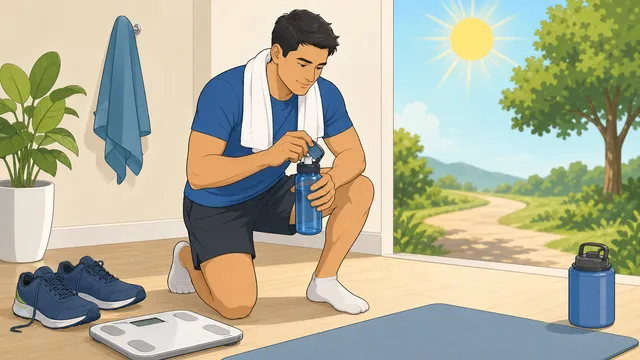
Imagine someone who selects amber urine, strong thirst, cramps, and a hot-exercise context after a long sunny session. That pattern usually suggests sweat and heat losses. The useful next step is often cooling down, drinking steadily, and considering an electrolyte-containing drink if the session was long or left salt-loss symptoms behind.
Now compare that with someone who selects dark urine, dizziness, very little urine, and vomiting or diarrhoea. That pattern is more worrying because the body is losing fluid faster and may not tolerate replacement well. In that case, oral rehydration solution and a shorter re-check window make more sense, and inability to keep fluids down becomes a reason to seek medical help instead of treating it as a routine hydration problem.
When this stops being a home hydration question
A symptom checker should not pretend to diagnose electrolyte imbalance, kidney injury, or heat illness. Confusion, fainting, extreme drowsiness, very little urine with ongoing losses, rapid heartbeat with worsening symptoms, or inability to keep fluids down are all reasons to seek help rather than trying to solve the problem with a bigger water bottle.
This page therefore uses urgent escalation language on purpose. Severe dehydration can become dangerous quickly, especially in children, older adults, and people with chronic disease. A home checker is most useful when it helps someone recognise when the situation has moved beyond self-management.
Frequently asked questions
Can urine colour alone tell me if I am dehydrated?
No. Urine colour is useful, but it is not perfect by itself. Vitamins, supplements, food dyes, and some medicines can change colour. It is more useful when combined with thirst, urine volume, dizziness, and other symptoms.
Should I drink water or oral rehydration solution?
For everyday mild dehydration, water is often enough. If vomiting, diarrhoea, heavy sweating, or prolonged illness is involved, oral rehydration solution may be more appropriate because it replaces both fluid and electrolytes.
When should I worry about very little urine?
Very little urine is more concerning when it happens together with dizziness, vomiting, diarrhoea, confusion, rapid heartbeat, or a higher-risk medical context. That combination should prompt medical advice rather than waiting it out.
Can this checker diagnose electrolyte imbalance?
No. It can only flag a symptom pattern that may fit dehydration or related fluid problems. Blood tests and clinical assessment are needed to diagnose sodium, potassium, kidney, or acid-base abnormalities.
Can I be dehydrated if my urine is not very dark?
Yes. Urine colour can be misleading after recent drinking, supplements, or medicines. That is why dizziness, thirst, low urine output, fatigue, and illness context still matter even if the urine colour is not the darkest option.
Do sunken eyes or very dry skin mean severe dehydration?
They can be more concerning when they appear with very little urine, confusion, fainting, dizziness, vomiting, diarrhoea, or a higher-risk person. They are not diagnostic by themselves, but they should lower the threshold for medical advice.
Why does this page treat older adults differently?
Older adults often feel thirst later, have less fluid reserve, and are more likely to have conditions or medicines that complicate rehydration. The same symptoms therefore deserve earlier attention in that group.
What if I cannot keep fluids down?
That is a red flag. Repeated vomiting or inability to keep fluids down can make dehydration worse quickly and means home rehydration may fail. Seek medical advice instead of relying only on a symptom checker.
Is this page for children as well as adults?
The symptom ideas overlap, but children can deteriorate faster and use somewhat different warning signs such as no tears or very few wet diapers. If a child shows dehydration signs, use child-specific medical advice rather than depending only on an adult-style checker.