Convert rise over run to percent slope with grade percentage, degrees, radians, decimal slope, slope length, 1:N ratio, pitch per 12.
Last updated
Rise-over-run to percent slope Convert a vertical rise and horizontal run into percent slope, grade percentage, degrees, radians, slope length, roof-pitch notation, and normalized 1:N slope.
Common presets
Horizontal run only
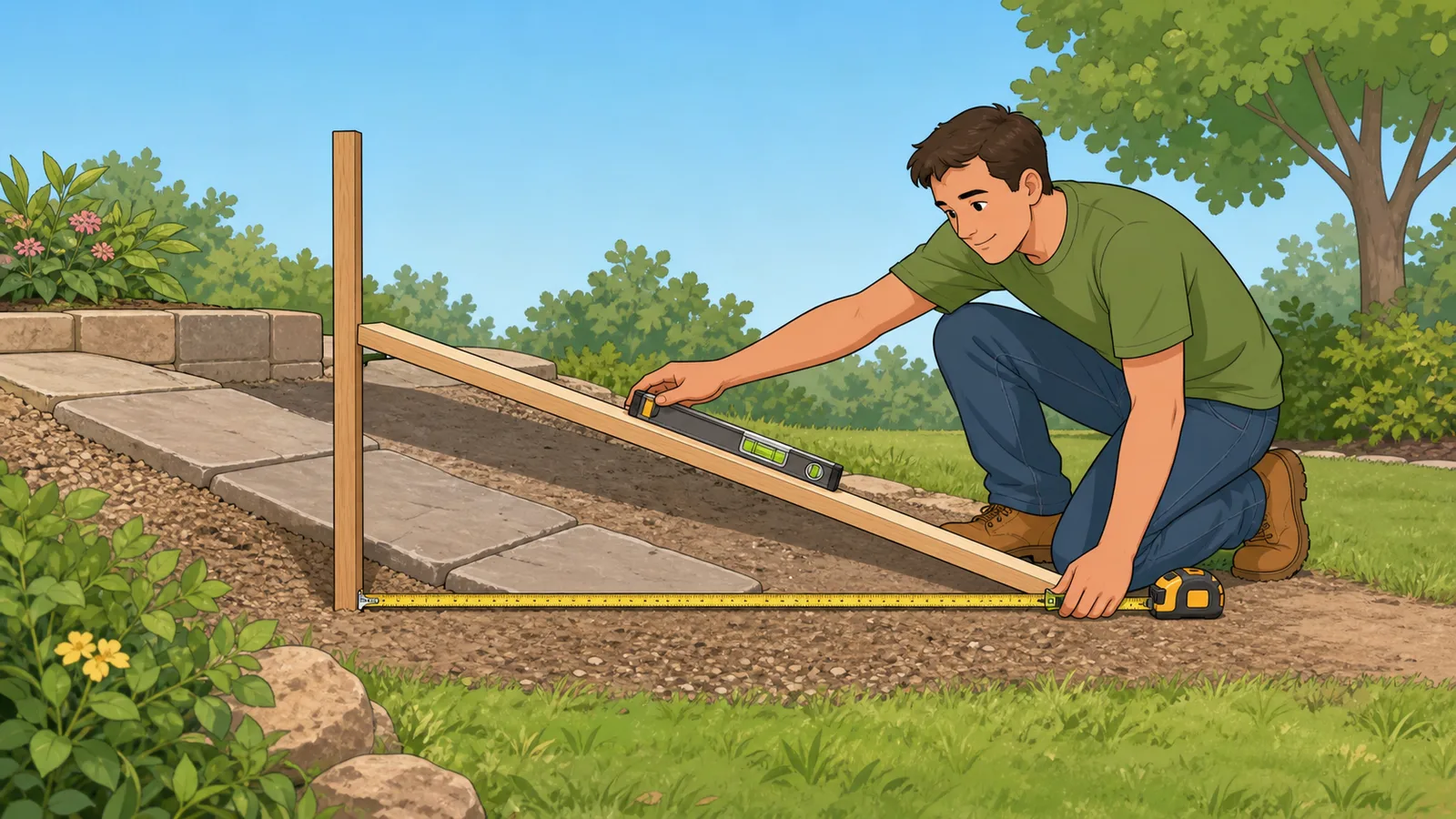
Percent slope uses rise divided by horizontal run, not the sloped surface length or map distance along the incline. Switching the measurement basis changes the grade percentage.
Percent can exceed 100%
Any slope steeper than 45° has a grade above 100% because the rise becomes larger than the horizontal run.
Result
8.3333%
A rise-over-run slope of 1 : 12 is ascending at 4.7636°, with a normalized ratio of 1 : 12. The closest built-in reference is 1:12 ramp.
Percent slope
8.3333%
Degrees
4.7636°
Radians
0.0831 rad
1:N equivalent
1 : 12
Decimal slope
0.0833
Slope length
12.0416
Pitch per 12
1:12
Pitch multiplier
1.0035
Interpretation
Every 12 units of horizontal run changes elevation by 1 units, and the inclined surface length is 12.0416 in the same units.
Ratio and direction
Ascending slopes keep the sign on the grade and angle, while the 1:N output normalizes to a positive magnitude for easier comparison.
Formula check
rise ÷ run = 0.0833; 0.0833 × 100 = 8.3333%. The matching angle is arctan(0.0833) = 4.7636°.
Measurement check
The pitch multiplier is 1.0035, so the sloped surface is about 0.3466% longer than the horizontal run for this grade.
Reference slopes
1% gentle drainage
A shallow site-drainage reference where rounding and field tolerance matter.
Percent
1%
Degrees
0.5729°
1:N
1 : 100
Run for your rise
100
shallower than your slope
2% drainage
Common quick-reference grade for drainage, walks, and paved surfaces.
Percent
2%
Degrees
1.1458°
1:N
1 : 50
Run for your rise
50
shallower than your slope
1:48 cross slope
A shallow accessibility-style reference equal to about 2.08% grade.
Percent
2.0833%
Degrees
1.1935°
1:N
1 : 48
Run for your rise
48
shallower than your slope
1:20 walk
A 5% grade reference that is easier to compare than degrees alone.
Percent
5%
Degrees
2.8624°
1:N
1 : 20
Run for your rise
20
shallower than your slope
1:12 ramp
Familiar ramp benchmark: about 8.33% grade and 4.76 degrees.
Percent
8.3333%
Degrees
4.7636°
1:N
1 : 12
Run for your rise
12
about the same steepness
4:12 roof pitch
Common roof-pitch example that converts to 33.33% slope.
Percent
33.3333%
Degrees
18.4349°
1:N
1 : 3
Run for your rise
3
steeper than your slope
45 degree slope
Rise equals run, so the percent slope is 100%.
Percent
100%
Degrees
45°
1:N
1 : 1
Run for your rise
1
steeper than your slope
Reference
Percent
Degrees
1:N
Run for your rise
Against yours
1% gentle drainageA shallow site-drainage reference where rounding and field tolerance matter.
1%
0.5729°
1 : 100
100
shallower than your slope
2% drainageCommon quick-reference grade for drainage, walks, and paved surfaces.
2%
1.1458°
1 : 50
50
shallower than your slope
1:48 cross slopeA shallow accessibility-style reference equal to about 2.08% grade.
2.0833%
1.1935°
1 : 48
48
shallower than your slope
1:20 walkA 5% grade reference that is easier to compare than degrees alone.
5%
2.8624°
1 : 20
20
shallower than your slope
1:12 rampFamiliar ramp benchmark: about 8.33% grade and 4.76 degrees.
8.3333%
4.7636°
1 : 12
12
about the same steepness
4:12 roof pitchCommon roof-pitch example that converts to 33.33% slope.
33.3333%
18.4349°
1 : 3
3
steeper than your slope
45 degree slopeRise equals run, so the percent slope is 100%.
Rise-over-run to percent slope calculator: percent grade, degrees
A rise-over-run to percent slope calculator turns a vertical-over-horizontal ratio into the grade percentage used in sitework, ramps, drainage, trails, roads, roofs, and grading notes. Enter the rise and horizontal run to see percent slope first, then compare the same incline as degrees, radians, decimal slope, slope length, pitch per 12, and normalized 1:N ratio.
How rise-over-run becomes percent slope
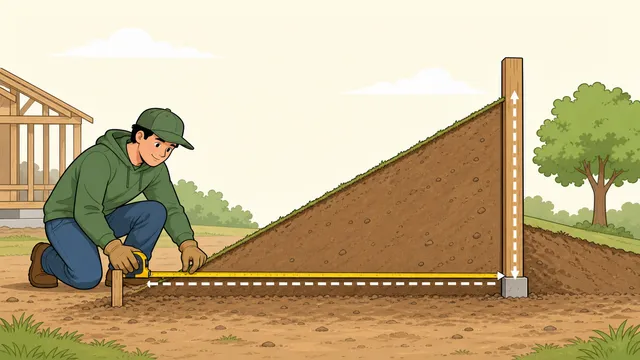
Percent slope is the rise divided by the horizontal run, multiplied by 100. That is why a slope of 1 over 12 becomes about 8.33 percent grade, a slope of 1 over 50 becomes 2 percent, and a 1 over 1 grade becomes 100 percent.
The same right-triangle relationship also gives the slope angle. The calculator keeps percent grade as the headline result because that is the format many field notes, trail signs, ramp discussions, and site-grading checks use, but it also shows degrees and radians so the answer can be compared with angle-based tools.
Percent slope = (rise / run) × 100
Reports grade as a percentage of the horizontal run.
Decimal slope = rise / run
The shared ratio behind percent grade, angle, and 1:N notation.
Angle = arctan(rise / run)
Converts the same ratio into degrees or radians.
1:12 = 8.33% ≈ 4.76°
Common ramp-style benchmark for relating ratio, percent slope, and angle.
Why horizontal run matters
Rise-over-run uses horizontal distance, not the sloped distance measured along the surface. If the wrong dimension is used as the run, the resulting grade percentage will usually be understated because the sloped surface is longer than its flat projection.
That distinction matters when a slope percentage calculator is used from a map, ramp plan, roof detail, driveway profile, or field measurement. Two people can be describing the same incline but get different numbers if one person measures horizontal run and the other measures along the slope.
The result panel therefore shows slope length and pitch multiplier alongside the percent slope. Those extra outputs make it easier to spot when a measurement might have been taken from the wrong side of the triangle.
Slope length = √(rise² + run²)
The distance along the inclined surface.
Pitch multiplier = slope length / horizontal run
Shows how much longer the sloped surface is than the flat run.
Reference slopes make percent grade easier to read
A bare percent grade can be hard to visualize, so the calculator compares your answer with reference rows such as 1% gentle drainage, 2% drainage, 1:48 cross slope, 1:20 walk, 1:12 ramp, 4:12 roof pitch, and 45 degrees. This turns a numeric percent slope into a practical steepness comparison.
The table also estimates the horizontal run needed to keep your entered rise at each reference grade. For example, if the rise is 1 unit, a 2% grade needs about 50 units of horizontal run, while a 1:12 ramp-style slope needs 12 units of run. That reverse view is useful when the question is not only “what percent is this slope?” but also “how much run would I need for a gentler grade?”
Worked example: convert rise and run to percent grade
Suppose a ramp, trail, or site section rises 1 foot over 12 feet of horizontal run. Divide 1 by 12 to get 0.08333, then multiply by 100 to get 8.33 percent slope. The inverse tangent of 0.08333 is about 4.76 degrees.
The same input can also be read as a 1:12 ratio, a 1:12 pitch per 12, and a sloped surface length of about 12.04 feet. Those surrounding values help a user check whether they entered the horizontal run or accidentally entered the surface length.
1 ÷ 12 = 0.08333
The decimal slope. This is the specific relationship the calculator applies when building the result.
0.08333 × 100 = 8.33%
The percent grade. This is the specific relationship the calculator applies when building the result.
arctan(0.08333) ≈ 4.76°
The matching angle from horizontal. This is the specific relationship the calculator applies when building the result.
Common mistakes when converting rise over run to percent
The first mistake is mixing units. Rise and run can be in feet, inches, metres, or any other length unit, but both values must use the same unit before division. A rise entered in inches with a run entered in feet will inflate the slope unless the units are converted first.
The second mistake is treating percent slope as degrees. A 10% grade is not 10 degrees; it is about 5.71 degrees because percent grade comes from tangent rather than the angle itself. A 45-degree slope is 100%, not 45%.
The third mistake is assuming the percent slope must stay below 100%. It can exceed 100% whenever the rise is larger than the horizontal run. That is mathematically valid, even though it may describe a very steep or impractical surface.
Where percent slope is useful and where caution is needed
Percent grade is convenient when comparing drainage targets, site grades, roads, paths, trails, ramps, terrain, and roof pitch because it reads as vertical change per 100 units of horizontal distance. It also lets gentle and steep slopes sit on one consistent scale.
The result should still be treated as geometry, not a compliance ruling. Accessibility standards, design standards, drainage requirements, and construction tolerances depend on the governing context and may define different limits for running slope, cross slope, surface type, and measurement conditions.
Use the calculator to translate the entered rise and run. Then confirm the standard that applies to the real project before deciding whether a ramp, walk, driveway, drainage surface, or trail is acceptable.
What is the difference between rise-over-run and percent slope?
Rise-over-run is the raw geometric ratio. Percent slope is that same ratio multiplied by 100, so a slope of 1 over 12 becomes about 8.33 percent.
What is the formula for percent slope from rise and run?
Use percent slope = (rise / horizontal run) × 100. Rise and run must use the same length unit before you divide.
Is percent slope the same as percent grade?
For this calculator, yes. Percent slope, slope percentage, grade percentage, and percent grade all describe rise divided by horizontal run, multiplied by 100.
How do I convert a 1:12 slope to percent?
Divide 1 by 12 and multiply by 100. A 1:12 slope is about 8.33% grade and about 4.76 degrees.
Can percent slope be more than 100 percent?
Yes. Any slope steeper than 45 degrees has a rise larger than the horizontal run, which makes the percent slope greater than 100 percent.
Why does the calculator use horizontal run instead of slope length?
Because percent slope is defined from rise over horizontal run. Using the sloped surface length would understate the true grade.
Is 10 percent slope the same as 10 degrees?
No. A 10% grade means rise divided by run equals 0.10, so the angle is arctan(0.10), or about 5.71 degrees.
What is a 2% slope in rise-over-run form?
A 2% slope means 2 units of rise for every 100 units of horizontal run. Normalized to one unit of rise, that is 1:50.
What does a negative percent slope mean?
A negative percent slope means the entered rise is negative, so the surface descends over the positive horizontal run. The magnitude still describes the steepness.
Does this calculator prove code or accessibility compliance?
No. It converts the entered geometry only. Compliance depends on the governing standard, field measurement method, tolerances, surface condition, and project context.