Convert slope percent, 1:N gradient ratio, degrees, radians, decimal slope, and mm-per-metre style gradient with practical reference rows for ramps, roads.
Last updated
Slope and gradient converter Convert a ramp, road, roof pitch, drainage, or terrain angle between percent grade, a 1:N ratio, degrees, radians, decimal slope, and per-mille or mm-per-metre style gradient.
Common presets
How to read 1:N
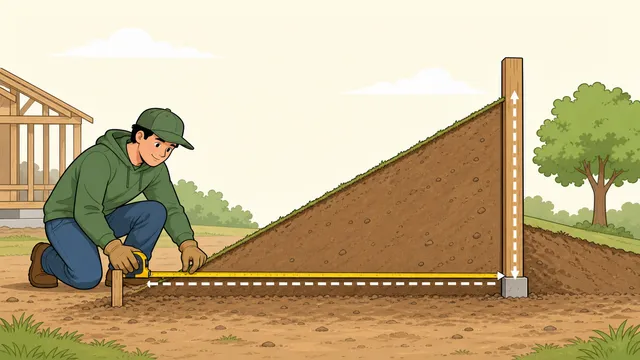
A 1:N ratio means one unit of rise for every N units of horizontal run. Larger N values are shallower grades.
Quick checkpoints
100% grade = 45°. A 1:12 ramp is about 8.33%. A decimal slope of 0.05 is 5%, 50‰, or 50 mm per metre. Zero grade is level and has no finite 1:N ratio.
Enter a value Provide a percent, ratio, degree, or radian slope to compare every representation side by side.
Slope and gradient converter: percent grade, degrees, radians, and rise-over-run explained
A slope and gradient converter turns the same incline into the language used by drawings, accessibility guidance, road design, and site work. Enter a percent grade, an angle, a radian value, or a rise-over-run ratio and compare the equivalents without doing the trigonometry by hand.
How slope formats connect
Percent grade describes rise divided by horizontal run, multiplied by 100. A 10% grade means 10 units of rise for every 100 units of horizontal run. Angle uses the same geometry, but it expresses the incline as a rotation from horizontal instead of as a ratio.
Because those formats are linked by the tangent function, they are not linearly interchangeable. Doubling the angle does not simply double the percent grade.
Percent grade = (rise / run) × 100
Standard way to express slope as a percentage of horizontal run.
Angle = arctan(rise / run)
Converts a geometric ratio into an angle from horizontal.
1:12 = 8.33% ≈ 4.76°
A familiar accessibility example showing ratio, percent, and angle for the same incline.
Where percent grade and ratios appear
Percent grade is common in roads, ramps, drainage, trail design, and site plans because it communicates steepness in a compact way. Ratios such as 1:12 or 1:20 stay common in accessibility and construction guidance because they show the relationship between rise and horizontal run directly.
Degrees and radians are more common in mathematics, surveying, and engineering calculations where the incline needs to connect to trigonometric formulas or instrument readings.
Decimal slope, per mille, and mm per metre
Decimal slope is the raw rise-over-horizontal-run value. A decimal slope of 0.05 means the surface rises 0.05 units for every 1 unit of horizontal run. That same incline is 5%, 50‰, and 50 mm per metre because all of those formats use the same horizontal-run base.
Per-mille and mm-per-metre formats are handy for shallow drainage, paving, and site-work checks because they avoid very small decimals. For example, 20 mm per metre is a 2% grade, while 50 mm per metre is a 5% grade.
Decimal slope = rise / horizontal run
The shared base used before converting to percent, per mille, angle, or ratio.
Per mille = decimal slope × 1000
Equivalent to millimetres of rise per metre of horizontal run when both measurements use consistent length units.
Common reference slopes to compare
Reference rows make converted slopes easier to interpret. A 1:48 reference is about 2.08%, a 1:20 reference is 5%, and a 1:12 reference is about 8.33%. Those familiar values help you see whether a grade is shallow, moderate, or already beyond common ramp-style examples.
Road, driveway, roof, and terrain examples can use much steeper numbers. A 10% road grade is about 5.71 degrees. A 4:12 roof pitch is 33.33%, or about 18.43 degrees. A 45-degree surface is a 100% grade, which is a useful reminder that degrees and percent grade are not the same scale.
Running slope versus other measurements
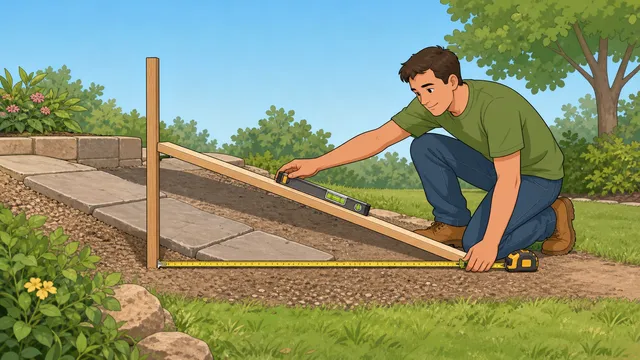
Slope ratios should always describe rise over horizontal run, not rise over the sloped path length. That distinction matters because using the wrong base length will understate the real grade.
Accessibility references also distinguish running slope from cross slope. The same site can meet one requirement and fail the other, so this converter should be treated as a geometry helper rather than a standalone compliance decision.
No. Percent grade is a rise-over-run ratio scaled by 100, while degrees express the incline as an angle. They are connected through trigonometry, so the relationship is curved rather than linear.
What does 1:12 mean?
It means 1 unit of rise for every 12 units of horizontal run. That corresponds to about 8.33% grade and roughly 4.76 degrees.
Why does a small change in degrees matter more on steep slopes?
Because the tangent relationship gets steeper as the angle rises. Near-horizontal angles change percent grade slowly, but at steeper inclines the same angle change can produce a much larger grade jump.
Can I use this to prove accessibility compliance?
Use it as a geometry check only. Real compliance also depends on which slope is being measured, the applicable standard, and the physical context of the route or ramp.
What is the difference between slope ratio and running slope?
Slope ratio is written as rise over horizontal run, such as 1:12. Running slope uses the same horizontal-based geometry, while cross slope measures the sideways tilt of a surface. This converter focuses on the incline itself, not on compliance decisions for every slope direction.
Is 10% slope the same as 10 degrees?
No. A 10% grade is about 5.71 degrees because percent grade is based on tangent: tan(angle) × 100. A 10-degree angle is much steeper, about 17.63% grade.
What does decimal slope mean?
Decimal slope is rise divided by horizontal run. A decimal slope of 0.05 equals 5%, 50‰, 50 mm per metre, and a 1:20 ratio.
How do I convert mm per metre to percent slope?
Divide the mm-per-metre value by 10. For example, 20 mm per metre is 2%, and 50 mm per metre is 5%, because 1 metre equals 1000 millimetres.
Why is a 45-degree slope called 100% grade?
A 45-degree incline has equal rise and horizontal run. Rise divided by run is 1, and 1 × 100 equals 100% grade.
Should I enter the sloped length as the run?
No. Use the horizontal run, not the sloped surface length. Percent grade, decimal slope, ratio, and angle conversions all rely on the horizontal distance as the base.