Acetaminophen (paracetamol) dosing depends on age, body weight, product strength, and whether the person has liver risk factors or is already taking another medicine that contains acetaminophen. This page estimates a practical dose range and daily ceiling, but the pack instructions and local clinical advice still take priority because child products, concentrations, and maximum daily limits can vary by country and formulation.
How this calculator estimates a dose
For adults and older adolescents who weigh 50 kg or more, this page uses a common fixed-dose range of 325 to 1,000 mg per dose every 4 to 6 hours. For children and lighter adolescents, it switches to weight-based dosing at 10 to 15 mg per kilogram per dose. That reflects a common prescribing framework, but it does not replace the specific instructions on the product label you are actually using.
That distinction matters because liquid strengths, age bands, and the maximum number of doses in 24 hours can differ across countries and products. UK consumer packs often use age-banded directions and a four-dose daily limit for children, while US weight-based advice may be expressed differently. If the label conflicts with a generic calculator estimate, follow the label or a clinician who knows the patient.
Paediatric single dose = 10 to 15 mg/kg
This is the weight-based starting range used by the calculator for children and lighter adolescents when a fixed adult dose would not be appropriate.
Adult ceiling = up to 4,000 mg/day in healthy adults
The calculator uses a lower ceiling when liver disease, heavy alcohol use, or malnutrition is flagged, but real-world labelling and clinician advice may be stricter.
Why overdose risk matters so much
Acetaminophen is widely used and usually safe at the correct dose, but accidental overdose is a major cause of severe liver injury. The commonest mistake is not one very large single dose, but combining several products that all contain acetaminophen or paracetamol, such as cold remedies, prescription pain medicines, and separate fever medicines.
People with liver disease, chronic heavy alcohol use, low body weight, or poor nutritional reserve may have less margin for error, so the calculator reduces the daily ceiling when liver concern is selected. That still does not make home dosing automatically safe in higher-risk patients. If there is ongoing vomiting, jaundice, confusion, suspected overdose, or uncertainty about the total amount taken, urgent medical advice is the safer path.
Converting a child acetaminophen dose from mg to mL
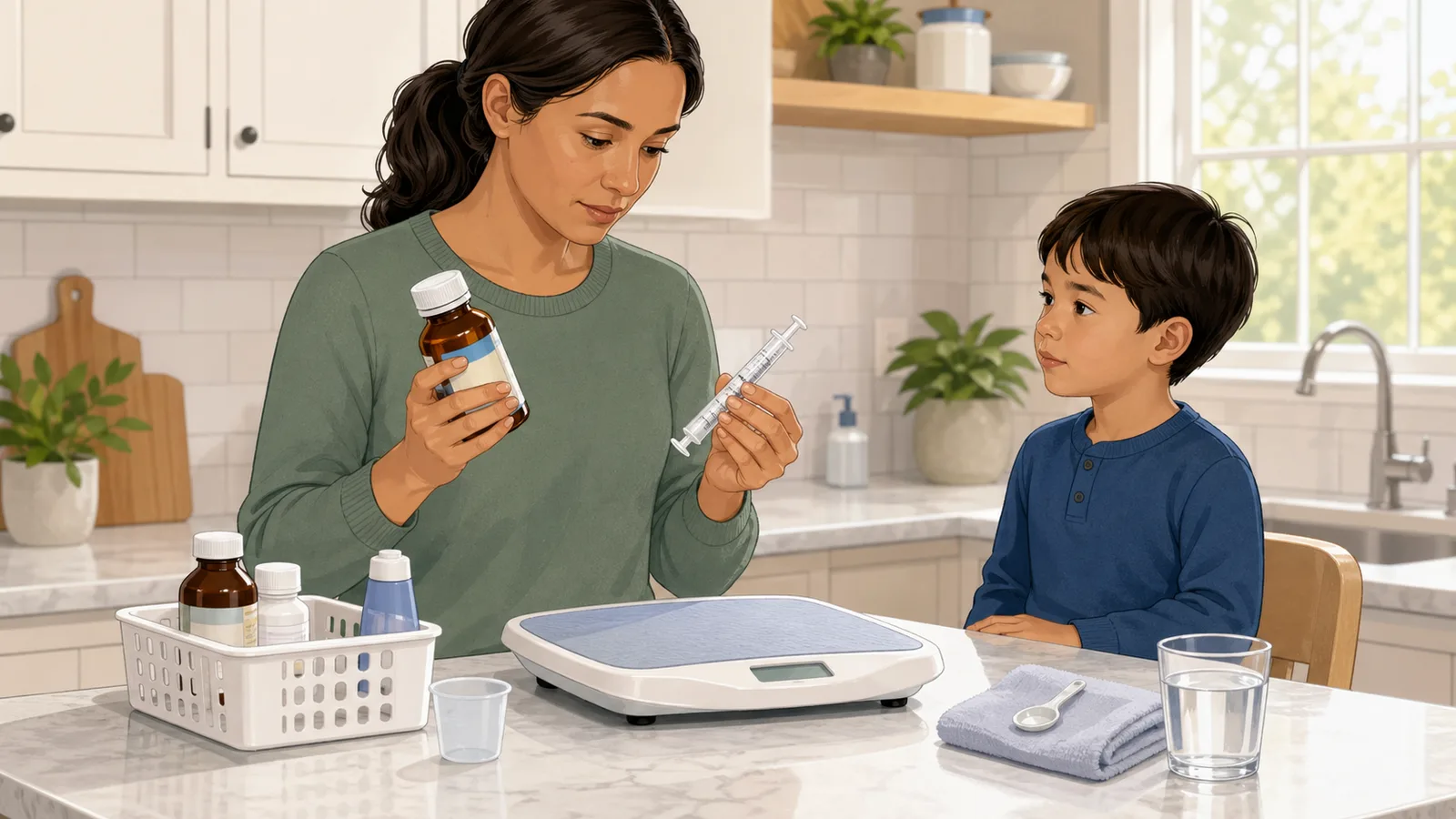
Many searches for a children's Tylenol dosage calculator or paracetamol dosage by weight calculator are really asking for the liquid amount to measure. The calculator therefore shows the milligram range first, then converts it to millilitres only when a liquid strength is selected.
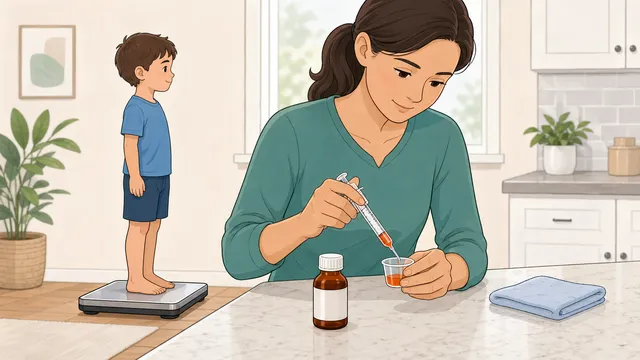
That mL estimate is useful only if the selected strength matches the bottle, sachet, or pharmacy label. A 160 mg/5 mL liquid contains 32 mg per mL, so a 400 mg dose is 12.5 mL. A different concentration changes the measured volume even when the target milligrams stay the same.
Liquid mL = target mg ÷ (label mg per 5 mL ÷ 5)
This converts the weight-based milligram result into a liquid amount only after the product concentration is known.
Use the child's most recent weight when it is available.
Match the liquid-strength selector to the exact label before using the mL output.
Use an oral syringe or supplied dosing device rather than a household spoon.
Worked example: child dose by weight
Suppose a child weighs 20 kg and the product is a 160 mg/5 mL acetaminophen liquid. The calculator's 10 to 15 mg/kg method gives a single-dose range of 200 to 300 mg. Because 160 mg/5 mL is 32 mg per mL, that converts to about 6.3 to 9.4 mL per dose before comparing against the product's own chart and maximum daily directions.
This example shows why the result is a planning estimate rather than a permission slip. The dose still has to fit the actual product label, the child's age, the number of doses already given, and whether another medicine in the household already contains acetaminophen, paracetamol, or APAP.
A printed acetaminophen dosage chart is useful when the product strength, age band, and weight row all match the person in front of you. A calculator can add value by making the mg/kg arithmetic visible, flagging lighter adolescents who should not be treated as fixed-dose adults, and converting the milligram result into an mL range when the liquid concentration is known.
The page also asks about duplicate acetaminophen exposure because this is one of the main reasons a mathematically correct single dose can still be unsafe. If another product may contain acetaminophen, the safe next step is not to calculate harder; it is to reconcile the total amount already taken from all products and routes.
Children under 2 years, patients with significant liver disease, people who may have taken more than one acetaminophen-containing medicine, and anyone with a possible overdose need more than a dose estimate. They need label review, medicine reconciliation, and sometimes urgent assessment or poison-service advice.
Pregnancy also deserves more care than a generic calculator can provide. FDA consumer guidance continues to recommend speaking with a health professional before using medicines in pregnancy, including acetaminophen. This page therefore treats pregnancy as a prompt for clinician review rather than a blanket reassurance.
Use the measuring device supplied with liquid products rather than a household spoon.
Check every cold, flu, pain, or combination medicine for acetaminophen, paracetamol, or APAP before adding another dose.
If a child is very small, under 2 months to 2 years, or unwell enough that dosing is unclear, use pharmacist or clinician advice instead of a generic calculator alone.
Frequently asked questions
Can I take 1,000 mg every four hours?
Not repeatedly unless that pattern still keeps you within the total daily limit and matches the product directions you are using. A single adult dose may be up to 1,000 mg, but healthy adults should still stay within a total of 4,000 mg in 24 hours, and many clinicians prefer extra caution below that in higher-risk patients.
Is acetaminophen safe during pregnancy?
FDA consumer guidance says medicine use in pregnancy should be discussed with a healthcare professional, including acetaminophen. Appropriate short-term use may still be advised, but the safest approach is the lowest effective dose for the shortest necessary time under clinician guidance.
Why can child dosing differ between products and countries?
Child acetaminophen products come in different strengths and may use age-banded or weight-based instructions depending on the country and formulation. That is why the label, supplied dosing device, and advice from a pharmacist or clinician should override a generic calculator when they differ.
How do I convert acetaminophen mg to mL?
Divide the target milligrams by the liquid concentration in mg per mL. For example, a 160 mg/5 mL product contains 32 mg per mL, so a 320 mg target dose is 10 mL. This only works if the liquid strength you enter exactly matches the label.
Is Tylenol the same as acetaminophen or paracetamol?
Tylenol is a brand name for acetaminophen. Paracetamol is the common name used in many countries for the same active ingredient. The important safety step is to look for acetaminophen, paracetamol, or APAP on every medicine label so duplicate products are not counted separately.
What should I do if another medicine also contains acetaminophen?
Do not add another dose until the total amount from all products is clear. Cold and flu remedies, prescription pain medicines, and separate fever medicines can all contribute to the same daily limit. A pharmacist, clinician, or poison service can help reconcile the total when the label history is unclear.
Why does the calculator show a range instead of one exact dose?
Weight-based acetaminophen dosing is commonly expressed as 10 to 15 mg/kg per dose, so a range is more honest than a single false-precision number. The final measured dose should be checked against the specific product label, supplied dosing device, age band, and maximum daily directions.
Can I use adult acetaminophen tablets for a child?
Only when the product label and a clinician or pharmacist's advice make that appropriate. Adult tablets can be too strong or difficult to measure accurately for younger children, and many child dose charts are built around liquid, chewable, or junior-strength products.