How wide should board and batten siding be?
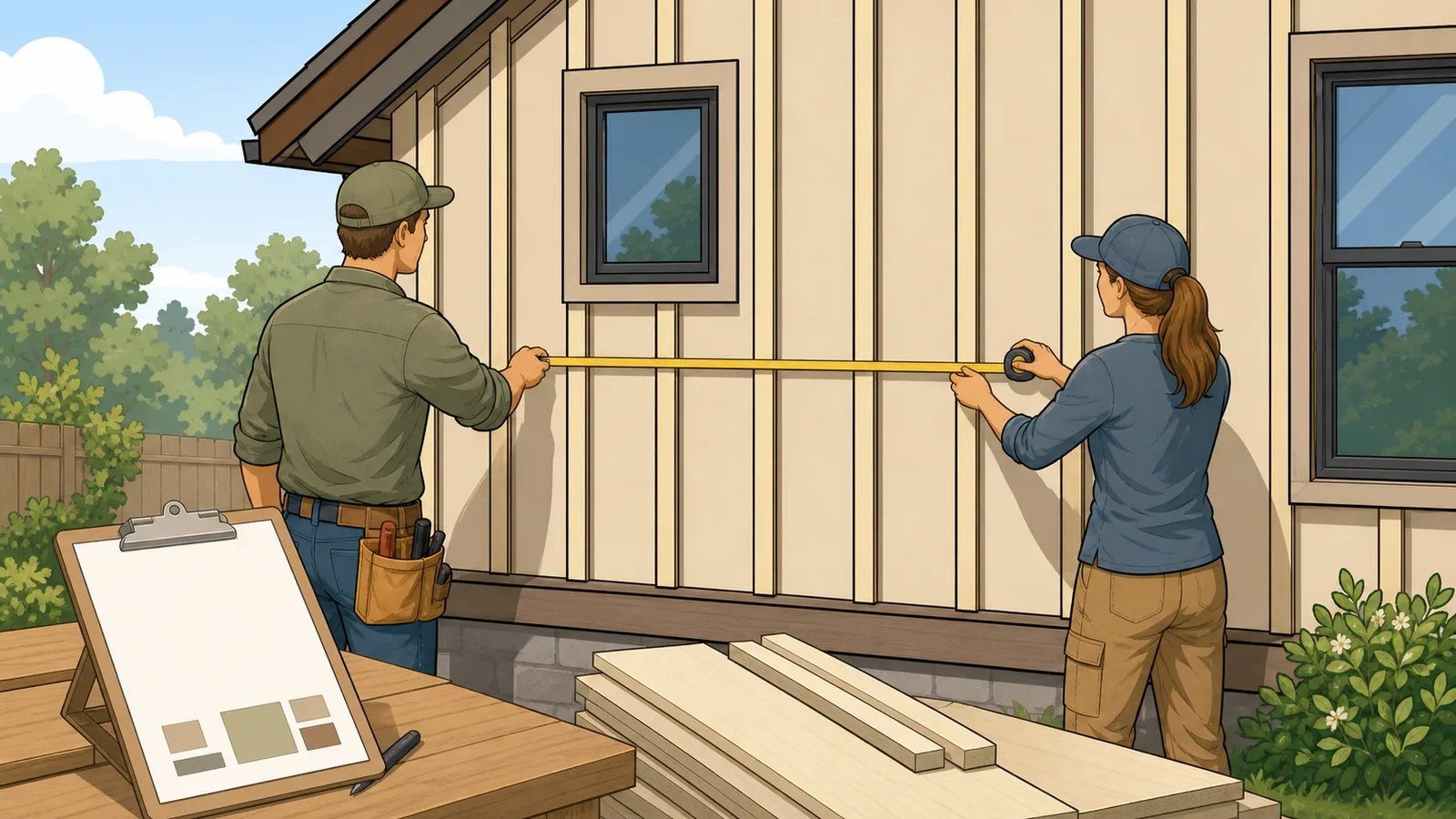
There is no single universal ratio, but the look usually depends on the width of the boards, the width of the battens, and the gap between them. A wider board with a narrow batten gives a more traditional board-and-batten look, while a wider batten can make the pattern read more strongly from a distance.
Can I install board and batten horizontally?
Board and batten is traditionally vertical, which lets water shed down the boards and keeps the seams visually regular. Horizontal installations are possible in some design styles, but they need careful flashing and product-specific installation rules to work correctly.
Do I need to subtract doors and windows?
Yes. Doors and windows reduce the siding area that needs to be covered, so subtracting them gives a more realistic board and batten material estimate. If you are budgeting by wall length alone, you will usually over-order.
Can I change the average size of doors and windows in the calculator?
Yes. That is one of the most useful upgrades for real projects because not every opening is average-sized. Oversized patio doors, grouped windows, and taller openings can shift the net siding area enough to change the material order.
How much waste should I add for board and batten siding?
A 10 percent waste allowance is a common starting point for simple walls. Add more if the wall has lots of openings, corners, gable cuts, or a detailed trim layout that will create extra offcuts.
What is a siding square in board and batten estimating?
A siding square is 100 square feet of material coverage. Many suppliers and contractors use squares in quotes, so converting the wall area after waste into siding squares makes it easier to compare takeoffs with supplier pricing.
How much does board and batten siding cost per square foot?
Installed board-and-batten-style work can vary a lot by material and labour. Current cost guides still show a broad spread because wood, fiber cement, engineered wood, and vinyl all price differently, so square-foot cost is only a planning estimate until you have a contractor quote.
What does the cost estimate include?
This calculator's cost field is a simple material estimate based on the linear-foot price you enter. It does not include labour, removal of old siding, primer, paint, trim, flashing, fasteners, permits, or rental equipment.
Can I use metric measurements and a non-US currency?
Yes. Switch the calculator to metres and square metres before entering wall dimensions, opening areas, and millimetre board widths. The optional cost field follows the selected currency preference, so the material-only estimate can be shown in the currency you use for supplier quotes.
When should I include furring strips in a board and batten estimate?
Include them when your siding assembly or rain-screen design needs horizontal rows behind the finished boards. The calculator gives an early-stage linear-foot estimate for those rows, but the final assembly still needs to follow the product instructions for the system you are installing.
Should I use this or the board-and-batten layout calculator?
Use this page when you already know the wall dimensions and want a siding material takeoff. Use the layout calculator when you are still balancing board count and spacing and want the visual module to land correctly first.
Can I use this for fiber cement, wood, or vinyl board and batten?
Yes, the takeoff logic still starts with wall area, openings, and module width. The material rules change by product, though, so always follow the manufacturer's installation instructions for the siding system you choose.
What is the difference between board and batten siding and board-and-batten layout?
This siding calculator estimates how many boards and battens you need and what they might cost. The layout calculator is the sibling tool for spacing and visual balance when you are deciding how the boards should land across the wall.
Should battens be centered over seams?
In a typical board-and-batten install, battens cover the seams between boards, so centering them over the joint is the standard approach. Product instructions may still require specific termination or flashing details where a batten meets a band board or panel joint.
Does board and batten add home value?
Board and batten can improve curb appeal, but it is usually chosen for style rather than for a guaranteed return on investment. The bigger benefit is often the visual update and the ability to match a home's exterior design language.