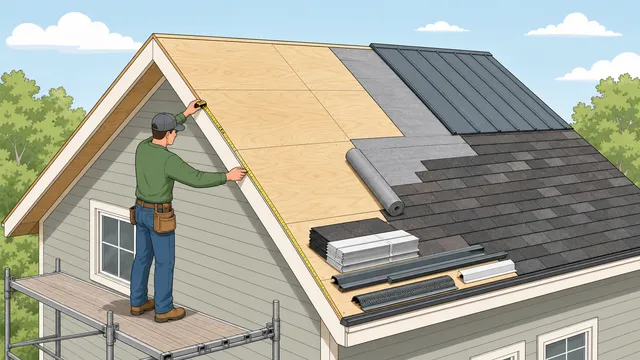
Calculate clapboard or lap siding boards, courses, even-coursed reveal, overlap, gable or dormer area, starter strip, corner trim, fasteners.
Last updated
Clapboard and lap siding takeoff Estimate clapboard or lap siding courses, even-coursed exposure, overlap, board count, starter strip, corner trim, fasteners, and rough material cost from wall perimeter, wall height, gable area, board width, reveal, and opening deductions.
Quick siding examples
Result
284 boards needed
Even coursing adjusts the reveal to 4.5 in, leaves 1.5 in of overlap, and covers about 1,240.8 sq ft after waste.
Courses
24
Pieces per course
12
Exact exposure
4.5 in
Overlap
1.5 in
Exposure adjustment
0 in
Coverage per board
4.5 sq ft
Net wall area
1,128 sq ft
Area with waste
1,240.8 sq ft
Siding squares
12.41
Openings deducted
132 sq ft
Extra gable / dormer area
0 sq ft
Starter strip
154 lin ft
Corner trim
79.2 lin ft
Planner note
The calculator is using 89.52% of the gross wall face after openings and a waste factor of 10%. This keeps the takeoff closer to a lap siding order sheet than a raw square-foot shortcut.
Extra gable or dormer area is included in the siding area, while starter strip still follows the wall perimeter you entered.
Clapboard siding calculator: estimate lap siding boards, courses, reveal, overlap
A clapboard siding calculator estimates how many lap siding boards you need, how many courses will fit the wall height, what the effective reveal becomes after even coursing, and how much starter strip, corner trim, gable or dormer area, and optional fastener quantity to plan for.
Why clapboard and lap siding takeoff needs reveal planning
Clapboard siding and lap siding are installed in overlapping horizontal courses. The reveal, or exposure, is the visible face of each course after the head lap is hidden behind the board above it. That means a siding calculator cannot stop at square footage alone. The reveal changes the number of courses, the overlap, and the total number of boards needed.
This page starts with the installer-first question: what board width are you using, and what reveal are you trying to hit? From there it computes even coursing across the wall height so you can see the adjusted reveal that will actually land cleanly at the top of the wall instead of leaving a skinny final course.
Courses = ceil(Wall height / Target reveal)
Uses the desired visible exposure to estimate how many clapboard courses must fit the wall.
Exact reveal = Wall height / Courses
Adjusts the visible exposure so the finished courses land evenly on the wall height.
Overlap = Board width - Exact reveal
Shows the working head lap left after even coursing adjusts the reveal.
Even coursing versus rough reveal
This is one of the main gaps in weak clapboard calculators. A rough reveal might be what you want visually, but the actual wall height rarely divides perfectly into that number. If you ignore even coursing, the top board can end up too narrow or the overlap can fall below what the product expects.
The calculator therefore shows both the target reveal and the adjusted reveal that fits the wall. That is especially useful when you are working with fiber cement clapboard siding, cedar clapboard siding, or other lap products where the visible reveal matters for both the look and the install.
Why opening sizes matter more than a simple door and window count
Many siding board calculators only ask how many doors and windows the wall has. That is better than nothing, but it breaks down quickly on patio doors, grouped windows, garages, and taller modern openings. A wall with six small windows and a wall with six oversized windows should not return the same siding takeoff.
That is why this page lets you enter average door and window areas. It keeps the calculator useful for real takeoffs, where the opening deduction can materially change the board count, siding squares, and waste-adjusted area.
Adding gables, dormers, and extra clapboard area
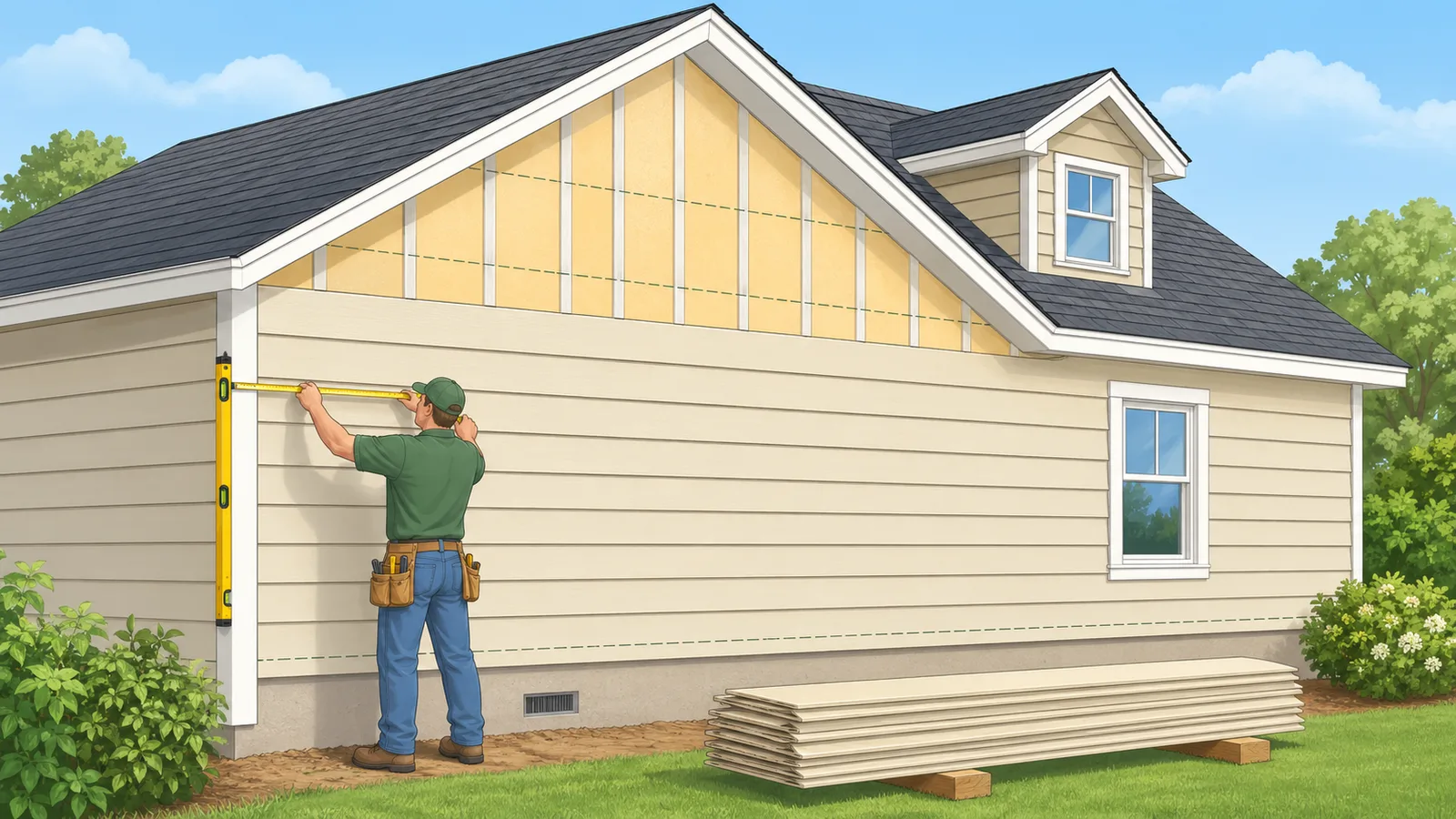
Gable ends and dormer faces often get missed when a siding takeoff starts from wall perimeter and wall height. The extra wall area field gives you a clean place to add those triangle, trapezoid, or dormer totals without forcing them into the main rectangular wall height.
Measure those surfaces separately, subtract any openings they contain, and add the remaining square footage as extra wall area. The calculator includes that area in board count, waste-adjusted siding squares, and cost planning while keeping starter strip tied to the main wall perimeter.
Total siding face area = Wall perimeter x Wall height + Extra wall area
Adds separately measured gables, dormers, or other non-rectangular siding surfaces to the main wall takeoff.
Board count, starter strip, and corner trim
Real clapboard ordering is not just about siding area. You also need a sense of how many full courses run around the wall perimeter, how many board lengths each course needs, how much starter strip runs along the base, and how much corner trim will be required at outside corners.
This calculator estimates all of those at once. That gives it a practical advantage over generic siding square calculators, especially when you are moving from rough budgeting into an actual lap siding material list.
Pieces per course = ceil(Wall perimeter / Board length)
Shows how many siding boards each full horizontal run needs before opening deductions.
Corner trim = Outside corners x Wall height x 2
Uses paired corner boards running the full wall height as a practical trim estimate.
Fasteners, story poles, and ordering checks
If you know the planned fasteners per board, the calculator can turn the board count into a rough fastener quantity. That is useful for comparing nail, screw, or clip needs across cedar clapboard, wood clapboard, vinyl clapboard, and fiber cement lap siding products before you build the final order list.
Treat the fastener result as a planning quantity only. Final fastening spacing, nail placement, corrosion resistance, and clearance rules should come from the manufacturer's installation guide and local job conditions. A story pole or layout stick is still the practical field check for confirming that the adjusted reveal lands cleanly around windows, trim bands, and the top course.
Clapboard siding, wood clapboard, vinyl, and fiber cement
The takeoff math is still similar whether you are pricing traditional wood clapboard siding, cedar clapboard siding, vinyl clapboard siding, or fiber cement lap siding. The product changes, but the planning questions stay familiar: board width, reveal, overlap, waste, openings, and trim.
What changes by material is the manufacturer's installation rule set. Cedar and other wood clapboard products may tolerate different finish and moisture conditions than vinyl or fiber cement. James Hardie and other fiber cement lines also have reveal and fastening rules that should be checked against the product literature before you order or install.
Squares and waste in siding orders
Suppliers and installers often switch between square feet and squares when they talk about siding. One square is 100 square feet of coverage, so a wall with 1,240 square feet of waste-adjusted siding area is also a 12.4-square order.
Waste matters because lap siding creates cutoffs at corners, around openings, and at course transitions. A simple rectangular wall may be close to a 10 percent waste allowance, while gables, lots of openings, or multiple wall offsets may need more.
Squares = Waste-adjusted siding area / 100
Converts the takeoff into the same unit many suppliers use in quotes and order sheets.
How to use the result well
Use the result as a planning estimate, not a substitute for the siding manufacturer's install guide. The calculator helps you compare reveals, courses, overlap, starter strip, trim quantities, extra gable or dormer area, fasteners, and siding squares before you place an order. It does not replace flashing details, nailing schedules, field layout, or product-specific head-lap rules.
If the adjusted overlap gets too tight, treat that as a warning to change the reveal or move to a wider board. That is exactly the sort of issue even-coursing checks are supposed to catch before the siding is on site.
What is the difference between clapboard siding and lap siding?
They are closely related terms. Clapboard usually refers to the traditional overlapping horizontal board profile, while lap siding is the broader category for overlapping horizontal courses. For estimating, the same reveal-and-overlap logic generally applies.
Why does the calculator show an adjusted reveal instead of only my target reveal?
Because even coursing matters. Your target reveal may not divide evenly into the wall height, so the calculator adjusts it slightly to avoid an awkward top course and to show the real overlap left between boards.
How much overlap should clapboard siding have?
The exact answer depends on the product, but the calculator flags when the even-coursed overlap drops below a common 1.25-inch planning threshold. Always confirm the required head lap in the product's installation instructions.
Can I use this for cedar clapboard siding?
Yes. The calculator works for cedar clapboard siding as long as you enter the actual board width, reveal target, board length, and opening deductions. The final install still needs to follow the product and finish details for cedar.
Can I use this for fiber cement clapboard siding or Hardie plank style lap siding?
Yes. The same takeoff approach works for fiber cement lap siding, but the final reveal, fastening, and clearance rules should come from the product's official installation documents.
Why do I need board length if the wall area is already known?
Because board length affects how many full pieces each course requires. Two walls with the same area can need different board counts if one is ordered in 12-foot boards and the other in 16-foot boards.
What does starter strip linear footage tell me?
It gives you a practical estimate of the base run that needs support at the first course. It is part of a more realistic lap siding material list than square footage alone.
Why does the calculator ask for average door and window area?
Because a simple opening count is often too rough. Oversized patio doors, grouped windows, and tall modern openings can materially reduce the siding area compared with average openings.
How do I include gables or dormers in the clapboard siding calculator?
Measure the gable, dormer, or other non-rectangular siding surfaces separately, subtract any openings in those surfaces, and enter the remaining total in the extra wall area field. The calculator adds that area to board count, waste-adjusted siding squares, and material cost planning.
How many nails or fasteners do I need for clapboard siding?
Enter the planned fasteners per board to get a rough fastener count from the estimated board quantity. Use that result for purchasing checks only, because final nail, screw, or clip spacing must follow the siding manufacturer's installation instructions and local job requirements.
How many squares of clapboard siding do I need?
The calculator converts the waste-adjusted siding area into squares automatically. One square equals 100 square feet of coverage.
Is this also a clapboard siding cost calculator?
Only at a simple material level. If you enter a price per board, the page estimates the board cost, but it does not include labor, removal, flashing, paint, fasteners, scaffolding, or permit costs.