

Skip to content
Calcipedia
CGS Units Converter instructional illustration

CGS Units Converter

Convert CGS to SI units for centimetre, gram, dyne, erg, gal, poise, stokes, barye, density, and surface tension while keeping each physical quantity separate.

Last updated

CGS to SI unit converter

Choose the physical quantity first

Convert centimetre-gram-second units such as dyne, erg, gal, poise, stokes, barye, and dyn/cm into the matching SI family. Each panel keeps one physical dimension isolated so a force unit never turns into pressure, energy, or viscosity by accident.

Common examples

Physical quantity

Quantity-safe CGS conversion Force is not mass; do not convert grams to dynes without an acceleration model. Electromagnetic CGS variants such as ESU, EMU, and Gaussian notation are intentionally excluded here because they can require convention-specific relationships rather than a simple mechanical-unit factor.

Force scope

Convert dyne and newton force values from older mechanics tables or laboratory notes.

Reference factor: 1 dyn = 10^-5 N. This tool is a unit converter, not a derived-equation or dimensional-analysis solver.

Result

1e-5 N

1 dyn converted into the primary SI unit, with the matching CGS form and common scaled units below.

CGS base
1 dyn
SI base
1e-5 N

CGS / centimetre-gram-second units

Dyne (dyn) 1

SI and common metric equivalents

Newton (N) 1e-5
Kilonewton (kN) 1e-8
Millinewton (mN) 0.01

What this CGS converter includes

The page covers common base, mechanical, and fluid-property CGS conversions: centimetre, gram, second, dyne, erg, gal, g/cm³, poise, stokes, barye, and dyn/cm. It keeps specialist electromagnetic, radiation, magnetism, and dimensional-analysis workflows on their own calculators.

← All General Science calculators

Scientific Units

CGS units converter: dyne, erg, poise, stokes, barye, and SI equivalents

A CGS units converter helps when older scientific or engineering references use centimetre-gram-second units such as centimetre, gram, dyne, erg, gal, poise, stokes, barye, or dyn/cm while your current work expects SI units. This page keeps the scope disciplined by converting only within the selected quantity family instead of mixing unrelated dimensions.

Why CGS units still appear in practice

Many legacy physics texts, material references, and instrument notes still use CGS-derived units. Dyne appears in force work, erg in older energy references, gal in acceleration and geophysics notes, poise and stokes in viscosity tables, barye in pressure material, and dyn/cm in surface-tension references. Even when modern reporting is SI-first, engineers and researchers still need clean comparisons against those older labels.

That is why this converter keeps the CGS and SI families visible together. The point is not to promote CGS usage over SI, but to reduce transcription mistakes when moving between historical documentation and current notation.

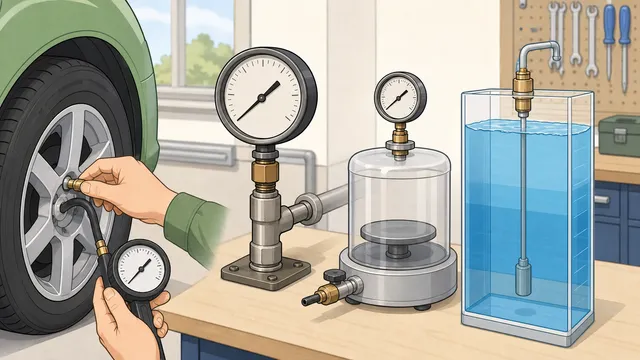
Why quantity families must stay separate

A dyne and an erg may both belong to the CGS system, but they do not represent the same physical dimension. Length, mass, time, force, energy, acceleration, density, dynamic viscosity, kinematic viscosity, pressure, and surface tension each need their own conversion path and their own reference units.

This page therefore asks you to choose the quantity first, then shows only the units that belong to that family. That constraint is deliberate and prevents accidental comparisons between incompatible dimensions. It also makes the page more useful than a generic all-units search box when the real risk is choosing the wrong physical property.

1 cm = 0.01 m; 1 g = 0.001 kg

Base CGS length and mass relationships against SI metre and kilogram notation.

1 dyn = 10^-5 N

Force relationship between the CGS dyne and the SI newton.

1 erg = 10^-7 J

Energy relationship between the CGS erg and the SI joule.

1 P = 0.1 Pa·s

Dynamic-viscosity relationship between poise and pascal-second.

1 St = 10^-4 m²/s; 1 Ba = 0.1 Pa; 1 dyn/cm = 0.001 N/m

Common kinematic-viscosity, pressure, and surface-tension CGS-to-SI relationships.

Common CGS to SI conversions covered here

Use the base panels for centimetre to metre, gram to kilogram, and second checks. Use the mechanical panels for dyne to newton, erg to joule, gal to m/s², barye to pascal, and dyn/cm to N/m. Use the fluid-property panels for poise to Pa·s, centipoise to mPa·s, stokes to m²/s, centistokes to mm²/s, and g/cm³ to kg/m³.

The calculator shows both the CGS base form and the SI base form first, then lists scaled equivalents in grouped result rows. That layout supports the quick answer intent while still giving enough context for students, lab readers, and engineers checking old tables.

What this CGS converter does not try to simplify

Some CGS search results mix mechanical CGS, electrostatic units, electromagnetic units, Gaussian notation, and magnetic unit systems into one topic. Those areas can require convention-specific relationships rather than a simple decimal factor. For that reason, this page does not claim to convert every ESU, EMU, Gaussian, radiation, or magnetism quantity.

If the source value involves statcoulomb, abampere, gauss, maxwell, oersted, rad, rem, or another specialist unit, use a calculator built for that quantity. Keeping those workflows separate reduces the chance of treating a notation bridge as a physical model.

How to use the result responsibly

Use the converter as a notation bridge when you already know the physical quantity involved. It is well suited to re-reading older tables, checking lecture notes, translating instrument manuals, comparing laboratory viscosity notation, and moving legacy mechanics values into modern SI reports.

Do not use it as a shortcut for solving equations or for dimensional-analysis work. If the real task is to derive a missing variable, choose a dedicated engineering or physics calculator instead of treating a unit converter as the full solution step.

Frequently asked questions

Why does this page ask me to choose force, energy, viscosity, or pressure first?

Because the same unit system contains many different dimensions. Choosing the quantity first prevents you from comparing units that share historical origin but describe different physical things, such as dyne for force, erg for energy, poise for dynamic viscosity, stokes for kinematic viscosity, and barye for pressure.

Is CGS still an official recommended system?

Modern standards work is SI-first, but CGS-derived units still appear in older references, niche technical fields, and historical data. A converter remains useful because those labels have not disappeared completely.

What is the difference between CGS and SI units?

CGS is based on centimetre, gram, and second, while SI mechanics is built around metre, kilogram, and second. Many mechanical CGS conversions are decimal scale changes, but the physical quantity still has to stay the same.

How do I convert dyne to newton?

Choose Force, enter the value in dyne, and read the SI result in newtons. The fixed relationship is 1 dyn = 10^-5 N, so 100,000 dyn equals 1 N.

How do I convert erg to joule?

Choose Energy, enter the value in erg, and read the result in joules. The relationship is 1 erg = 10^-7 J, so very small or very large values may display in scientific notation.

Is centipoise the same as millipascal-second?

Yes. One centipoise equals one millipascal-second. The dynamic viscosity panel shows both because older fluid tables often use cP while SI-first reports use mPa·s.

Is centistokes the same as square millimetres per second?

Yes. One centistokes equals one mm²/s. It is a kinematic-viscosity unit, so it should not be converted directly to centipoise unless density is known.

Why are ESU, EMU, and Gaussian electromagnetic units not all included?

Those systems can involve convention-specific electromagnetic relationships rather than a simple one-quantity unit factor. This page focuses on common base, mechanical, and fluid-property CGS conversions and leaves specialist electromagnetic quantities to dedicated converters.

Why are some converted values shown in scientific notation?

Because CGS and SI can differ by very large decimal factors. Scientific notation keeps those relationships readable without hiding the order of magnitude.

Can I use this page for dimensional-analysis homework?

Only for the conversion step. If the real task is to set up or solve an equation, use a dimensional-analysis or physics calculator in addition to the unit conversion.

Also in General Science

Related

More from nearby categories

These related calculators come from the same leaf category, nearby sibling categories, or the same top-level topic.