Calculate cone volume from radius, diameter, or circumference plus vertical height or slant height, then review surface area, cone net sector angle, litres.
Last updated
Cone volume calculator Calculate cone volume, slant height, lateral area, base area, total surface area, and cone net sector angle from radius, diameter, or circumference plus vertical height or slant height. Results include cubic-unit volume, litres, US gallons, and the matching cylinder comparison.
Quick examples
Base measurement
Measure from centre to edge
Units
Known height measurement
Straight distance from base centre to apex
Measurement assumptions
Right circular cone: the height is straight up from the base centre to the apex.
Slant-height mode: if you enter the side length, it must be longer than the radius so vertical height can be solved with the Pythagorean theorem.
Consistent units: radius, diameter, circumference, and height are treated as the same length unit before volume is converted.
Material planning: lateral area excludes the base, while total surface area includes it.
Result
This cone holds one-third of the matching cylinder volume (113.0973 cm^3) and has 75.3982 cm^2 of total surface area including the base.
37.7 cm^3
V = (1/3) * pi * 3^2 * 4 = 37.6991 cm^3
Volume
37.7
cm^3
Total surface area
75.4
cm^2
Lateral area
47.12
cm^2
Slant height
5
cm
Vertical height
4
cm
Base area
28.27
cm^2
Litres
0.04
L
US gallons
0.01
gal
Cubic feet
0
ft^3
Sector angle
216
degrees
Normalized base
Radius 3 cm, diameter 6 cm, circumference 18.85 cm.
Cylinder comparison
A matching cylinder would hold 113.1 cm^3; this cone holds 33.33% of that volume.
Surface area choice
Use lateral area for the curved side only. Use total surface area when the circular base also needs material.
Flat pattern
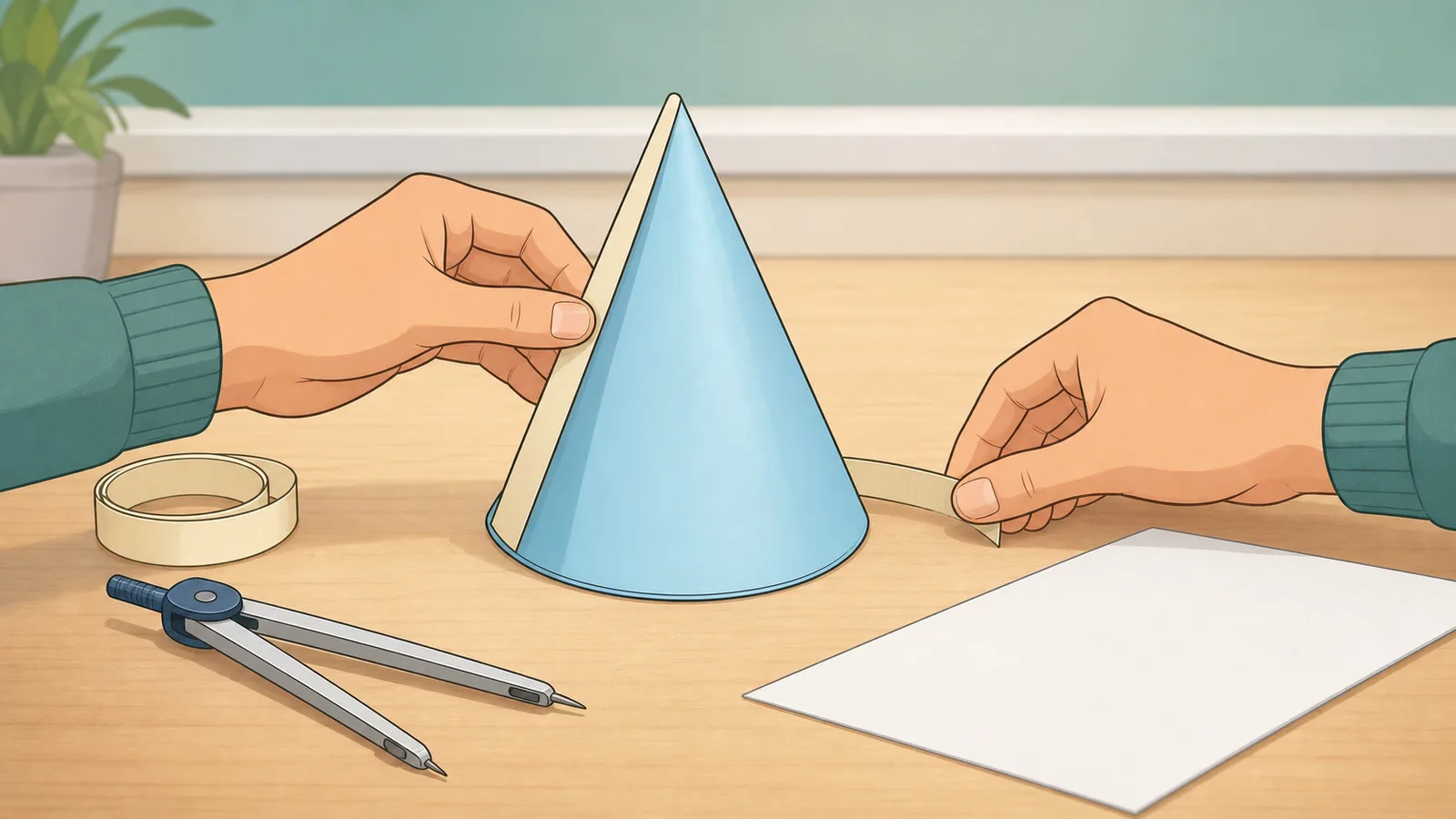
The curved side unwraps to a sector with radius 5 cm, arc length 18.85 cm, and central angle 216°.
Cone volume calculator: radius, diameter, surface area, and slant height
Use the cone volume calculator to work from radius, diameter, or circumference plus vertical height or slant height into volume, total surface area, lateral area, base area, and cone net details. The page also converts the result into litres, US gallons, cubic feet, and cubic metres so it can support homework checks, drafting, fabrication, fill planning, and measurement review rather than returning a bare number.
Cone formulas for volume, surface area, and slant height
A right circular cone is defined by a circular base and an apex directly above the centre of that base. The two core dimensions are base radius r and vertical height h. Once those are known, the volume is one-third of a cylinder with the same base and height: V = (1/3) * pi * r^2 * h.
The slant height comes from the right triangle formed by the radius and the vertical height, so l = sqrt(r^2 + h^2). Lateral surface area is pi * r * l, and total surface area adds the base circle: SA = pi * r * (r + l). This is why a strong cone calculator should show volume, slant height, base area, lateral area, and total surface area together.
If you enter diameter instead of radius, the calculator first divides the diameter by 2. If you enter circumference, it first solves r = circumference / (2 * pi). Those conversions let the same volume of a cone calculator match the way a real object was measured.
Some geometry and fabrication problems give slant height instead of vertical height. In that mode, the calculator first solves h = sqrt(l^2 - r^2), then uses that vertical height in the cone volume formula. It also reports the flat-pattern sector angle, because the curved side of a right cone unwraps into a circular sector whose radius is the slant height and whose arc length is the base circumference.
V = (1/3) pi r^2 h
Volume of a right circular cone from radius and vertical height.
l = sqrt(r^2 + h^2)
Slant height from radius and vertical height.
L = pi r l
Lateral surface area of the curved side only.
SA = pi r(r + l)
Total surface area including the circular base.
r = d / 2; r = C / (2 pi)
Convert diameter or circumference into radius before calculating.
h = sqrt(l^2 - r^2)
Find vertical height from slant height and radius when the side length is known.
theta = 360r / l
Central angle of the unrolled cone-side sector for flat-pattern layout.
How to measure a cone correctly
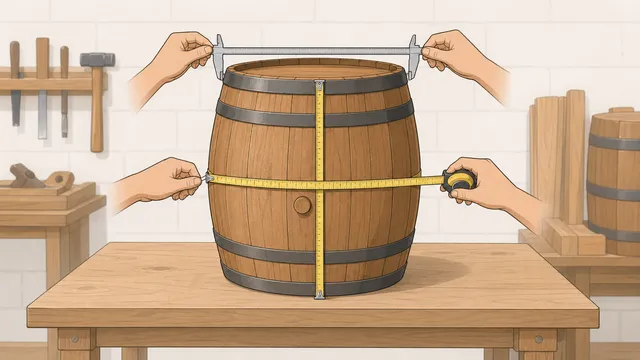
Measure the radius from the centre of the circular base to the outer edge, not the full width across the base. If you have the diameter instead, use the diameter input mode or divide by 2 before using a radius-only formula. If a flexible tape gives the base circumference, the calculator can convert that circumference to radius automatically.
The height must normally be the straight vertical distance from the base plane to the tip of the cone. It is not the slant height along the side. Mixing height and slant height is one of the most common causes of wrong cone volume and cone surface area answers, so the calculator now makes the known height measurement explicit before it solves the formula.
Use slant-height mode only when the measurement runs along the side from the base edge to the apex. The slant height must be longer than the radius; if it is equal to or shorter than the radius, the dimensions cannot form a right circular cone with positive height.
Keep units consistent. If the base measurement is in centimetres, the height must also be in centimetres; if the base measurement is in inches, the height must also be in inches. The calculator reports area in square units and volume in cubic units, then adds practical capacity conversions where they help interpretation.
How to read the result sheet
Volume tells you how much space the cone encloses. It is the number to use for capacity questions such as how much a cone-shaped funnel section, mould, or decorative cone could hold before allowances for wall thickness or unusable headspace.
Base area is the area of the circular bottom only. Lateral area is the curved outside surface without the base, which is the figure most often used for labels, wrappers, sheet layouts, or side covering. Total surface area combines the lateral area and the base area.
Slant height is especially useful in construction, sheet layout, and model making because it measures the true edge distance along the side rather than the straight vertical height. The calculator also normalizes radius, diameter, and circumference so you can check whether the base measurement was interpreted the way you intended.
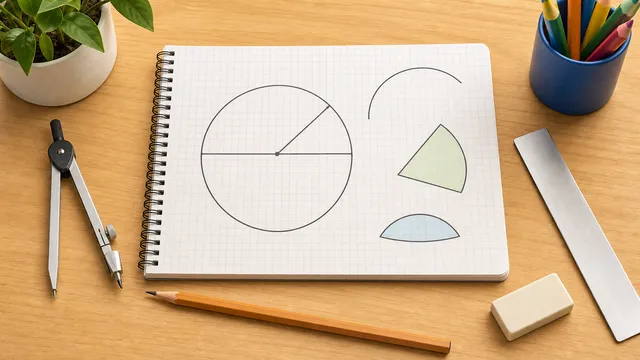
The flat-pattern result shows the central angle of the sector that would form the curved side. For example, if the sector angle is 138.46 degrees, a full circular disk would be too much material; the cone side is that angle's slice from a circle whose radius equals the slant height.
Why a cone is one-third of the matching cylinder
A cylinder with the same radius and height has volume pi * r^2 * h. A cone with that same base and height tapers to a point, so its volume is exactly one-third of the cylinder volume. That relationship is useful because it gives a quick reasonableness check: if the cone result is not one-third of the matching cylinder, something was entered incorrectly.
The calculator shows the matching cylinder comparison because many users remember cylinder volume more easily than cone volume. It also helps with practical questions: a cone-shaped hopper, funnel, or pile section holds much less than a straight-sided container with the same base and height.
Worked examples: radius-height and diameter-height cones
For a cone with radius 3 cm and height 4 cm, the volume is (1/3) * pi * 3^2 * 4 = 37.7 cm^3. The slant height is 5 cm because sqrt(3^2 + 4^2) = 5. The lateral area is about 47.12 cm^2, the base area is about 28.27 cm^2, and the total surface area is about 75.4 cm^2.
For a party-hat style cone with diameter 16 cm and height 24 cm, the radius is 8 cm. The volume is about 1,608.5 cm^3, which is about 1.61 litres. The same result would be much harder to trust if the page accepted only radius while the real object was measured across its full width.
Surface area, material cuts, and capacity conversions
The difference between lateral area and total surface area matters for real work. Use lateral surface area when you only need the curved side, such as wrapping a cone, cutting a sector for a model, or estimating coating on the side. Use total surface area when the base is also covered, painted, printed, or made from material.
For a cone net or sheet-metal pattern, treat the slant height as the radius of the sector and the cone base circumference as the arc length. The calculator's sector angle output gives a cleaner starting point for layout than volume alone, although real cuts still need overlap, seam, kerf, and trimming allowances.
The capacity conversions matter when the cone volume is not just a classroom answer. Cubic centimetres convert naturally to millilitres and litres, cubic inches and cubic feet help with imperial measurements, and US gallons help when the cone is part of a container or funnel planning workflow.
The unit conversions do not change the geometric assumption. They only translate the same volume into a more useful label. If the object has wall thickness, internal liners, a missing tip, or a flat top, measure the usable inside shape or switch to a more specific frustum or tank calculator.
Limitations
This calculator handles right circular cones only. It does not apply to oblique cones, cones with elliptical bases, cone frustums, or composite solids unless those shapes are simplified first.
Results are geometric values, so real manufactured cones may differ slightly because of wall thickness, rounding, manufacturing tolerance, seams, or measurement error at the tip and base.
For exact fabrication, shipping, food-service capacity, or regulated fill work, treat the result as a planning estimate and verify the real inside dimensions or the manufacturer's stated capacity.
Frequently asked questions
What is the formula for cone volume?
The formula for the volume of a cone is V = (1/3) * pi * r^2 * h, where r is the base radius and h is the vertical height. The radius and height must use the same length unit.
How do I calculate the volume of a cone from diameter?
Convert diameter to radius first by dividing by 2, then use V = (1/3) * pi * r^2 * h. The calculator's diameter mode does this automatically, which helps when the base was measured across its full width.
How do I find the slant height if I only know radius and height?
Use the Pythagorean theorem: slant height = sqrt(radius^2 + height^2). The slant height is the distance along the side of the cone from the base edge to the apex.
Can I calculate cone volume from slant height?
Yes, if you also know the radius, diameter, or circumference. First convert the base measurement to radius, then find the vertical height with h = sqrt(l^2 - r^2). Use that vertical height in V = (1/3) * pi * r^2 * h. The slant height must be greater than the radius for the dimensions to describe a real right circular cone.
What is the difference between cone height and slant height?
Height is the straight vertical distance from the base plane to the apex. Slant height is the diagonal distance along the side from the base edge to the apex. Cone volume uses vertical height, while cone surface area uses slant height.
What is the difference between lateral area and total surface area?
Lateral area is only the curved side of the cone. Total surface area includes that curved side plus the circular base. Use lateral area for wraps or side covering, and total surface area when the base matters too.
Why is cone volume one-third of a cylinder?
A cone and a cylinder can have the same circular base and height, but the cone tapers to a point. The cone volume is exactly one-third of that matching cylinder volume, so three identical cones would fill the matching cylinder.
Can I use circumference instead of radius?
Yes. Convert circumference to radius with r = circumference / (2 * pi), or use the calculator's circumference input mode. This is useful when measuring around the base with a flexible tape is easier than finding the exact centre.
What units does the cone volume calculator use?
The geometric result follows your input unit cubed. For example, centimetres produce cubic centimetres and inches produce cubic inches. The calculator also converts the result into cubic metres, cubic feet, litres, and US gallons for easier practical use.
Does this calculator work for a cone frustum?
No. A frustum is a cone with the top cut off and needs top radius, bottom radius, and height. Use a frustum-specific formula or calculator for that shape.
Does this work for oblique cones?
Not directly. The calculator assumes a right circular cone where the apex is vertically above the centre of the base. Oblique cones need more careful geometry and may not share the same surface-area relationships.
Which area should I use for wrapping a cone?
Use lateral surface area for wrapping the curved side only. The unwrapped side is a circular sector, so the lateral area is the material needed before adding overlap, seam allowance, trimming, or waste.
How do I make a flat pattern for a cone?
The curved side of a right cone unwraps into a circular sector. Use the slant height as the sector radius, use the base circumference as the arc length, and use theta = 360r / l for the sector angle in degrees. The calculator reports that sector angle so material planning does not stop at volume and surface area.
Why does my real cone hold less than the calculated volume?
The formula uses ideal inside geometry. A real cone may have wall thickness, a rounded tip, a flattened top, a seam, or usable headspace limits. For fill planning, measure the internal usable shape rather than the outside shell.