Full circle
Answers: radius, diameter, circumference, and area
Use when: You know one complete-circle measurement and want the rest solved together.
Formula: d = 2r, C = 2pi r, A = pi r^2

Use this circle calculator to solve radius, diameter, circumference, area, arc length, sector area.
Last updated
Circle geometry workflows
Use one circle calculator for radius, diameter, circumference, area, arc length, sector area, and segment area. The anchored workflows keep formula direction clear, so long-tail questions such as area of a circle calculator, circumference calculator, radius calculator, and arc length calculator still land on the exact tool they need.
Active workflow
Solve radius, diameter, circumference, and area from any one known circle measurement.
Start with one known circle measurement, then the calculator solves the full circle for you.
Known measurement
Unit
What this page is for
Use radius or diameter mode when a sketch or object gives you a straight measurement. Use circumference when you know the distance around the circle. Use area when the covered surface is known and you need the matching width back.
This broader circle worksheet is the right page when you need to reverse-solve the whole circle from any one of the four core measurements instead of using a narrower radius-only, diameter-only, circumference-only, or area-only tool.
Solved circle
Full circle
Answers: radius, diameter, circumference, and area
Use when: You know one complete-circle measurement and want the rest solved together.
Formula: d = 2r, C = 2pi r, A = pi r^2
Area and circumference
Answers: surface area or distance around the circle
Use when: The question is a direct area-of-a-circle or circumference calculation from radius or diameter.
Formula: A = pi r^2, C = pi d
Reverse circle solving
Answers: diameter or radius from circumference or area
Use when: You measured around an object or know the area and need the hidden radius or diameter.
Formula: r = C / 2pi, r = sqrt(A / pi)
Partial circle geometry
Answers: arc length, sector area, and segment area
Use when: The shape is only part of a circle, such as a sector, arc, or circular segment.
Formula: s = r theta, sector area = 1/2 r^2 theta
| Workflow | Answers | Use when | Formula |
|---|---|---|---|
| Full circle | radius, diameter, circumference, and area | You know one complete-circle measurement and want the rest solved together. | d = 2r, C = 2pi r, A = pi r^2 |
| Area and circumference | surface area or distance around the circle | The question is a direct area-of-a-circle or circumference calculation from radius or diameter. | A = pi r^2, C = pi d |
| Reverse circle solving | diameter or radius from circumference or area | You measured around an object or know the area and need the hidden radius or diameter. | r = C / 2pi, r = sqrt(A / pi) |
| Partial circle geometry | arc length, sector area, and segment area | The shape is only part of a circle, such as a sector, arc, or circular segment. | s = r theta, sector area = 1/2 r^2 theta |
The former specialist pages still represent useful long-tail intents: area of a circle calculator, circumference calculator, circumference to diameter calculator, radius calculator, arc length calculator, sector area calculator, and segment area calculator. They now resolve into anchored workflows on this canonical circle calculator instead of competing as separate general circle-geometry pages.
The circle sector calculator remains separate for now because it was previously upgraded as a richer sector worksheet with chord-length and major-versus-minor sector interpretation. This page still links the related partial-circle workflows together so users can move between arc, sector, and segment calculations.
Geometry Basics
A circle calculator helps you solve the whole shape from one known measurement, then switch into partial-circle workflows when a problem asks for arc length, sector area, or segment area.
Every circle is built around the same relationships. The radius is the distance from the centre to the edge. The diameter is twice the radius. The circumference is the distance around the circle, and the area is the amount of flat space inside it.
Because all of these measurements are linked, one known value is enough to calculate the others. That is why a circle calculator is such a practical online maths tool. Whether you start with a radius, a diameter, a circumference, or an area, the rest follow from the same geometry.
Circle formulas all depend on pi, written as π. Pi is the constant ratio between circumference and diameter and is approximately 3.14159. In practice, the calculator applies this circle calculator relationship to the user inputs, keeps the units and assumptions consistent, and then surfaces the supporting context needed to interpret the output responsibly.
Diameter = 2r
If the radius r is known, the diameter is simply twice that value.
Circumference = 2πr = πd
The distance around the circle can be found from either radius r or diameter d.
Area = πr²
The area inside the circle depends on the square of the radius, which is why area grows quickly as the circle gets larger.
A free online calculator for circles is useful in more places than a classroom. It can help with round tables, pipes, circular slabs, wheels, lids, tanks, sports markings, and any layout where a radius or diameter is known but area or perimeter is needed.
It is also a helpful problem-solving calculator because it lets you switch starting points. If you only know circumference, the tool can work backward to radius. If you only know area, it can estimate the diameter. That makes it a practical everyday maths calculator rather than just a formula lookup.
If the area is known, divide it by π and take the square root to get the radius. If the circumference is known, divide it by 2π to get the radius. Those two reverse formulas are the reason a circle calculator is useful both as a forward calculator and as a solver.
That same pattern appears in many search queries: radius from area, circle area calculator, find diameter from circumference, and circumference to radius. A good circle tool should handle whichever measurement you already have and then show the rest in one place.
r = √(A / π)
Use this when the area is known and you need the radius.
r = C / (2π)
Use this when the circumference is known and you need the radius.
d = 2r
Once the radius is known, the diameter follows immediately.
Further reading
Suppose the circumference is 31.42 cm. Dividing by 2π gives a radius of about 5 cm, so the diameter is about 10 cm and the area is about 78.54 cm². This is a common reverse-solve workflow when a string measurement, tape-wrap measurement, or outside edge measurement is the only starting point you have.
Now suppose the area is 78.54 cm² instead. Divide by π and take the square root to get a radius of about 5 cm. From there the diameter is about 10 cm and the circumference is about 31.42 cm. This is why a broad circle calculator is often more useful than a narrower area-only or circumference-only tool when you need the whole shape solved from one input.
r = C / (2π)
Reverse-solve the radius when the known value is the distance around the circle.
r = √(A / π)
Reverse-solve the radius when the known value is the covered area inside the circle.
Most circle calculators show the formula, but the quality of the result still depends on the measurement you enter. A circumference wrapped with string, a tape-measured diameter, and an area copied from a rounded worksheet can all describe slightly different circles once the calculator works backward to radius.
Rounding matters most when an input is reversed and then squared. If you enter a rounded circumference, the recovered radius is rounded too; the area then squares that recovered radius. For layout, cutting, fabrication, or material estimates, measure the most direct value you can and keep a few extra decimal places until the final answer.
The formulas here assume a true circle. If the object is oval, warped, flattened, or measured across an angled chord instead of through the centre, use an ellipse, segment, or drawing-specific method instead of treating the shape as a perfect circle.
Complete-circle formulas are only part of circle geometry. Many school, design, machining, landscaping, and layout problems ask for part of a circle instead: the curved edge of an arc, the wedge-shaped area of a sector, or the cap-shaped area of a circular segment.
The arc length workflow uses radius and central angle to find the curved distance. The sector area workflow uses the same radius and central angle to find the wedge area. The segment area workflow subtracts the triangle inside the sector to find the cap area between a chord and the arc.
Keeping these tools on the canonical circle calculator prevents duplicate circle pages while preserving long-tail searches for arc length calculator, sector area calculator, and segment area calculator.
Arc length = rθ
Use this when θ is measured in radians. If θ is in degrees, convert it first or use (θ / 360) × 2πr.
Sector area = 1/2 × r² × θ
Use this for a circular sector when θ is in radians, or use (θ / 360) × πr² for degrees.
Segment area = sector area − triangle area
Use this for the cap-shaped region between a chord and the corresponding arc.
Use the full-circle workflow when your known measurement could be radius, diameter, circumference, or area and you want every linked circle property in one place. That broad intent remains the reason this page owns the generic circle calculator search.
Use the area, circumference, circumference-to-diameter, and radius workflows when the task has a narrower starting point. They are now anchored sections of this page, so a searcher looking for a circumference calculator or area of a circle calculator still reaches the exact calculation without creating a competing duplicate page.
Use the arc length, sector area, and segment area workflows when only part of the circle is involved. The separate circle sector calculator remains available for richer sector-specific interpretation, but this page now covers the core partial-circle formulas directly.
If the radius is 5 cm, the diameter is 10 cm because diameter is twice the radius. The circumference is 2πr, which gives about 31.42 cm, and the area is πr², which gives about 78.54 cm².
That kind of worked example shows why a circle calculator is useful for quick checks. If you only know one measurement, you can immediately recover the others without rearranging formulas by hand or worrying about whether you squared the right quantity.
Frequently asked questions
Divide the circumference by 2π. For example, if the circumference is 31.42 cm, the radius is 31.42 ÷ (2 × π) ≈ 5 cm. Once the radius is known, the diameter is twice the radius and the area is πr².
Divide the area by π, then take the square root. In formula form, r = √(A ÷ π). For example, if the area is 78.54 cm², the radius is √(78.54 ÷ π) ≈ 5 cm. From there, the diameter is 10 cm and the circumference is about 31.42 cm.
The key properties are radius (r), diameter (d = 2r), circumference (C = 2πr), and area (A = πr²). Given any one of these values, all others can be calculated. The relationship between circumference and diameter is always π ≈ 3.14159 regardless of the circle's size.
Yes. If circumference is known, the radius is C ÷ (2π). If area is known, the radius is √(A ÷ π). Once the radius is recovered, the calculator can solve the diameter, circumference, and area together. That reverse-solving ability is one reason to use a full circle calculator instead of a narrower one-purpose tool.
Circumference is the distance around the edge of the circle (a length, measured in units). Area is the space enclosed within the circle (measured in square units). Both grow with radius, but area grows as r² while circumference grows as r.
Use this page when you want the broadest circle workflow and may start from radius, diameter, circumference, or area. Use a circumference calculator when the main task is perimeter from radius or diameter, and use an area-of-circle calculator when the main task is surface coverage from radius or diameter.
Arc length = (θ / 360) × 2πr for an angle θ in degrees. Sector area = (θ / 360) × πr². For example, a 90-degree sector of a circle with radius 5 cm has arc length = (90/360) × 2π × 5 = 7.85 cm and sector area = (90/360) × π × 25 = 19.63 cm².
Use arc length = rθ when the central angle θ is in radians. If the angle is in degrees, use arc length = (θ ÷ 360) × 2πr. For example, a 90-degree arc with radius 5 cm has length (90 ÷ 360) × 2π × 5 ≈ 7.85 cm.
Use sector area = 1/2 × r² × θ when θ is in radians, or sector area = (θ ÷ 360) × πr² when θ is in degrees. A 90-degree sector is one quarter of the full circle area.
A circular segment is the cap-shaped area between a chord and the arc above it. It is different from a sector, which is the wedge from the centre of the circle. Segment area is commonly found by subtracting the triangle inside the sector from the sector area.
The calculator is as accurate as the value entered. Rounding a circumference or area before reverse-solving changes the recovered radius, and area calculations square that radius. For practical work, enter the most precise measured value available and round only the final result.
No. These formulas assume every point is the same distance from the centre. An oval or ellipse needs ellipse formulas, and an irregular real-world shape may need measurement, CAD, or a layout-specific method.
Guides
Step-by-step guides that use this calculator to solve real problems.
Also in Circles
Related
These related calculators come from the same leaf category, nearby sibling categories, or the same top-level topic.

Calculate the area, arc length, chord length, perimeter, and sector type of a circular sector from radius and central angle in degrees or radians.
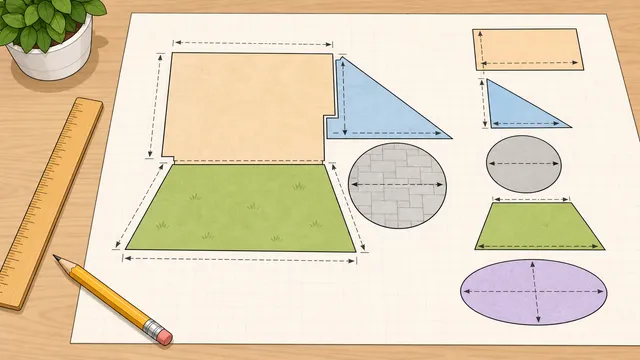
Use this area calculator to find the area of common shapes, convert between square feet, square metres, acres, and hectares.
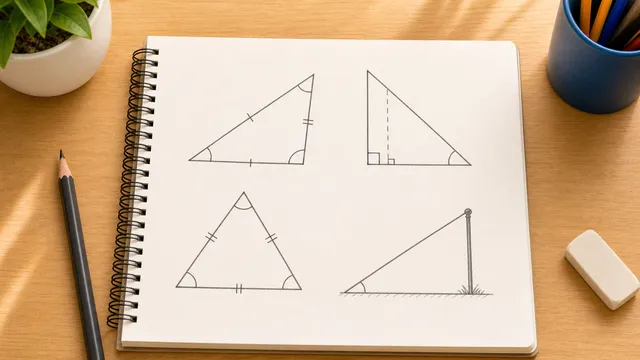
Use the triangle calculator to solve general triangles, right triangles, hypotenuse, isosceles and equilateral triangles, special right triangles, area.
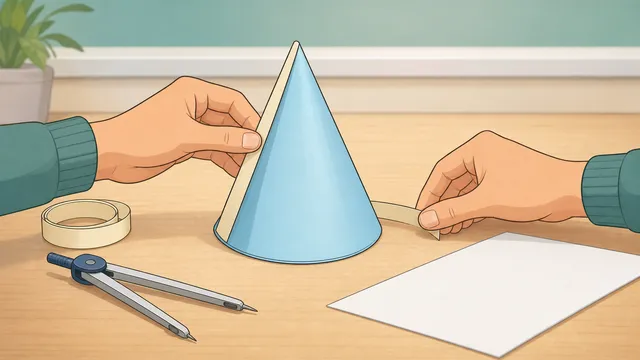
Calculate cone volume from radius, diameter, or circumference plus vertical height or slant height, then review surface area, cone net sector angle, litres.