Skip to content
Calcipedia
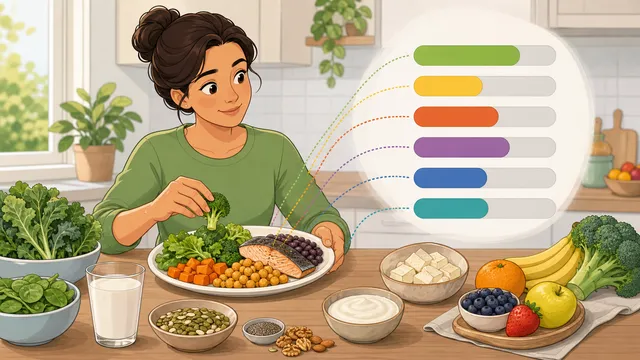
Deficiency Risk Screener instructional illustration

Deficiency Risk Screener

Use this vitamin deficiency quiz-style screener to identify nutrients worth reviewing from life stage, diet pattern, symptom prompts, medication context.

Health estimate

Topic review: Maria Santos

Diet & Lifestyle Coach. Assigned as the health topic reviewer for nutrition, macro, calorie, and lifestyle diet calculators.

Reviewed 1 May 2026 Updated 19 May 2026 View reviewer profile Contact editorial team
Screen review priorities, not diagnoses This vitamin deficiency risk screener uses diet, life-stage, symptom-prompt, medication, and food-pattern answers to decide which nutrients are worth reviewing. It does not diagnose deficiency or replace lab interpretation.

Editable scenarios

Use these examples to compare common vitamin and mineral deficiency test questions, then adjust the profile to match your situation.

Profile

Diet pattern

Result

Worth reviewing

Omnivore answers and life-stage details were screened for nutrient review signals only. This is a planning tool, not a diagnosis.

2 nutrient area(s) are worth reviewing. The pattern suggests a few practical nutrition weak points, but the screen does not diagnose deficiency. The score is 21/100 and highlights areas worth reviewing before assuming your current pattern is covering everything.
Review areas
2
High priority
0
Headline score
21/100

Vitamin D

Women 19 to 30 years / RDA target 15 mcg

Worth reviewing

24/100

Why it surfaced

  • Sun exposure is limited or inconsistent.
  • Vitamin D-fortified foods are not used most days.

Food-first ideas

Salmon, trout, and sardines / Fortified milk or plant drinks / Egg yolks and fortified cereals

ODS uses updated calcium and vitamin D DRIs: 15 mcg for ages 1 to 70, 20 mcg above 70.

Persistent low sun exposure, fracture risk, or clinician concern may justify vitamin D review rather than guessing from symptoms alone.

Review the NIH ODS fact sheet for Vitamin D

Iron

Women 19 to 30 years / RDA target 18 mg

Worth reviewing

18/100

Why it surfaced

  • Menstrual blood loss raises iron review priority.

Food-first ideas

Red meat and shellfish / Beans and lentils / Fortified cereals and pumpkin seeds

Iron requirements rise in adolescence, menstruating adults, and pregnancy, then fall again after menopause.

Heavy periods, pregnancy, fatigue, breathlessness, or GI symptoms are common reasons to discuss ferritin or iron-status testing.

Review the NIH ODS fact sheet for Iron

Next steps

  • Review whether fortified dairy or plant alternatives, eggs, oily fish, calcium-set tofu, or a clinician-guided supplement plan are regular enough for your routine.
  • Check whether the weekly pattern includes reliable B12, iron, and folate anchors instead of assuming one good meal fixes the whole week.
← All Micronutrients calculators

Health — Nutrition

Deficiency risk screener guide: which nutrients are worth reviewing before symptoms or

A deficiency risk screener is most useful when it highlights nutrients worth reviewing without pretending to diagnose a deficiency. This guide explains why life stage, diet pattern, medication use, symptom prompts, and food-pattern habits can raise review priority, and why the right next step is often better food planning or clinician review rather than guessing from vague symptoms.

Why a risk screener is not a diagnosis tool

Micronutrient deficiency is not diagnosed from a checklist alone. Symptoms overlap, absorption varies, and some nutrient problems need blood tests or clinical history to interpret properly.

That is why this page is framed as a review screener. It helps you spot which nutrients deserve a closer look based on known intake-support factors rather than promising certainty from limited inputs.

This matters for searches such as vitamin deficiency quiz, vitamin deficiency test, nutrient deficiency test, or what vitamins am I missing. A quiz can organise questions and next steps, but it cannot confirm deficiency, decide a treatment dose, or rule out non-nutrition causes of fatigue, numbness, hair changes, cramps, or mouth symptoms.

Why life stage changes the review priority

Pregnancy, lactation, menstruation, and older age can shift nutrient priorities even when the overall diet pattern looks similar. Iron, folate, iodine, calcium, vitamin D, and vitamin B12 do not carry the same review weight in every life stage.

A trustworthy screener therefore starts with the matched reference profile and then looks for food-pattern or medication factors that make those targets harder to meet or interpret.

Why diet pattern and medication matter together

Food pattern alone is not the whole picture. A vegan pattern without B12 support is different from a vegan pattern with reliable fortified foods and supplementation, and a mixed diet can still run into vitamin B12, iron, or iodine problems if medication use or food variety is poor.

That is why this page combines dietary pattern with selected risk factors such as acid suppression, metformin, GI issues, restricted variety, and low iodized-salt use.

The calculator also separates food-source questions from symptom prompts. Low sun exposure, low dairy or fortified alternatives, rare seafood, limited legumes, and low produce variety are intake-support signals. Fatigue, neurologic changes, bone or muscle concerns, and skin, hair, mouth, or wound-healing concerns are clinical context signals. Treating them separately keeps the result more useful and less likely to overclaim.

What the symptom prompts mean

Many vitamin deficiency symptoms are nonspecific. Fatigue can overlap with iron, vitamin B12, folate, vitamin D, thyroid, sleep, mental health, infection, and many other causes. Tingling, numbness, balance changes, memory changes, or other neurologic symptoms need medical context rather than a supplement guess.

The symptom prompt therefore changes review priority and clinician cues; it does not convert the page into a diagnosis checker. A vitamin deficiency symptoms checker that treats one symptom as proof can be misleading. A safer screen asks which nutrients are plausible enough to discuss, which foods support them, and which situations deserve lab review.

How the editable scenarios help

The example scenarios are starting points for common intent patterns: a vegan B12 review, heavy-period iron review, pregnancy iodine and folate review, and older-adult low-sun review. Each one changes multiple assumptions at once so the result shows why a profile moved, not just which nutrient label appeared.

This makes the page more practical than a bare nutrient deficiency quiz. You can start with a realistic scenario, then adjust life stage, food support, supplementation, medication, and symptom context until the review queue matches your situation more closely.

Which nutrients this screen prioritises

The screen focuses on review patterns for vitamin D, vitamin B12, iron, folate, calcium, iodine, zinc, and magnesium because these nutrients often connect to life stage, food pattern, fortified-food habits, sun exposure, absorption issues, or medication context.

It is not a full dietary analysis and it is not a complete micronutrient deficiency panel. For detailed intake planning, pair this page with a nutrient reference calculator or food gap calculator and use the result here as the shorter review list.

When testing may be the next step

A nutrient deficiency test is most useful when it is selected for a reason and interpreted in context. Clinicians may use blood tests, diet history, medication review, physical examination, or repeat testing depending on the nutrient and the situation.

This page can help you prepare that conversation. For example, a vegan pattern without B12 support, heavy menstrual bleeding with fatigue, low sun exposure with bone or muscle concerns, pregnancy without reliable iodine or folate support, or medication and absorption issues can all make a targeted review more useful than buying a broad at-home panel blindly.

How to avoid supplement guesswork

More supplement is not automatically safer. Some nutrients have upper limits, some interact with medications, and some symptoms persist because the cause is not a deficiency at all. The safest first step is usually to identify reliable foods, confirm whether a targeted supplement is already appropriate for your life stage, and ask for clinical review when the situation is higher risk.

The calculator's food highlights and source links are there for that reason. They point you toward official reference material and practical food categories before you turn a possible micronutrient deficiency into self-treatment.

How to use the result well

Treat the flagged nutrients as a review queue. First check whether the food pattern truly contains reliable sources, then decide whether your situation needs a clinician or dietitian rather than more guesswork.

That approach keeps the tool practical. It helps you improve the food pattern and recognise when higher-stakes situations such as pregnancy, heavy menstrual bleeding, malabsorption, neurologic symptoms, or persistent symptoms deserve professional follow-up.

A low-priority result also has limits. It means the answers you entered did not create a strong review signal inside this model; it does not prove that lab values are normal or that new symptoms should be ignored.

Frequently asked questions

Does a high-priority result mean I am deficient?

No. It means the selected pattern contains risk factors that make that nutrient worth reviewing. Deficiency still depends on the broader clinical picture and sometimes lab testing.

Is this a vitamin deficiency quiz or a medical test?

It is closer to a structured vitamin deficiency quiz than to a test. It screens diet, life stage, medication, food support, and symptom context so you can decide what to review next. It does not measure blood levels, diagnose deficiency, or prescribe supplements.

What vitamins am I missing if I feel tired?

Fatigue can overlap with iron, vitamin B12, folate, vitamin D, and many non-nutrition causes. The calculator raises review priority when fatigue appears alongside stronger risk factors such as heavy menstrual bleeding, vegan eating without B12 support, low sun exposure, pregnancy, medication use, or absorption issues.

Can symptoms alone identify a nutrient deficiency?

Usually no. Symptoms such as tiredness, hair changes, mouth soreness, cramps, numbness, or brain fog can have many causes. Use symptoms as a reason to seek context, not as proof of a particular vitamin or mineral deficiency.

Why can a mixed diet still flag vitamin B12 or iron?

Because medication use, food variety, menstruation, pregnancy, GI issues, or low use of common source foods can still make those nutrients worth checking even without a vegan pattern.

Why is iodine review included here?

Because iodine is easy to miss casually, especially when seafood, dairy, fortified alternatives, or iodized salt are not regular parts of the pattern. Pregnancy makes that question more important, not less.

Why does the tool ask about metformin or acid suppression?

Long-term medication context can matter for nutrient interpretation, especially vitamin B12 review. The calculator does not decide whether a medication is causing a problem; it simply treats medication or absorption context as a reason to discuss testing and follow-up more carefully.

Why does heavy menstrual bleeding affect the result?

Heavy menstrual bleeding can make iron review more urgent, especially with fatigue, pregnancy planning, low iron-rich food intake, or a history of anaemia. It is also a reason to discuss broader causes with a clinician rather than only increasing iron foods.

Can this replace an at-home nutrient deficiency test?

No. At-home tests and questionnaires answer different questions, and any abnormal test result still needs clinical interpretation. This page helps you decide which nutrients and risk factors are worth discussing before you buy broad testing or start supplements.

Should I take a multivitamin if several nutrients are flagged?

Not automatically. Several flags often mean the food pattern or life stage deserves review. A multivitamin may be appropriate for some people, but pregnancy, medication use, absorption concerns, anaemia history, and possible excess intake all change the decision.

When should I speak to a clinician instead of changing food choices first?

Pregnancy, lactation, heavy menstrual bleeding, malabsorption concerns, significant fatigue, neurological symptoms, or existing medical workups are all good reasons to move straight to clinician review.


Also in Micronutrients

Related

More from nearby categories

These related calculators come from the same leaf category, nearby sibling categories, or the same top-level topic.