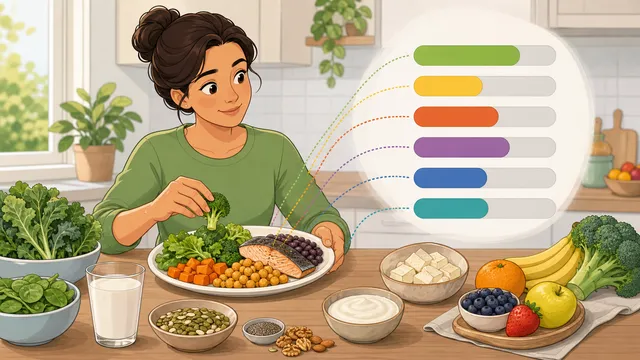
Women 19 to 30 years
Vegetarian profile with pattern-based micronutrient risk scoring.
The pattern has some variety, but it still leaves room for micronutrient blind spots.
Fortified and calcium/B12 support
2/6
Fortified-food coverage is present but not yet consistent enough to treat as automatic.
Iodine and vitamin D support
4/6
Your iodine and vitamin D backstops look weak unless supplements or explicit fortified-food choices are already in place.
Life stage adds some extra nutrient pressure beyond the base food pattern.
No major practical stressors stand out from the pattern-based questions.
Iron
Women 19 to 30 years target: 18 mg (RDA)
Menstruating profiles often need a more deliberate iron strategy than non-menstruating adults.
Iron requirements rise in adolescence, menstruating adults, and pregnancy, then fall again after menopause.
Useful food anchors
Red meat and shellfish, Beans and lentils, Fortified cereals and pumpkin seeds
If concern remains, clinicians often review CBC and ferritin alongside the history because intake alone cannot confirm iron deficiency.
Iodine
Women 19 to 30 years target: 150 mcg (RDA)
Inconsistent iodized salt use leaves iodine coverage uncertain.
Iodine targets rise in pregnancy and lactation because fetal and infant thyroid hormone production depends on maternal intake.
Useful food anchors
Iodized salt, Dairy foods, Seafood and seaweed
Iodine questions are usually handled through diet, thyroid context, and clinician advice rather than a generic home test.
Vitamin B12
Women 19 to 30 years target: 2.4 mcg (RDA)
Vegetarian patterns can narrow vitamin B12 coverage if dairy, eggs, or fortified foods are inconsistent.
Adults above 50 are often advised to rely on fortified foods or supplements because food-bound absorption can fall.
Useful food anchors
Shellfish and fish, Meat and dairy foods, Fortified breakfast cereals
If concern remains after diet review, clinicians often consider CBC, vitamin B12, and sometimes methylmalonic acid context.
Score bands
Lower risk: under 25. Watch: 25 to 49. Elevated: 50 to 74. Higher: 75 and above.
Use the band as a diet-quality triage signal, then use the nutrient cards above to decide what to review first.
What to do next
Build an explicit iodine and vitamin D strategy with iodized salt, seafood or fortified foods, and sun-safe exposure habits.
Increase the range and frequency of produce, legumes, nuts, and seeds before assuming supplements are the first fix.
Use the nutrient intake or food gap tools to review iron and iodine next.
This score is an educational pattern screen, not a diagnosis. It cannot confirm deficiency, toxicity, or whether you personally need a supplement or laboratory test.