Skip to content
Calcipedia
Egg Substitution Converter instructional illustration

Egg Substitution Converter

Use this egg substitute calculator to compare flax egg, chia egg, aquafaba, applesauce, banana, yogurt, tofu, and egg replacer swaps by amount, recipe role.

Last updated

Quick swaps

Egg substitutes are not interchangeable. Some mainly bind, some mainly add moisture, and aquafaba behaves more like an egg-white-style replacement than a yolk-style one.

Conversion inputs

Use this converter as recipe-planning guidance. The best substitute depends on whether the egg was there for structure, moisture, or foam.

Recommended substitute for 2 eggs

8 tbsp (0.5 cups) of Flax Egg

Per egg guide: 1 tbsp ground flax + 3 tbsp water. This substitute is best treated as a binding-style substitute rather than a universal whole-egg swap.

Total weight

40 g

Recipe role

Binding-style substitute

Context fit

Strong fit

Best for

Cookies, muffins, pancakes, brownies, and quick breads where eggs mainly bind and hold moisture.

Recipe-context check for cookies & bars

Binding and spread matter most, so seed gels and neutral replacers are usually safer than high-moisture fruit swaps.

Selected fit
Good binder for cookies, bars, brownies, and sturdy batters, especially when a slightly denser crumb is acceptable.
Process check
Flax egg is a binding-style replacement, not a lifting replacement. Let the mixture sit until it turns gel-like before adding it to the batter.

Substitution sheet

Use the converter result as a starting point, then decide whether the recipe needs binding, moisture, or lift. That is why the process note matters as much as the quantity.

Recipe contextCookies & bars
Eggs replaced2
Per egg1 tbsp ground flax + 3 tbsp water
Total tablespoons8 tbsp
Total cups0.5 cups
Process noteFlax egg is a binding-style replacement, not a lifting replacement. Let the mixture sit until it turns gel-like before adding it to the batter.

Compare egg replacement options

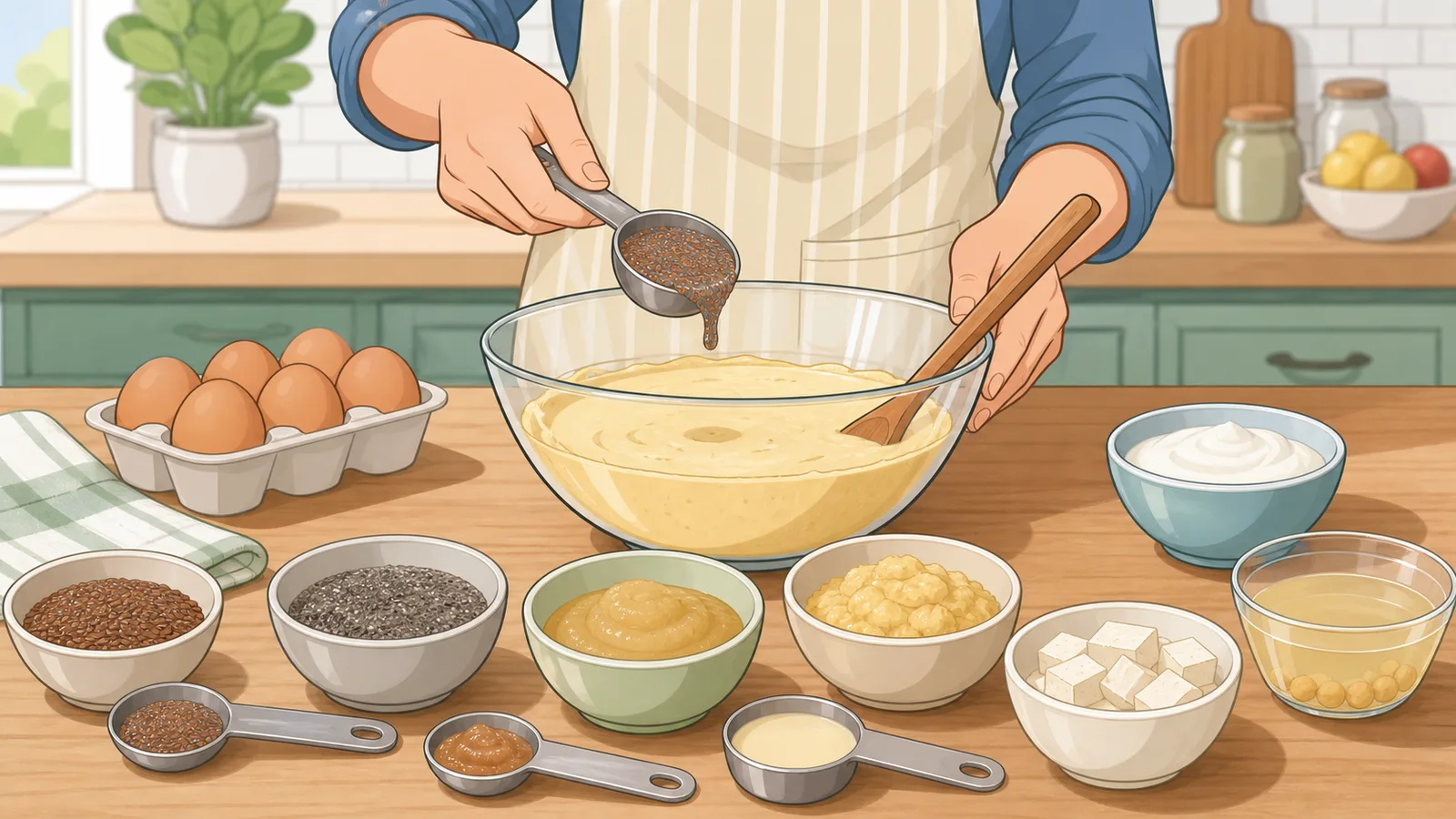
The same egg count can point to different substitutes depending on the job. Use this comparison before treating a fruit puree, seed gel, aquafaba, or commercial egg replacer as interchangeable.

SubstituteAmountGramsRoleContext fitWhy it fits or fails
Flax Egg8 tbsp (0.5 cups)40 gBinding-style substituteStrong fitGood binder for cookies, bars, brownies, and sturdy batters, especially when a slightly denser crumb is acceptable.
Chia Egg8 tbsp (0.5 cups)40 gBinding-style substituteStrong fitGood for sturdy cookies and bars where visible specks and a gelled texture are acceptable.
Applesauce8 tbsp (0.5 cups)120 gMoisture-first substituteUse with cautionCan soften cookies and bars; use mainly when a cakier, moister result is acceptable.
Mashed Banana8 tbsp (0.5 cups)120 gMoisture-first substituteUse with cautionCan work in soft bars and brownies, but it changes flavor and can make cookies cakier.
Silken Tofu8 tbsp (0.5 cups)120 gBinding-style substituteGood starting pointBest in brownies and dense bars where extra body is useful and lift is not the main goal.
Yogurt8 tbsp (0.5 cups)120 gMoisture-first substituteUse with cautionCan make cookies softer and cakier, so it is better for bars or recipes that already expect tenderness.
Aquafaba6 tbsp (0.38 cups)90 gEgg-white-style substituteGood starting pointUseful when a recipe needs lightness, but it is not as strong a binder as flax, chia, or a commercial replacer.
Commercial Egg Replacer7 tbsp (0.44 cups)12 gBinding-style substituteStrong fitOften the most neutral path for cookies, bars, muffins, and standard cakes when package directions match the recipe.
Buttermilk8 tbsp (0.5 cups)122 gMoisture-first substituteUse with cautionCan make cookies cakier and wetter, so use mainly in softer bars or recipes built for tangy dairy.
Baking Powder + Oil + Water6 tbsp (0.38 cups)84 gLeavening-style pantry substituteUse with cautionCan puff a batter but will not add much binding, so cookies may spread or crumble.

Adjustment notes

  • Expect a denser crumb than a recipe made with whole eggs.
  • Do not treat flax egg as a good swap for whipped egg whites, sponge cakes, or recipes that rely on egg lift.
← All Cooking & Baking calculators

Cooking Substitutions

Egg substitute converter for flax egg, aquafaba, applesauce, and baking swaps

An egg substitute converter is only useful when it explains what job the egg was doing in the recipe. This page compares flax egg, chia egg, applesauce, banana, aquafaba, commercial replacers, and other common swaps so you can judge the quantity, the baking role, and the texture tradeoffs before changing a recipe.

What an egg substitute converter should help you answer

People usually search for an egg substitute converter when they are trying to save a batch of cookies, adapt a cake for an egg allergy, or swap eggs out of a vegan bake. The practical question is not just how many tablespoons to use. It is whether the substitute is there to bind, to add moisture, or to replace whipped egg structure.

That is why this converter labels each option by role instead of pretending every substitute does the same job. Flax and chia behave like binders, applesauce and yogurt behave more like moisture-first replacements, and aquafaba is the closest option here to an egg-white-style substitute for foaming and light structure.

Binding swaps, moisture swaps, and egg-white-style swaps are different categories

Flax egg, chia egg, silken tofu, and many commercial replacers work mainly by binding ingredients together. They can be excellent in cookies, muffins, brownies, and loaf cakes, but they do not usually recreate the same lift as whole eggs in airy sponges or meringues.

Applesauce, mashed banana, yogurt, and buttermilk are closer to moisture substitutes. They can keep a batter tender, but they often soften the crumb and may make the bake heavier if you replace too many eggs. Aquafaba is different again, because it can be whipped and folded into recipes that depend on foam. The right substitute depends on what the egg was contributing, not on which option has the neatest number.

total tablespoons = eggs to replace × substitute tablespoons per egg

Scales each substitute by the number of eggs you want to replace so you can compare the practical mixing amount.

total grams = eggs to replace × substitute grams per egg

Converts the replacement into a weight-based planning number so batch size is easier to scale.

Worked examples: flax egg in muffins and aquafaba in meringue-style baking

Suppose a muffin recipe calls for 2 eggs and you want a vegan binder. The flax-egg option gives you 2 tablespoons of ground flax mixed with 6 tablespoons of water, or 8 tablespoons of total mixture once hydrated. That quantity can work well in hearty muffins, pancakes, and brownies, but it usually makes the finished bake slightly denser than whole eggs.

Now compare that with aquafaba. Replacing 3 eggs with aquafaba gives 9 tablespoons, which is less about moisture and more about whip-able foam. That makes aquafaba a much stronger candidate for macarons, meringues, and some lighter cakes than applesauce or banana would be. The same number of eggs can point to very different substitutes depending on the recipe goal.

  • Use flax, chia, or commercial replacer when the egg is mostly acting as a binder.
  • Use applesauce, yogurt, or banana when moisture and tenderness matter more than lift.
  • Use aquafaba when the recipe depends on whipped egg-white-style structure.
  • Use the pantry baking-powder substitute only as a quick-bread shortcut, not as a universal egg rule.

Use recipe context before trusting an egg replacement chart

Competitor egg substitute calculators and allergy guides tend to separate cookies, cakes, muffins, pancakes, egg whites, and breakfast-style egg dishes for a reason. A flax egg can be a strong cookie binder but a poor meringue choice. Applesauce can rescue a muffin batter but make crisp cookies cakier. Aquafaba can solve foam but may not give a dense brownie the same binding as a seed gel.

The calculator now includes a recipe-context selector for exactly that decision. Use cookies and bars when binding and spread are the main risk, cakes and muffins when tenderness and lift compete, pancakes and quick breads when the batter is forgiving, meringues and foams when egg-white structure matters, and custards or rich batters when yolk richness and protein setting are hard to replace.

  • For cookies and bars, compare flax egg, chia egg, and commercial egg replacer before using a fruit puree.
  • For cakes and muffins, moisture swaps such as applesauce, yogurt, buttermilk, or banana can work when the recipe has enough leavening.
  • For meringues, macarons, mousses, and foams, aquafaba is usually the relevant simple substitute because it can be whipped.
  • For custards, curds, choux pastry, mayonnaise, and yolk-rich formulas, a tested egg-free recipe is usually safer than a direct conversion.

Allergy, vegan, and out-of-eggs substitutions need slightly different decisions

A vegan egg substitute converter often focuses on plant-based swaps such as flax, chia, aquafaba, banana, applesauce, tofu, and commercial replacers. An egg allergy substitution question needs an extra check: do not replace one allergen with another without reading labels, especially with soy-based tofu, wheat-based seitan, nut butters, or commercial products processed in shared facilities.

If you are simply out of eggs, dairy options such as yogurt or buttermilk may be acceptable and can keep cakes or pancakes tender. If the recipe must be vegan or allergy-safe, keep the ingredient constraints visible before choosing the mathematically neatest replacement. The measurement is only useful when the substitute also fits the reason for the swap.

What this converter does not decide for you

This tool does not guarantee that every recipe will survive a straight substitute. Custards, choux pastry, rich brioche, lemon curd, mayonnaise, and recipes with many eggs often need a recipe designed around the substitute rather than a one-line conversion. Even in baking, replacing one egg is easier than replacing four.

It also does not decide whether a recipe needs a tested allergy-safe product, a vegan commercial replacer, or a formula written specifically without eggs. Use the result here as planning guidance, then check whether the recipe relies on foam, emulsification, yolk richness, or a particular protein structure that a simple substitute may not recreate.

Further reading

Frequently asked questions

What is the best egg substitute for baking cookies or muffins?

Usually a binding-style substitute such as flax egg, chia egg, or a commercial egg replacer. Those options hold the batter together without turning the bake into fruit puree. Applesauce and banana can still work, but they tend to push the texture softer and moister, which is not always ideal for crisp cookies or structured muffins.

Can I use applesauce instead of eggs in every cake recipe?

Not reliably. Applesauce is mainly a moisture substitute, so it works best in snack cakes, muffins, brownies, and quick breads where a softer crumb is acceptable. In lighter cakes or recipes that rely on eggs for lift, applesauce can make the result heavy or gummy if you replace too many eggs without changing anything else.

Why is aquafaba treated differently from flax egg or banana?

Aquafaba can be whipped, which makes it useful when the original egg was contributing foam and lift rather than just binding. Flax egg, chia egg, banana, applesauce, and yogurt cannot reproduce that same egg-white-style structure. That is why aquafaba often shows up in macarons, meringues, and mousses while flax and banana belong more naturally in cookies, muffins, and pancakes.

Does a commercial egg replacer work better than homemade substitutes?

Sometimes, especially when you want a neutral, predictable result in straightforward baking. A commercial replacer can be easier than adjusting flavour and moisture around banana or applesauce. But it still does not solve every recipe problem. Even commercial replacers are usually better for cakes, cookies, muffins, and breads than for recipes that depend on whipped eggs, custard texture, or yolk richness.

What egg substitute works best for meringues or egg whites?

Aquafaba is usually the first simple swap to test because it can be whipped and folded in a way seed gels, fruit purees, yogurt, and tofu cannot. It is still not a perfect egg-white clone, so meringues, macarons, mousses, and sponge-style cakes may need stabilising, careful folding, or a recipe written around aquafaba rather than a direct whole-egg conversion.

Can I replace three or more eggs in the same recipe?

The risk rises quickly when a recipe uses several eggs. One egg may be mostly binding or moisture, but three or four eggs often contribute structure, richness, lift, and setting at the same time. For multi-egg cakes, custards, enriched breads, choux pastry, and curds, use the calculator as a planning screen and then look for a tested egg-free recipe or a product designed for that specific job.

Which egg substitute is best when I am out of eggs but not vegan?

If dairy is acceptable, plain yogurt or buttermilk can be practical in cakes, muffins, pancakes, and quick breads because they add moisture and tenderness. If the recipe mainly needs binding, flax egg or chia egg may still be a better match. If the recipe needs egg-white lift, aquafaba is more relevant than yogurt even when you are not trying to make the recipe vegan.

What should I check for an egg allergy substitution?

Check labels and allergen cross-contact statements before assuming a substitute is safe. Tofu brings soy, seitan brings wheat, nut butters bring tree nut or peanut concerns, and commercial egg replacers can vary by brand and facility. For an allergy-sensitive recipe, the safest substitute is the one that fits both the recipe function and the eater's specific allergen restrictions.

Why do egg substitute conversion charts disagree?

Charts disagree because they mix different goals. Some list moisture swaps, some list binders, some focus on vegan baking, some focus on allergy substitutions, and some include egg-white-only replacements. Product density also varies. A good egg replacement calculator should show the amount, the recipe role, and the context fit instead of treating every substitute as a universal one-to-one answer.

Can I combine two egg substitutes in one recipe?

Sometimes, especially when the original egg did more than one job. A dense vegan cake might use a seed gel for binding and a little extra leavening for lift, while a soft muffin might combine applesauce for moisture with a commercial replacer for structure. Keep combinations conservative, because adding several wet substitutes at once can make a batter gummy or heavy.

Also in Cooking & Baking

Related

More from nearby categories

These related calculators come from the same leaf category, nearby sibling categories, or the same top-level topic.