Skip to content
Calcipedia
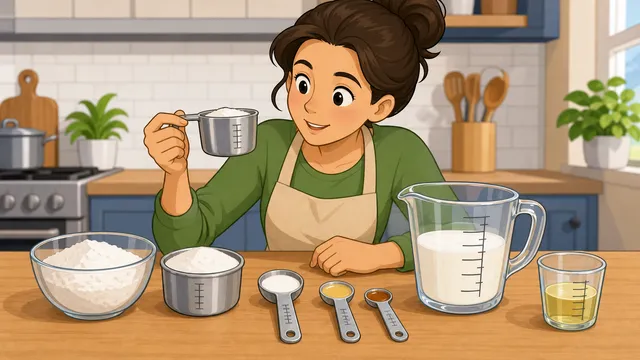
Ingredient Converter instructional illustration

Ingredient Converter

Convert cooking and baking ingredients between cups, tablespoons, teaspoons, millilitres, grams, ounces, pounds.

Last updated

Ingredient converter Convert common cooking and baking ingredients between cups, tablespoons, teaspoons, millilitres, grams, ounces, pounds, and kilograms using ingredient-specific density assumptions, recipe-style fractions, and a built-in ingredient conversion chart.

Quick conversion intents

Common ingredients

Density assumption and chart reference

All-purpose flour is currently modeled at about 0.5283 g/ml. That is about 125 g per US cup and 125 g per selected us cup. Kitchen conversions still vary by brand, grind, packing method, and whether an ingredient is sifted, melted, chopped, or loosely filled.

Spoon outputs use the selected us spoons convention: 14.7868 ml per tablespoon and 4.9289 ml per teaspoon. This preserves US, metric/UK, and Australian tablespoon intent on one master converter.

Best use

Use grams or ounces when you want repeatable baking or meal-prep results. Volume units are convenient, but weighing ingredients is usually more consistent for flour, oats, sugar, syrups, nut butters, and chopped mix-ins.

This page works best as an ingredient conversion calculator and quick chart for one ingredient at a time. If you need to scale an entire recipe, use a dedicated recipe converter rather than applying one density assumption across the whole dish.

Result

125 g

1 US cup of all-purpose flour equals 4.4093 oz and 0.2756 lb by weight.

Selected ingredient reference

1 us cup of all-purpose flour is modeled as 125 g. With us spoons, that works out to about 7.8125 g per tablespoon and 2.6042 g per teaspoon.

Measuring note: Spoon and level; avoid scooping from the bag. Variability check: high packing sensitivity.

Use this as a practical ingredient conversion chart, not a brand-specific specification. Packed brown sugar, sifted flour, melted butter, and chopped nuts can all shift the real number.

Cups
1 us cup
Millilitres
236.588 ml
Grams
125 g
Ounces
4.4093 oz

All unit equivalents

UnitEquivalent
Cups (cup)1 US cup
Tablespoons (tbsp)15.9999 tbsp
Teaspoons (tsp)48 tsp
Millilitres (ml)236.588 ml
Grams (g)125 g
Ounces (oz)4.4093 oz
Pounds (lb)0.2756 lb
Kilograms (kg)0.125 kg

Ingredient conversion chart

IngredientMeasuring note1 us cup1 tbsp1 US cup to grams
All-purpose flourSpoon and level; avoid scooping from the bag125 g7.8125 g125 g
Bread flourSpoon and level for the closest cup reference130 g8.125 g130 g
Cake flourSpoon and level after aerating114 g7.125 g114 g
Whole wheat flourSpoon and level; bran can settle128 g8 g128 g
Granulated sugarScoop or pour, then level200 g12.5 g200 g
Brown sugar (packed)Use a packed cup unless the recipe says otherwise220 g13.75 g220 g
Powdered sugarSpoon and level; sift first if the recipe says sifted120 g7.5 g120 g
ButterSolid butter reference; melted butter can settle differently227 g14.1875 g227 g
MilkLiquid measuring cup on a level surface245 g15.3126 g245 g
WaterLiquid measuring cup on a level surface237 g14.8126 g237 g
Vegetable oilLiquid measuring cup or spoon218 g13.625 g218 g
HoneyLiquid measure; warm or scrape the vessel for accuracy340 g21.2501 g340 g
Maple syrupLiquid measuring cup or spoon315 g19.6876 g315 g
Rice (uncooked)Level uncooked grains without compacting185 g11.5625 g185 g
Rolled oatsLightly fill and level; do not crush90 g5.625 g90 g
Cocoa powderSpoon and level; break up lumps first86 g5.375 g86 g
CornstarchSpoon and level gently128 g8 g128 g
Salt (table)Level spoon or cup; salt type matters288 g18.0001 g288 g
Baking sodaLevel the spoon carefully230 g14.375 g230 g
Cream cheesePacked/softened reference; weigh when possible232 g14.5 g232 g
Sour creamSpoon into a cup and level230 g14.375 g230 g
YoghurtSpoon into a cup and level245 g15.3126 g245 g
Peanut butterPacked/scraped measure; stir natural peanut butter first258 g16.1251 g258 g
Chocolate chipsLevel chips without crushing170 g10.625 g170 g
Shredded coconutLoose-fill and level unless packed is specified85 g5.3125 g85 g
Almond flourSpoon and level; do not compact96 g6 g96 g
Walnuts (chopped)Level chopped pieces loosely120 g7.5 g120 g
RaisinsLightly packed fruit reference150 g9.375 g150 g

Kitchen note

Spoon-and-level flour, lightly pack oats, and remember that honey, oils, nut butters, and chopped ingredients behave differently from fluffy dry goods. A density-based converter is useful, but a scale is still the better reference for precise baking and repeatable cooking prep.

← All Cooking & Baking calculators

Cooking Converter

Ingredient converter: cups to grams, grams to cups, tablespoons, teaspoons, ounces, pounds

An ingredient converter works only when it knows the ingredient itself. This page also explains the main assumptions behind the ingredient converter result, highlights the supporting figures shown by the calculator, and helps the reader use the estimate without overstating what a quick online tool can prove.

Why an ingredient converter needs density

Volume units such as cups, tablespoons, teaspoons, and millilitres describe space. Weight units such as grams, ounces, pounds, and kilograms describe mass. To move between those two systems, an ingredient converter needs a representative density or grams-per-cup reference for the ingredient you selected.

That is why an ingredient conversion chart cannot use one fixed ratio for everything. Flour is airy, granulated sugar is compact, honey is dense, and chopped walnuts or shredded coconut trap more air between pieces. Changing the ingredient changes the conversion immediately.

This page therefore treats the ingredient name as part of the calculation, not as decoration. That is the difference between a useful kitchen ingredient converter and a generic unit converter that only handles volume-to-volume or weight-to-weight math.

Weight = Volume x Density

Converts the selected kitchen volume into grams using the ingredient-specific density assumption.

Volume = Weight / Density

Works in reverse when the starting measure is grams, ounces, pounds, or kilograms.

1 US cup = 236.588 ml

Provides the common kitchen volume basis used by the converter and the reference chart.

How this differs from a recipe converter

A recipe ingredient converter answers one ingredient at a time: how much does this amount of flour, butter, oats, cocoa, or syrup weigh, or how much volume does a given weight represent. A recipe converter does a different job. It scales the whole recipe up or down while preserving each ingredient's listed amount.

That distinction matters because one dish can include liquids, dry ingredients, sticky ingredients, and chopped mix-ins that all need different density assumptions. This page is the right tool when you need a cooking measurement converter or ingredient conversion chart. Use a recipe scaler when you want to double dinner or halve a batter.

Keeping those intents separate also prevents mistakes. A single density assumption should never be applied to an entire recipe, because a cup of milk and a cup of cocoa powder are not interchangeable just because they share the word cup.

Common cups to grams and grams to cups checks

The most common searches around ingredient conversion are still flour and sugar: how many grams are in 1 cup of flour, how many grams are in 1 cup of sugar, and how many cups is 100 g or 500 g of flour. The same pattern extends to butter, cocoa powder, oils, syrups, rice, oats, and other staples.

That is why the calculator now pairs the headline result with an ingredient conversion chart. You can see the selected ingredient's one-cup and one-tablespoon references, then compare your current amount against a broader kitchen chart without switching tools.

If you are working in a baking-first workflow, the chart is a strong bridge between recipe cards that use cups and kitchen scales that use grams. If you are cooking more loosely, it still helps you translate tablespoons, cups, millilitres, ounces, and grams without guessing.

1 cup all-purpose flour ~ 125 g

A common kitchen reference weight for flour-based cooking and baking.

1 cup granulated sugar ~ 200 g

Useful when converting sweeteners between volume and weight.

1 cup butter ~ 227 g

Helps bridge stick, cup, ounce, and gram measurements.

Using recipe-style fractions

Recipe cards often use fractions rather than decimals: 1/2 cup, 1 1/3 cups, 3/4 teaspoon, or a unicode fraction such as ½. The converter accepts those recipe-style amounts directly, so you do not have to convert them to decimals before checking cups to grams, grams to cups, teaspoons to grams, or tablespoons to teaspoons.

This matters most when you are working from a printed cookbook, handwritten family recipe, or imported US recipe where fractional cup and spoon amounts are common. Enter the fraction as written, choose the ingredient, and the result table will still show the equivalent grams, ounces, millilitres, cups, tablespoons, and teaspoons from the same density assumption.

Fractions do not remove the usual density caveat. A precisely typed 1 1/2 cups of flour is still only as accurate as the measuring method behind that cup. Spoon-and-level, sifted, scooped, packed, chopped, and melted preparations can all change the real weight.

Tablespoons, teaspoons, pounds, and cup-standard checks

Many thin cooking converters only answer one permutation, such as cups to tablespoons, tablespoons to teaspoons, grams to tablespoons, grams to teaspoons, teaspoons to grams, or pounds and cups. Those are the same ingredient-conversion problem once the unit system and ingredient density are visible, so this page keeps them together.

Pure volume-to-volume conversions are stable: 1 US cup is 16 US tablespoons, and 1 US tablespoon is 3 teaspoons. Weight-to-spoon conversions are different because they depend on the ingredient. One tablespoon of flour weighs far less than one tablespoon of honey, even though the spoon volume is the same.

The cup-standard control is important for international recipes. The default US cup is 236.588 ml, while a metric cup is 250 ml. A metric cup of the same ingredient therefore weighs slightly more than a US cup because it contains more volume.

The spoon convention matters too. A US tablespoon is about 14.7868 ml, a metric tablespoon is 15 ml, and an Australian tablespoon is commonly 20 ml. That means an Australian tablespoon equals 4 metric teaspoons, while US and metric tablespoons usually map to 3 teaspoons. Keeping this setting visible preserves tablespoon-to-teaspoon, cups-to-tablespoons, and grams-to-tablespoons intent without sending users to separate regional pages.

1 US cup = 16 US tablespoons = 48 teaspoons

Useful for cups-to-tablespoons and tablespoons-to-teaspoons recipe checks.

1 Australian tablespoon = 20 ml = 4 metric teaspoons

Useful when adapting Australian recipes or checking Australian tablespoon to teaspoons searches.

1 metric cup = 250 ml

Used when the recipe explicitly follows the metric-cup standard.

Cups = pounds × 453.592 / grams per selected cup

Converts pounds and cups for a chosen ingredient and cup standard.

When to trust grams more than cups

Volume measures are convenient, but grams are usually the safer standard when consistency matters. The same cup of flour can shift noticeably depending on whether it was spooned in gently, scooped directly from the bag, or sifted first. Brown sugar can pack tightly, peanut butter can settle differently by brand, and chopped nuts can vary with cut size.

That does not make volume useless. Cups and spoons are still practical for everyday cooking, quick conversions, and adapting older recipes. The best workflow is to use an ingredient conversion calculator to understand the approximate equivalent, then standardize on grams when you want repeatable results batch after batch.

This is especially true for ingredients that searchers often look up by name, such as flour, sugar, cocoa powder, oats, honey, butter, and rice. A digital scale remains the strongest reference, but a density-aware converter gets you much closer than a generic volume chart.

How to use the ingredient conversion chart well

Treat the chart as a strong kitchen estimate, not a brand-specific specification sheet. Moisture, grind, crystal size, temperature, and packing method can all change the real conversion slightly. Sticky ingredients and chopped ingredients often vary more than water or milk.

The most useful workflow is to choose the ingredient, enter the amount you actually have, and then scan the reference chart for a sanity check. If the result looks out of line with what you expect from the recipe, it may be a sign that the recipe uses a metric cup, a packed measurement, or a different ingredient preparation.

For detailed baking-only charts, use a baking-specific reference page. This ingredient converter is intentionally broader: it covers common kitchen ingredients and multiple unit systems so you can answer cups-to-grams, grams-to-cups, ounces-to-cups, and millilitres-to-grams questions in one place.

The calculator now also keeps a measuring note beside each chart row. That extra context matters because a spoon-and-level flour cup, a packed brown sugar cup, a loose chopped-walnut cup, and a liquid milk cup are not only different ingredients; they are different measuring behaviours. Use the note as a quick check before trusting a volume-to-weight conversion for a recipe that is sensitive to texture or structure.

Further reading

Using a custom grams-per-cup reference

Some recipe ingredients will not appear in any short built-in chart. Competitor ingredient converters often solve that by adding more fixed ingredients, but a custom grams-per-cup reference is more flexible when you have a package label, recipe author's note, or trusted ingredient weight chart for a specific item.

Select the custom ingredient option, enter the ingredient name, and add the grams-per-US-cup value you trust. The calculator then treats that value exactly like a listed ingredient, converting the amount across cups, tablespoons, teaspoons, millilitres, grams, ounces, pounds, and kilograms while keeping the assumption visible.

This is especially useful for regional flours, alternative sweeteners, protein powders, specialty grains, chopped ingredients, and branded products where a generic ingredient conversion chart may not match the exact texture or packing method in front of you.

Custom density = custom grams per cup / 236.588 ml

Turns a trusted cup weight into the density used for volume-to-weight and weight-to-volume conversions.

Frequently asked questions

Why does one cup of flour weigh less than one cup of honey?

Because the ingredients have different densities. Flour is airy while honey is dense, so the same cup volume contains much more mass when it is filled with honey.

Is this ingredient converter using US cups or metric cups?

This page uses the standard US cup basis of 236.588 millilitres. Metric cups used in some countries are slightly larger, so a recipe written for metric cups may need a small adjustment.

Is this the same as a recipe converter?

No. This calculator converts one ingredient at a time between weight and volume. A recipe converter scales an entire recipe up or down while preserving each listed ingredient amount.

Can I use this as a cups to grams converter and a grams to cups converter?

Yes. Enter a cup, tablespoon, teaspoon, or millilitre amount to convert into grams, ounces, and pounds, or start with grams, ounces, pounds, or kilograms to convert back into cups and spoon measures.

Can I use this as a grams to tablespoons or grams to teaspoons converter?

Yes. Start with grams, choose the ingredient, and read the tablespoon or teaspoon equivalent. The ingredient selection matters because a tablespoon of flour, sugar, salt, butter, and honey do not weigh the same.

Can I convert tablespoons to teaspoons here?

Yes. Choose tablespoons as the starting unit and read the teaspoon equivalent. For US and metric kitchen measures, 1 tablespoon is usually 3 teaspoons. For Australian tablespoons, choose the Australian tablespoon convention; 1 Australian tablespoon is 20 ml, or 4 metric teaspoons.

Does the calculator support Australian tablespoons?

Yes. Use the spoon convention control to switch from US spoons to metric spoons or Australian tablespoons. This changes tablespoon and teaspoon outputs while leaving the ingredient density and cup-standard setting visible.

Can I convert pounds and cups for flour, sugar, or butter?

Yes. Start with pounds or cups, choose the ingredient, and the calculator will use the selected ingredient density to convert between pounds and cups. A pound of flour occupies more cups than a pound of sugar because flour is less dense.

What is the difference between a US cup and a metric cup?

A US cup is 236.588 ml, while a metric cup is 250 ml. If a recipe uses metric cups, the same one-cup ingredient amount will usually weigh slightly more than the US-cup result.

Why are brown sugar and powdered sugar different from granulated sugar?

Because they pack and settle differently. Brown sugar is usually measured packed, powdered sugar is lighter and more aerated, and granulated sugar is more compact. That changes the grams-per-cup reference.

Should I still use a scale if the converter gives grams?

Yes. The converter gives a strong kitchen estimate, but weighing the actual ingredient is still the most reliable way to repeat a result consistently.

Can I trust one conversion for every brand of peanut butter, flour, or oats?

No. Brand formulation, moisture, grind, and packing can all change the real conversion. Use the chart as a practical average rather than a guaranteed brand-specific specification.

Why does the page show an ingredient conversion chart as well as the headline result?

Because many people use the tool for quick reference as much as for one-off calculations. The chart helps you compare common ingredients, sanity-check the result, and answer related cups-to-grams or grams-to-cups questions without switching pages.

What should I do if my ingredient is not listed?

Use the custom ingredient option if you have a trusted grams-per-cup value from the recipe author, package, or an ingredient weight chart. Enter that cup weight and the calculator will convert the ingredient across volume and weight units while showing the custom assumption.

Can I use package serving information as the custom cup weight?

Only if the package clearly gives a cup-based serving such as one cup equals a specific number of grams. If the package only gives calories or grams per tablespoon, convert that reference carefully first or follow the recipe author's stated weight instead.

Can I enter fractions like 1/2 cup or 1 1/3 cups?

Yes. The amount field accepts decimals, simple fractions, mixed numbers, hyphenated mixed numbers, and common unicode fractions such as ½. That makes it easier to convert ingredient amounts exactly as they appear in recipe cards.

Why does the chart include measuring notes for each ingredient?

The measuring note tells you how to treat the reference cup before relying on the number. Flour and cocoa powder are best spooned and leveled, brown sugar is often packed, chopped nuts should usually be loose-filled, and liquids belong in a liquid measuring cup. That note helps prevent the most common mistake in an ingredient converter: using a correct density number with the wrong measuring method.

Also in Cooking & Baking

Related

More from nearby categories

These related calculators come from the same leaf category, nearby sibling categories, or the same top-level topic.