Estimate mixed epoxy volume, resin-hardener split, coat count, and optional kit count and material cost from project area, thickness, waste, and mix ratio.
Last updated
Epoxy resin volume planner Estimate mixed epoxy volume, split the batch into resin and hardener, and optionally convert that total into kit count and local-currency material cost.
Display currency
Use the shared currency selector for optional kit-cost planning without changing the resin maths.
Mix ratio
Set the manufacturer ratio as resin parts to hardener parts, then use the split totals as a planning baseline before you mix.
Enter project dimensions Add the project area or rectangle, thickness, waste allowance, and mix ratio to estimate total mixed epoxy and the resin-hardener split.
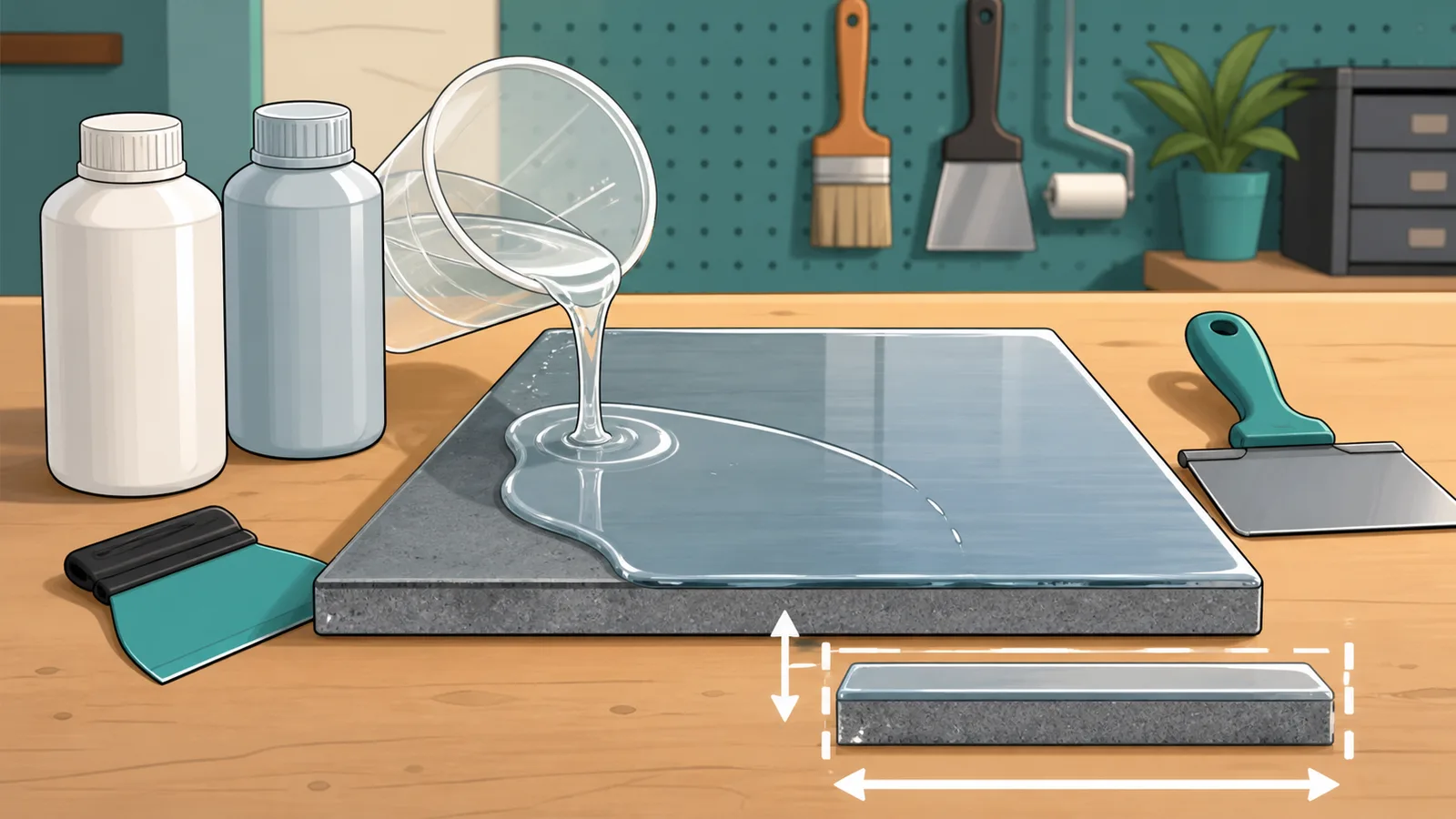
An epoxy resin calculator helps you estimate how much mixed resin system to buy before you start pouring or coating. This version converts project area, per-coat thickness, number of coats, waste allowance, and resin-to-hardener ratio into a total mixed volume, then splits that total into resin and hardener parts and optionally rounds it into whole kit purchases.
What this epoxy resin calculator is estimating
Epoxy projects are usually planned by area and thickness, not by guesswork. A thin countertop flood coat, a garage-floor seal coat, and a small moulding or craft pour may cover very different areas, but each still needs the same core calculation: convert the project footprint, per-coat thickness, and number of coats into a mixed liquid volume before you buy material.
That makes this kind of epoxy resin calculator useful for early ordering. It gives you the mixed total first, then splits that total into resin and hardener quantities based on the stated mix ratio so you can compare the result with the exact packaging of the system you plan to buy.
Core epoxy volume formulas
The calculator treats the project as a simple area-times-thickness volume problem. Metric mode uses a particularly convenient relationship because one square metre at one millimetre thickness equals one litre of mixed material.
Metric mixed volume (L) = Area (m²) x Thickness per coat (mm) x Coats
A one-millimetre coating across one square metre equals one litre of mixed epoxy, then each additional coat adds another layer.
Imperial mixed volume (gal) = Area (ft²) x Thickness per coat (in) x Coats / 12 x 7.48052
The imperial workflow converts square feet and inches into cubic feet, then into gallons.
Resin part = Total mixed volume x Resin ratio / (Resin ratio + Hardener ratio)
The total mixed volume is split into resin and hardener according to the selected manufacturer ratio.
Epoxy floor calculators and coating charts often talk in coats, while countertop and casting examples often talk about one total pour depth. Those are compatible as long as you are clear about the input. Enter the thickness for one coat, then set the number of coats so the calculator multiplies them into the total applied build.
For example, two thin seal coats at 0.01 inches each have the same geometric thickness as one 0.02 inch layer, but they may behave differently in the real world because pot life, recoat timing, substrate absorption, and product limits matter. Use the coat count for quantity planning, then check the technical data sheet before assuming that the coats can be applied in one session.
Worked example: 8 ft by 2 ft countertop at one eighth inch
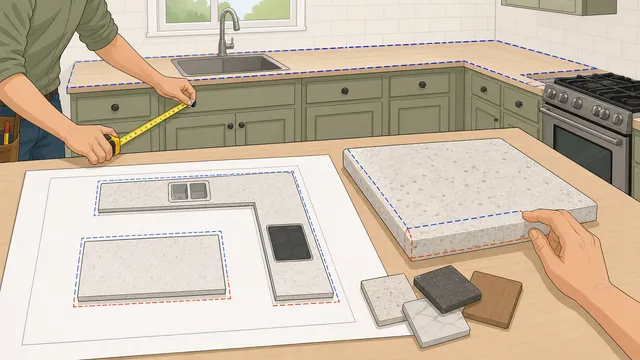
Suppose a rectangular countertop is 8 feet long and 2 feet wide, the target flood-coat thickness is 0.125 inches, the waste allowance is 10%, and the resin system mixes at 1:1. The project area is 16 square feet.
Using the imperial volume relationship, that area and thickness require about 1.25 gallons before waste and about 1.37 gallons after waste is added. Because the mix ratio is 1:1, the total splits evenly into about 0.69 gallons of resin and 0.69 gallons of hardener. If the product is sold as a 1.5 gallon mixed kit, the practical order quantity is one full kit.
What this planning tool does not cover
This page is an ordering and batching guide, not a full product-selection worksheet. It does not model maximum recommended pour depth, substrate porosity, roller loss, multiple staged pours, pigment loading, or temperature-driven working-time changes.
Different systems also behave differently. Countertop coating epoxy, flooring epoxy, laminating resin, casting epoxy, and deep-pour systems can all have different mix ratios and depth limits. Treat the result here as the baseline quantity, then confirm the technical data sheet for the exact resin system you plan to use.
Frequently asked questions
Why does this calculator ask for mix ratio if it already has the total volume?
The project first needs a total mixed volume, but most epoxy systems are sold and measured as separate resin and hardener parts. The mix ratio converts that total into the amount of each part you actually need to pour or dispense. A wrong split can ruin a batch even when the total volume looks correct.
Can I use the same result for deep-pour epoxy and thin flood coats?
Only as a starting quantity estimate. The area-times-thickness maths still works, but deep-pour systems often have stricter lift-depth limits, slower cure times, and different waste behaviour than countertop or coating systems. Always confirm the technical sheet for the product family you are buying.
Why should I add waste to an epoxy calculation?
Real projects lose material in mixing cups, rollers, squeegees, spreaders, edge cleanup, and leftover residue in containers. Waste allowance also helps absorb small measurement errors and product loss on porous or uneven surfaces. A zero-waste calculation can leave you short in the middle of a pour.
Should I round resin and hardener down if I am close to a kit size?
No. Epoxy is normally purchased in whole kits or matched part quantities, so rounding down risks stopping the project short. The safer approach is to round the purchase up to the next full kit and keep the extra as contingency after checking product shelf life and storage guidance.
How does the number of coats affect an epoxy resin calculation?
The calculator treats the entered thickness as the thickness per coat. Two coats at the same thickness require roughly twice the mixed volume before waste, so floor coatings and seal coats should use the coat count instead of silently folding everything into one layer.
Can I use this as an epoxy floor calculator?
Yes, for first-pass material quantity planning. Enter the floor area, thickness per coat, number of coats, waste allowance, and mix ratio. Then verify substrate preparation, primer needs, recoat window, and coverage guidance against the exact floor coating product.