Convert linear feet to square feet by actual material width, reverse square feet to linear feet, add waste, estimate package counts, and check square yards.
Last updated
Linear feet to square feet planner Convert linear feet to square feet by actual material width, or work backward from a target area to the linear feet you need. Waste, package coverage, square yards, square meters, and optional board feet are included for practical ordering.
Common conversion scenarios
Width is the key assumption: a linear foot is only length. The square-foot conversion needs the actual exposed width of the material.
Package coverage helps ordering: enter the carton, bundle, or roll coverage to turn square feet with waste into a whole-package estimate.
Result
50 ft²
100 linear feet at 6" wide covers 50 sq ft before waste.
Base area
50 sq ft
With waste
55 sq ft
Linear feet to order
110 LF
Waste amount
5 sq ft
Square yards
6.11
Square meters
5.11
Packages needed
3
Formula used
100 linear ft x (6 in / 12) = 50 sq ft before waste
Ordering interpretation
Buy whole packages based on the 55 sq ft material total; package counts round up because partial cartons usually cannot be ordered.
Measurement checks
Use actual exposed width, not nominal width or total board width, when overlap, tongue-and-groove edges, or gaps reduce coverage.
How to use this result
Use the base square-foot figure for area comparison, the waste-adjusted square feet for ordering, and the linear-foot result when a supplier prices by length. If the material is lumber and thickness matters, board feet gives a separate volume check; for flooring or sheet goods, the carton or roll coverage is usually the more important buying number.
Convert linear feet to square feet, square yards, and board feet
A linear feet to square feet calculator helps you convert the length of a board, plank, roll, or strip material into area once the material width is known. It is useful for flooring, trim stock, sheet goods cut into strips, and lumber planning where you need square feet, square yards, square metres, optional board feet, waste allowance, package counts, or the reverse square feet to linear feet conversion from a target area.
What this converter is doing
Linear feet measure only length. To turn that length into square footage, you also need the width of the material. This calculator converts the width from inches to feet, multiplies it by the linear length, and then expands the result into other area units so the output is easier to compare with quotations, packaging, or project plans.
That makes this tool useful when flooring material, trim, or lumber is described by length but the purchasing or planning decision depends on area. If thickness is also relevant, the calculator adds a board-foot figure so the same entry can double as a quick lumber-volume check.
The calculator can also work backward. If you know the square feet you need to cover and the actual material width, it estimates the linear feet to order. That reverse direction is often the practical question for plank flooring, borders, trim strips, and rolls sold by length.
Linear feet versus square feet
A linear foot is a one-dimensional length measurement. A square foot is a two-dimensional area measurement. One linear foot of 12-inch-wide material covers one square foot, but one linear foot of 6-inch-wide material covers only half a square foot. That is why there is no single linear feet to square feet conversion without a width.
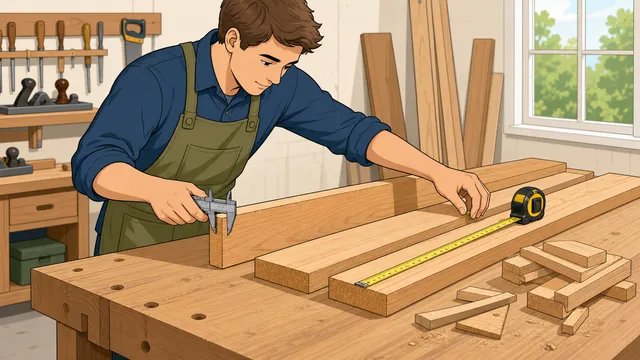
For flooring, trim, boards, and strip goods, the most important input is the actual exposed width. Nominal dimensions can be misleading. A board, plank, or tongue-and-groove product may be sold under one width but cover slightly less after machining, overlap, or required spacing.
Core conversion formulas
The key step is converting the width from inches into feet. Once the width is expressed in feet, square footage is just length times width. The result can then be converted into square yards, square metres, and board feet where appropriate.
When you work from a target area instead, the same formula is rearranged. Divide the square feet by the material width in feet to get the linear feet needed, then add any waste allowance before ordering.
Square feet = Linear feet x (Width in inches / 12)
This converts the width to feet and multiplies it by the entered linear length to get area.
Linear feet = Square feet / (Width in inches / 12)
This reverses the formula when you know the area to cover and need the length to buy.
Order area = Square feet x (1 + Waste percent / 100)
Waste allowance turns a perfect area conversion into a more realistic buying estimate for cuts, layout, and damaged pieces.
Square yards = Order area / 9
Square footage is converted into square yards for showroom and covering estimates.
Square metres = Order area / 10.7639
Square footage is converted into square metres for metric comparison.
Board feet = Linear feet x Width in inches x Thickness in inches / 12
If thickness matters, the same material can also be expressed as lumber volume rather than area alone.
How to use the result
Use the square-foot result when you need coverage area from a length-based measurement. For example, 10 linear feet of material that is 6 inches wide covers 5 square feet because the material is half a foot wide. That same output can then be compared with square-yard or square-metre requirements without doing a second conversion by hand.
If thickness is relevant, board feet give you a second check that is useful for lumber ordering. That can be helpful when the same stock is being discussed in two different ways, such as coverage for a surface and board footage for the timber order.
For buying material, focus on the waste-adjusted square feet and package count. A product label might say that one carton covers 22 square feet, so a 55 square foot order should be rounded up to 3 cartons even though the geometric area is smaller.
Waste, package coverage, and flooring orders
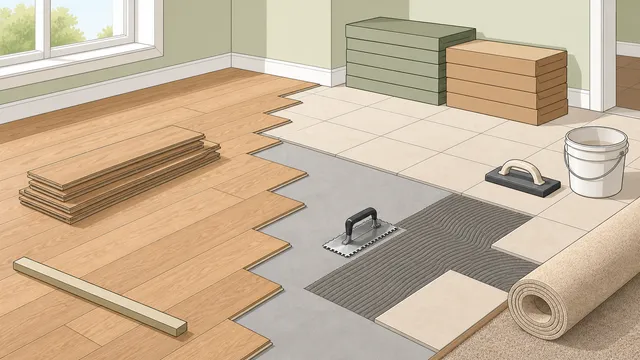
A clean conversion tells you the theoretical area. Real orders usually need a waste allowance because cuts, starter rows, end joints, defects, pattern alignment, and layout changes can consume more material than the exact area. Ten percent is a common early-planning allowance for straightforward flooring layouts, but unusual rooms, diagonal layouts, and patterned materials can need more.
Package coverage is a separate ordering step. Flooring, underlayment, and some sheet goods are sold in cartons, rolls, or bundles that cover a fixed number of square feet. Dividing the waste-adjusted square feet by that package coverage and rounding up helps avoid under-ordering when partial packages are not available.
Worked examples for common widths
A 100 linear foot border that is 6 inches wide covers 50 square feet before waste. With a 10% allowance, the material total becomes 55 square feet. If each carton covers 20 square feet, you would plan for 3 cartons.
For a 200 square foot room using 5-inch-wide plank material, the base length is 200 / (5 / 12), or 480 linear feet. Adding 10% waste raises the order estimate to about 528 linear feet. That example shows why square feet to linear feet is often the real buying workflow.
What this result does not cover
This calculator assumes the width is constant across the full length and does not account for profile waste, tongue-and-groove overlap, nominal-versus-actual lumber dimensions, irregular room shape, stair details, doorway transitions, or supplier-specific rounding rules. It includes a waste allowance and package rounding, but those are planning inputs rather than a substitute for the product instructions.
Use it as a quick conversion and ordering tool, then confirm actual product dimensions, overlap, waste requirements, package coverage, and purchase-unit rules before ordering material.
Frequently asked questions
How do I convert linear feet to square feet?
Multiply the linear length by the material width expressed in feet. If the width is in inches, divide it by 12 first, then multiply by the linear feet.
How do I convert square feet to linear feet?
Divide the square feet by the material width in feet. For example, 200 square feet with 5-inch-wide material needs 200 / (5 / 12), or 480 linear feet before waste.
Why do I need the width to convert linear feet to square feet?
Linear feet measure only length. Square feet measure area, so you need both length and width before a valid area conversion can be made.
How many square feet are in one linear foot?
It depends on width. One linear foot of 12-inch-wide material is 1 square foot, one linear foot of 6-inch-wide material is 0.5 square feet, and one linear foot of 3-inch-wide material is 0.25 square feet.
Should I use nominal width or actual width?
Use actual exposed width whenever possible. Nominal lumber sizes, tongue-and-groove profiles, overlap, and gaps can make the installed coverage smaller than the sales description.
How much waste should I add?
Use the waste percentage that matches the material and layout. Ten percent is a common early-planning allowance for simple flooring projects, but patterned, diagonal, or irregular layouts may need more.
How does package coverage affect the result?
Package coverage converts the waste-adjusted square feet into whole cartons, bundles, or rolls. The calculator rounds package counts up because most materials cannot be bought as partial packages.
What is the difference between square feet and board feet?
Square feet measure surface area only. Board feet measure lumber volume and include thickness as well as width and length.
Does this work for flooring planks and trim?
Yes, as a quick conversion for constant-width material. You should still confirm actual installed coverage, overlap, waste allowance, and package quantities before ordering.
Can I use this for carpet, vinyl, or sheet goods?
Yes when the material has a constant width and is sold by length. For broadloom carpet or sheet vinyl, also check roll width, seam layout, pattern repeat, and retailer cutting rules before ordering.