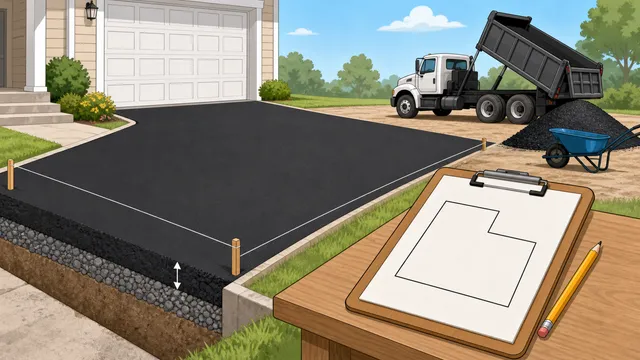
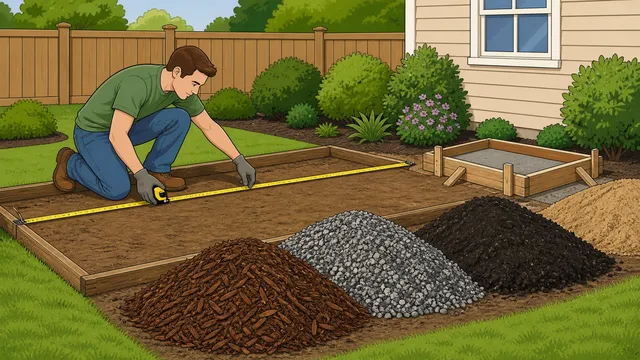
Use the gravel driveway calculator to estimate driveway gravel in tons and cubic yards, then compare rounded supplier order targets, density assumptions.
Last updated
Gravel driveway planner Estimate gravel driveway tons, cubic yards, supplier order rounding, and delivery-load planning from driveway area, gravel depth, density, and waste allowance.
Common driveway presets
#57 crushed stone
Typical compacted depth: 3 to 4 in
Best for: surface gravel and general residential driveway topping
A simple one-layer planning baseline for a typical residential driveway surface.
Supplier order target
9.25 short tons
Exact estimate 9.07 short tons from 480.00 ft², 4.00 in depth, and 8% waste.
Exact order volume
6.40 yd³
Rounded supplier volume
6.53 yd³
Project area
480.00 ft²
Ordered weight
18,144.00 lb
10-ton load equivalent
0.93 loads
Estimated gravel cost
471.74
How to use this result
#57 crushed stone is commonly used for surface gravel and general residential driveway topping. A practical compacted depth for this material is 3 to 4 in, but the right build-up still depends on soil support, drainage, and traffic.
Use the exact tonnage for internal checking and the rounded target for supplier quotes. This order is about 0.93 of a 10-ton truck load, so confirm whether your supplier prices by loose cubic yard, by ton, or by a fixed truck size before ordering.
Gravel driveway calculator for tons, cubic yards, depth, and truck-load planning
A gravel driveway calculator helps answer the two questions most people actually bring to a supplier: how much gravel do I need for my driveway, and should I order by cubic yard or by ton. This driveway gravel calculator turns driveway area, gravel depth, density, and waste allowance into an order volume, delivered weight, rounded supplier target, and optional material budget so you can compare quotes with less guesswork.
What this gravel driveway calculator is estimating
A useful gravel driveway estimate needs more than length and width alone. Aggregate is commonly bought by cubic yard, cubic metre, or ton, so the planning result has to connect driveway area with installed depth and the bulk density of the stone you intend to use.
That makes this kind of gravel driveway calculator useful for new private drives, resurfacing work, parking pads, and side-access lanes. It turns the footprint into an installed aggregate volume, adds a waste allowance, converts that figure into tonnage, and then rounds the result into a supplier-style order target so the page is easier to use in the real world than a bare geometry formula.
Core gravel driveway formulas
The calculation starts with driveway area, converts the gravel depth into the main length unit, derives a raw aggregate volume, then applies waste before estimating weight. If you enter a cost per ton, the calculator also produces a rough material-only budget for early planning.
The page deliberately keeps volume and tonnage together because supplier conversations often move between both. Some yards quote loose cubic yards, some quote tons, and some effectively think in truck loads. Seeing the same driveway in more than one unit reduces ordering mistakes.
Area = Length x Width
The driveway footprint is the base for the gravel estimate.
Base volume = Area x Gravel depth
Depth is converted into the main unit before the raw aggregate volume is calculated.
Order volume = Base volume x (1 + Waste%)
Waste is added after the geometric minimum to produce a more practical order figure.
Ordered weight = Order volume x Bulk density
The waste-adjusted volume is converted into weight using the density assumption you enter.
Rounded supplier order = round up estimated tons to a practical supplier increment
The page adds a supplier-style target so you can compare quotes without doing a second rounding step yourself.
How to choose driveway gravel type and density
Not every gravel type behaves the same way in a driveway. A compactable material such as crusher run or dense-grade aggregate usually carries a higher planning density and is often chosen for the structural base. A more open material such as #57 crushed stone is common for the surface layer on many residential drives, while pea gravel is often better treated as a decorative finish than a heavy-use vehicle surface.
That is why density matters. A driveway gravel calculator that assumes one fixed weight for every stone type can understate or overstate the order. Moisture, fines content, and supplier blend can all move the number further, so the density input should be treated as a planning assumption that you verify with the quarry or contractor before you place the final order.
How deep should gravel be for a driveway
Searchers often land on a gravel driveway tons calculator when the real question is driveway depth. A light resurfacing top-up may only need around 2 inches of fresh surface stone, while a new or rebuilt residential driveway commonly needs a deeper compacted section. Heavy vehicles, soft subgrade, and drainage problems usually push the required depth upward rather than downward.
The calculator does not pretend to design the whole driveway section for you, but it does make the depth assumption visible instead of hiding it. That matters because changing the installed depth from 2 inches to 4 inches doubles the volume, and moving from 4 inches to 6 inches adds another fifty percent on top of that.
Worked example: a typical residential gravel driveway
Suppose your driveway is 40 ft long and 12 ft wide, you plan for 4 inches of gravel, you assume a bulk density of 105 lb/ft3, and you carry an 8% waste allowance. The geometric order volume is about 6.40 cubic yards and the exact delivered-weight estimate is about 9.07 short tons.
That exact tonnage is useful for checking the maths, but a supplier often prefers a rounded figure. This page therefore lifts the order to a more practical target of roughly 9.25 short tons. That small extra cushion can be cheaper than paying for a second trip if the finished depth runs slightly thin at the edges or if the subgrade is less even than expected.
Using tons, cubic yards, and truck loads together
A driveway gravel volume calculator becomes more useful when it also shows truck-load context. A number such as 6.40 cubic yards is mathematically correct, but many homeowners still need to translate that into the way the material actually arrives. If the same order works out to roughly 0.93 of a 10-ton truck load, you can immediately see that one delivery may cover it if the yard uses that kind of truck.
This does not mean every supplier uses a 10-ton truck, and it does not replace their actual haul limits. It simply gives you an early planning view so you can ask better questions about minimum order size, delivery charges, and whether a small top-up order will still trigger a full-load trip fee.
What this result does not cover
This calculator does not design the full driveway build-up. It does not choose the correct sub-base thickness for your soil, drainage details, geotextile need, crown, edging, or the exact gravel grading that best resists washout and rutting on your site.
Use it as an aggregate-order planning tool, then confirm gravel type, compaction method, and supplier density with the quarry or contractor before final purchase. If the driveway has mixed depths, turnouts, retaining edges, or a separate base and surface course, measure those sections separately instead of treating the whole drive as one uniform rectangle.
Frequently asked questions
How much gravel do I need for a driveway?
That depends on the driveway area, the gravel depth, the waste allowance, and the density of the aggregate you plan to buy. This calculator combines those inputs and returns an order volume, an estimated tonnage, and a rounded supplier target so you can quote the job more practically.
Why does density matter in a gravel driveway calculator?
Gravel is often sold by weight, not just by volume. Two driveways with the same footprint and depth can still need different tonnage if the aggregate grading and bulk density differ. Moisture and fines content can move the weight further, which is why supplier confirmation still matters.
Should I add waste to a gravel driveway order?
Usually yes. A waste allowance helps cover uneven subgrade, shaping, compaction loss, and the difference between a perfect geometric estimate and the way aggregate is actually placed on site. It also gives you a small buffer against ordering exactly to a neat rectangle when the real driveway edges are less perfect.
Does this calculator choose the right driveway gravel depth?
No. It estimates quantity from the depth you enter. The correct section depth still depends on soil support, drainage, traffic, freeze-thaw conditions, and the overall driveway build-up. Use the preset depths as planning starts, not as a structural design sign-off.
How does gravel density affect the order size?
Density converts the calculated volume into delivered weight. Denser stone weighs more per cubic unit, so the same driveway footprint can require a different tonnage depending on the gravel type and supplier basis. That is why a driveway gravel tons calculator should never hide the density assumption.
How many tons of gravel are in a cubic yard for a driveway?
There is no single answer because a cubic yard of gravel can weigh more or less depending on the material. A common planning range is roughly 1.3 to 1.5 short tons per cubic yard, but dense or wet material can sit outside that range. Always use the supplier's figure when available.
How deep should a gravel driveway be for a new install versus a top-up?
A resurfacing top-up may only need around 2 inches of fresh stone, while a new or rebuilt residential driveway often needs a deeper compacted section. The exact target depends on subgrade, drainage, traffic, and whether you are measuring just the surface layer or the full build-up.
Is crusher run better than pea gravel for a driveway?
Crusher run or other dense graded aggregate is often better for the structural part of a driveway because it compacts tightly. Pea gravel is usually looser and more decorative. It can work in some situations, but it is often less stable for repeated vehicle traffic unless the driveway is built specifically around that finish.
Should I order gravel by the ton or by the cubic yard?
Order in the unit your supplier actually quotes, but understand both. Tons are often easier for aggregate yards, while cubic yards make the geometry easier to picture. This page shows both so you can compare quotes without redoing the conversion yourself.
Does the calculator include geotextile, edging, or the whole driveway base design?
No. It estimates aggregate quantity only. Geotextile, edging, excavation depth, crown, drainage details, and separate base-versus-surface layers still need to be measured or designed outside the calculator.