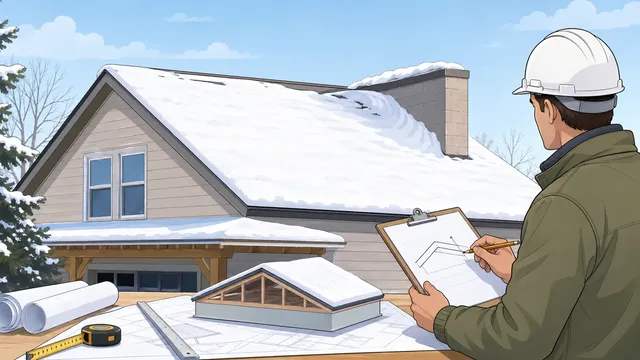
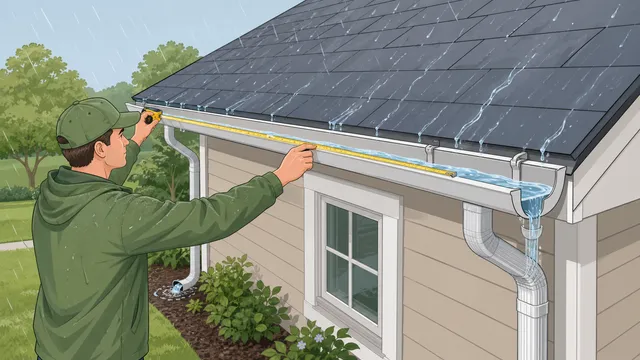
Use the ice and water shield calculator to estimate membrane rolls for eaves, valleys, penetrations.
Last updated
Ice and water shield planner Estimate membrane rolls for eaves, valleys, penetrations, or full-roof deck coverage. The planner separates net protection area from real order area so laps, cuts, and partial-roll waste do not get hidden behind a too-optimistic roll count.
Quick scenarios
Coverage mode
What coverage efficiency means
A 36-inch by 75-foot roll has 225 square feet of nominal area, but field overlaps, starter cuts, and awkward geometry usually reduce usable coverage. The default 90% efficiency keeps the estimate closer to real ordering practice.
Check the eave depth requirement Many cold-climate details need more than a simple 3-foot strip once the membrane has to reach at least 24 inches past the warm wall line. Use the comparison table to pressure-test 4-foot and 6-foot planning cases.
Result
4 rolls
Based on 679.8 sq ft of targeted protection after waste and 202.5 sq ft of effective coverage per roll.
Net protected area
618 sq ft
Order area with waste
679.8 sq ft
Effective coverage per roll
202.5 sq ft
Nominal roll area
225 sq ft
Protection breakdown
The targeted plan combines 480 sq ft at the eaves, 90 sq ft in valleys, and 48 sq ft around penetrations.
The order area adds 61.8 sq ft for field loss, then converts that requirement into rolls using the efficiency-adjusted roll coverage.
Eave depth comparison
Use this to compare one-course, extended eave, and two-course planning cases before ordering.
Depth
Net area
Order area
Rolls
Planning note
3-ft eave depth
618 sq ft
679.8 sq ft
4
Common single-course planning baseline for many 36-inch products.
4-ft eave depth
778 sq ft
855.8 sq ft
5
Useful when the code line or overhang pushes protection beyond one simple course.
6-ft eave depth
1,098 sq ft
1,207.8 sq ft
6
Useful as a two-course or higher-risk planning check before ordering rolls.
Ordering notes
Treat the result as a roll-ordering plan, not a field layout. Confirm exact starter details, overlap requirements, and penetration flashing sizes against the membrane instructions you will actually install.
If the roof has many dormers, dead valleys, or alternating roof sections, keep the efficiency lower and round up early. Running short on self-adhered membrane is more disruptive than carrying one extra roll.
Ice and water shield calculator guide: rolls, coverage, and roof protection planning
An ice and water shield calculator helps you estimate how many rolls of self-adhered roof membrane you need for eaves, valleys, penetrations, or full-deck coverage. This page works as an ice and water shield roll calculator, roof membrane calculator, and ice dam protection calculator by separating net protection area from real order area after overlaps, cuts, and waste.
What this ice and water shield calculator solves
Many membrane tools stop at a simple eave length times width formula. That is not enough for a real roof order because valleys, skylights, vent stacks, chimneys, and complicated layout cuts can materially change how many rolls you need.
This calculator handles two common planning paths. Targeted-zone mode estimates membrane for eaves, valleys, and penetrations. Full-roof mode estimates whole-deck leak-barrier coverage for projects where low slope, severe weather, or product-specific details justify more than standard perimeter protection.
That makes it useful for searches such as ice and water shield calculator, ice and water shield roll calculator, roof membrane calculator, and roof underlayment calculator where the real intent is not just square footage, but a practical roll count.
Eaves, valleys, and penetrations are different estimating problems
Eave protection is usually driven by the required depth up the roof slope, not just by the horizontal overhang. Valleys are usually estimated as their own strip because they collect concentrated runoff and often receive a centered membrane run. Penetrations such as chimneys, plumbing vents, skylights, and roof-to-wall transitions are smaller individually, but together they can easily absorb part of a roll.
Treating those areas separately gives you a better planning result than pretending the whole job is one rectangle. That is why this page uses dedicated line items for eaves, valleys, and penetration allowances before it applies waste and converts the result into full rolls.
Targeted protection area = Eave area + Valley area + Penetration allowance
Use this when the roof only needs membrane at vulnerable zones rather than across the entire deck.
Order area = Net protected area x (1 + Waste%)
Waste covers overlaps, starter cuts, awkward geometry, and partial-roll loss.
Nominal roll size is not the same as effective roll coverage
A common 36-inch by 75-foot roll has 225 square feet of nominal area. In the field, usable coverage is lower because seams overlap, valleys and penetrations create offcuts, and the last section of a roll may not fit the next roof zone cleanly.
That is why this page includes a coverage-efficiency setting. It lets you convert nominal roll size into a more realistic effective coverage number. A simple roof may stay closer to 90% to 95% efficiency, while a valley-heavy or penetration-heavy roof may need a lower figure.
Nominal roll area: based on product width x product length
Effective roll area: nominal area x efficiency setting
Order area: protection requirement after waste
Roll count: order area divided by effective roll area, rounded up
When full-roof coverage can be the better planning mode
Whole-deck membrane is not the default for every steep-slope roof, but it is common enough that a strong ice and water shield calculator should model it directly. Low-slope sections, severe ice-dam risk, wind-driven rain exposure, and certain manufacturer or project standards can all push a roof toward broader membrane coverage.
Using a full-roof mode is also helpful when you are reviewing a quote that includes complete leak barrier coverage and you want to sense-check the material count. In that case, roof area becomes the direct membrane target and the zone-by-zone inputs are intentionally ignored.
Worked example: targeted-zone order planning
Suppose a roof has 160 linear feet of eaves to protect at 3 feet up slope, 30 linear feet of valleys with a 3-foot strip, and four penetrations with a 12-square-foot allowance each. The net protection area is 618 square feet. Adding 10% waste raises the planning area to about 679.8 square feet.
If the chosen roll is 36 inches by 75 feet, nominal roll area is 225 square feet. At 90% effective coverage, usable area falls to about 202.5 square feet per roll. Dividing 679.8 by 202.5 gives about 3.36, so the practical order is 4 rolls.
Eaves: 160 x 3 = 480 sq ft
Valleys: 30 x 3 = 90 sq ft
Penetrations: 4 x 12 = 48 sq ft
Net protection area: 618 sq ft
Order area at 10% waste: 679.8 sq ft
Effective roll coverage at 90%: 202.5 sq ft
Rolls needed: 4
Common ordering mistakes this calculator helps catch
The first mistake is using only nominal roll coverage. That can make the job look safely covered on paper even when overlaps and partial-roll waste leave the crew short. The second mistake is forgetting penetrations and transitions because they feel minor compared with long eaves and valleys.
Another common miss is assuming the same depth works for every climate and roof layout. Many roofs need more than a basic 3-foot strip once the membrane has to extend farther past the interior wall line. That is why the calculator includes a comparison table for deeper eave protection cases.
The final mistake is treating a membrane order like a precision engineering output. This page gives you a much better planning number than a back-of-envelope estimate, but supplier takeoffs, local code requirements, and the chosen product instructions still take priority.
How do you calculate ice and water shield for eaves?
Multiply the total eave length by the required protection depth up the roof slope. That depth is often more important than the horizontal overhang because membrane requirements are usually written around how far the protection must extend back from the warm wall line or vulnerable eave edge.
How wide should ice and water shield be in a valley?
A common planning baseline is a 36-inch strip centered in the valley, but exact width depends on the roof design, the product instructions, and local practice. Valley-heavy roofs should also expect lower effective roll coverage because the cuts and transitions are less efficient than long straight eave runs.
Should I count skylights, vents, and chimneys separately?
Yes. Penetrations and transitions deserve their own allowance because they create offcuts and require extra membrane pieces around flashing details. Ignoring them is one of the easiest ways to under-order rolls.
How much waste should I add to an ice and water shield order?
A simple roof may work with about 8% to 10% waste, while roofs with several valleys, skylights, dormers, or chopped-up sections often justify more. Waste is not only installation error; it also covers overlaps, starter cuts, and leftover sections that cannot be reused cleanly.
What does coverage efficiency mean in this calculator?
Coverage efficiency converts nominal roll size into realistic usable coverage. A 225-square-foot roll is not always 225 square feet of field coverage once overlaps, cuts, and awkward transitions are factored in, so the efficiency setting makes the roll count less optimistic.
When should I use full-roof ice and water shield coverage?
Use full-roof mode when the project actually calls for whole-deck leak barrier coverage, such as some low-slope assemblies, severe-weather projects, or jobs following product-specific or contractor-specific standards. It is also useful for checking a quote that includes complete membrane coverage instead of targeted perimeter protection.
Can this calculator replace local code checks?
No. It is a material-planning tool, not a code engine. Local climate, roof slope, product type, and project details can all change where membrane is required and how far it must extend.
Why does the calculator compare 3-foot, 4-foot, and 6-foot eave depths?
Those comparison rows help you test whether a simple single-course assumption is too optimistic. A roof with deeper overhangs, a farther interior wall line, or higher snow risk can move from a 3-foot planning strip to a 4-foot or 6-foot strip quickly, and that change often adds at least one roll.
Is ice and water shield the same as regular roof underlayment?
No. Ice and water shield is a self-adhered leak barrier used at high-risk areas or across the full deck in some assemblies. Standard synthetic or felt underlayment usually covers the remaining roof area where a full membrane layer is not required.