Use this sod calculator to estimate rolls, slabs, pallets, waste-adjusted lawn coverage, supplier pallet surplus.
Last updated
Sod calculator for rolls, pallets, and cost Estimate how much sod you need from lawn dimensions, supplier roll size, pallet coverage, waste allowance, and optional material cost per square foot.
Quick scenarios
Result
158 pieces
Sod rolls or slabs needed for 1,575 sq ft after adding 75 sq ft for waste.
Measured lawn area
1,500 sq ft
Order area
1,575 sq ft
Pieces before waste
150
Extra pieces
8
Pallets
4
500 sq ft per pallet
Ordering guidance This is a typical simple-lawn allowance. Confirm roll size, pallet coverage, and delivery timing before ordering.
Order sheet
Roll, pallet, and coverage summary
Measured area
1,500 sq ft before waste
Waste allowance
5% adds 75 sq ft and 8 extra pieces
Roll or slab coverage
10 sq ft each, about 50 pieces per full pallet at this supplier coverage
Pallet rounding
4 pallets gives about 425 sq ft above the waste-adjusted order area
Installation timing
Prepare soil before delivery and plan to lay fresh sod promptly, especially in warm or dry weather.
Sod calculator for rolls, pallets, and lawn coverage
A sod calculator estimates how many pieces or rolls of turf your lawn needs, how many pallets to order, and what the order will cost at your chosen unit price.
How sod quantity is estimated
Sod is usually sold by the piece, roll, or pallet. Mini rolls and larger rolls cover different amounts of turf, so the calculator divides the lawn area by the selected piece coverage to estimate how many units you need.
A waste allowance of 5 to 10 percent is added to cover cutting losses around curves, edges, walkways, and garden beds. Irregularly shaped lawns should use the higher end of the waste range so you do not come up short during installation.
The calculator now separates measured lawn area from waste-adjusted order area. That matters because a 1,500 sq ft rectangle and a 1,500 sq ft lawn broken up by beds, paths, and corners may need the same base square footage but different extra sod for cuts.
Measured area = Lawn length x Lawn width
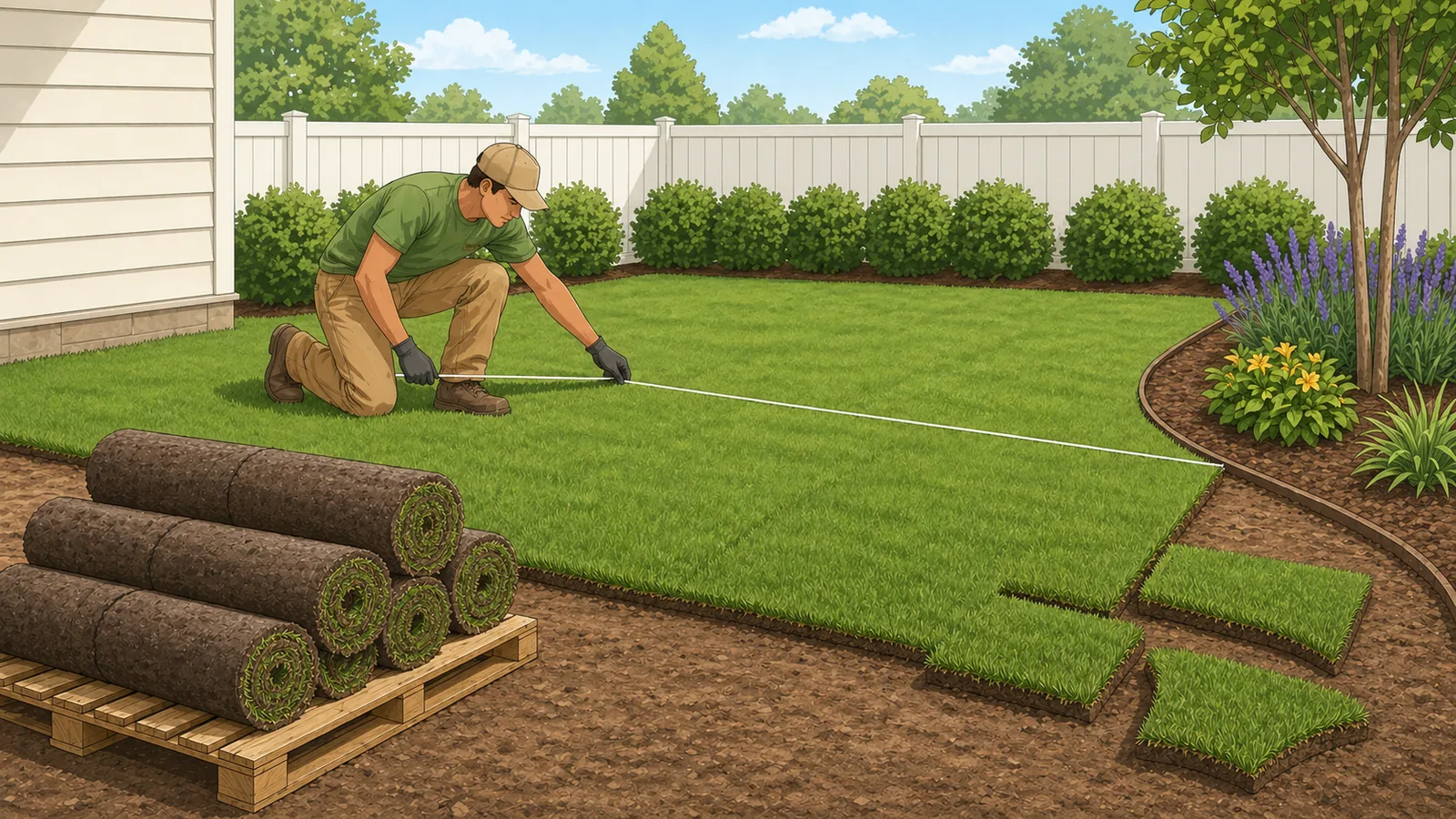
The calculator starts with a rectangular lawn section measured in feet.
Order area = Measured area x (1 + Waste allowance / 100)
The waste-adjusted order area is used for rolls, pallets, and square-foot material cost.
Sod pieces = ceil(Order area / Coverage per piece)
The final piece count is rounded up because partial rolls or slabs are not normally orderable.
Pallets, delivery, and supplier coverage
Pallet coverage varies by supplier and sod type. The calculator converts the total piece count into a pallet estimate so you can get close to a practical delivery order, but you should always confirm the exact pallet coverage with the supplier before checkout.
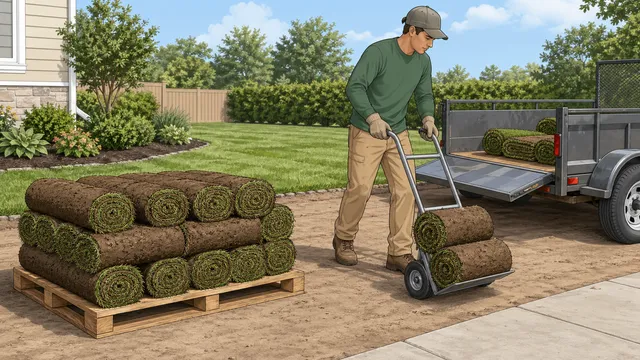
Sod should be installed as soon as possible after delivery, ideally the same day or within about 24 hours, to reduce drying and heat damage. Plan your site preparation and labour before the delivery date so the sod goes down quickly.
Many sod estimator pages assume one fixed pallet size, but real quotes may use 450, 500, 600, or another square-foot figure. Enter the supplier's pallet coverage when you have it so the pallet count, surplus square footage, and rolls-per-pallet estimate match the order you are actually comparing.
Pallets = ceil(Order area / Supplier pallet coverage)
This keeps pallet rounding tied to the coverage printed on the supplier quote.
How to use the estimate
Use the total piece count as your order baseline, then round up if the lawn has narrow strips, curves, or unusual cutouts. That extra buffer is often cheaper than running short and needing a second delivery.
If you enter a unit price, the calculator multiplies it by the total piece count to give an estimated total cost. That makes it easier to compare sod suppliers, compare alternative piece sizes, and judge whether delivery charges are changing the overall value.
For quotes priced by the square foot, use the material cost field rather than trying to convert everything into a per-roll price yourself. The calculator applies that price to the waste-adjusted order area, which is usually closer to the number a supplier uses for material-only pricing.
Worked example: standard lawn sod order
Suppose a rectangular lawn is 50 ft long and 30 ft wide. The measured area is 1,500 sq ft. With an 8 percent waste allowance, the order area becomes 1,620 sq ft.
If the supplier sells standard 2 ft by 5 ft rolls, each roll covers 10 sq ft. Dividing 1,620 sq ft by 10 gives 162 rolls. If each pallet covers 500 sq ft, the order rounds to 4 pallets, leaving some surplus coverage after pallet rounding.
That worked example is why the result shows pieces, waste pieces, pallets, surplus square footage, and material cost together. A homeowner can use the same measurement to compare a roll quote, a pallet quote, and a square-foot quote without recalculating the project from scratch.
When to raise the waste allowance
A simple rectangle with straight edges can often use a modest waste allowance. Raise the waste allowance when the lawn wraps around planting beds, follows a curved sidewalk, includes tree rings, has sprinkler heads, or needs many narrow strips.
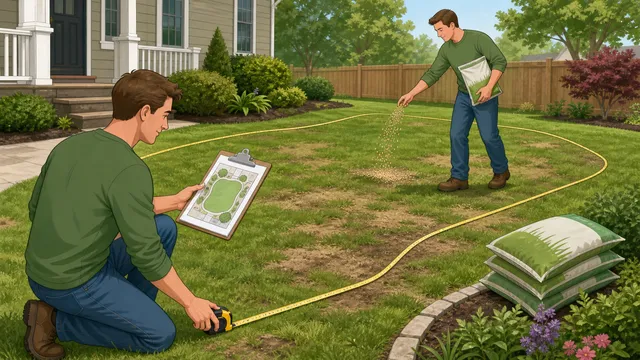
For very irregular lawns, split the project into smaller rectangles, calculate each section, and add the areas before ordering. That gives a better sod quantity estimate than stretching one bounding rectangle across beds, patios, or hardscape that will not receive turf.
Waste is not only about mistakes. Some extra material is needed because cut pieces are less reusable, edges dry faster, and a damaged roll during unloading can leave a visible gap if there is no spare sod available.
Frequently asked questions
How much sod do I need for my lawn?
Measure the lawn area in square feet, add 5 to 10 percent for waste, and divide by the coverage per sod piece or roll. A sod calculator automates the conversion and also turns the total into a pallet estimate for ordering.
How many square feet are on a pallet of sod?
Pallet coverage varies by supplier and by the sod product itself. Many suppliers sell pallets in the rough range of a few hundred square feet, so it is best to confirm the exact coverage before you place the order.
How much waste should I add when ordering sod?
A 5 to 10 percent waste allowance is common. Use the lower end for simple rectangles and the higher end for curved lawns, garden beds, and areas with lots of trimming around paths or trees.
How long can sod sit before installation?
Sod is best installed the same day it arrives, or within about 24 hours when possible. Heat and drying can damage it quickly, especially in warm weather or if pallets are left in direct sun.
How many rolls of sod are on a pallet?
There is no universal roll count because pallet coverage and roll size vary by supplier. A pallet with 500 sq ft of sod holds about 50 standard 10 sq ft rolls, but a different farm may use different roll dimensions or pallet coverage. Use the supplier pallet coverage field in the calculator when you have a quote.
What is the standard size of a sod roll?
A common residential roll size is 2 ft by 5 ft, or 10 sq ft, but sod can also be sold as smaller slabs, larger slabs, or big rolls that need equipment. Choose the roll or slab size that matches your supplier rather than assuming every sod farm cuts the same size.
Should I calculate sod by rolls, square feet, or pallets?
Use all three if you are comparing quotes. Square feet tells you the true lawn coverage, rolls or slabs tell you the handling count, and pallets tell you how the supplier may stage delivery. A good sod calculator shows the three views from the same measurements.
Can I lay sod over existing grass?
Usually no. Existing grass and thatch can block root contact with the soil, trap uneven layers, and make establishment unreliable. Remove the old turf, prepare the soil, grade the area, and moisten the bed before laying fresh sod.
How do I measure an irregular lawn for sod?
Break the lawn into rectangles or other simple sections, estimate each section, then add the square footage together. Avoid using one large rectangle that includes patios, beds, driveways, or other areas that will not be sodded, because that can overstate the order dramatically.
Does the sod calculator include delivery, labour, or soil preparation?
No. The cost field is a material-only estimate based on the entered square-foot price or unit price. Delivery, pallet deposits, soil amendments, old-grass removal, grading, rolling, irrigation setup, and installer labour should be added from supplier or contractor quotes.
How soon should I water new sod?
Water new sod immediately after it is laid so the roots and soil below the sod stay moist. Follow the supplier or local extension guidance for watering frequency, because heat, soil type, grass species, and local restrictions can all change the best schedule.