Skip to content
Calcipedia
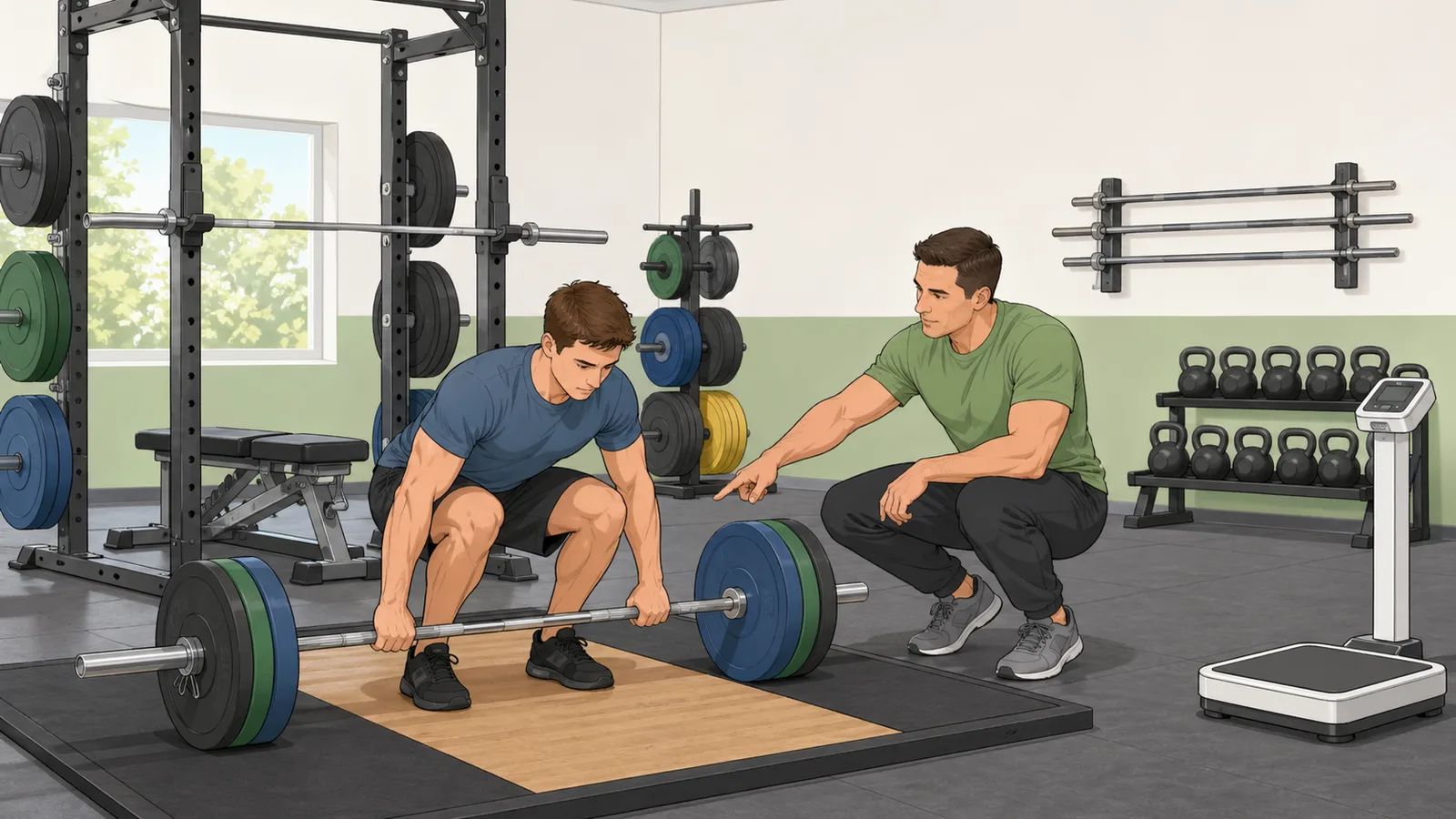
Strength Level Calculator instructional illustration

Strength Level Calculator

Classify your strength level for squat, bench press, deadlift, or overhead press using stricter bodyweight-ratio standards, tested or rep-estimated 1RM input.

Last updated

Strength level calculator Find out how strong you are — enter your body weight and one-rep max for any major lift (squat, bench press, deadlift, or overhead press) to see your strength level from beginner to elite, with body-weight-ratio strength standards.

Quick examples

Sex

Units

Lift

Strength input
Tested max or recent-set estimate Use a true one-rep max if you have one. If you would rather avoid a maximal single, switch to recent-set mode and estimate your strength level from a hard set in the 3-to-8 rep range.

Result

Beginner

Back Squat strength level · Male · 1.25× body weight · ~35th percentile

Lift : bodyweight
1.25×
One-rep max
100 kg
To next level
+40 kg

Strength levels

Untrained
Beginner
Intermediate
Advanced
Elite

Training recommendation

Run a simple linear progression programme (e.g. Starting Strength or StrongLifts 5×5). Aim to add small increments to the bar each session — consistency is the key driver at this stage.

The next level is a longer-term target. Use the nearest roadmap row for direction, but judge the block by repeatable rep PRs, technique quality, and recovery.

Strength standards by body weight (Male)

Body-weight-ratio benchmarks for squat, bench press, deadlift, and overhead press. Multiply by your body weight to get the target one-rep max in kg.

LiftBeginnerIntermediateAdvancedElite
Back Squat1.25×1.75×2.25×
Bench Press0.75×1.25×1.75×2.25×
Deadlift1.5×2.5×3.25×
Overhead Press0.55×0.8×1.1×1.5×

Back Squat roadmap at your current body weight

This personalised table turns each benchmark tier into an actual load target so you can see exactly how far each step is from your current one-rep max.

LevelRatioTarget load (kg)Gap (kg)
Beginner Target cleared
1.25×100Met
Intermediate Next benchmark to reach
1.75×140+40
Advanced Next benchmark to reach
2.25×180+80
Elite Next benchmark to reach
240+140

How the strength level calculator works

This strength level calculator compares your one-rep max to your body weight to produce a lift-to-bodyweight ratio, then classifies it across five levels: untrained, beginner, intermediate, advanced, and elite. The strength standards differ for male and female lifters and cover the major compound lifts — squat, bench press, deadlift, and overhead press.

If you don't know your one-rep max, you can estimate it from a multi-rep set using the recent-set mode above. The calculator uses the same kind of rep-based estimate you would get from a one-rep-max tool, then maps that estimate onto the lift-specific standards table. That makes the page more practical for normal training blocks where you have a recent 3-to-8 rep set but do not want to test an all-out single.

The standards table above shows what you should be able to lift at each level as a multiple of body weight, giving a quick answer to "how strong am I for my weight?". These are generalised population benchmarks and are intended as a rough guide — thresholds vary across classification systems. This tool is not a substitute for advice from a qualified strength and conditioning coach.

Use the result as a planning anchor rather than a label. A newer lifter can still progress quickly after an early intermediate result, while an advanced lifter may need longer blocks to move the same absolute weight.

The roadmap table is more useful than a single score because it turns each benchmark into an actual load target at your body weight. That means you can see whether the next jump is a small microload, a full plate jump, or a longer programming block.

← All Strength & Performance calculators

Health — Fitness

Strength level calculator guide: squat, bench, deadlift

A strength level calculator helps answer a question many lifters ask after their first serious training block: where do my numbers actually sit? This page compares either a tested one-rep max or a rep-estimated max against bodyweight-relative standards for the squat, bench press, deadlift, and overhead press so you can judge whether you are in the beginner, intermediate, advanced, or elite range without relying on guesswork or social-media hype.

Why strength is measured relative to bodyweight

Absolute lifting numbers are a poor basis for comparison across different body sizes. A 120 kg powerlifter squatting 180 kg is lifting 1.5× bodyweight; a 70 kg recreational lifter squatting 100 kg is lifting 1.43× bodyweight — comparable strength levels despite very different absolute numbers. Using the lift-to-bodyweight ratio (also called relative strength) creates a fair, size-adjusted classification that works across a wide range of athletic populations.

Sex differences in relative strength standards reflect well-documented physiological differences in upper- and lower-body muscle mass distribution. Women carry a similar proportion of lower-body muscle to men but less upper-body muscle, so squat standards are closer between sexes than bench press standards. Published strength standards also disagree on the exact cut points, which is why this page treats the labels as benchmark bands and shows the ratio, the next-level gap, and the roadmap target instead of relying on the label alone.
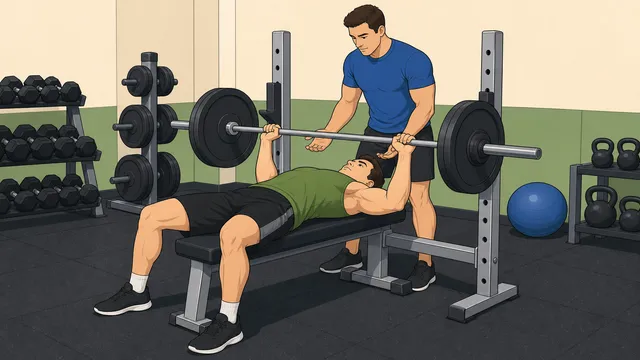
What beginner, intermediate, advanced, and elite really mean

Strength labels are most useful when they are treated as rough benchmarks rather than identity statements. Beginner usually means the lifter has moved beyond completely untrained levels but still has large, relatively fast progress available. Intermediate usually means the obvious novice gains have already happened and progress now depends more on better programming, recovery, and patient overload. Advanced and elite represent progressively rarer levels of relative strength, not simply time spent in the gym.

That is why competitor pages rank strongly for phrases like strength standards, squat standards by bodyweight, and what is a good bench press. Lifters are not usually looking for an abstract category. They want context for the numbers they have today and a sense of how far the next tier actually is. The recalibrated benchmark bands on this page are intentionally stricter than a casual gym-milestone chart, because a true strength level calculator should not call a lift advanced just because it has cleared the first obvious bodyweight milestone.

Why the lifts do not scale the same way

Deadlift, squat, bench press, and overhead press do not share the same ratios because they challenge different muscle groups and movement patterns. Lower-body lifts typically support higher relative loads than upper-body lifts, and the deadlift often leads the group because the movement starts from a dead stop with favourable leverage for many lifters.

That is why a strong bench press can still sit at a lower bodyweight multiple than a strong deadlift without meaning the bench is lagging. A useful strength level page should give exercise-specific context rather than treating every lift as if the same ratio defined the same standard.

What counts as a good bench, squat, deadlift, or overhead press?

This is the real search intent behind many strength standards pages. People do not only type strength level calculator. They type what is a good bench press, good deadlift for bodyweight, squat standards by bodyweight, or overhead press standards. All of those searches are asking for context around the same four lifts.

The honest answer is always exercise-specific. A bodyweight bench press is a much stronger benchmark than a bodyweight overhead press, while a strong deadlift usually sits higher than a strong squat. Good standards therefore need separate ratios for each lift rather than one catch-all label for total-body strength.

Use estimated 1RM sensibly if you do not want to test a max

A true 1RM can be informative, but it is not always necessary or worth the fatigue. Many lifters get a safer estimate by using a hard set of 3 to 5 reps and then applying a one-rep-max prediction formula. That is especially sensible for newer lifters, anyone training alone, or anyone who does not need a maximal test to guide programming.

That matters because people often arrive on a strength-level page without a competition-style max. The useful question is not whether the number came from a grinder single or a rep-based estimate. It is whether the number is close enough to place you in the right training context and help you plan what comes next.

What to do when your lift sits between categories

A result that lands near the edge of two categories is usually better read as a range than as a hard identity. A lifter sitting just below advanced is often functionally closer to advanced than to intermediate, especially if their programming, recovery, and technique are still improving.

That is why a strength level page should show the next level gap as well as the label. The gap tells you whether the next milestone is a small loading jump or a much longer training block.

How to use the roadmap table in your training plan

The roadmap table translates the benchmark tiers into a concrete load target at your current body weight. That is more actionable than a ratio alone because it tells you whether the next step is a 2.5 kg microload, a larger plate jump, or a multi-week block of progress.

The most useful way to read the roadmap is from top to bottom: if you are already clearing the beginner and intermediate rows, your next planning anchor is the advanced row rather than the middle of the table. If you are new to the lift, the beginner row gives you a practical first target to aim at before you worry about higher tiers.

Why this page may look stricter than a simple gym milestone chart

Some strength-standard pages use a novice category between beginner and intermediate, while others jump straight from beginner to intermediate. This page keeps the interface simpler with untrained, beginner, intermediate, advanced, and elite, then uses stricter cut points that stay closer to serious strength-standard tables than to casual social-media milestones.

That matters for trust. A bodyweight bench press, a 1.5× bodyweight squat, or a 2× bodyweight deadlift can all be meaningful achievements without automatically being advanced or elite in a standards model. The useful answer is not the most flattering label; it is the label plus the exact ratio and the load needed for the next benchmark.

How to compare lifts without mixing up the standards

A squat, bench press, deadlift, and overhead press all respond differently to body weight, lever length, and technique. That means a single strength number cannot describe every lift well. The right comparison is lift-specific first and bodyweight-relative second.

If you want the broader picture, compare your squat, bench, and deadlift against the same sex-and-bodyweight standard, then use the roadmap table to see how each lift maps to a real load. That approach is much closer to how strength coaches think about training than a generic 'good' or 'bad' score.

Frequently asked questions

What is considered a good squat for my bodyweight?

A good squat for bodyweight depends on sex, training age, depth standard, and the benchmark table being used. In this model, an 80 kg male lifter reaches the beginner squat band at about 100 kg, intermediate at about 140 kg, advanced at about 180 kg, and elite at about 240 kg. A bodyweight squat is still a useful early milestone, but it is not the same as an advanced strength-standard result.

What is a good bench press for my bodyweight?

A good bench press depends on sex, training age, pause standard, and the standard system being used, but many recreational lifters treat a bodyweight bench press as a meaningful milestone. Relative bench standards are lower than squat or deadlift standards because upper-body pressing muscles usually support less load than the lower-body lifts. Use the roadmap row to see whether your current bench is merely near a milestone or actually clearing the next strength-standard tier.

Should I test my actual one-rep max?

Testing a true 1RM carries injury risk, especially for beginners and without a spotter. A safer approach is to use a multi-rep max (e.g. the weight you can lift for 5 reps) and apply a 1RM estimation formula (such as Brzycki, Epley, or Lander). Our one-rep max calculator can estimate your 1RM from a multi-rep set.

Does a higher strength level automatically mean faster future progress?

Usually the opposite. The higher the level, the slower progress tends to come. Beginners often improve quickly, while advanced lifters may need much longer blocks to move the same amount. The level is useful context, not a guarantee of how fast the next jump will happen.

How do I estimate my one-rep max from multiple reps?

Use a proven prediction formula such as Brzycki or Epley when you know a recent set of 3 to 8 reps. These formulas are approximate, but they are usually good enough to place you in the right strength band and avoid an unnecessary max test.

Is bodyweight ratio enough to compare lifts?

It is the best quick comparison for a general strength page, but it is not perfect. Technique, limb lengths, training age, age band, equipment, and judging standard all matter. Treat the ratio as a useful screening tool rather than a final judgement, especially if you are comparing a true tested max against a rep-estimated max.

What is a good strength level for a beginner?

Beginner is the right label when you have started to train consistently but your lift is still below the intermediate threshold for your sex, body weight, and exercise. In practical terms, the beginner band is usually where technique is still improving quickly and loading can rise session to session.

Should I compare my squat, bench press, and deadlift using the same benchmark?

No. The same bodyweight ratio means very different things across the squat, bench press, and deadlift because the lifts have different leverage and muscle demands. Use the exercise-specific standards for each lift, then compare the roadmap rows at your own body weight.

How often should I recheck my strength level?

Recheck whenever your recent training weights or rep PRs have clearly moved. For most lifters that means every few weeks or at the end of a training block, not every session. Frequent rechecking is only useful if it changes the next block of programming.

Can I use a rep set instead of a true one-rep max?

Yes. A recent rep set can be turned into an estimated one-rep max if you do not want to test an all-out single. That is often the safer choice for newer lifters or for anyone who does not need a maximal attempt just to plan the next training phase.

Why is my result lower than another strength standards calculator?

Different calculators use different datasets, labels, age adjustments, and category names. Some include a separate novice tier, some use Wilks-style scoring, and some use broad bodyweight-ratio milestones. This page uses stricter lift-specific benchmark bands and shows the next-load gap so the result is useful for planning, not just flattering.

Does this strength level calculator adjust for age?

No. The calculator focuses on sex, body weight, lift, and tested or estimated one-rep max. Age can change how a result should be interpreted, especially for older lifters and youth lifters, so use the classification as a broad benchmark and place more weight on safe progression, technique consistency, and personal training history.

Also in Strength & Performance

Related

More from nearby categories

These related calculators come from the same leaf category, nearby sibling categories, or the same top-level topic.