Use this cylinder cubic yardage calculator to estimate solid or hollow cylinder volume in cubic yards, add quantity and waste, compare concrete bag counts.
Last updated
Cylinder cubic yardage for material ordering Calculate solid or hollow cylinder volume in cubic yards, then add cylinder count, waste allowance, bag counts, tonnage, and optional price per cubic yard for concrete, gravel, soil, or fill estimates.
Measurement setup
Quick examples
Cylinder type
Use the measurement that matches the material space
For a solid pier, post hole, or round footing, enter the filled diameter and depth. For a ring wall or hollow tube pour, switch to hollow cylinder and enter both outside and inside diameters so the void is subtracted before the cubic yardage is scaled.
The waste-adjusted result is the ordering quantity. The one-cylinder line stays visible so you can catch a wrong unit, diameter, or depth before multiplying the mistake across the whole job.
Waste-adjusted material order
0.768 cubic yards
Planning quantity for 6 solid cylinders after adding 10.0% waste. One cylinder is 0.116 yd³ before scaling.
Cubic yards
0.768 yd³
Cubic feet
20.73 ft³
Weight
1.56 tons
Estimated cost
127 units
80 lb bags
35
60 lb bags
47
Cubic meters
0.587 m³
Liters
587 L
Scenario comparison
Scenario
Cubic yards
Cubic feet
Cubic meters
Gallons
One cylinder
0.116 yd³
3.14 ft³
0.089 m³
23.50 gal
All cylinders
0.698 yd³
18.85 ft³
0.534 m³
141.00 gal
All cylinders + waste
0.768 yd³
20.73 ft³
0.587 m³
155.10 gal
Small-batch quantity range This estimate is under 1 cubic yard after allowance, so packaged bags may still be practical if access, labour, and finish requirements fit the job.
Bag-count planning cue
For concrete mix comparisons, this volume is roughly 35 80 lb bags, 47 60 lb bags, 51 25 kg bags, or 63 20 kg bags before product-specific yield checks.
Interpret the result
The net circular footprint is 0.785 ft². For a solid cylinder, the full circular footprint is filled before height is applied.
Use the waste-adjusted cubic yardage for ordering material, the one-cylinder line to check geometry, and the bag-count or tonnage outputs as comparison cues. Supplier yield, moisture, compaction, delivery minimums, and field loss can still change the final purchase.
Cylinder cubic yardage calculator for concrete, sonotubes, posts, and round fill
Use this cylinder cubic yardage calculator to estimate how many cubic yards of material a round form, pier, post hole, tank wall, or cylindrical fill area needs. It starts with diameter and height, supports solid and hollow cylinders, adds quantity and waste, then converts the result into cubic feet, cubic metres, gallons, litres, concrete bag counts, tonnage, and optional cost per cubic yard.
What this cylinder cubic yardage calculator is estimating
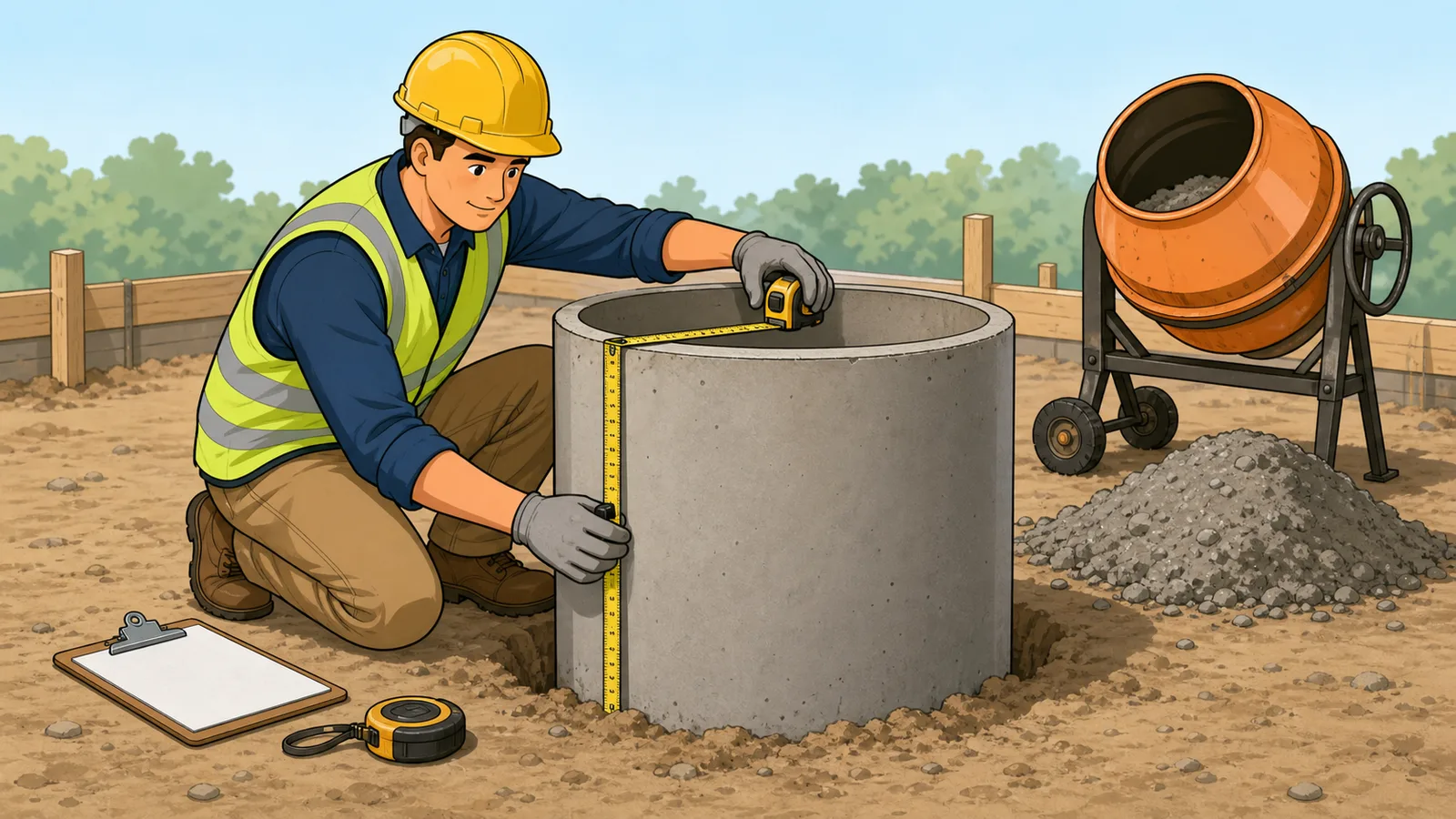
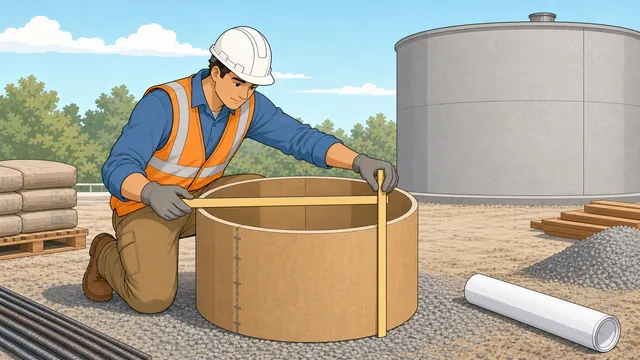
A cylinder cubic yardage calculator turns round geometry into a material-ordering quantity. The most common use is a concrete cylinder calculator for sonotube piers, round footings, caissons, columns, and post holes, but the same cylinder volume workflow also applies to gravel, soil, fill dirt, tank capacity, and other cylindrical spaces.
The calculator keeps three results visible: one cylinder, all identical cylinders, and all cylinders plus the selected waste or overage allowance. That separation matters because the pure geometry answer is useful for checking the measurement, while the waste-adjusted cubic yardage is usually the number to compare with ready-mix, bagged concrete, or bulk-material suppliers.
Cylinder volume formula in cubic yards
The calculator converts the diameter and height into feet, changes diameter into radius, calculates the circular base area, and multiplies by height. The cubic-foot result is then divided by 27 because one cubic yard equals 27 cubic feet.
For a hollow cylinder, the inside circular area is subtracted from the outside circular area before height is applied. That makes the tool useful for ring walls, pipe sleeves, tank walls, and hollow cylindrical forms where ordering from the outside diameter alone would overstate the material.
Adds the selected waste, spillage, overfill, or procurement allowance after multiplying by the number of cylinders.
Worked example: sonotube piers for a deck
Suppose a deck uses 6 round concrete piers, each with a 12-inch diameter and a 4-foot depth. One pier is π × 0.5² × 4, or about 3.14 cubic feet. Six identical piers are about 18.85 cubic feet.
Divide by 27 and the measured project volume is about 0.698 cubic yards. Add a 10% allowance for overfill, spillage, and form irregularity, and the ordering estimate becomes about 0.768 cubic yards. That is under one cubic yard, so the bagged-concrete versus ready-mix decision depends on access, labour, minimum delivery charges, and the exact product yield.
Solid versus hollow cylinder estimates
Use solid cylinder mode when the entire circular footprint is filled: post holes, round footings, concrete piers, tank fills, drums, or cylindrical voids that need to be filled completely. Enter the filled diameter, not the outside product diameter, if a form wall or liner takes up space.
Use hollow cylinder mode when the center remains open. The calculator asks for outside diameter, inside diameter, and height so it can estimate only the ring-shaped volume. This is the correct workflow for many cylindrical wall pours, ring footings, sleeves, collars, and tank-wall material estimates.
Waste, overage, bag counts, and ready-mix decisions
Competitor pages often stop at the geometric cubic yards or add only a price field. A jobsite estimate normally needs a little more context: how many repeated cylinders are being poured, whether a waste allowance has been added, how the result compares with bagged-concrete yields, and whether the batch is large enough to price ready-mix.
The bag counts on this page are planning cues based on common yield assumptions, not guaranteed product output. Different concrete mixes can yield different volumes per bag, and field conditions can change how much material is actually needed. Use the bag count to compare the scale of the job, then check the manufacturer's yield table before buying.
Material density and tonnage
Cubic yards measure volume, not weight. The calculator therefore lets you choose or override material density before estimating tons. Normal concrete is commonly planned near 150 pounds per cubic foot, or about 4,050 pounds per cubic yard, while gravel, topsoil, and fill dirt can vary widely with moisture, gradation, compaction, and source.
If your supplier gives a density or conversion factor, use that value instead of a generic preset. A small density difference can become a meaningful hauling, delivery, and cost difference once the cylinder quantity grows.
Common mistakes this calculator helps prevent
The first mistake is confusing diameter and radius. If a full diameter is accidentally used as the radius, the calculated volume becomes four times too large because the radius is squared. Entering diameter directly avoids that mental conversion.
The second mistake is mixing inches, feet, centimetres, and metres without converting them into one base unit. The calculator accepts mixed units and performs the conversion before solving the formula. The third mistake is ordering the exact geometric result when the job needs a separate allowance for over-excavation, spillage, uneven formwork, or supplier rounding.
When to use a related calculator instead
Use this page when the shape is round and the material-ordering unit is cubic yards. If you need a general cylinder volume in cubic feet with tank-capacity comparisons, use the cylinder cubic feet calculator. If the site starts from length, width, and depth instead of diameter and height, use the cubic yards calculator or the concrete calculator.
For bulk materials already measured in cubic yards where the main question is weight, use the cubic yards to tons calculator. That page focuses on density, truckload, and quote-review workflows after the volume has already been measured.
Further reading
Cylinder cubic feet calculator — Use this for round forms, tanks, drums, and pipe sections where cubic feet and capacity comparisons are the primary intent.
Cubic yards calculator — Use this for rectangular or general volume estimates from length, width, and depth.
Cubic yards to tons calculator — Use this when the volume is already known and the supplier quote or truckload limit is in tons.
Limitations
This calculator assumes a true cylinder or hollow cylinder with a constant diameter from top to bottom. It does not model tapered shafts, bell-bottom piers, domed ends, rebar displacement, irregular excavations, sloped bottoms, or shapes that change along the height.
The waste allowance, density, price, and bag-count outputs are planning assumptions. Final ordering should be checked against actual field measurements, product yield, supplier density, delivery minimums, mix design, and project requirements.
Frequently asked questions
How do I calculate the cubic yardage of a cylinder?
Calculate the cylinder volume in cubic feet with π × (diameter / 2)^2 × height, then divide by 27 to convert cubic feet to cubic yards. This calculator handles the diameter-to-radius step and unit conversions automatically.
How many cubic yards are in a round concrete pier?
It depends on the pier diameter and depth. A 12-inch diameter pier that is 4 feet deep is about 0.116 cubic yards before waste. Six of those piers are about 0.698 cubic yards before allowance.
Should I add waste to a cylinder concrete estimate?
Usually, yes. A 5% to 10% allowance is common for small round pours because overfill, spillage, uneven excavation, and form irregularities can make the real order quantity higher than the exact geometric volume.
Can this calculator handle hollow cylinders?
Yes. Switch to hollow cylinder mode and enter outside diameter, inside diameter, and height. The calculator subtracts the inside void before converting the net material volume into cubic yards.
Is this the same as a sonotube calculator?
It covers the core sonotube workflow: diameter, depth, number of tubes, waste allowance, cubic yards, and bag counts. A product-specific sonotube table may still be useful for checking standard tube sizes and manufacturer assumptions.
Do I use inside diameter or outside diameter?
Use the diameter of the space being filled. For concrete forms, that is usually the inside diameter. For hollow pours, enter both the outside diameter and the inside diameter so only the ring-shaped material volume is counted.
How many bags of concrete do I need for a cylinder?
After the cubic yardage is calculated, the calculator compares the waste-adjusted volume with common 60 lb, 80 lb, 20 kg, and 25 kg bag-yield assumptions. Treat those as planning cues and confirm the exact yield on the bag or product data sheet.
When should I compare ready-mix instead of bagged concrete?
Once the waste-adjusted estimate approaches or exceeds 1 cubic yard, ready-mix is usually worth pricing because bag handling, mixing time, consistency, delivery access, and minimum-load charges start to matter more.
Can I use metric measurements?
Yes. The calculator accepts inches, feet, centimetres, and metres for diameter and height, then shows cubic yards alongside cubic feet and cubic metres so mixed-unit drawings and supplier quotes are easier to reconcile.